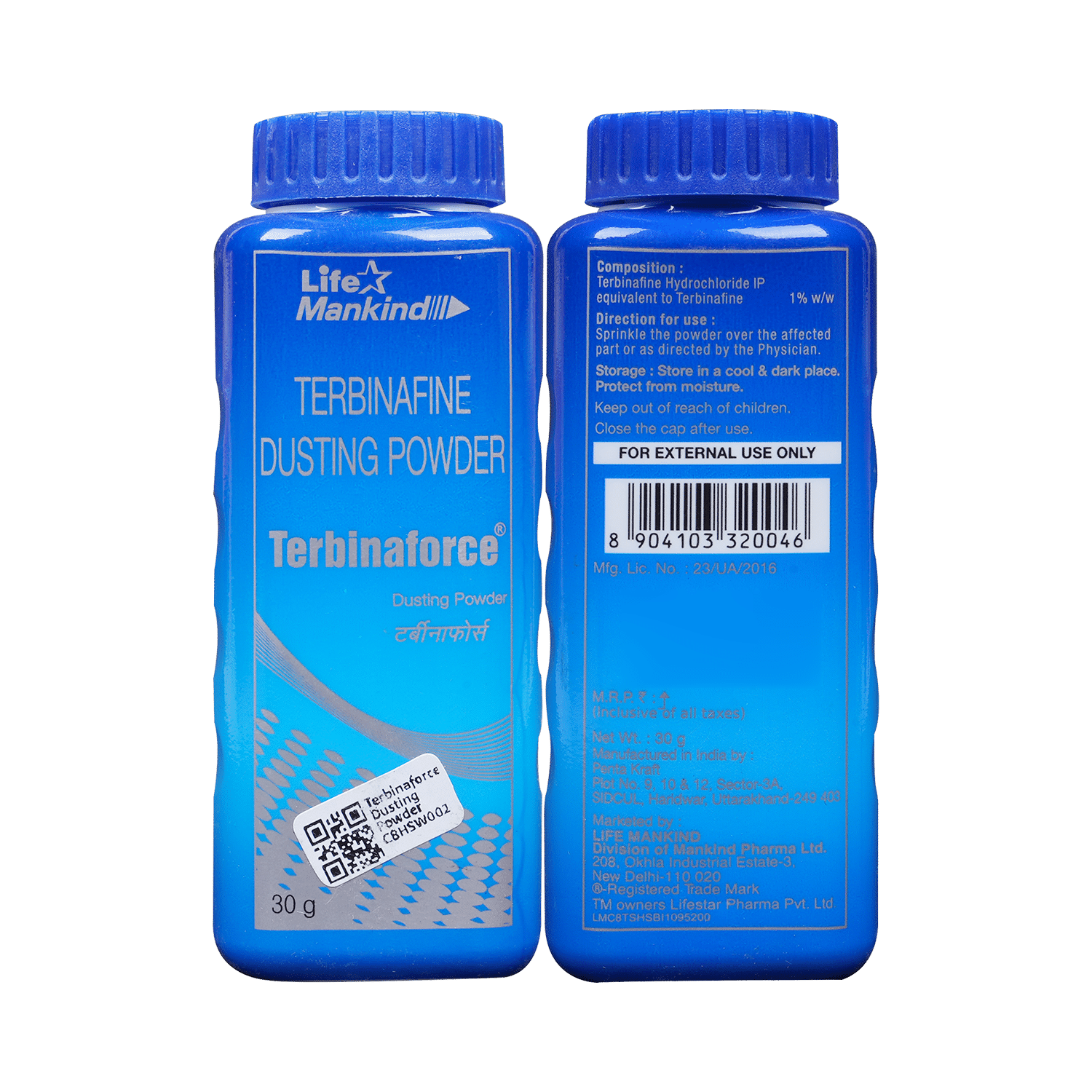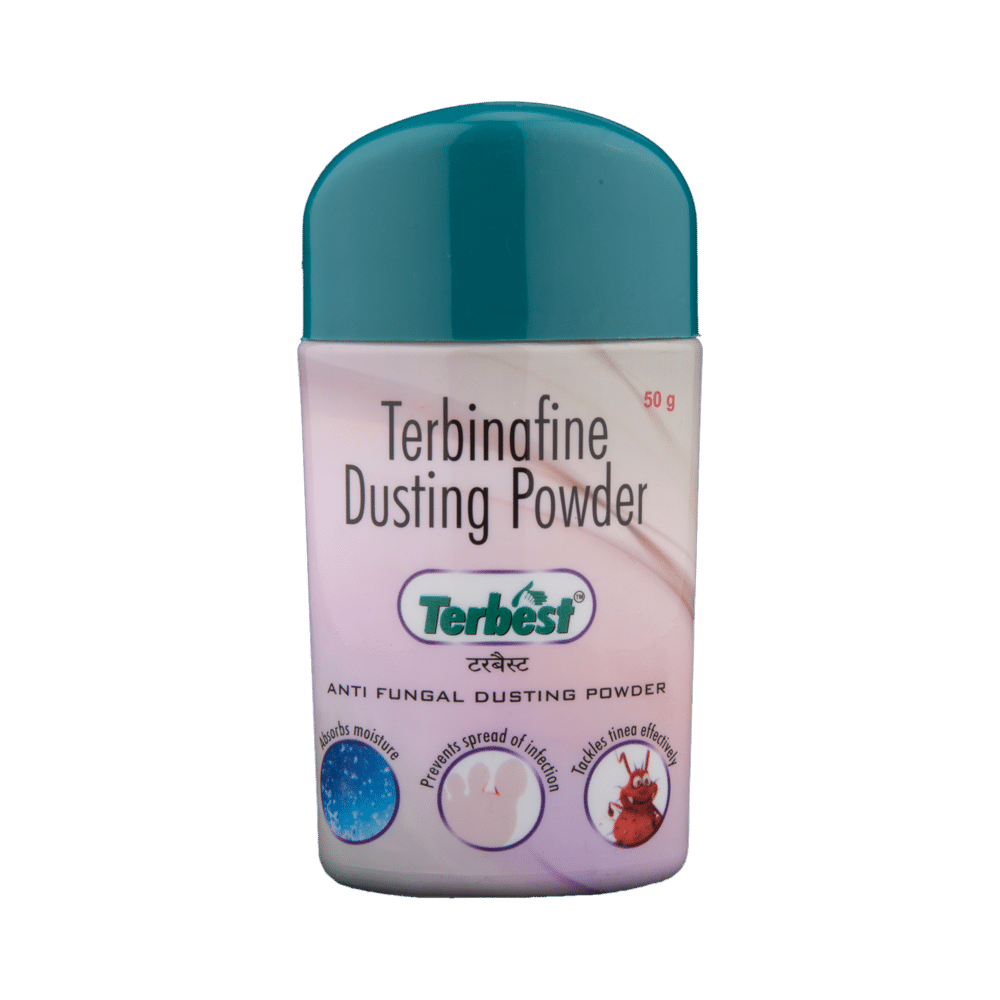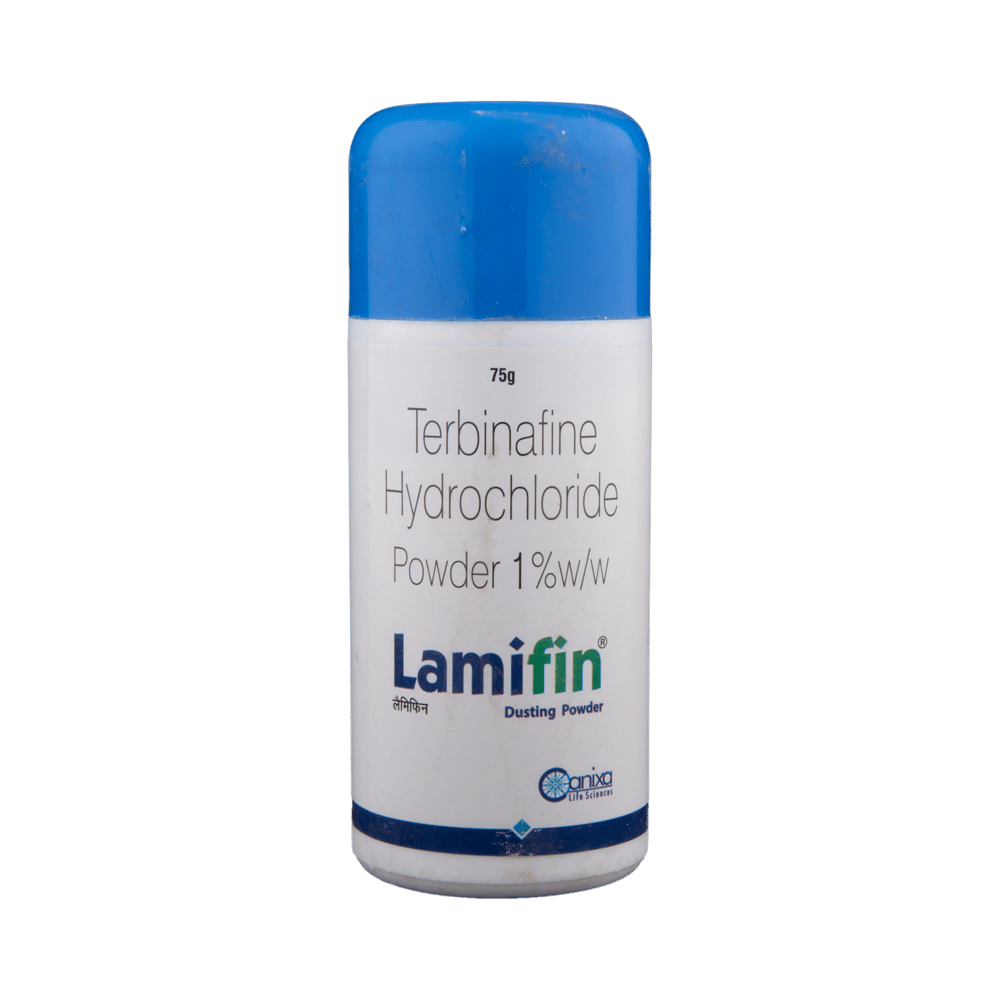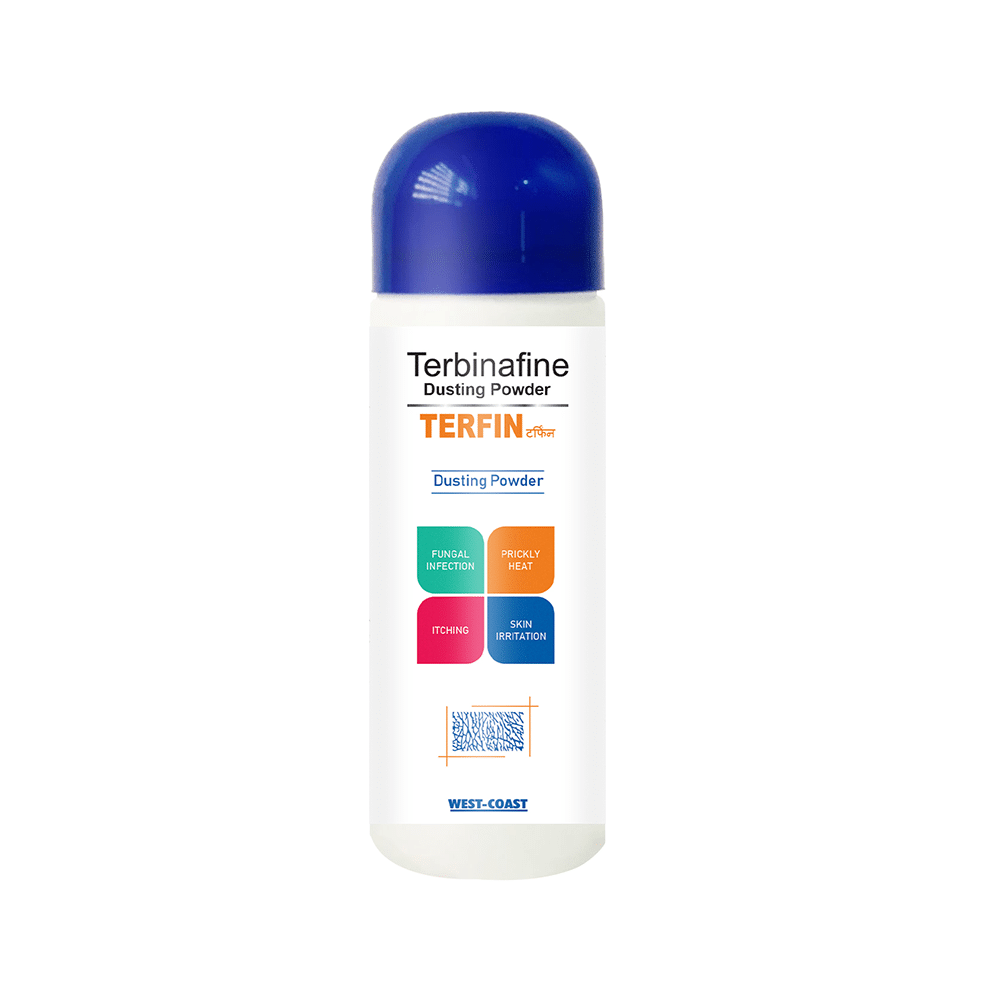
Xpoterb 1% Dusting Powder
bottle of 50.0 gm Dusting Powder
About this product:
| Salt Composition: | Terbinafine (1% w/w) |
| Manufacturer: | Smayan Healthcare Pvt Ltd |
| Storage: | Below 25 degree celcius |
Out of Stock
Have doubts about this medicine?
Have doubts about this medicine?
Xpoterb 1% Dusting Powder is used to treat a wide range of fungal infections of the skin and nails, including ringworm. Xpoterb 1% Dusting Powder is an antifungal medication that treats skin infections. It works by killing the fungi on the skin by destroying their cell membrane.
Xpoterb 1% Dusting Powder is an antifungal medication that treats skin infections. It works by killing the fungi on the skin by destroying their cell membrane.
What is Xpoterb 1% Dusting Powder used for?
Xpoterb 1% Dusting Powder is a medication used to treat superficial fungal infections such as athlete's foot, ringworm, and jock itch, as well as fungal skin infections like pityriasis (tinea versicolor), which causes white or dark pigmentation on the face, neck, chest, arms, or legs. It works by killing the causative fungus, thereby treating the infection.
How long does it take for Xpoterb 1% Dusting Powder to work on the skin?
Xpoterb 1% Dusting Powder is an antifungal medicine that acts on the skin and cures fungal skin infections. The usual dosage is once or twice daily, and the duration of treatment varies from 1 to 2 weeks depending on the type of fungal skin infection. Your doctor may extend the duration of therapy based on your response to the medication. You may see noticeable results within a few days, but it is essential to continue the medication for the prescribed duration to cure the fungal infection completely. Do not stop using it without completing the course.
How do I apply Xpoterb 1% Dusting Powder on the skin?
Clean and dry the affected skin properly. Then, apply a thin layer of Xpoterb 1% Dusting Powder on and around the affected skin gently. Do not cover the area after applying the cream unless specified by your doctor. However, if the infection is present under the breasts, between the fingers, buttocks, or in the groin, then the cream should be applied properly and the skin may be covered with a sterile dressing. Avoid getting the medicine into your eyes, nose, or mouth. Inform your doctor if you experience any signs of increased irritation, redness, itching, burning, blistering, swelling, or oozing.
How long can I use Xpoterb 1% Dusting Powder?
Xpoterb 1% Dusting Powder usually takes a few days to relieve symptoms. However, since fungal infections affect multiple layers of the skin, you may need to continue the medication for the prescribed duration to get cured completely. The duration of treatment varies from 1 to 2 weeks and can be extended up to 4 weeks. Irregular use or stopping the treatment before the prescribed time increases the risk of relapse of the infection. If you do not notice any improvement in your symptoms within the prescribed duration, consult your doctor immediately.
Is Xpoterb 1% Dusting Powder safe in children?
Xpoterb 1% Dusting Powder has been approved for use only in people above 12 years of age. The safety of the medication has not been approved in children. Refrain from using it in children less than 12 years of age unless prescribed by your doctor.
I feel better now. Can I stop using Xpoterb 1% Dusting Powder?
No, do not stop taking Xpoterb 1% Dusting Powder without consulting your doctor even if you are feeling better. Your symptoms may improve before the infection is completely cured. Therefore, for better and complete treatment, it is advised to continue your treatment for the prescribed duration.
This medicine is for external use only. Use this medicine in the dose and duration as advised by your doctor. Check the label for directions before use. Clean and dry the affected area before application and do not rub.
- Xpoterb 1% Dusting Powder helps treat skin infections caused by many different types of fungi.
- Finish the full course of treatment even if you feel better.
- It can take a few weeks for the infection to clear and a few months before the skin returns to its normal color.
- Apply an amount sufficient to cover the affected area and 1 inch of the immediate surrounding skin.
- It can make your skin more sensitive to sun. Use broad-spectrum sunscreen and protective clothing when outdoors.

Alcohol
No interaction found/established

Breastfeed
Xpoterb 1% Dusting Powder is probably unsafe to use during breastfeeding. Limited human data suggests that the drug may pass into the breastmilk and harm the baby.

Pregnancy
Xpoterb 1% Dusting Powder may be unsafe to use during pregnancy. Although there are limited studies in humans, animal studies have shown harmful effects on the developing baby.