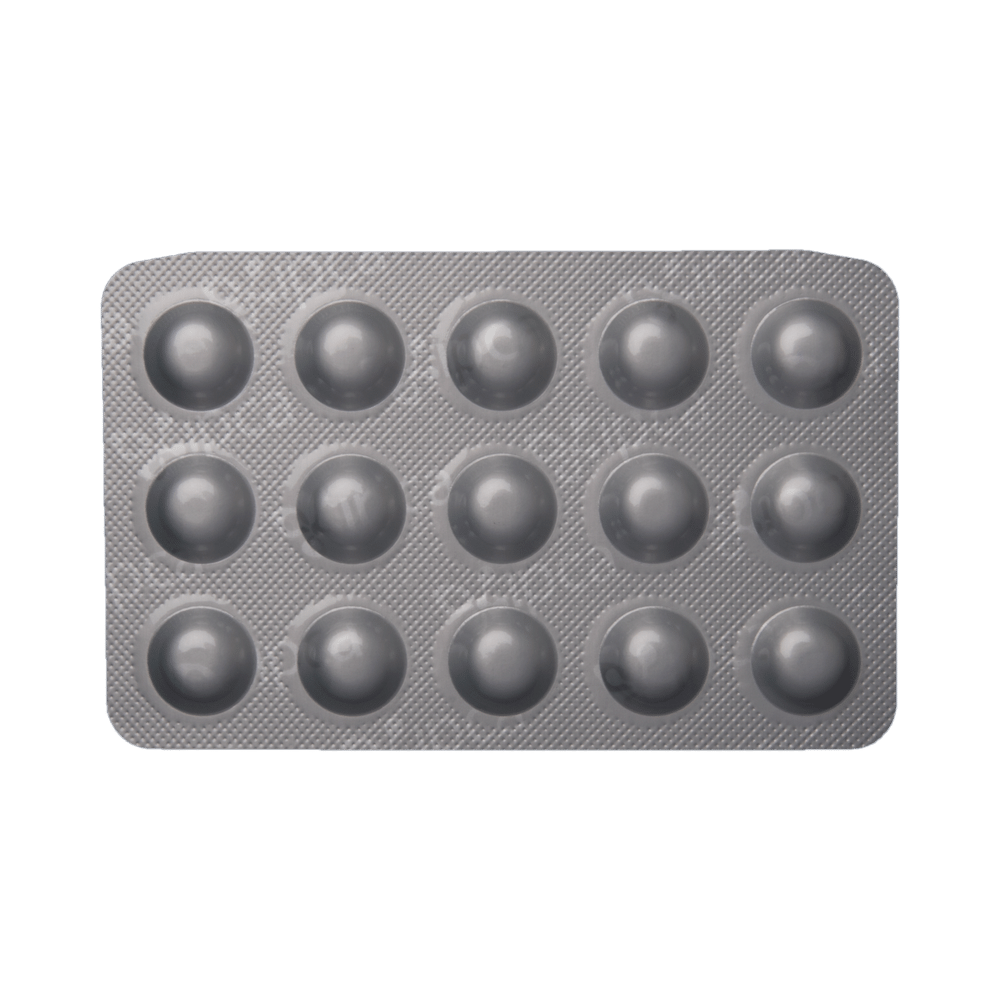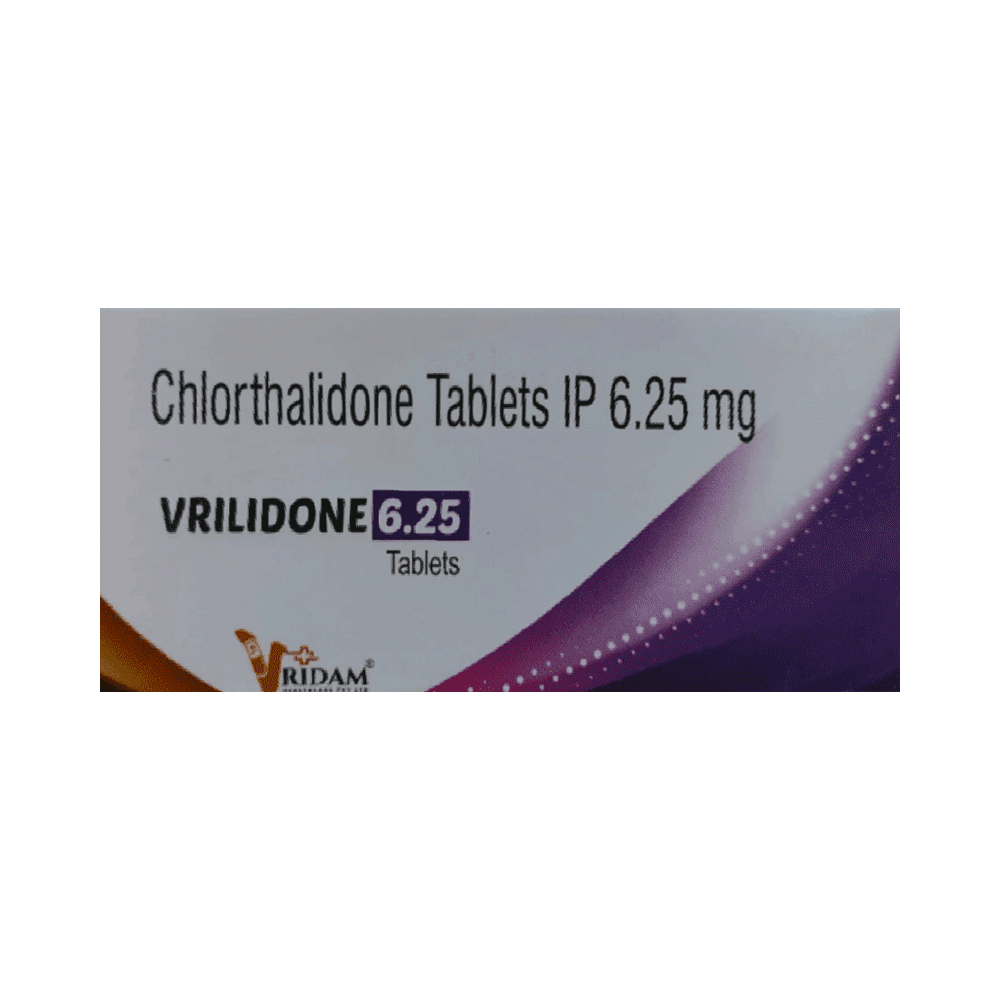
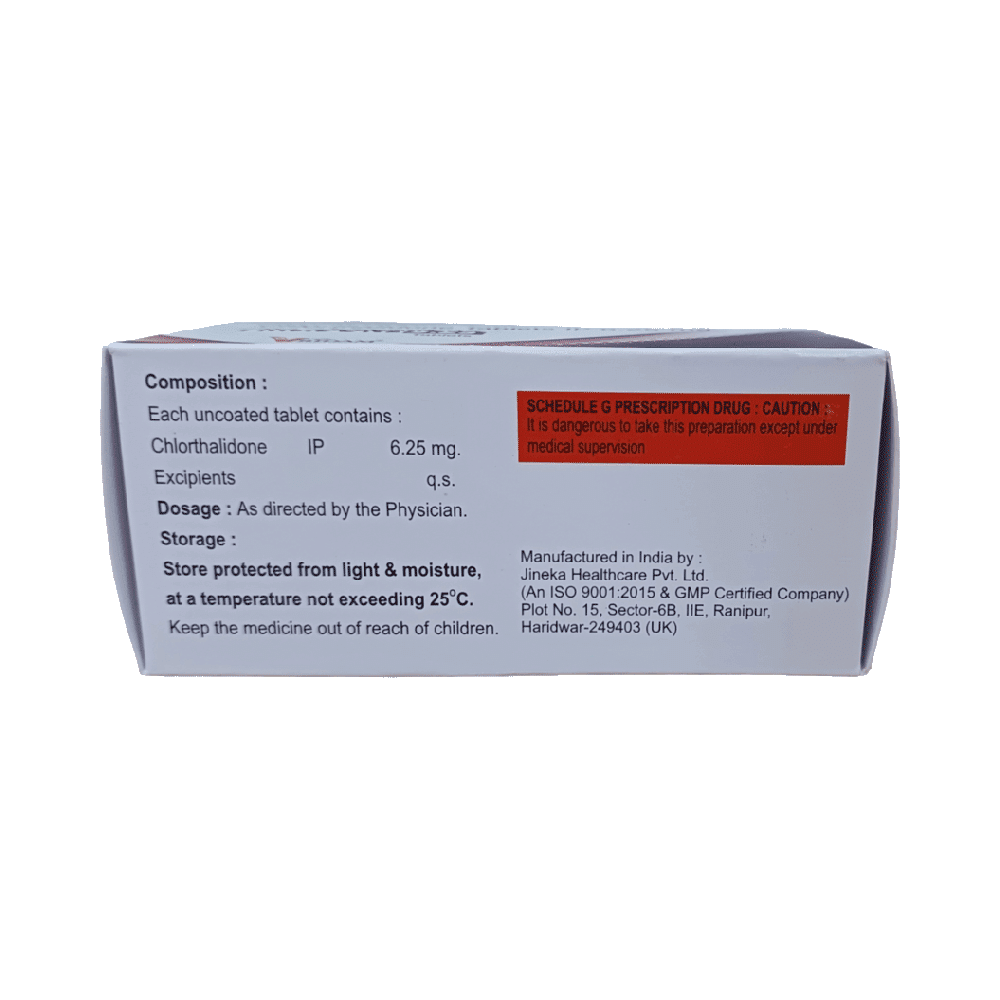
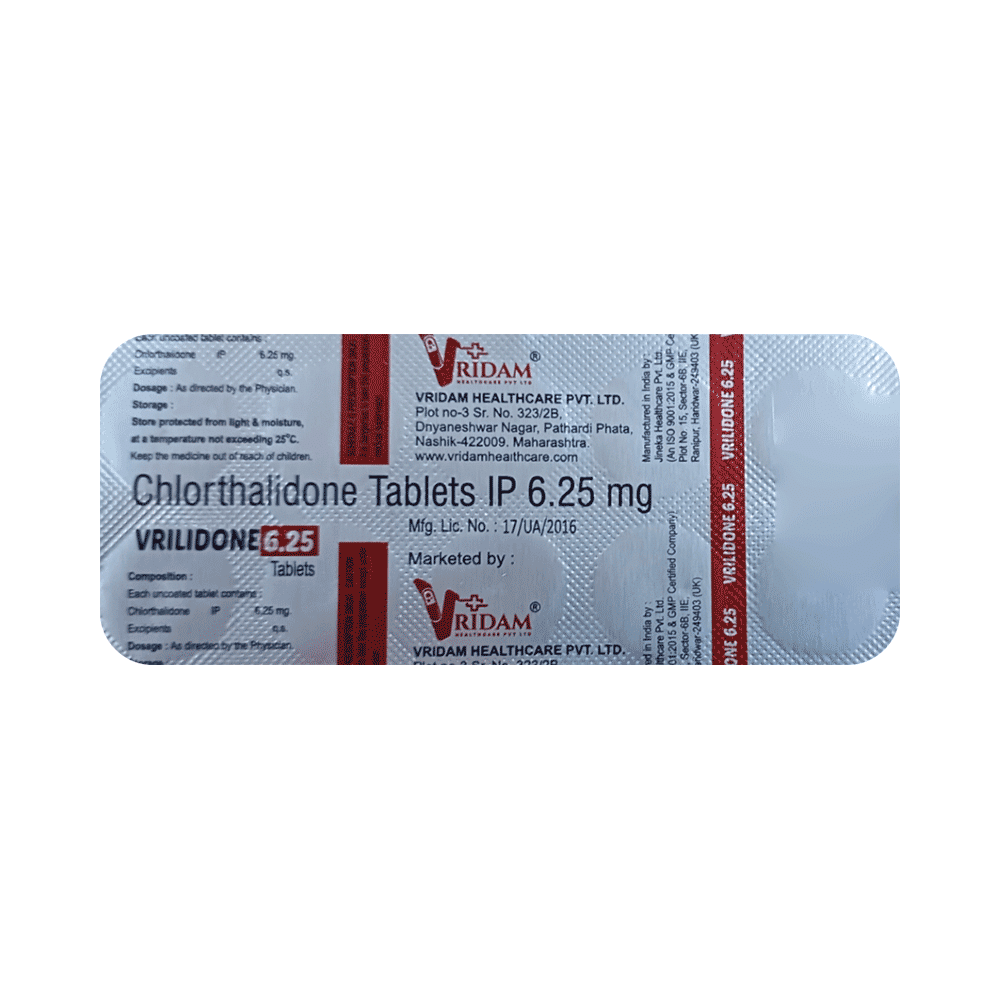
Vrilidone 6.25 Tablet
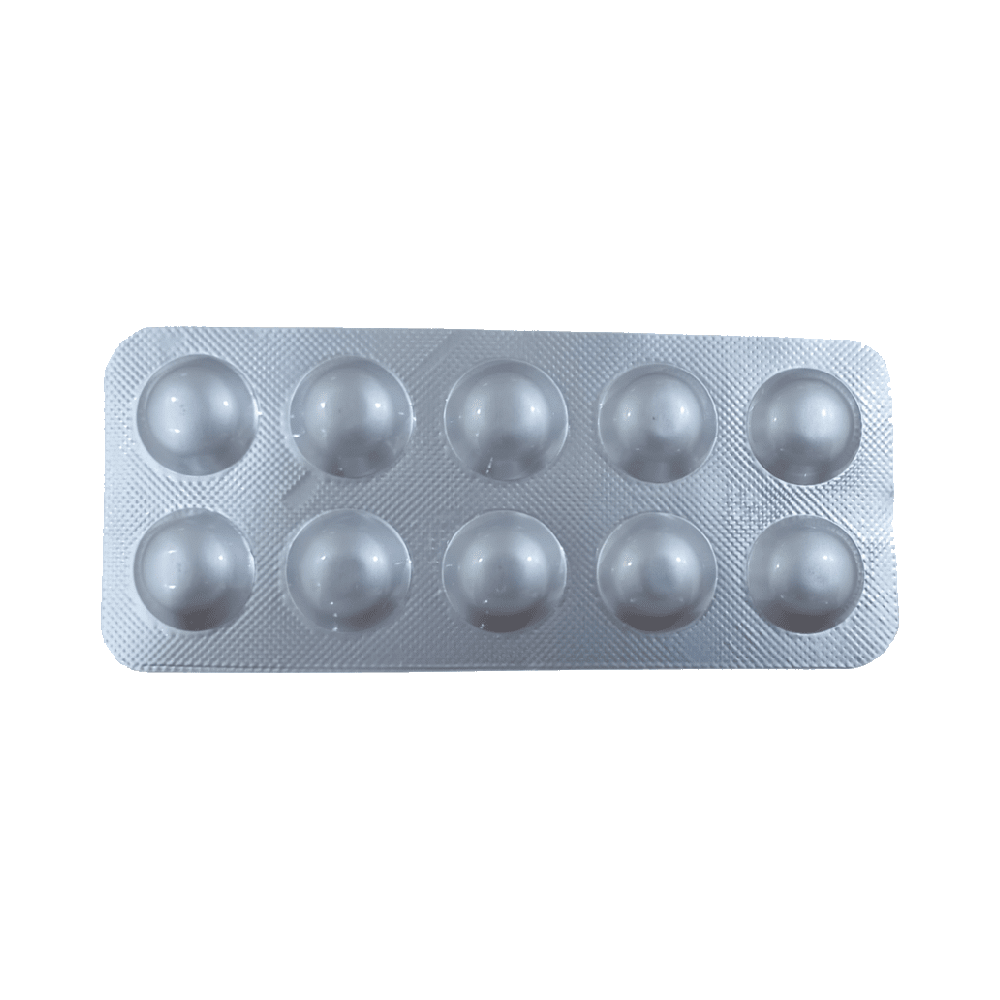
strip of 10.0 tablets.Prescription required
About this product:
| Salt Composition: | Chlorthalidone (6.25mg) |
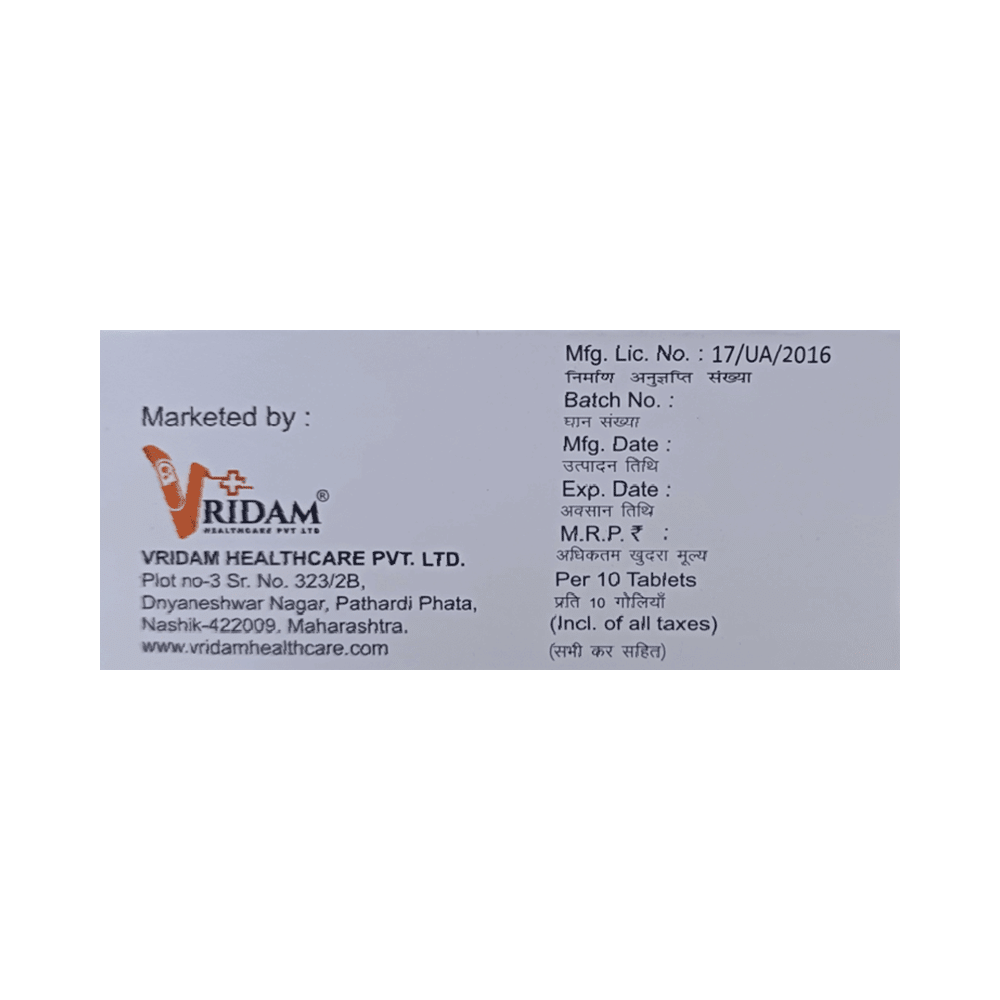
| Manufacturer: | Vridam Healthcare Pvt Ltd |
| Storage: | Below 25 degree celcius |
Out of Stock
Have doubts about this medicine?
Have doubts about this medicine?
Vrilidone 6.25 Tablet is a diuretic (water pill) medicine used to treat hypertension (high blood pressure) and edema (fluid overload) associated with heart, liver, kidney, or lung disease. Vrilidone 6.25 Tablet makes you lose excess water through urine. It may be used alone or in combination with other medicines. This medicine should be taken only during day time to avoid frequent urination at night. You must take this medicine in the dose and duration as advised by the doctor and never stop it abruptly without consulting the doctor. Most people with high blood pressure do not feel ill but if you stop taking this medicine your condition could get worse. This may lead to your blood pressure rising again and increase your risk of heart disease and stroke. It is important to have your blood pressure checked regularly. This medicine is only one part of a treatment program which should also include a healthy diet, regular exercise, smoking cessation, moderation of alcohol intake, and weight reduction. You can eat normally while taking this medicine but try to reduce your salt intake. Common side effects of this medicine include headache, nausea, and dizziness. Consult your doctor if these side effects bother you. Before taking this medicine it is better to let your doctor know if you are suffering from any kidney or liver disease. Also, pregnant women and breastfeeding mothers should consult a doctor before taking it. You must inform the doctor about all the other medicines that you are taking apart from this medicine.
Vrilidone 6.25 Tablet is a diuretic which lowers blood pressure by removing extra water and certain electrolytes from the body. Over time it also relaxes blood vessels and improves blood flow.
Can I drink alcohol while taking Vrilidone 6.25 Tablet?
No, do not take alcohol with Vrilidone 6.25 Tablet. Combining alcohol with this medication may cause a sudden and significant drop in blood pressure, leading to dizziness or lightheadedness.
What happens if I take more than the recommended dose of Vrilidone 6.25 Tablet?
Exceeding the prescribed dosage of Vrilidone 6.25 Tablet can lead to symptoms such as nausea, lightheadedness, weakness, rapid or irregular heartbeat, drowsiness, muscle cramps and pain, difficulty breathing. In severe cases, it could even trigger a heart attack. If you experience these side effects after exceeding the recommended dose, contact your doctor immediately or seek emergency medical care at the nearest hospital.
Can I take ibuprofen with Vrilidone 6.25 Tablet?
Combining ibuprofen with Vrilidone 6.25 Tablet is not recommended as they may interfere with each other's effectiveness. If your doctor advises you to take both medications, it is crucial to monitor your blood pressure and kidney function regularly.
Does Vrilidone 6.25 Tablet increase uric acid? Can it cause gout?
Yes, Vrilidone 6.25 Tablet can elevate uric acid levels. However, the likelihood of experiencing gout due to this medication is quite low.
Does Vrilidone 6.25 Tablet cause skin cancer?
There have been no reported cases of Vrilidone 6.25 Tablet causing skin cancer. However, the medicine can temporarily make your skin more sensitive to sunlight. If exposed directly to the sun, there is a risk of developing skin rashes. To minimize this risk, wear protective clothing and apply sunscreen regularly.
Take this medicine in the dose and duration as advised by your doctor. Swallow it as a whole. Do not chew, crush or break it. Vrilidone 6.25 Tablet is to be taken with food.
- Take it in the morning with breakfast to avoid getting up at night to urinate.
- It makes you feel dizzy. Avoid driving and attention requiring activity until you know how it affects you.
- Avoid alcohol intake while taking Vrilidone 6.25 Tablet as it may increase the dizziness.
- It may cause a sudden drop of sodium level in blood. Avoid low sodium diet while you are taking this medication.
- Monitor your blood pressure after starting Vrilidone 6.25 Tablet and notify your doctor if it does not lower down.
- Notify your doctor if you experience dizziness, tiredness, or muscle weakness that does not go away.
- Inform your doctor if you are pregnant, planning pregnancy or breastfeeding.
- Headache
- Nausea
- Dizziness

Alcohol
Vrilidone 6.25 Tablet may cause excessive drowsiness with alcohol.

Breastfeed
Vrilidone 6.25 Tablet should be used with caution during breastfeeding. Breastfeeding should be held until the treatment of the mother is completed and the drug is eliminated from her body.

Pregnancy
Vrilidone 6.25 Tablet may be unsafe to use during pregnancy. Although there are limited studies in humans, animal studies have shown harmful effects on the developing baby. Your doctor will weigh the benefits and any potential risks before prescribing it to you. Please consult your doctor.