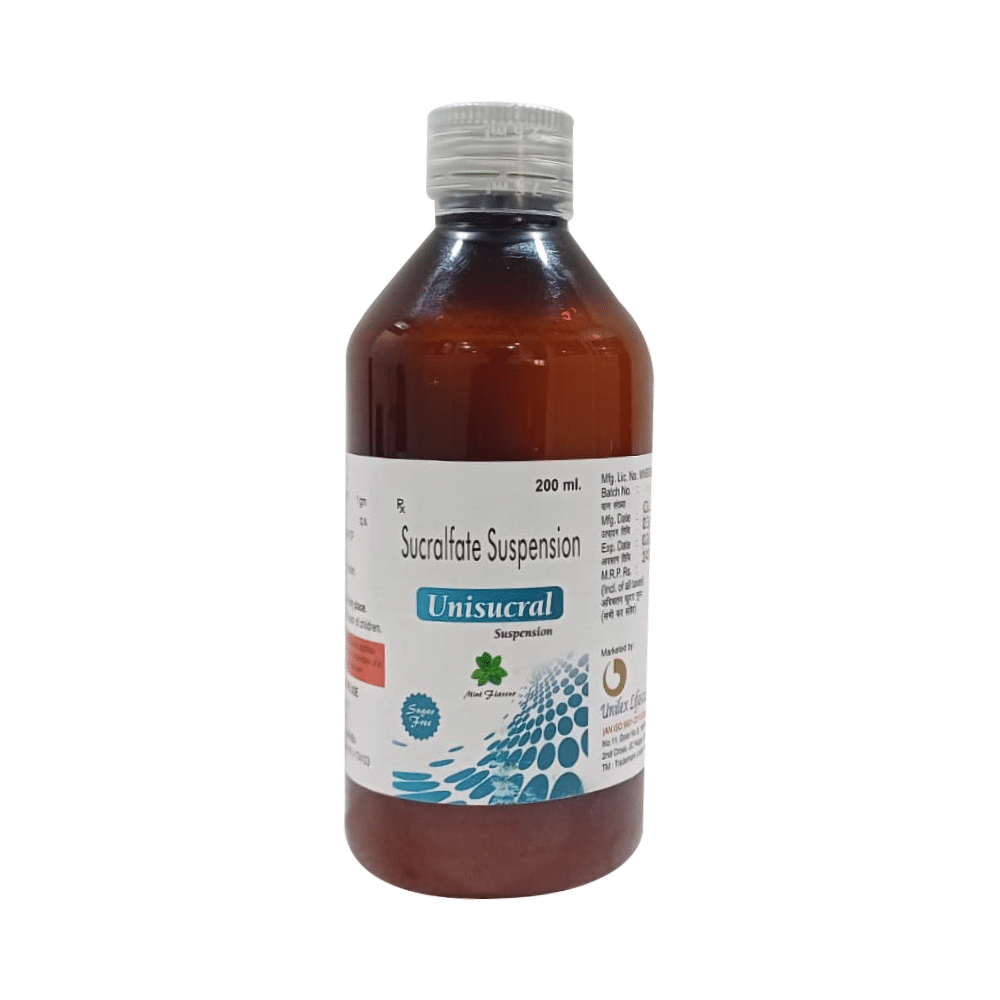
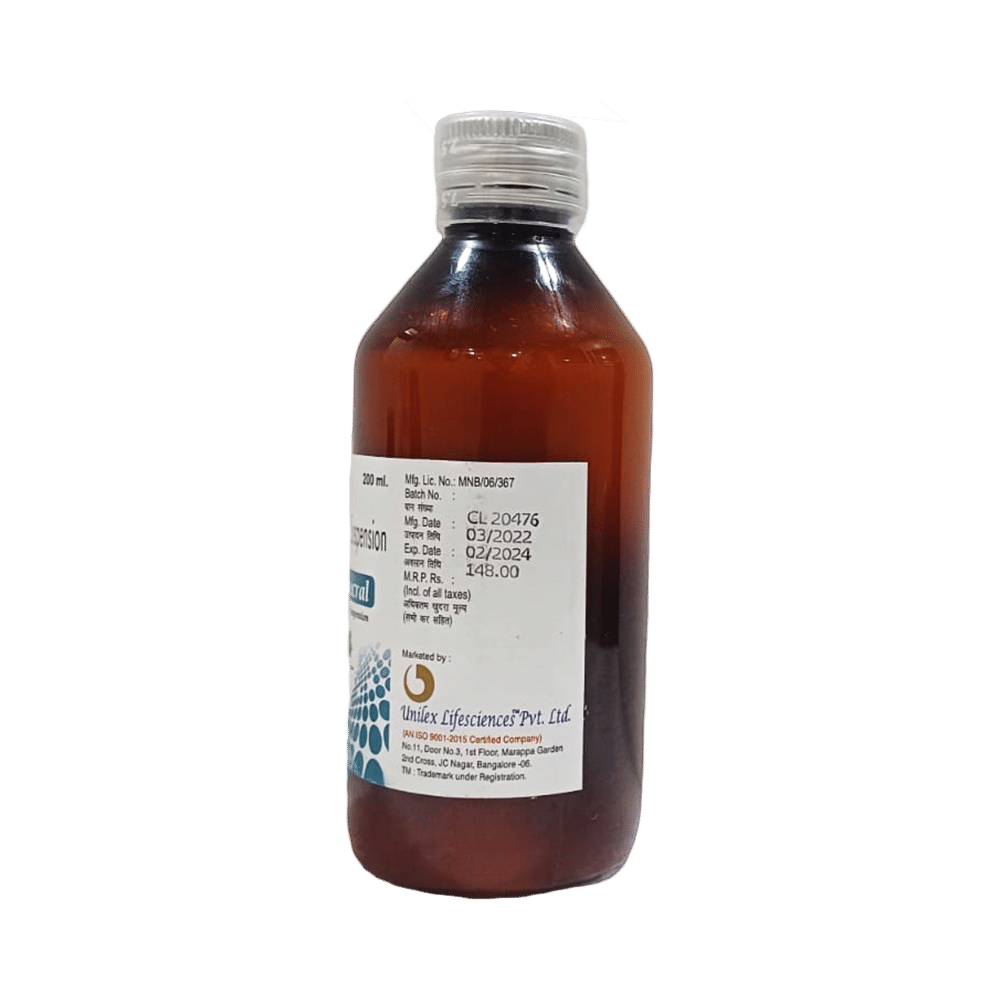
Unisucral Oral Suspension Mint Sugar Free
bottle of 200.0 ml Oral Suspension.Prescription required
About this product:
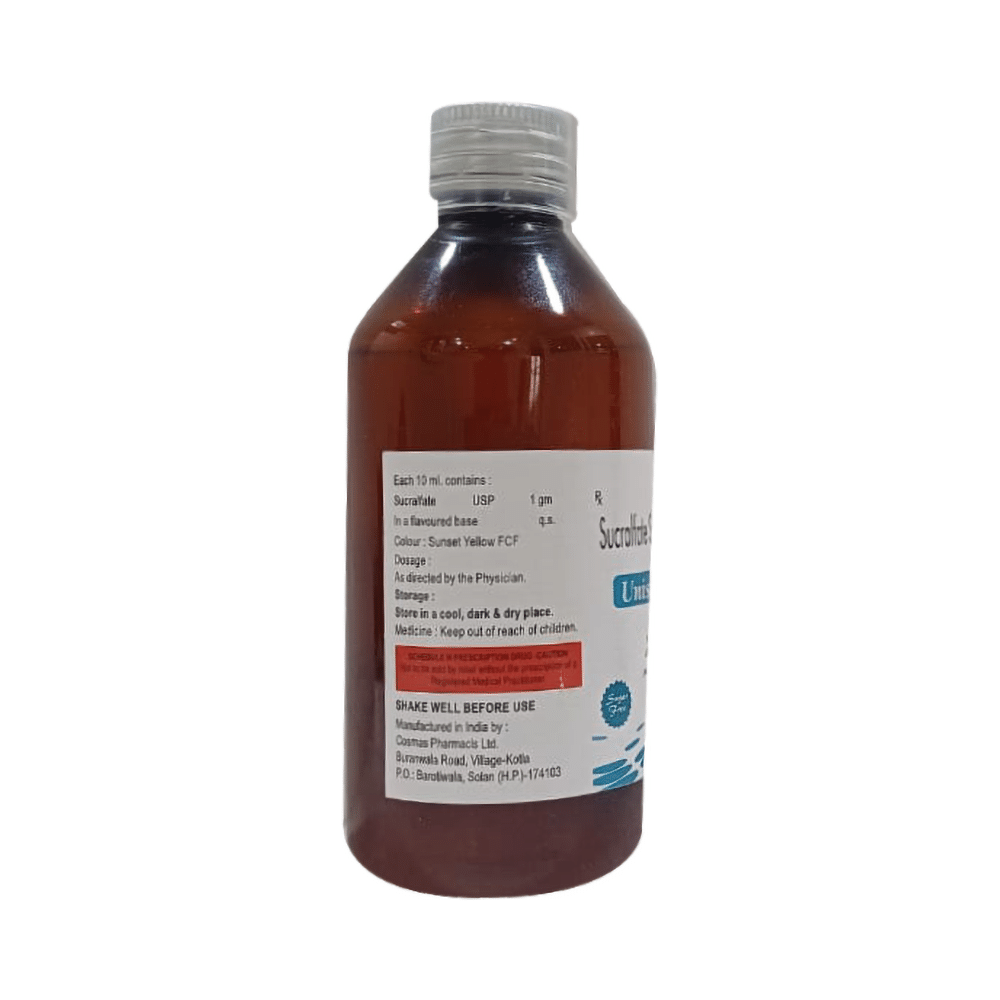
| Salt Composition: | Sucralfate (1000mg) |
| Manufacturer: | Unilex Lifesciences Pvt Ltd |
| Storage: | Below 25 degree celcius |
Out of Stock
Have doubts about this medicine?
Have doubts about this medicine?
Unisucral Oral Suspension Mint Sugar Free is used in the treatment of ulcers in the stomach and intestine. Unisucral Oral Suspension Mint Sugar Free contains the active ingredient sucralfate which promotes the healing of ulcers by forming a coating over them which acts as a physical barrier.
Unisucral Oral Suspension Mint Sugar Free forms a coating over the ulcer or any other raw surface. This creates a physical barrier that protects the ulcer/raw surface from the gastric acid or any other injury allowing it to heal.
What should you avoid when taking Unisucral Oral Suspension Mint Sugar Free?
You should avoid taking antacids within 30 minutes of taking Unisucral Oral Suspension Mint Sugar Free, as this medicine can decrease the absorption of some antacids if taken together.
How long after taking Unisucral Oral Suspension Mint Sugar Free can I eat?
Unisucral Oral Suspension Mint Sugar Free must be taken on an empty stomach, at least 1 hour before or 2 hours after a meal.
Does Unisucral Oral Suspension Mint Sugar Free work immediately?
No, it takes around one to two weeks for the medicine to heal an ulcer of the stomach or intestine. However, continue taking Unisucral Oral Suspension Mint Sugar Free for the duration as prescribed by your doctor for complete healing.
Does Unisucral Oral Suspension Mint Sugar Free cause constipation?
Yes, constipation is a common side effect of Unisucral Oral Suspension Mint Sugar Free. Include fiber in your diet (fruits and vegetables), drink 8-10 glasses of fluids per day, and keep active. A stool softener (with a doctor's prescription) once or twice a day may prevent constipation. If you do not have a bowel movement for 2-3 days, consult your doctor.
Is Unisucral Oral Suspension Mint Sugar Free an antibiotic/sulfa drug/pain-killer/PPI?
Unisucral Oral Suspension Mint Sugar Free is not an antibiotic/sulfa drug/ PPI (proton-pump inhibitor) or a pain-killer. It is an ulcer protective medicine.
Is Unisucral Oral Suspension Mint Sugar Free available or sold over the counter?
No. Unisucral Oral Suspension Mint Sugar Free is a prescription drug and not available or sold over the counter.
Is Unisucral Oral Suspension Mint Sugar Free gluten free?
Yes, Unisucral Oral Suspension Mint Sugar Free is gluten-free. However, please refer to the package insert of the prescribed brand before use.
Is Unisucral Oral Suspension Mint Sugar Free safe?
Yes, Unisucral Oral Suspension Mint Sugar Free is relatively safe if used as recommended. If you experience any side effects, consult your doctor.
Can I take Unisucral Oral Suspension Mint Sugar Free with Prilosec/Nexium/ Tylenol/Zantac/ibuprofen/Pepto?
Yes, Unisucral Oral Suspension Mint Sugar Free can be taken with Prilosec/Nexium/ Tylenol/Zantac/ibuprofen and Pepto if prescribed by your doctor.
Does Unisucral Oral Suspension Mint Sugar Free cause headaches/weight gain/insomnia/ heartburn?
Unisucral Oral Suspension Mint Sugar Free does not cause headaches, weight gain, insomnia, or heartburn. If you experience any such symptoms, please consult your doctor.
Is Unisucral Oral Suspension Mint Sugar Free a narcotic drug?
No. Unisucral Oral Suspension Mint Sugar Free is not a narcotic drug.
Take this medicine in the dose and duration as advised by your doctor. Check the label for directions before use. Measure it with a measuring cup and take it by mouth. Shake well before use. Unisucral Oral Suspension Mint Sugar Free is to be taken empty stomach.
- Take it on an empty stomach preferably 1 hour before a meal.
- Do not take antacids 30 minutes before or after taking this medication.
- Use caution while driving or doing anything that requires concentration as Unisucral Oral Suspension Mint Sugar Free can cause dizziness and sleepiness.
- It may take 4-6 weeks or more for the ulcers to heal completely. Do not stop taking the medicine until your doctor tells you to.
- Inform your doctor if you have a kidney disorder.

Alcohol
Caution is advised when consuming alcohol with Unisucral Oral Suspension Mint Sugar Free. Please consult your doctor.

Breastfeed
Unisucral Oral Suspension Mint Sugar Free is probably safe to use during breastfeeding. Limited human data suggests that the drug does not represent any significant risk to the baby.

Pregnancy
Unisucral Oral Suspension Mint Sugar Free is generally considered safe to use during pregnancy. Animal studies have shown low or no adverse effects to the developing baby; however, there are limited human studies.