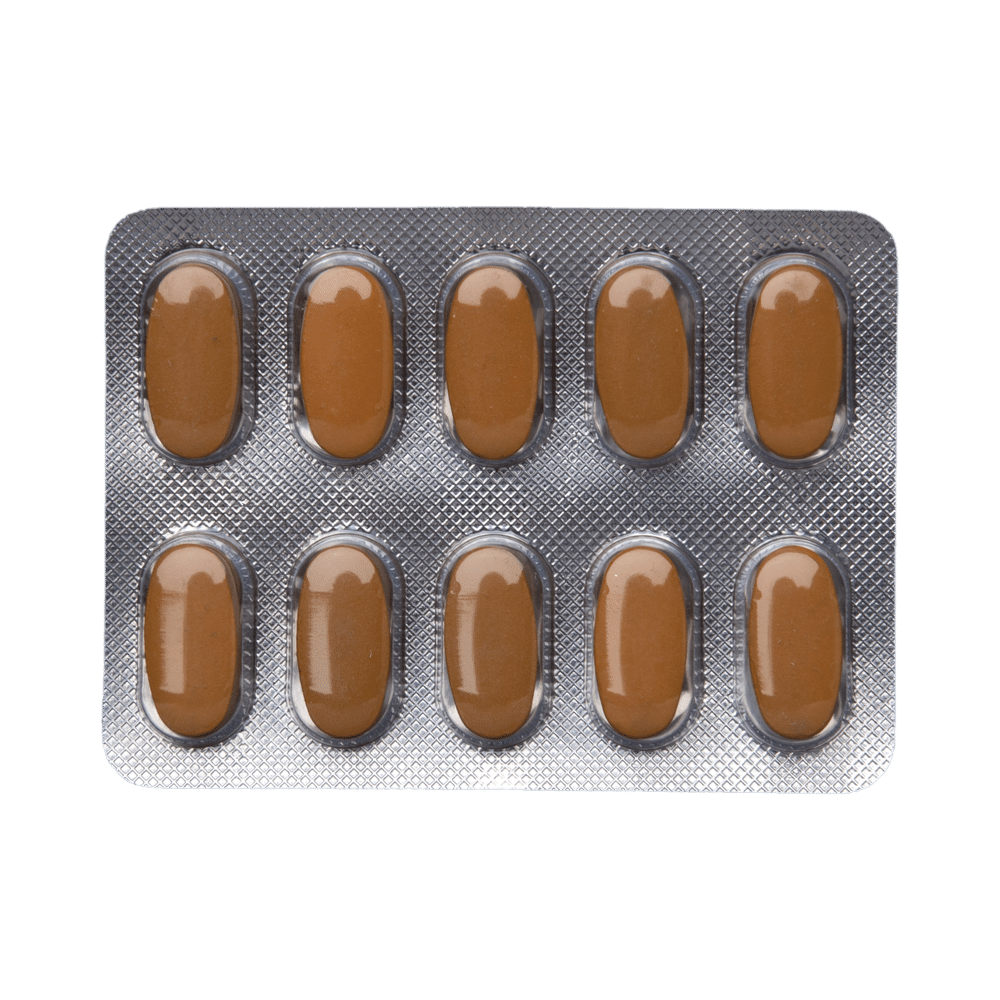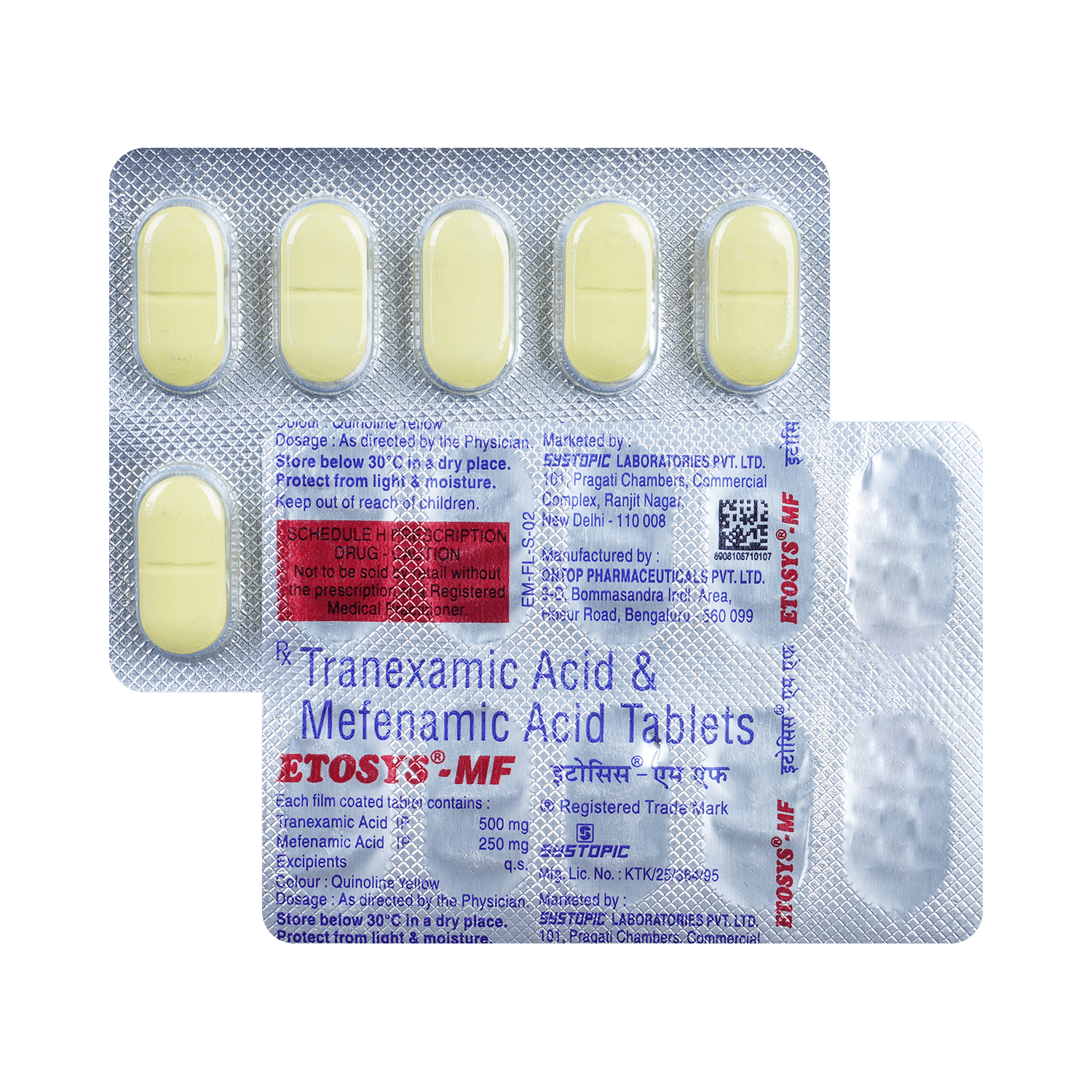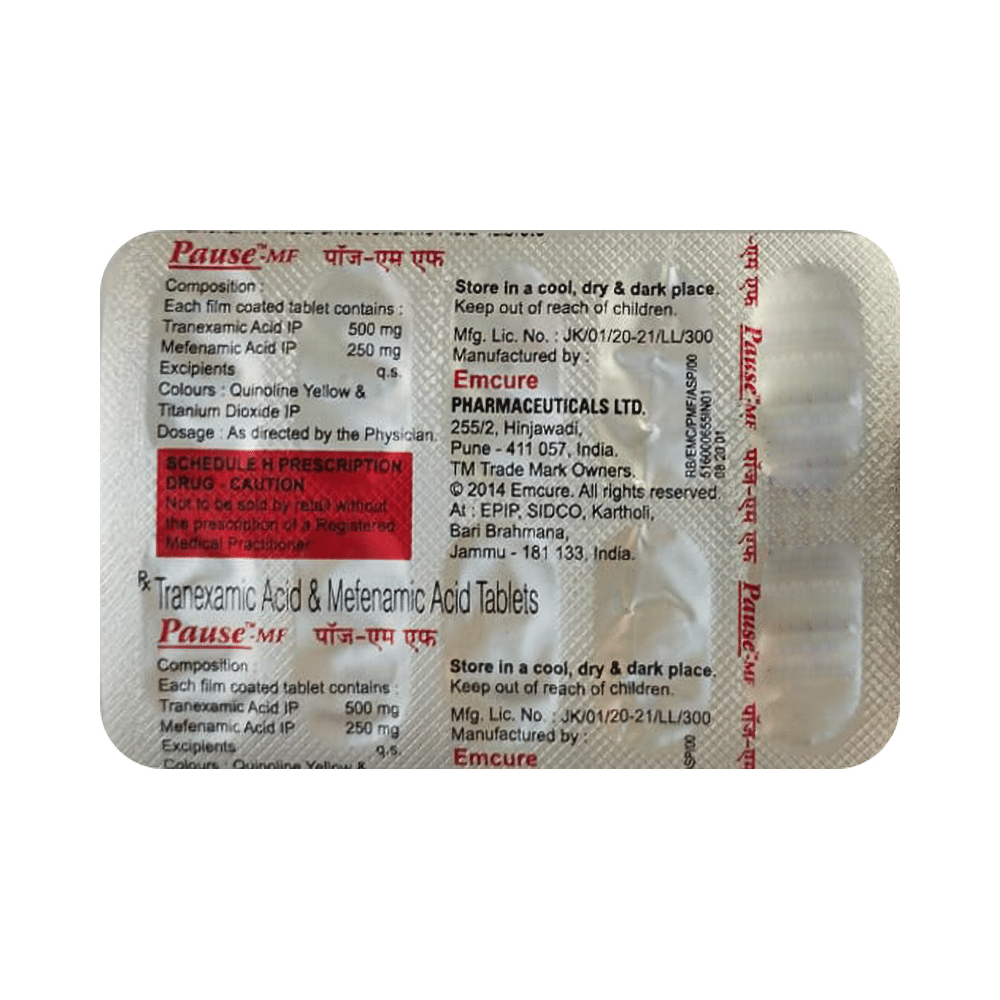
Tronomef 500mg/250mg Tablet
strip of 10.0 tablets.Prescription required
About this product:
| Salt Composition: | Tranexamic Acid (500mg) + Mefenamic Acid (250mg) |
| Manufacturer: | TNT Lifesciences |
| Storage: | Below 25 degree celcius |
Out of Stock
Have doubts about this medicine?
Have doubts about this medicine?
Tronomef 500mg/250mg Tablet is a combination medicine used to treat heavy menstrual bleeding and menstrual pain. Tronomef 500mg/250mg Tablet is a combination medicine used to treat heavy menstrual bleeding and menstrual pain. It prevents the breakdown of blood clots to control excessive bleeding during periods. It also blocks the production of certain chemical messengers that cause pain and inflammation. The most common side effects of this medicine include nausea, stomach pain, headache, nasal congestion, sinus pain, sinus inflammation, rash, tiredness, and musculoskeletal pain. It may also cause diarrhea, so it is better to take plenty of fluids while taking this medicine to prevent dehydration. Consult your doctor if you do not notice any changes in periods after 3 consecutive periods. Pregnant or breastfeeding women should also consult their doctor for advice before taking this medicine.
Tronomef 500mg/250mg Tablet is a combination of two medicines: Tranexamic Acid and Mefenamic Acid. Tranexamic Acid is an anti-fibrinolytic that works by preventing the breakdown of blood clots to control excessive bleeding during periods. Mefenamic Acid is a non-steroidal anti-inflammatory drug (NSAID) that blocks the production of certain chemical messengers (prostaglandins) that cause pain and inflammation.
Take this medicine in the dose and duration as advised by your doctor. Swallow it as a whole. Do not chew, crush, or break it. Tronomef 500mg/250mg Tablet is to be taken with food.
- Tronomef 500mg/250mg Tablet helps relieve menstrual pain and abnormally heavy menstrual bleeding.
- Your doctor will prescribe the lowest effective dose for the shortest possible time necessary to relieve your symptoms.
- Take it with food to avoid an upset stomach.
- Take it on the first day of a heavy period. Taking it before or after will not have any benefit.
- Inform your doctor if there is no improvement in your bleeding after using this medicine for three consecutive menstrual periods.
- Inform your doctor if you have a history of kidney or liver disease.
- Nausea
- Stomach pain
- Headache
- Nasal congestion
- Sinus pain
- Sinus inflammation
- Rash
- Tiredness
- Musculoskeletal pain
- Diarrhea

Alcohol
It is unsafe to consume alcohol with Tronomef 500mg/250mg Tablet.

Breastfeed
Tronomef 500mg/250mg Tablet is probably safe to use during breastfeeding. Limited human data suggests that the drug does not represent any significant risk to the baby.

Pregnancy
Tronomef 500mg/250mg Tablet may be unsafe to use during pregnancy. Although there are limited studies in humans, animal studies have shown harmful effects on the developing baby. Consult your doctor.