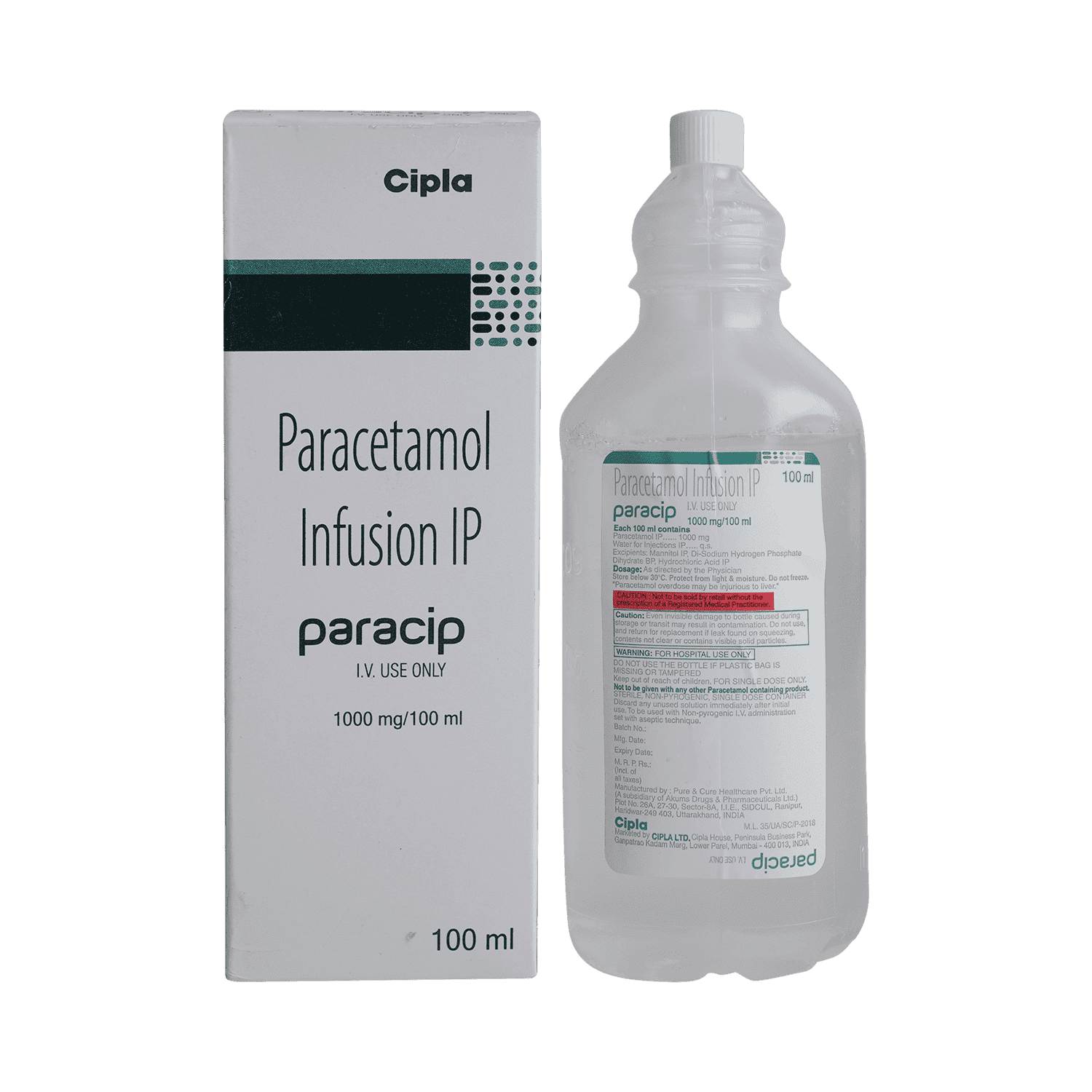
Smopara IV 1000mg Infusion
bottle of 100.0 ml Infusion.Prescription required
About this product:
| Salt Composition: | Paracetamol (1000mg) |
| Manufacturer: | Nydux Pharma |
| Storage: | Below 25 degree celcius |
Out of Stock
Have doubts about this medicine?
Have doubts about this medicine?
Smopara IV 1000mg Infusion helps in relieving moderate pain and reducing fever for the short-term in cases following surgery or in cases where oral administration is not possible. Smopara IV 1000mg Infusion is administered by a doctor or a nurse and should not be self-administered. Depending on the severity of your underlying illness, your doctor will decide the precise dose and schedule as per which this injection is to be given. It starts working within one hour. Inform your doctor if you are also taking other medications containing paracetamol to avoid an overdose. You should let your doctor know if your pain or fever does not subside. Vomiting, difficulty sleeping, and constipation may be seen as side effects in some patients. Consult your doctor if these side effects do not resolve with time and persist for a longer duration of time. Inform your doctor immediately if any rash or allergic reaction is observed while taking this medicine. Pregnant and nursing women should use it under medical supervision only. It should be used with caution in patients with liver and kidney disease or alcohol abuse. It is not recommended in patients with severe or active liver disease.
Smopara IV 1000mg Infusion is an analgesic (pain reliever) and anti-pyretic (fever reducer). It works by blocking the release of certain chemical messengers that cause pain and fever.
How is Smopara IV 1000mg Infusion administered?
Smopara IV 1000mg Infusion should only be administered under the direct supervision of a trained healthcare professional or a doctor. The dose will be determined by your doctor based on your specific condition, and you should follow their instructions carefully to ensure maximum benefit.
What if I vomit after taking Smopara IV 1000mg Infusion?
If you vomit within 30 minutes of taking a dose of Smopara IV 1000mg Infusion, you should retake the same dose. However, if you vomit more than 30 minutes after taking a dose, you should not take another dose until your next scheduled dose.
What are the serious side effects of taking an excess of the Smopara IV 1000mg Infusion?
Taking more than the prescribed dose of Smopara IV 1000mg Infusion can cause severe and potentially life-threatening liver injury, kidney injury, decreased platelet count, and even coma. Early symptoms of an overdose may include nausea, vomiting, and general tiredness. If you suspect an overdose, seek immediate medical attention or contact emergency services.
When will I feel better after taking the Smopara IV 1000mg Infusion?
You may start feeling better within about 30 minutes of taking a Smopara IV 1000mg Infusion.
Is Smopara IV 1000mg Infusion an antibiotic?
No, Smopara IV 1000mg Infusion is not an antibiotic. It is a pain-relieving and fever-reducing medicine.
Is Smopara IV 1000mg Infusion safe for children?
Smopara IV 1000mg Infusion is considered safe for children when used as directed by a doctor. However, it is essential to follow the doctor's instructions and not use the medicine without their guidance.
Can I take Smopara IV 1000mg Infusion and ibuprofen together?
Ibuprofen and Smopara IV 1000mg Infusion are both safe medicines, but they should not be used together. Consult your doctor if you are unsure about taking these medicines simultaneously.
Does Smopara IV 1000mg Infusion make babies sleepy?
No, Smopara IV 1000mg Infusion does not cause babies to become sleepy. It is a pain-relieving medicine that is also used to control high fever.
Your doctor or nurse will give you this medicine. Kindly do not self-administer.
- Smopara IV 1000mg Infusion helps in relieving moderate pain and fever for the short-term, especially following surgery.
- Inform your doctor if you are also taking other medications containing paracetamol.
- Inform your doctor if you suffer from liver disease, severe kidney disease, or alcohol abuse.
- Inform your doctor if you experience symptoms such as feeling or being sick, weight loss, pale skin (pallor), or abdominal pain within the first 24 hours as it indicates an overdose.
- Your doctor may regularly monitor your kidney function, liver function, and levels of blood components if you are taking this medicine for long-term treatment.

Alcohol
It is unsafe to consume alcohol with Smopara IV 1000mg Infusion.

Breastfeed
Smopara IV 1000mg Infusion is safe to use during breastfeeding. Human studies suggest that the drug does not pass into the breastmilk in a significant amount and is not harmful to the baby.

Pregnancy
Smopara IV 1000mg Infusion is safe to use during pregnancy. Most studies have shown low or no risk to the developing baby.