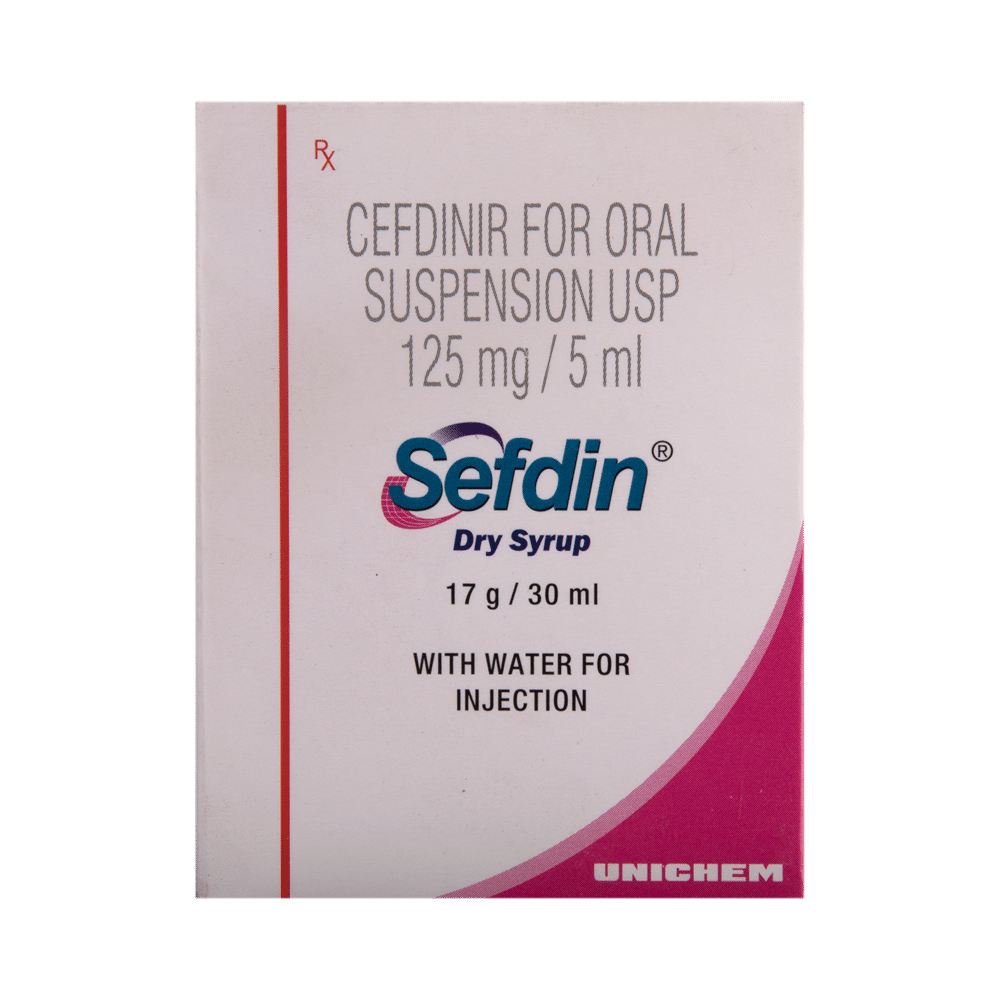
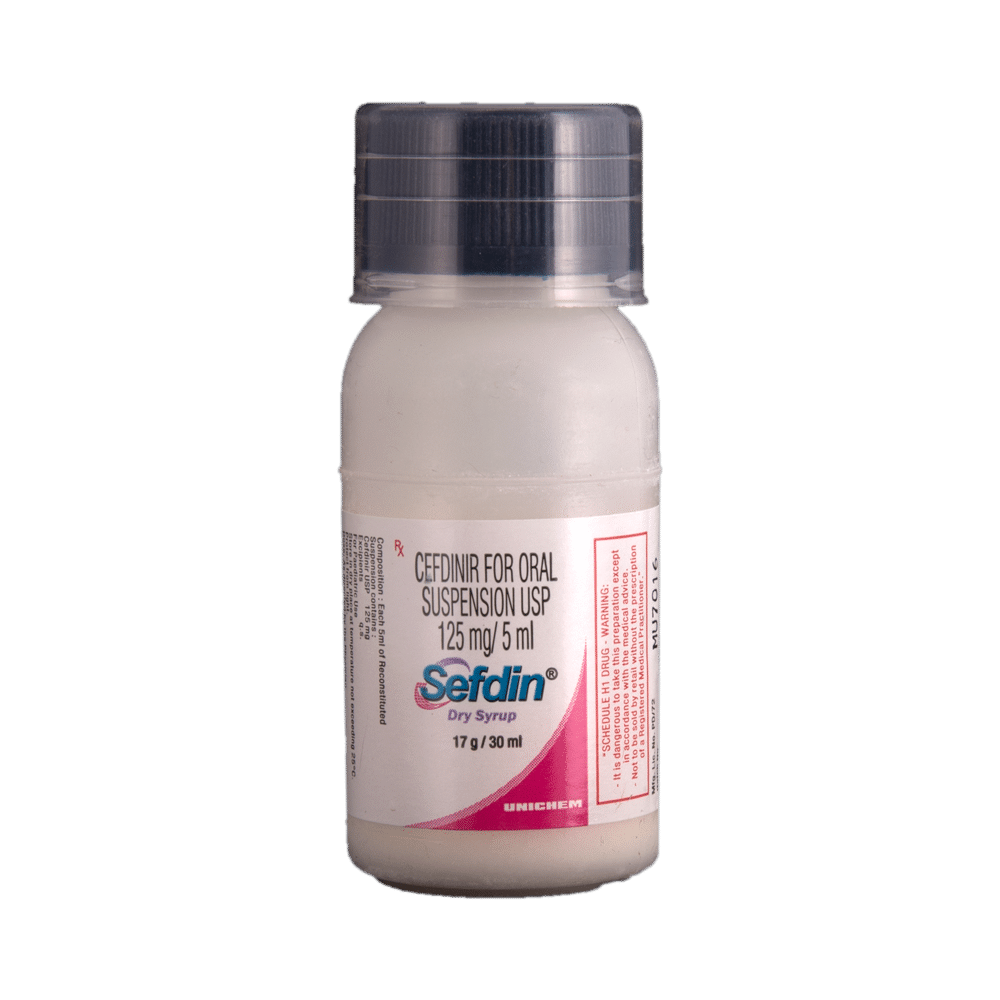
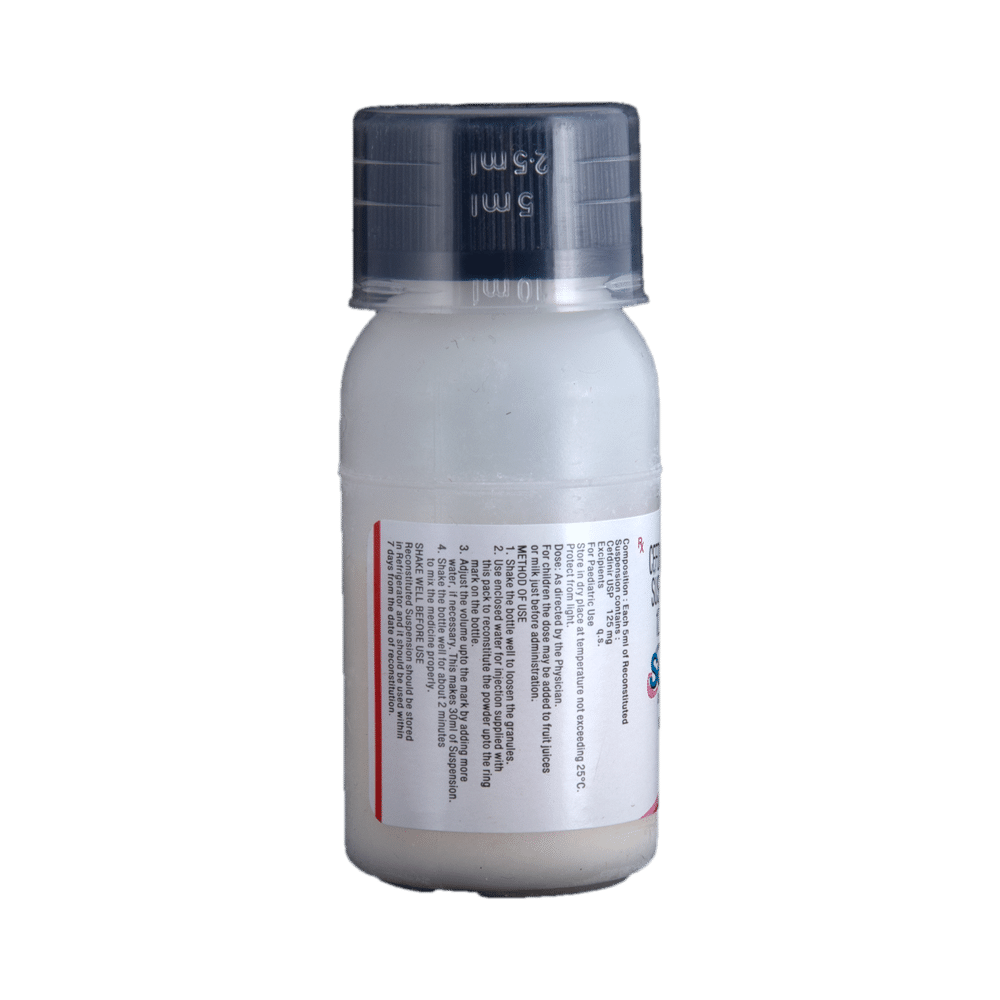
Sefdin Dry Syrup
bottle of 30.0 ml Oral Suspension.Prescription required
About this product:
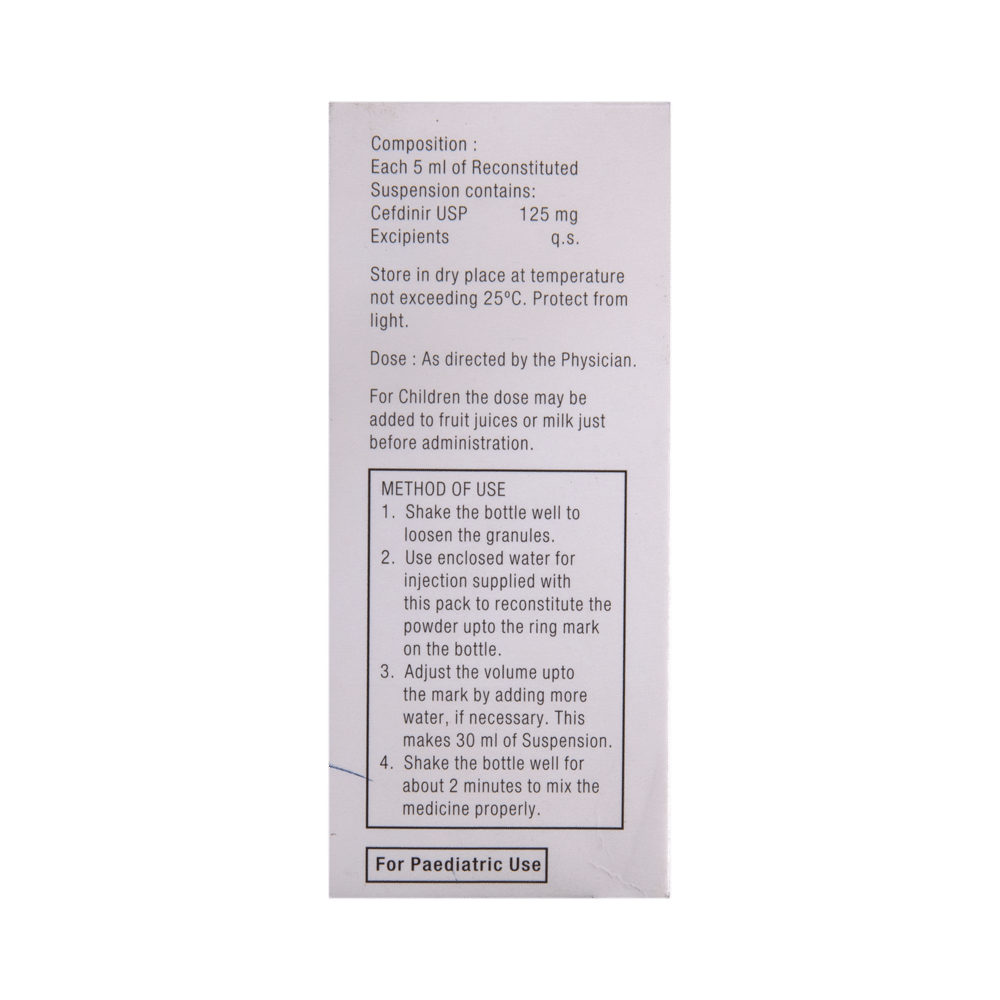
| Salt Composition: | Cefdinir (125mg/5ml) |
| Manufacturer: | Torrent Pharmaceuticals Ltd |
| Storage: | Below 25 degree celcius |
Out of Stock
Have doubts about this medicine?
Have doubts about this medicine?
Sefdin Dry Syrup is an antibiotic medicine used to treat a wide range of bacterial infections in children. Sefdin Dry Syrup is an antibiotic medicine that helps treat a wide range of bacterial infections in children, such as infections of the ear, eyes, nose, throat, lungs, skin, gastrointestinal tract, and urinary tract. It works by stopping the growth of bacteria.
Sefdin Dry Syrup is an antibiotic that works by preventing the formation of the bacterial protective covering (cell wall) which is essential for the bacteria to survive. By doing so, this medicine stops the infection-causing bacteria from growing further and prevents the infection from spreading without making them resistant to further treatment.
Is Sefdin Dry Syrup safe for infants under 5 months of age?
No. Safety and efficacy data in neonates and infants less than 6 months of age have not been established, so avoid giving it to kids younger than 6 months of age.
Can I use infant formula alongside Sefdin Dry Syrup?
Infant formula does not cause significant interference with the absorption of Sefdin Dry Syrup. Therefore, this medicine can be given with oral nutrition supplements (infant formula or baby milk).
What are the potential risks of taking excessive amounts of Sefdin Dry Syrup?
While a larger dose of Sefdin Dry Syrup is unlikely to harm your child, it's important to avoid excess. If you believe you have given your child too much medication, contact a doctor immediately.
Are there any serious side effects associated with Sefdin Dry Syrup?
Some serious side effects of this medicine include persistent vomiting, kidney damage, allergy, diarrhea, severe gastrointestinal infections, blood cell count abnormalities, impaired glucose levels in the blood, and electrolyte imbalances. It is crucial to consult your child's doctor if any of these symptoms occur.
My child has type 1 diabetes and is taking insulin therapy. Is it safe for them to receive Sefdin Dry Syrup?
No, Sefdin Dry Syrup can cause a disturbance in blood sugar levels. Therefore, it is not recommended to give Sefdin Dry Syrup if your child is diabetic.
Can I administer other medications alongside Sefdin Dry Syrup?
Sefdin Dry Syrup may interact with other medications or substances. Always inform your doctor about all the medications your child is taking before starting treatment. It is also advisable to consult a healthcare professional for advice on any medicine administration.
What happens when I give Sefdin Dry Syrup alongside oral iron therapy?
Sefdin Dry Syrup can bind to iron preparations in the child's digestive system and could result in reddish stools.
Can I administer vaccines alongside my child’s treatment with Sefdin Dry Syrup?
Generally, antibiotics do not interfere with vaccine ingredients or cause adverse reactions in children who have recently been vaccinated. However, it's best to wait until your child recovers from their illness before administering any medication.
What lab tests might be ordered by the doctor while my child takes Sefdin Dry Syrup long-term?
The doctor may order periodic kidney function and liver function tests to monitor your child's condition during long-term treatment with Sefdin Dry Syrup.
Can the color of mucus be used as a guide for bacterial infections in children?
It is not possible to determine if a bacterial infection is present by only looking at the color of the mucus. Changes in mucus color are common with various respiratory infections, and they might not always indicate a bacterial infection.
Does Sefdin Dry Syrup affect my child's digestive system?
Diarrhea is one of the frequent side effects of antibiotics. This happens because they kill both good and bad bacteria in the gut, resulting in more potential for infections.
It is essential that your child completes the entire course of antibiotics. Not finishing the full dose of medicine may cause the bacteria to multiply again or cause another infection.
- Encourage your child to drink plenty of water if they develop diarrhea as a side effect
- Do not use this medicine for conditions like common cold and flu, which are caused by viruses
- Only give Sefdin Dry Syrup to your child for their current infection
- Discontinue the medicine and seek immediate help from the doctor if your child develops an itchy rash, facial swelling, or breathing difficulties while taking this medicine