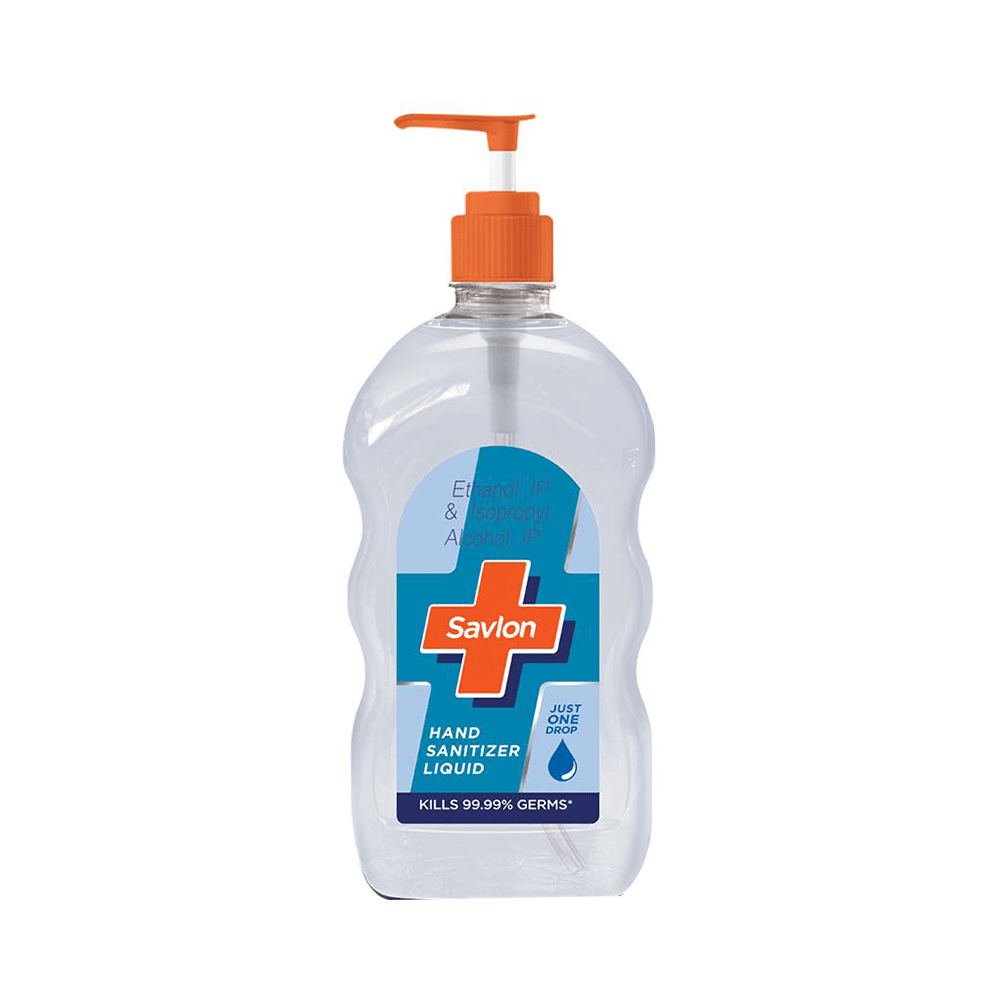
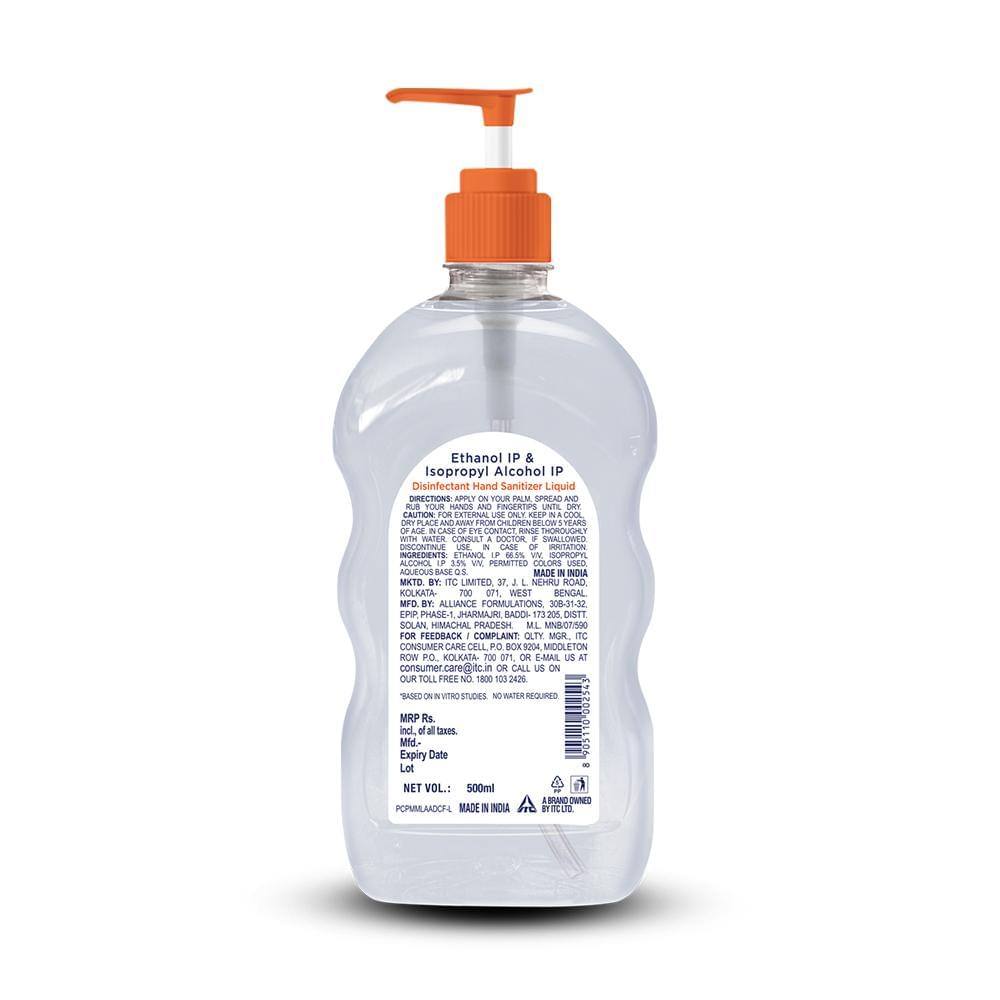
Savlon Hand Sanitizer Liquid
1 Bottle of 500 Ml
About this product:
| Manufacturer: | ITC ltd |
| Storage: | Below 25 degree celcius |
Out of Stock
Have doubts about this medicine?
Have doubts about this medicine?
Savlon Hand Sanitizer Liquid is a hand sanitizer that kills 99.9% of germs without the use of soap and water, providing effective protection against 100 disease-causing germs, including bacteria, yeast, mold, and viruses. Savlon Hand Sanitizer Liquid is a hand sanitizer that provides effective protection against 100 disease-causing germs, including bacteria, yeast, mold, and viruses. It is a liquid hand sanitizer that contains ethanol IP: 66.5% and isopropyl alcohol IP: 3.5%. It is designed to be used on the hands, and is effective in killing germs without the need for soap and water.
The hand sanitizer contains ethanol IP: 66.5% and isopropyl alcohol IP: 3.5%. When applied to the hands, the alcohol in the hand sanitizer works by killing the bacteria and microbes that are present on the skin, thereby providing effective protection against 100 disease-causing germs.
Does hand sanitizer really kill 99.9% of germs?
Most alcohol-based hand sanitizers are known to kill bacteria and microbes that are responsible for causing diseases. However, some germs like norovirus which are known to cause foodborne illnesses are not killed by sanitizers. Other than that, most sanitizers do offer protection against a wide range of microbes.
How long does hand sanitizer last on your hands?
This may vary from product to product. However, most hand sanitizers are known to be effective from a few minutes to hours. So, read the label of your sanitizer to know how long it offers protection against germs.
Where do the germs go after using hand sanitizer?
Hand sanitizers are known to kill the bacteria as they contain alcohol. Alcohol is known to cause rupture of the bacterial membrane, thereby killing the bacteria.
Is it safe to eat with your hands after using hand sanitizer?
Using an alcohol-based hand sanitizer before eating with your hands is considered to be safe. The hand sanitizer effectively kills the bacteria present in the hands, thereby lowering the risk of infections.
Do you have to wash your hands after using hand sanitizer?
The alcohol in hand sanitizer works best when you rub it all over your hands, between your fingers and on the back of your hands. Do not wash your hands with soap or under plain tap water after using a hand sanitizer as doing so can lower its effectiveness.
How do you clean your hands with sanitizer?
Spray the hand sanitizer all over dry hands, nails, and grooves up to the elbow. Rub vigorously for 2 minutes. Do not wipe or rinse off the hand sanitizer before it is dry.
How to prevent the spread of respiratory infections?
Most of us may not know this interesting fact that many of the germs that cause respiratory infections can be easily transmitted from one person to another. They can spread by breathing in respiratory droplets released by another person during coughing or sneezing, by touching another object that is exposed to the virus via respiratory droplets, or by touching the nose, mouth, or eyes after being in contact with someone who has a respiratory infection. The best preventive method to avoid contact with droplets is to wash your hands with soap and water. In situations where handwashing may not be possible, use a hand sanitizer that contains more than 70% alcohol.
Take a small amount on your palms, spread and rub it gently on your hands. Make sure to use it all over your dry hand, nails, and grooves up to the elbow. Rub vigorously for 2 minutes until it dries up.
- As the sanitizer contains alcohol, it is flammable in nature. Hence, it is advised to keep it away from fire and not store it in areas such as the kitchen.
- Do not use it on sensitive areas of the skin or open wounds and cuts as it might cause irritation.
- If you experience skin irritation after the use of the sanitizer or if you accidentally swallow the sanitizer, consult your doctor immediately.
- Avoid contact with the eyes. If it does get into your eyes by mistake, wash your eyes with cold water. Do not use soap and water.
- In case you are using it for children, make sure to use it under adult supervision as chances of licking and using it on open wounds are high.
- Do not apply or use it on your face or intimate areas.
- Rub it at least for 2 minutes until it is dry.
- When used as a hand sanitizer, it does not cause any side effects. Using it on cuts and wounds may cause mild irritation and sting on the skin but no major side effects.

Alcohol
As the sanitizer contains alcohol, it is flammable in nature. Hence, it is advised to keep it away from fire and not store it in areas such as the kitchen.

Breastfeed
There is no specific warning for breastfeeding, but it is recommended to use it under adult supervision and avoid applying it on open wounds or sensitive areas of the skin.

Pregnancy
There is no specific warning for pregnancy, but it is recommended to use it under adult supervision and avoid applying it on open wounds or sensitive areas of the skin.