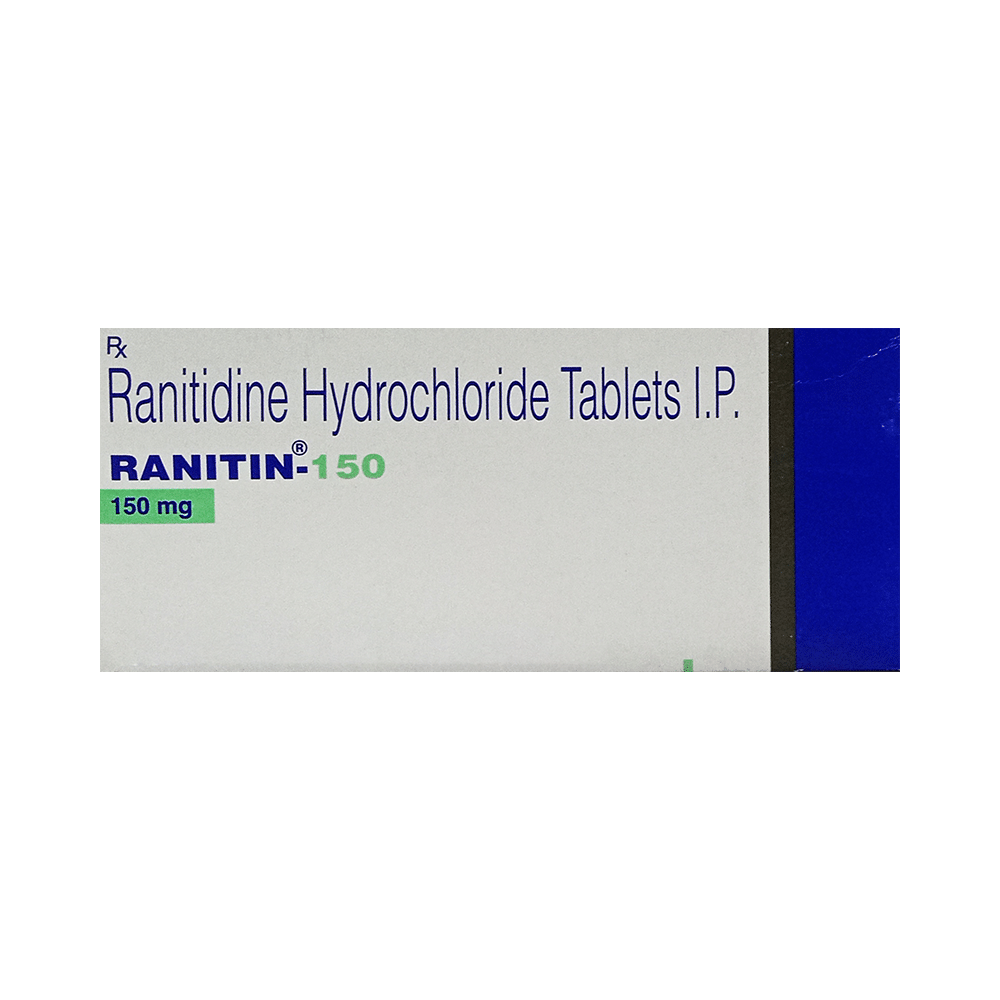
Ranitab 150mg Tablet
strip of 10.0 tablets.Prescription required
About this product:
| Salt Composition: | Ranitidine (150mg) |
| Manufacturer: | Laborate Pharmaceuticals India Ltd |
| Storage: | Below 25 degree celcius |
Out of Stock
Have doubts about this medicine?
Have doubts about this medicine?
Ranitab 150mg Tablet is a medicine that reduces the amount of acid your stomach makes. It is used to treat and prevent heartburn, indigestion, and other symptoms caused by too much acid in the stomach. Ranitab 150mg Tablet is also commonly prescribed to prevent stomach ulcers and heartburn seen with the use of painkillers. The medicine must be taken in dose and duration as prescribed by the doctor. How much you need and how often you take it will depend on what you are being treated for. Follow the advice of your doctor. This medicine should relieve indigestion and heartburn within a few hours and you may only need to take it for a short time when you have symptoms. If you are taking it to prevent ulcers and other conditions you may need to take it for longer. You should keep taking it regularly to prevent problems from happening in the future. You may be able to help improve your symptoms by eating smaller meals more often and avoiding spicy or fatty foods.
Ranitab 150mg Tablet is a histamine H2 receptor blocker that reduces the amount of acid made in the stomach. It relieves acid-related indigestion and heartburn.
Is Ranitab 150mg Tablet safe for long-term use?
The long-term safety of Ranitab 150mg Tablet has not been extensively studied. It is generally considered a safe medication, but it should only be used for the duration prescribed by your doctor. Do not exceed two weeks of over-the-counter Ranitab 150mg Tablet unless advised by your healthcare professional.
Can I take Ranitab 150mg Tablet empty stomach?
Ranitab 150mg Tablet can be taken with or without food. It may be taken once daily in the evening, or twice daily in the morning before bedtime.
Is Ranitab 150mg Tablet effective?
The effectiveness of Ranitab 150mg Tablet is dependent on accurate diagnosis and proper dosage and duration under the guidance of your healthcare provider. If you do not experience improvement in your condition while taking this medication, consult your doctor. Never adjust the dose or discontinue use without consulting your doctor.
What are the dos and don’ts while taking Ranitab 150mg Tablet?
Avoid taking aspirin or other painkillers used to treat arthritis, period pain, or headache. These medications may irritate the stomach and worsen your condition. Consult your doctor if you need alternative medications. Avoid coffee, tea, cocoa, and cola drinks as they contain ingredients that may irritate the stomach. Eat smaller, more frequent meals, chew food carefully, and eat without rushing.
Can I take alcohol with Ranitab 150mg Tablet?
Alcohol does not interfere with Ranitab 150mg Tablet's effectiveness. However, it is generally advised to avoid alcohol as it may further damage the stomach and delay recovery.
How long does it take for Ranitab 150mg Tablet to start working?
Ranitab 150mg Tablet begins to show effects within 15 minutes of administration. Its effect typically lasts throughout the day or night.
What is the difference between Ranitab 150mg Tablet and omeprazole?
Ranitab 150mg Tablet and Omeprazole are medications belonging to different classes. While Ranitab 150mg Tablet is a histamine H2 antagonist, Omeprazole belongs to the proton pump inhibitor group. Both medicines work by reducing acid production in the stomach to provide relief from symptoms, allowing for healing.
Take this medicine in the dose and duration as advised by your doctor. Swallow it as a whole. Do not chew, crush or break it. Ranitab 150mg Tablet may be taken with or without food but it is better to take it at a fixed time.
- Take this medicine in the dose and duration as advised by your doctor
- Swallow it as a whole. Do not chew, crush or break it
- Take it with or without food but at a fixed time
- Inform your doctor if you do not feel better after taking Ranitab 150mg Tablet for 2 weeks
- Inform your doctor if you have ever been diagnosed with kidney disease as dose of your medicine may need to be adjusted
- Do not stop taking the medication without talking to your doctor
- Headache
- Constipation
- Feeling drowsy or tired
- Diarrhea

Alcohol
It is unsafe to consume alcohol with Ranitab 150mg Tablet.

Breastfeed
Ranitab 150mg Tablet is probably safe to use during breastfeeding. Limited human data suggests that the drug does not represent any significant risk to the baby.

Pregnancy
Ranitab 150mg Tablet is generally considered safe to use during pregnancy. Animal studies have shown low or no adverse effects to the developing baby; however, there are limited human studies.