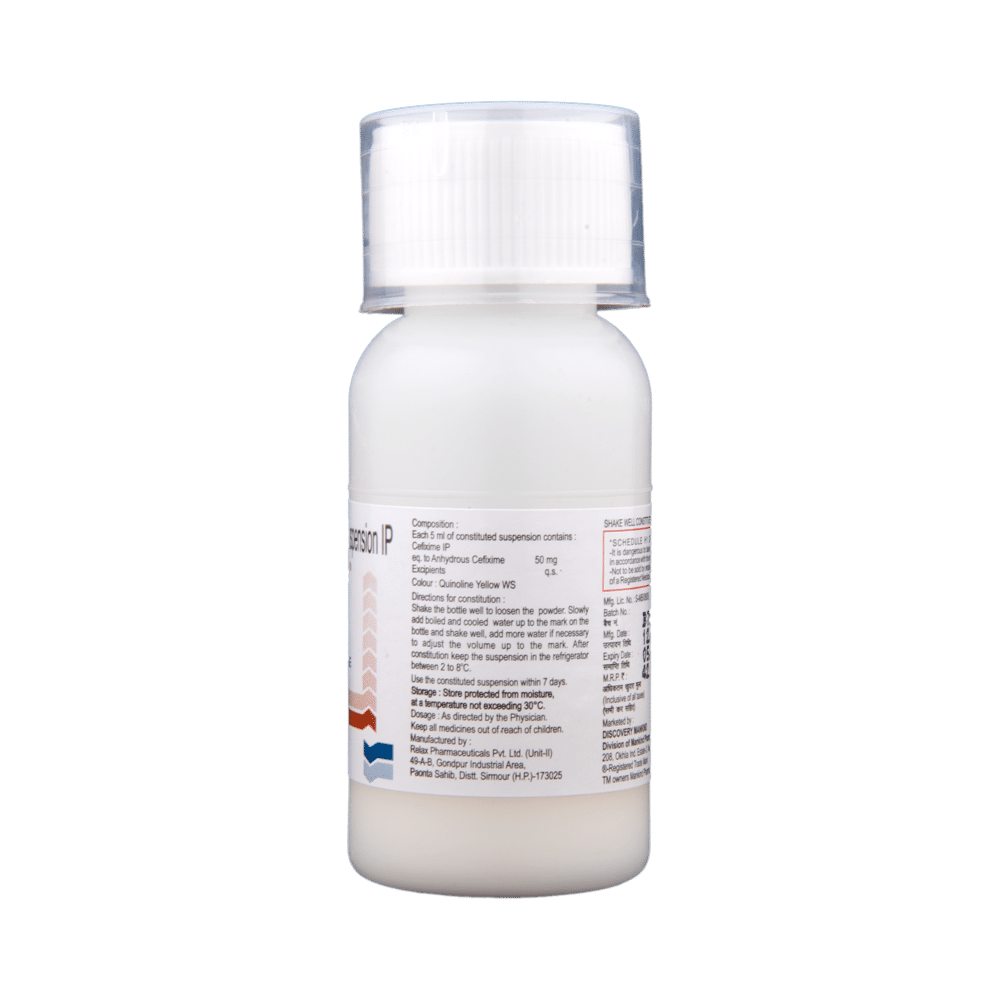
Qvcef 50 Dry Syrup
bottle of 30.0 ml Oral Suspension.Prescription required
About this product:
| Salt Composition: | Cefixime (50mg) |
| Manufacturer: | Anista Healthcare |
| Storage: | Below 25 degree celcius |
Out of Stock
Have doubts about this medicine?
Have doubts about this medicine?
Qvcef 50 Dry Syrup is an antibiotic medicine used to treat a wide range of bacterial infections in children. Qvcef 50 Dry Syrup is an antibiotic medicine commonly given to children to treat a wide range of bacterial infections targeting the ear, eyes, nose, throat, lungs, skin, gastrointestinal tract, and urinary tract. It can also be used in treating uncomplicated typhoid fever in children and adolescents.
Qvcef 50 Dry Syrup works by preventing the formation of the bacterial protective covering (cell wall) which is essential for the survival of the bacteria. This medicine stops the infection-causing bacteria from growing further and prevents the infection from spreading without making them resistant to further treatment.
What if I give too much of Qvcef 50 Dry Syrup by mistake?
If you accidentally give your child too much Qvcef 50 Dry Syrup, it is unlikely to cause harm. However, it is crucial to seek immediate medical attention from a doctor. Overdose may lead to unwanted side effects and potentially worsen your child's condition.
Are there any possible serious side effects of Qvcef 50 Dry Syrup?
Qvcef 50 Dry Syrup may cause serious side effects, including persistent vomiting, kidney damage, allergy, diarrhea, and severe gastrointestinal infections. If you notice any of these symptoms, consult your child's doctor for guidance and support.
Can other medicines be given at the same time as Qvcef 50 Dry Syrup?
Qvcef 50 Dry Syrup may interact with other medications or substances. Before starting treatment, inform your doctor about any other medications your child is taking. Additionally, consult your child's doctor before administering any other medications to your child.
Can I get my child vaccinated while on treatment with Qvcef 50 Dry Syrup?
Antibiotics typically do not interfere with vaccine ingredients or cause adverse reactions in children who have recently been vaccinated. However, children taking antibiotics should not receive vaccinations until they have recovered from their illness. Once your child feels better, the vaccine can be administered.
Which lab tests may my child undergo while taking Qvcef 50 Dry Syrup on a long-term basis?
Your child's doctor may recommend periodic kidney function tests and liver function tests to monitor their condition while taking Qvcef 50 Dry Syrup for an extended period.
The mucus coming out of my child's nose is yellow-green. Is it a sign of a bacterial infection?
Yellow or green mucus in the nose does not necessarily indicate the need for antibiotics. During a common cold, it is common for mucus to thicken and change color. Symptoms typically last for 7-10 days.
Does a common cold caused by viruses always result in a secondary bacterial infection? When to start an antibiotic to prevent infection?
In most cases, bacterial infections do not follow viral infections. Using antibiotics to treat viral infections may lead to side effects without benefiting your child's health. Consult your child's doctor before using antibiotics.
Can Qvcef 50 Dry Syrup impact my child's digestive system?
Children often experience stomach upset while taking antibiotics, including Qvcef 50 Dry Syrup. The good bacteria in their gastrointestinal tract may be affected, increasing the risk of developing other infections. If your child experiences diarrhea while taking Qvcef 50 Dry Syrup, do not stop the medication. Instead, consult your child's doctor for guidance.
Can Qvcef 50 Dry Syrup lead to bacterial resistance in my child?
Yes, irregular treatment, repeated use, and misuse of Qvcef 50 Dry Syrup can lead to bacterial resistance. Resistant bacteria are no longer killed by antibiotics and may lead to reinfection.
How long should I take Qvcef 50 Dry Syrup?
Qvcef 50 Dry Syrup is typically prescribed for 7-14 days. It is essential to complete the full treatment duration as advised by your doctor.
Give this medicine with food to avoid an upset stomach. Encourage your child to drink plenty of water in case diarrhea develops as a side effect.
- Your child must complete the entire course of antibiotics. Stopping too soon may cause the bacteria to multiply again
- Give this medicine with food to avoid an upset stomach
- Encourage your child to drink plenty of water in case diarrhea develops as a side effect
- Conditions like common cold and flu are caused by viruses. Never use this medicine for such conditions
- Only give Qvcef 50 Dry Syrup to your child for their current infection. Never save medicine for future illnesses