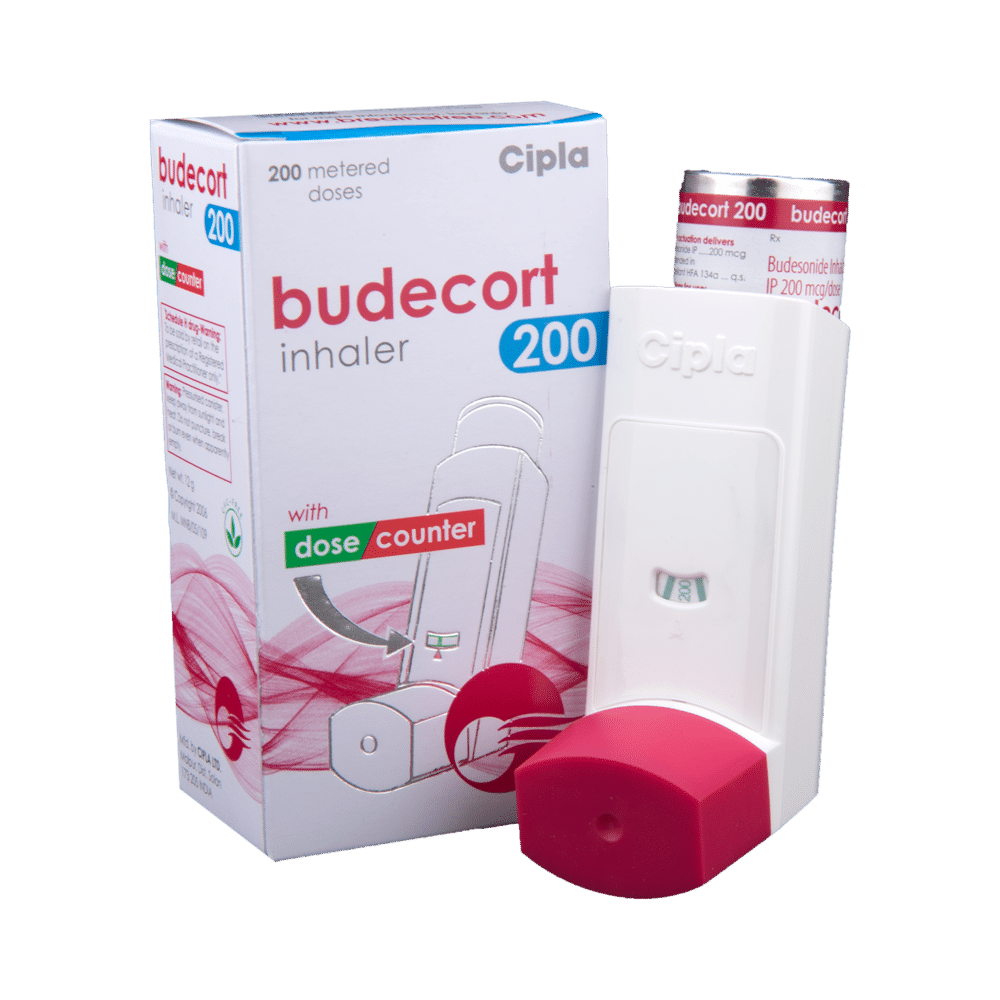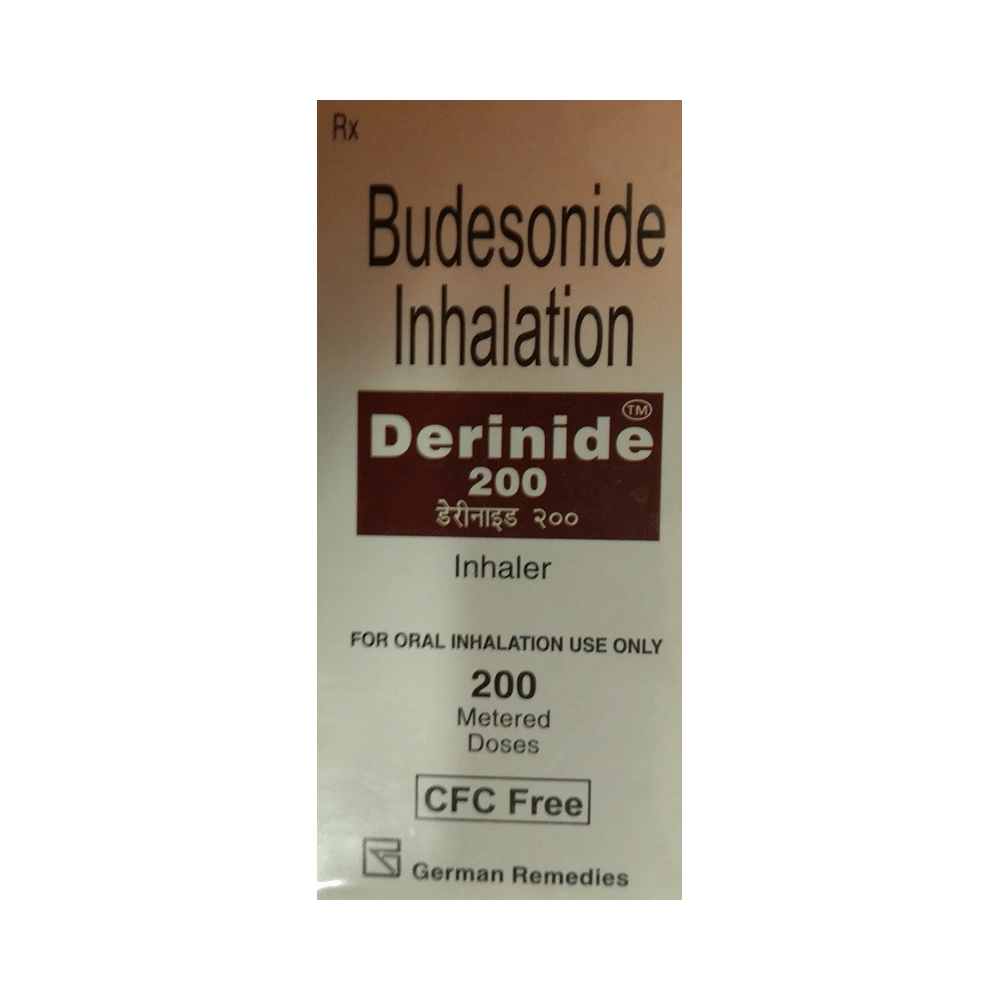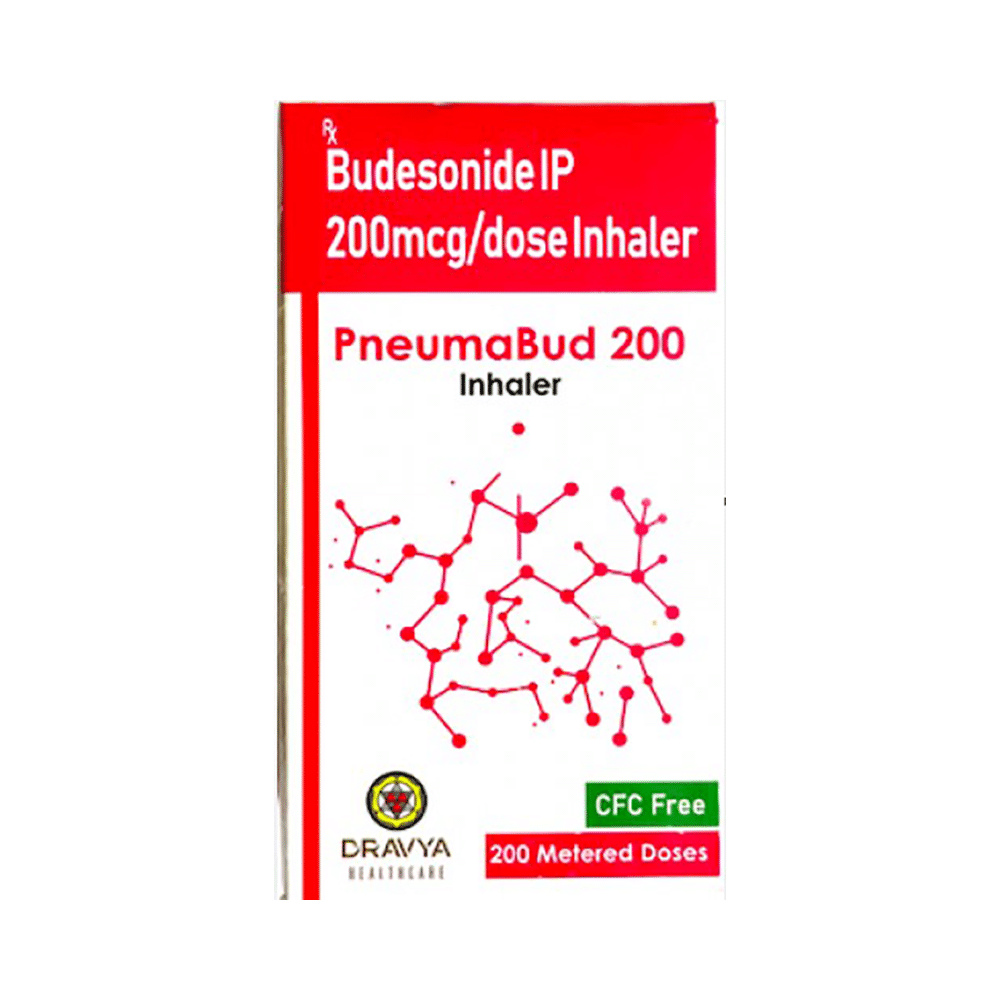
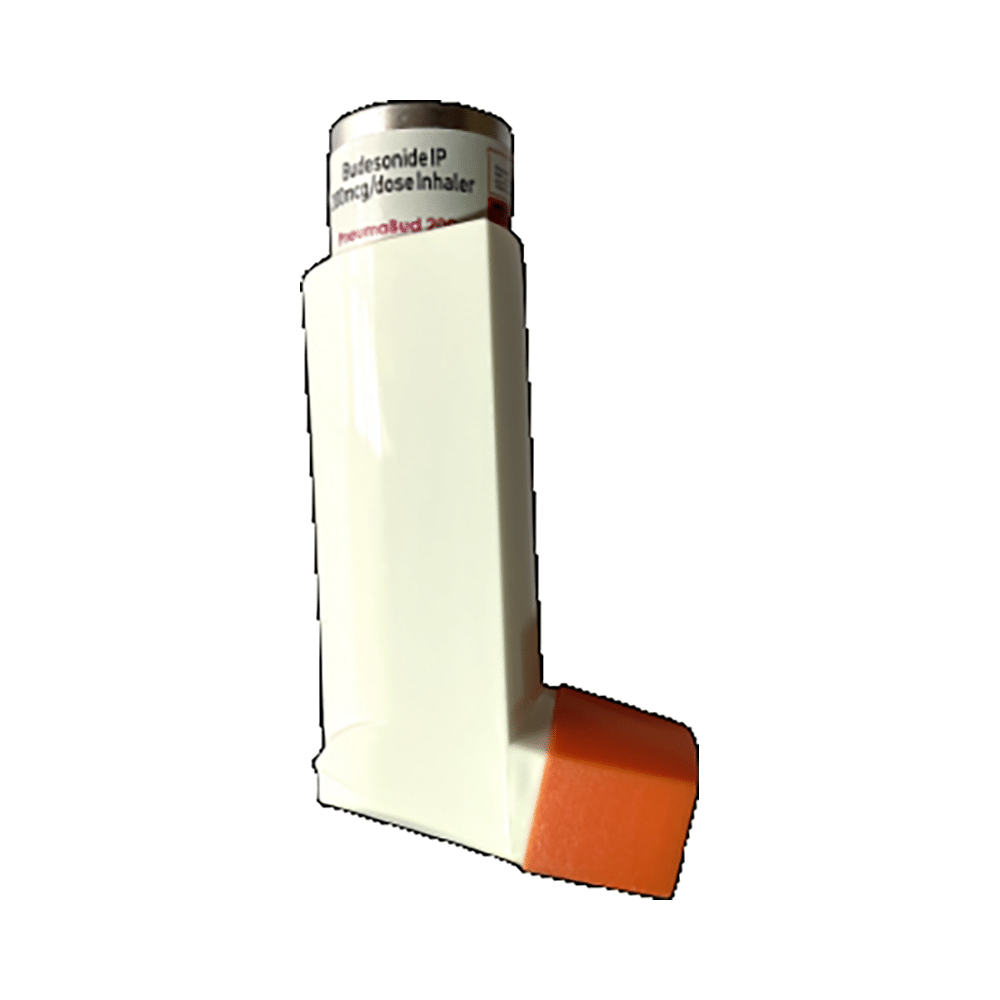
Pneumabud 200 Inhaler CFC Free
box of 200.0 MDI Inhaler.Prescription required
About this product:
| Salt Composition: | Budesonide (200mcg) |
| Manufacturer: | Dravya Healthcare |
| Storage: | Below 25 degree celcius |
Out of Stock
Have doubts about this medicine?
Have doubts about this medicine?
Pneumabud 200 Inhaler CFC Free is used to prevent the symptoms of asthma (wheezing and shortness of breath). It is a steroid and is known as a 'preventer'. You need to have a fast-acting 'reliever' as well because this medicine will not stop an asthma attack that has already started. Your doctor will tell you how often you need to use Pneumabud 200 Inhaler CFC Free. It is important that you take the lowest dose needed to effectively control your asthma. The effect of this medicine may be noticeable after a few days but will only reach its maximum after a few weeks. This medicine must be used regularly to be effective so go on taking it even if you do not have any symptoms. No symptoms mean that the medicine is doing its job. If you stop taking it your asthma may get worse. It should not be used to relieve sudden asthma attacks. If an asthma attack occurs use your quick-relief inhaler 'reliever'. To get the benefit from this medicine you need to make sure you get your inhaler technique right otherwise it will not work as well.
Pneumabud 200 Inhaler CFC Free is a steroid. It prevents the cells in the lungs and breathing passages from releasing chemical messengers that cause inflammation (swelling) of the airways. This makes breathing easier.
Does Pneumabud 200 Inhaler CFC Free help with cough?
Pneumabud 200 Inhaler CFC Free can help relieve coughing associated with asthma. It is used in children to alleviate a barking cough, which results from airway irritation and swelling. This swelling narrows the airways, making it difficult to breathe and causing the cough. Pneumabud 200 Inhaler CFC Free helps reduce airway irritation and swelling.
Is Pneumabud 200 Inhaler CFC Free safe?
Pneumabud 200 Inhaler CFC Free is safe when used as directed by your doctor. Take it exactly as prescribed and do not skip any doses. Follow your doctor's instructions carefully, and inform them if you experience any adverse effects.
Does Pneumabud 200 Inhaler CFC Free raise blood sugar?
Taking Pneumabud 200 Inhaler CFC Free orally may increase blood sugar levels. However, this is rare with inhalers and only likely to happen if high doses are taken over extended periods.
Does Pneumabud 200 Inhaler CFC Free cause bone loss?
Pneumabud 200 Inhaler CFC Free is a steroid, and it can lead to decreased bone density. However, this is usually seen in patients who take high doses for an extended time. Follow your doctor's advice on dosage to minimize the risk of bone loss.
Is Pneumabud 200 Inhaler CFC Free effective?
Pneumabud 200 Inhaler CFC Free is effective when taken as directed by your doctor. Do not stop taking it even if you experience improvement, and continuing the treatment will help to prevent symptom recurrence or worsening.
What if I forget to take a dose of Pneumabud 200 Inhaler CFC Free?
If you miss a dose of Pneumabud 200 Inhaler CFC Free, take it as soon as you remember. However, if it is nearly time for your next dose, skip the missed dose and take the next scheduled dose at the prescribed time. Do not double the dose to compensate for a missed one; this may increase the risk of side effects.
Check the label for directions before use. Shake the inhaler. While you are breathing in from mouth press down on the inhaler one time to release the medication and hold your breath for 10 seconds. Repeat until you have inhaled the number of puffs as suggested by the doctor. Afterwards rinse your mouth thoroughly with water and spit it out.
- Pneumabud 200 Inhaler CFC Free will not work for an ongoing asthma attack. Use your rescue inhaler to control sudden difficulty in breathing.
- Take it at the same time every day to prevent asthma attacks.
- Gargle with warm water after each inhalation to avoid any fungal infections in your mouth and throat.
- Never breathe out into the mouthpiece.
- Only minuscule amounts of Pneumabud 200 Inhaler CFC Free may get absorbed into the bloodstream after inhalation. Hence serious side effects such as weight gain are unlikely.
- Irritation in the throat
- Difficulty swallowing
- Fungal infections in the mouth or throat

Alcohol
It is not known whether it is safe to consume alcohol with Pneumabud 200 Inhaler CFC Free. Please consult your doctor.

Breastfeed
Pneumabud 200 Inhaler CFC Free is probably safe to use during breastfeeding. Limited human data suggests that the drug does not represent any significant risk to the baby.

Pregnancy
Pneumabud 200 Inhaler CFC Free may be unsafe to use during pregnancy. Although there are limited studies in humans, animal studies have shown harmful effects on the developing baby. Your doctor will weigh the benefits and any potential risks before prescribing it to you. Please consult your doctor.