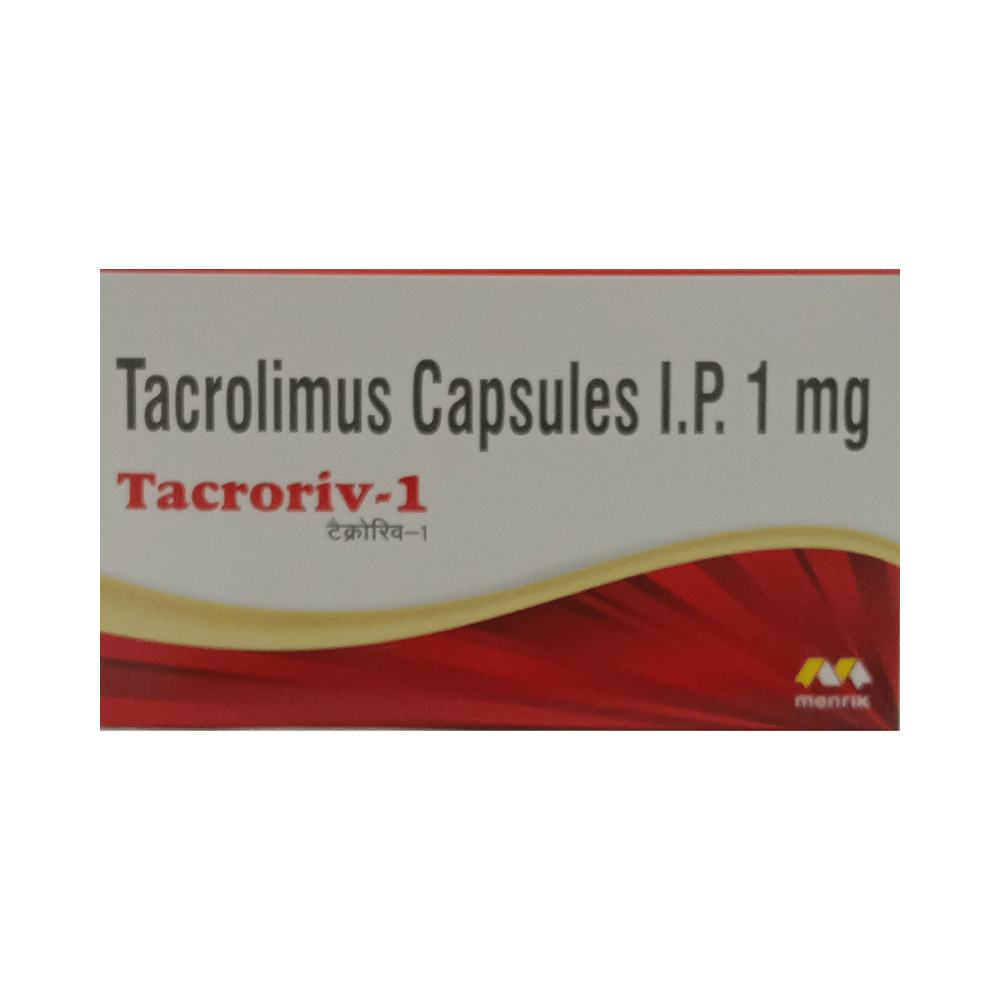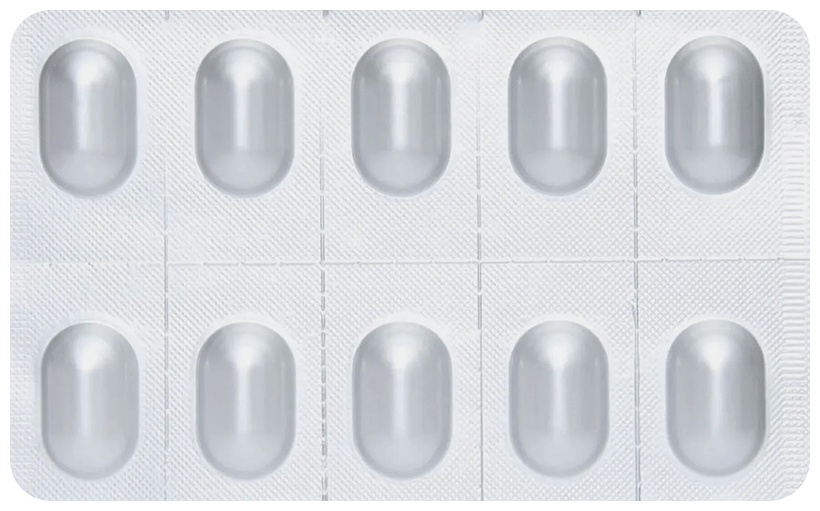
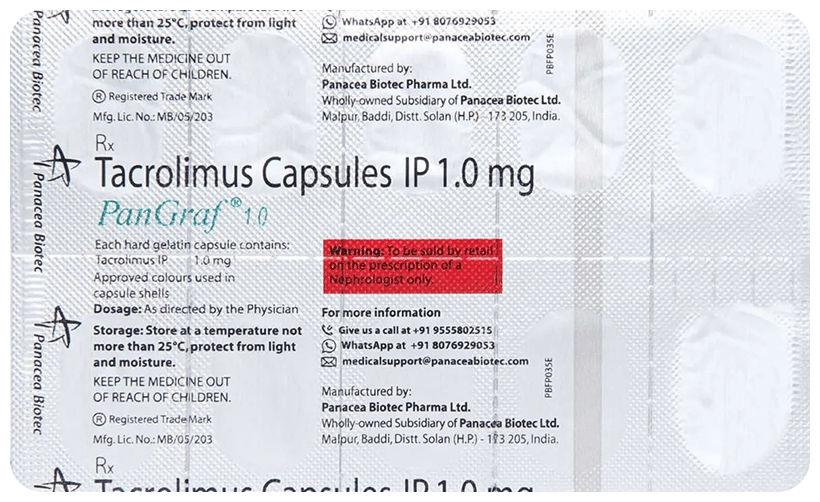
Pangraf 1 Capsule
1 Strip of 10 Capsules.Prescription required
About this product:
| Salt Composition: | Tacrolimus (1mg) |
| Manufacturer: | Panacea Biotec Ltd |
| Storage: | Below 25 degree celcius |
Out of Stock
Have doubts about this medicine?
Have doubts about this medicine?
Pangraf 1 Capsule is used along with other medicines to prevent your body from rejecting a new organ (e.g., liver, kidney, or heart) after transplant. Pangraf 1 Capsule is an immunosuppressant that works by suppressing your body's immune response following the transplant of an organ (e.g., liver, kidney, or heart). This helps your body to accept the new organ as if it were your own. It is used along with other medicines to prevent organ rejection in transplant patients.
Pangraf 1 Capsule is an immunosuppressant. It works by suppressing your body's immune response following the transplant of an organ (e.g., liver, kidney, or heart). This helps your body to accept the new organ as if it were your own.
Is Pangraf 1 Capsule an antibiotic?
Yes, Pangraf 1 Capsule is an antibiotic that belongs to the macrolide class of medicines. It is primarily used after organ transplantation to prevent organ rejection (rejection of a transplanted organ by the recipient's immune system). This medicine works by suppressing the immune system.
Which vaccines should not be taken while taking Pangraf 1 Capsule?
You should avoid live vaccines (vaccines that use pathogens still alive, but attenuated or weakened) when taking Pangraf 1 Capsule. These include: measles, mumps, rubella (MMR), BCG (TB vaccine), yellow fever, chickenpox, and typhoid. You should also avoid taking polio drops (by mouth) or the flu vaccine (through nose).
Who should not take Pangraf 1 Capsule?
Individuals with a history of allergies to Pangraf 1 Capsule or those with a weakened immune system, high blood pressure, or kidney failure should avoid this medication. Additionally, it should be avoided during pregnancy and breastfeeding. It's also essential to consult your doctor if you are planning to receive any live vaccines.
What should I tell my doctor before taking Pangraf 1 Capsule?
Before starting Pangraf 1 Capsule, it is crucial to inform your doctor about potential pre-existing conditions such as: pregnancy, allergies, long-term infections, high blood sugar, and high blood pressure. You should also disclose any history of medication use, recent or upcoming live vaccine receipt, and high potassium levels.
What should I be aware of before taking Pangraf 1 Capsule?
Pangraf 1 Capsule suppresses the immune system and increases the risk of infections. In some cases, it may raise the risk of certain cancers such as skin and lymph gland cancer (lymphoma). It's important to know that this medication can lower your body’s resistance to infection.
Does Pangraf 1 Capsule have an abuse potential?
No, Pangraf 1 Capsule does not have an abuse potential. It is not classified as a controlled substance, and its use doesn't require special permission or registration. Controlled substances are drugs that have the potential for abuse and therefore, require authorization from relevant authorities and healthcare professionals.
Take this medicine in the dose and duration as advised by your doctor. Pangraf 1 Capsule is to be taken empty stomach.
- Pangraf 1 Capsule is used to prevent organ rejection in transplant patients.
- It may take 3 to 4 months for the medication to work. Keep taking it as prescribed.
- Your doctor may monitor your kidney function regularly. Drink 8 to 10 glasses of water per day to help with your kidney function.
- Do not stop taking Pangraf 1 Capsule without talking to your doctor first.
- Your doctor may get regular blood tests done to check the levels of blood cells in your blood. Inform your doctor if you experience unexplained bruising or bleeding, sore throat, mouth ulcers, fever, or general illness.
- Your doctor may monitor your kidney function regularly. Drink 8 to 10 glasses of water per day to help with your kidney function.

Alcohol
It is unsafe to consume alcohol with Pangraf 1 Capsule.

Breastfeed
Pangraf 1 Capsule is probably unsafe to use during breastfeeding. Limited human data suggests that the drug may pass into the breastmilk and harm the baby.

Pregnancy
Pangraf 1 Capsule may be unsafe to use during pregnancy. Although there are limited studies in humans, animal studies have shown harmful effects on the developing baby. Your doctor will weigh the benefits and any potential risks before prescribing it to you. Please consult your doctor.