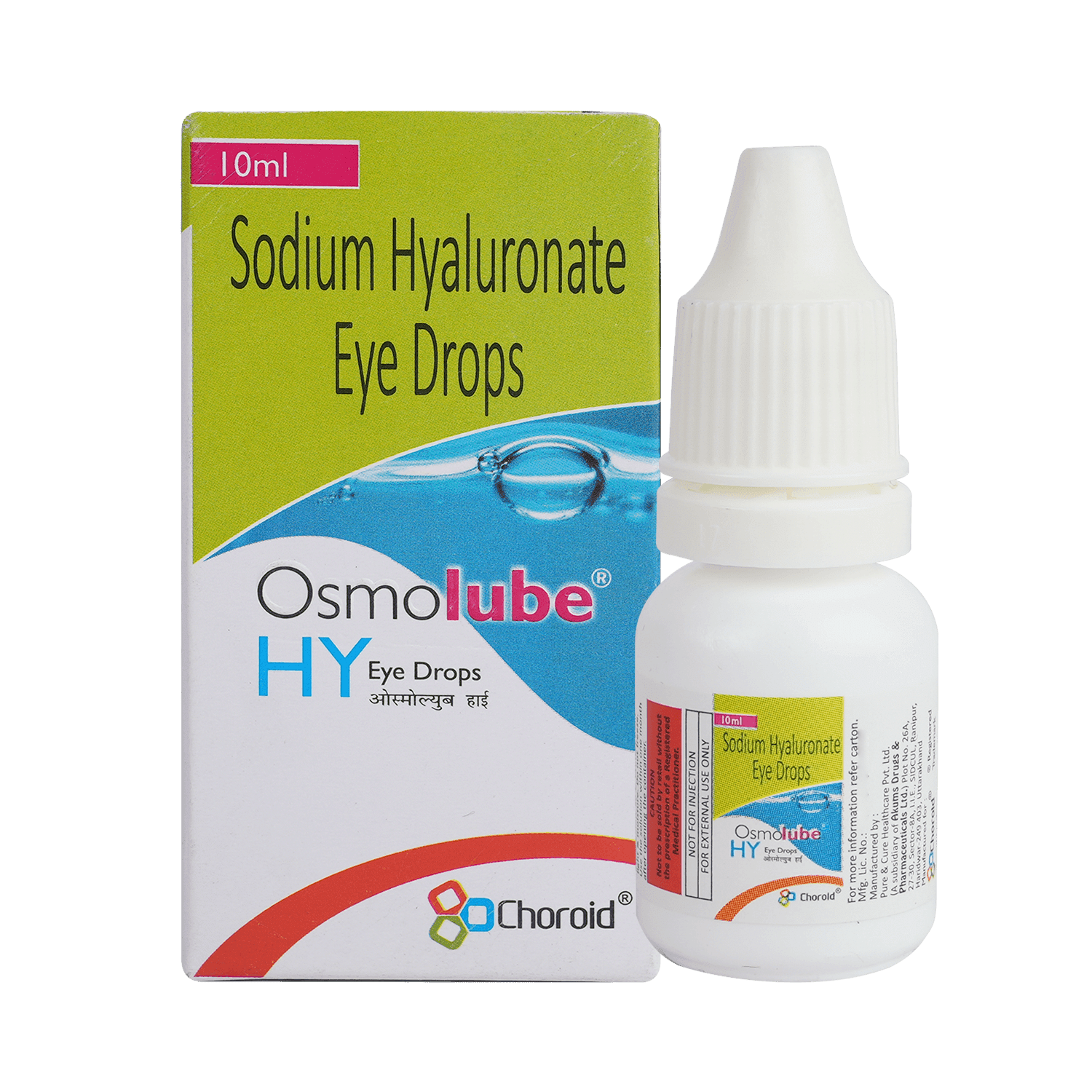
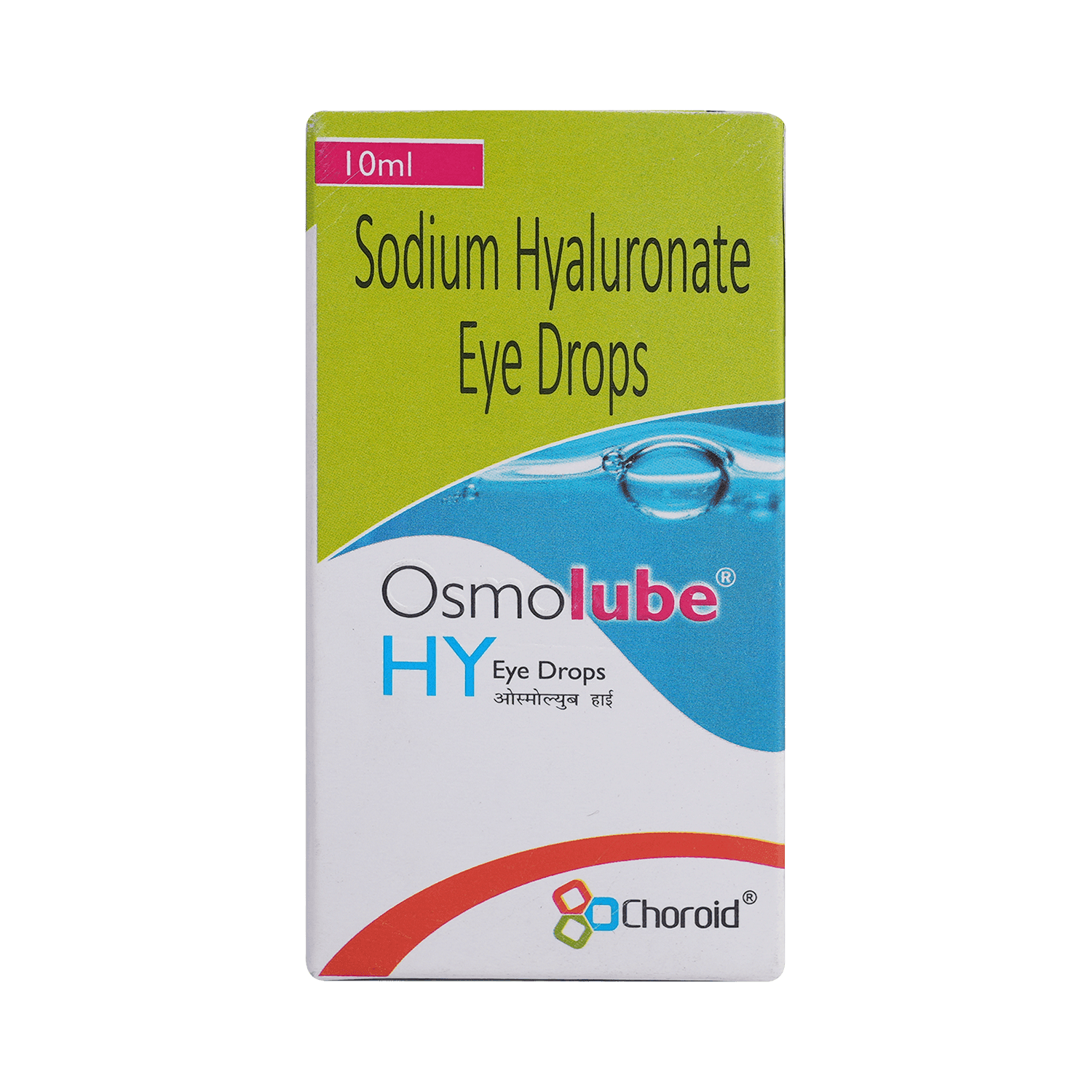
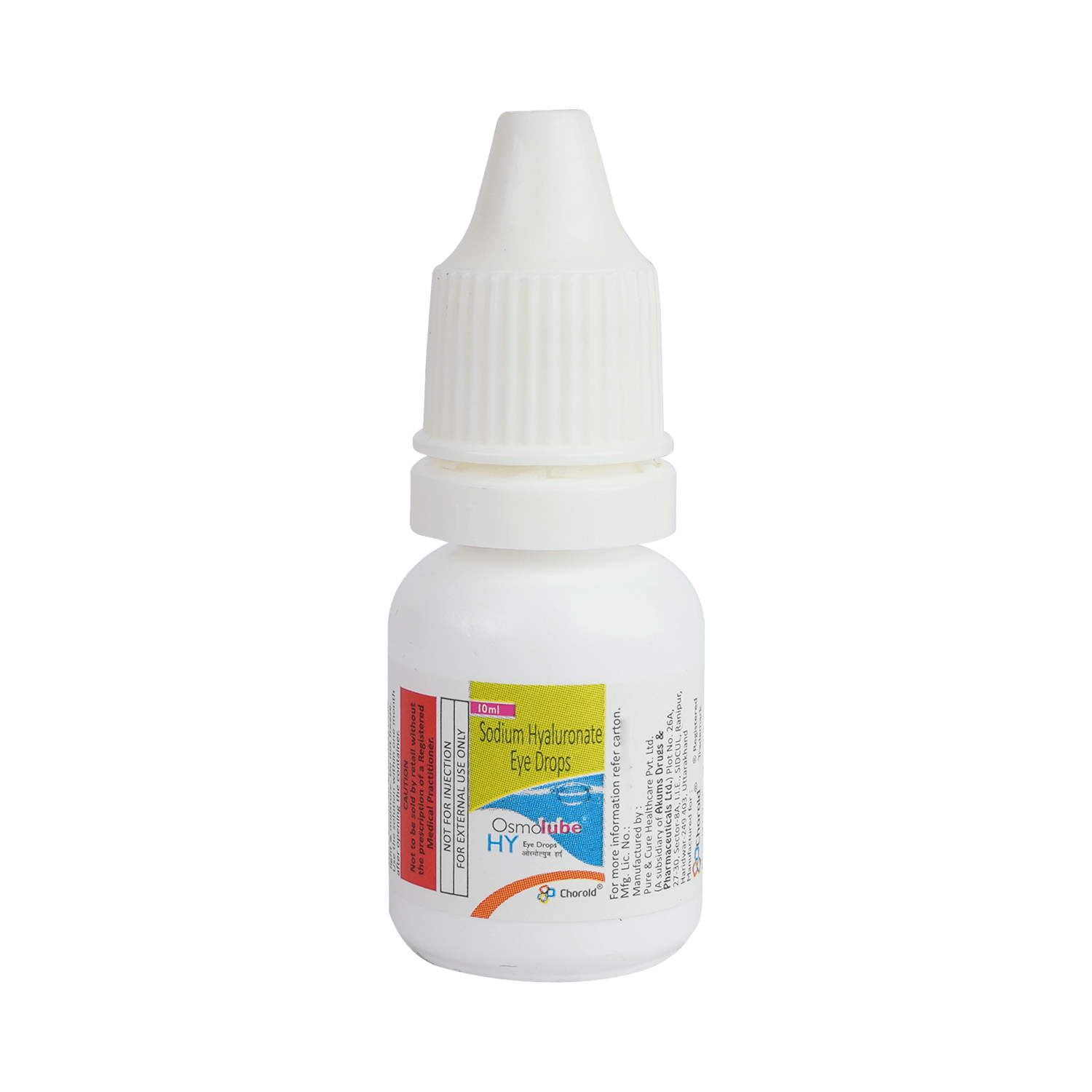
Osmolube HY Eye Drop
packet of 10.0 ml Eye Drop.Prescription required
About this product:
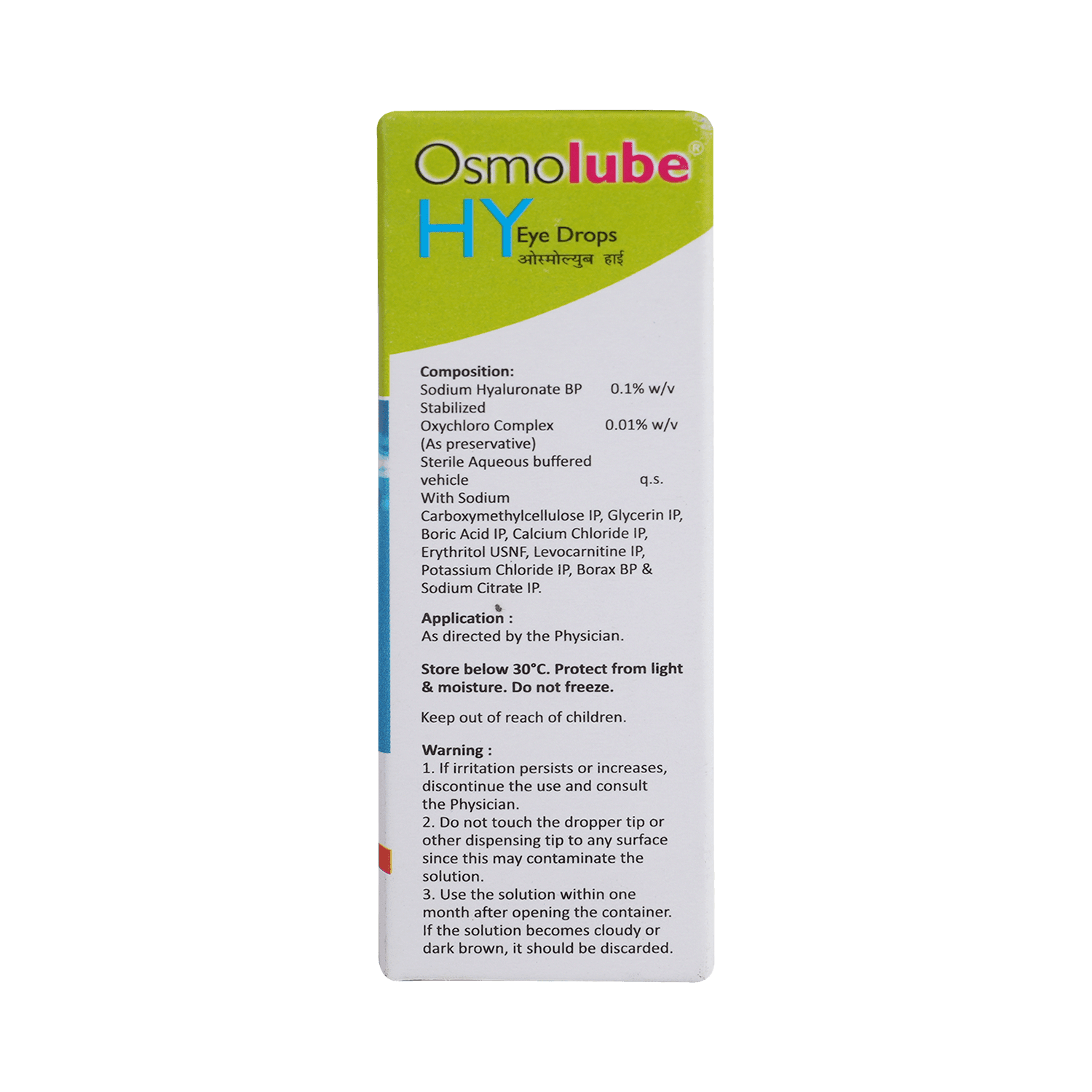
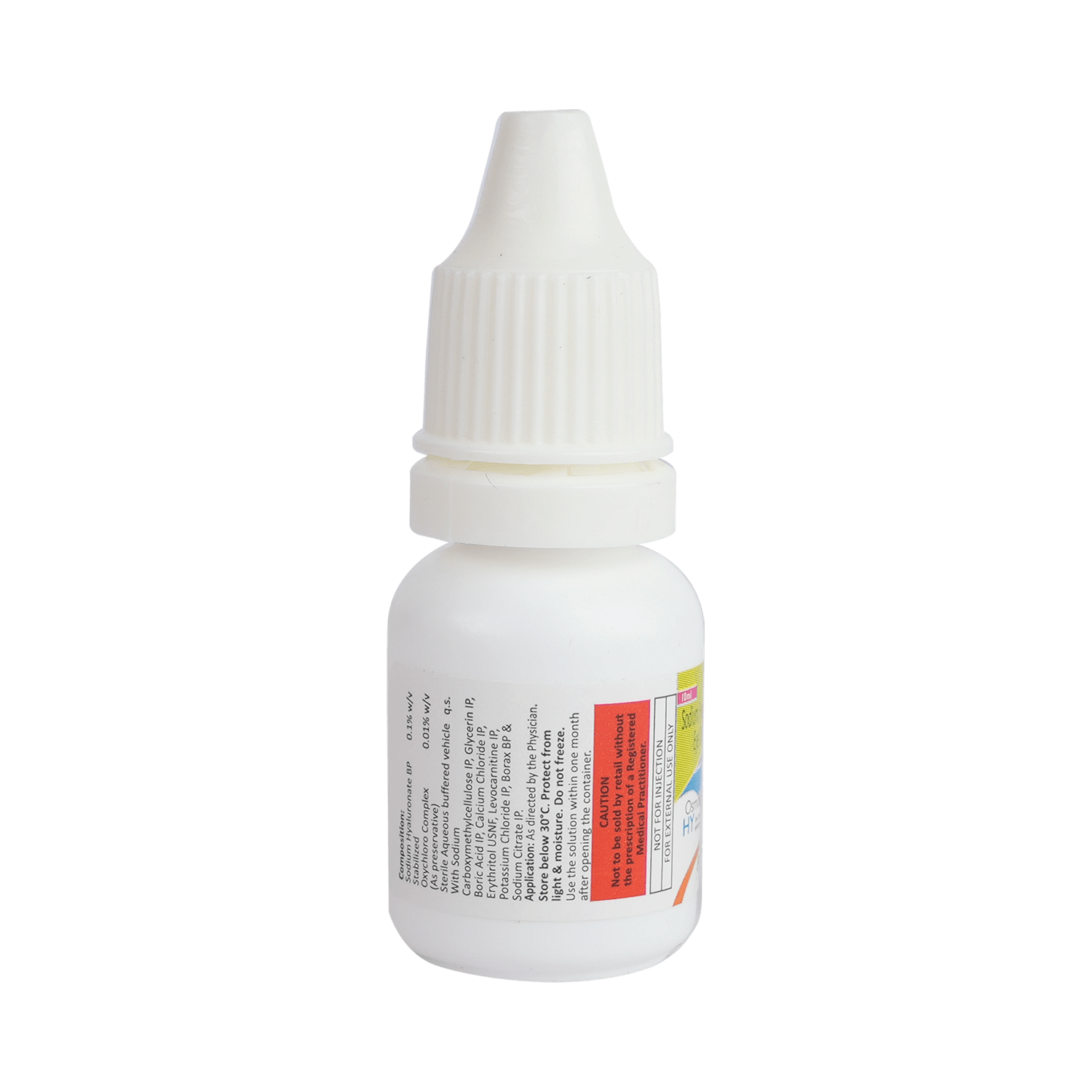
| Salt Composition: | Sodium Hyaluronate (0.1% w/v) |
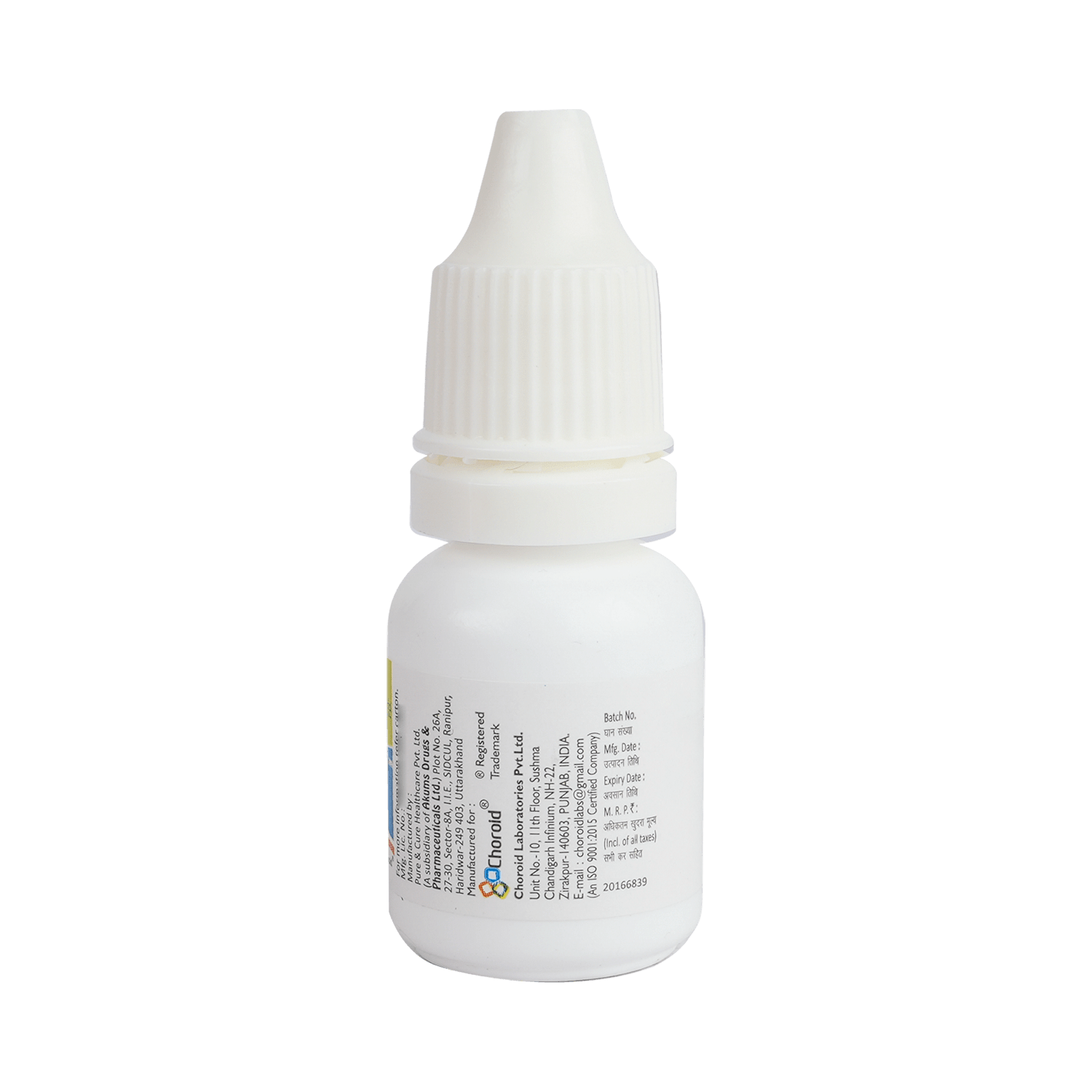
| Manufacturer: | Choroid Laboratories |
| Storage: | Below 25 degree celcius |
Out of Stock
Have doubts about this medicine?
Have doubts about this medicine?
Osmolube HY Eye Drop is a lubricant used to treat dry eyes, providing temporary relief from discomfort and burning. Osmolube HY Eye Drop is usually instilled whenever needed. Use the number of drops as advised by your doctor. Wait for at least 5-10 minutes before delivering any other medication in the same eye to avoid dilution. Do not use a bottle if the seal is broken before you open it, if the solution changes color, or becomes cloudy. Always wash your hands and do not touch the end of the dropper as this could infect your eye. It is generally safe to use medicine with no common side effects. Let your doctor know if you experience any mild burning or irritation of eyes. Do not drive, use machinery, or do any activity that requires clear vision until you are sure you can do it safely. Consult your doctor if your condition does not improve or if the side effects bother you. People with narrow angle glaucoma should not use this medicine.
Osmolube HY Eye Drop is a lubricant. It moistens the eyes and provides temporary relief from burning and discomfort.
Can Osmolube HY Eye Drop blur the vision?
Yes, some patients may experience temporary blurring of vision following instillation. However, this is usually transient and resolves quickly. Blinking your eyes several times after instillation can help spread the solution evenly over the ocular surface.
I wear contact lenses, can I use Osmolube HY Eye Drop?
Yes, Osmolube HY Eye Drop can be used with contact lenses. However, please consult your ophthalmologist to ensure safe usage while wearing contact lenses or if any adjustments are needed regarding eye drop application. Your doctor may advise removing the contacts before instilling the drops.
How long do I need to use Osmolube HY Eye Drop?
The duration of using Osmolube HY Eye Drop will depend on your individual condition and treatment plan. Your doctor will provide specific instructions regarding usage frequency and duration, which may be for an extended period if needed.
How often can I use Osmolube HY Eye Drop?
The recommended dosage is to apply 1-2 drops of Osmolube HY Eye Drop four times a day. Your doctor may adjust this frequency based on your specific condition and individual needs, following their recommendations.
What is Osmolube HY Eye Drop?
Osmolube HY Eye Drop is an artificial tear solution formulated to mimic the natural hyaluronic acid present in the body. It is a commonly used substitute for moisture when there is a deficiency of hyaluronic acid in the eyes.
What is Osmolube HY Eye Drop used for?
Osmolube HY Eye Drop treats dry eye syndrome (keratoconjunctivitis sicca). It helps alleviate dryness and protects the eyes from further complications. Additionally, it can be used to treat corneal dryness caused by trauma or eyelid paralysis where the patient cannot close their eyelids.
How do I use Osmolube HY Eye Drop?
Use Osmolube HY Eye Drops exactly as prescribed by your doctor. Avoid touching the tip of the container and keep it away from eyes or eyelids. After opening the eyelid, instill 1-2 drops into the eye with the help of someone else. To prevent washout, avoid using any other eye drop or ointment for at least 15 minutes.
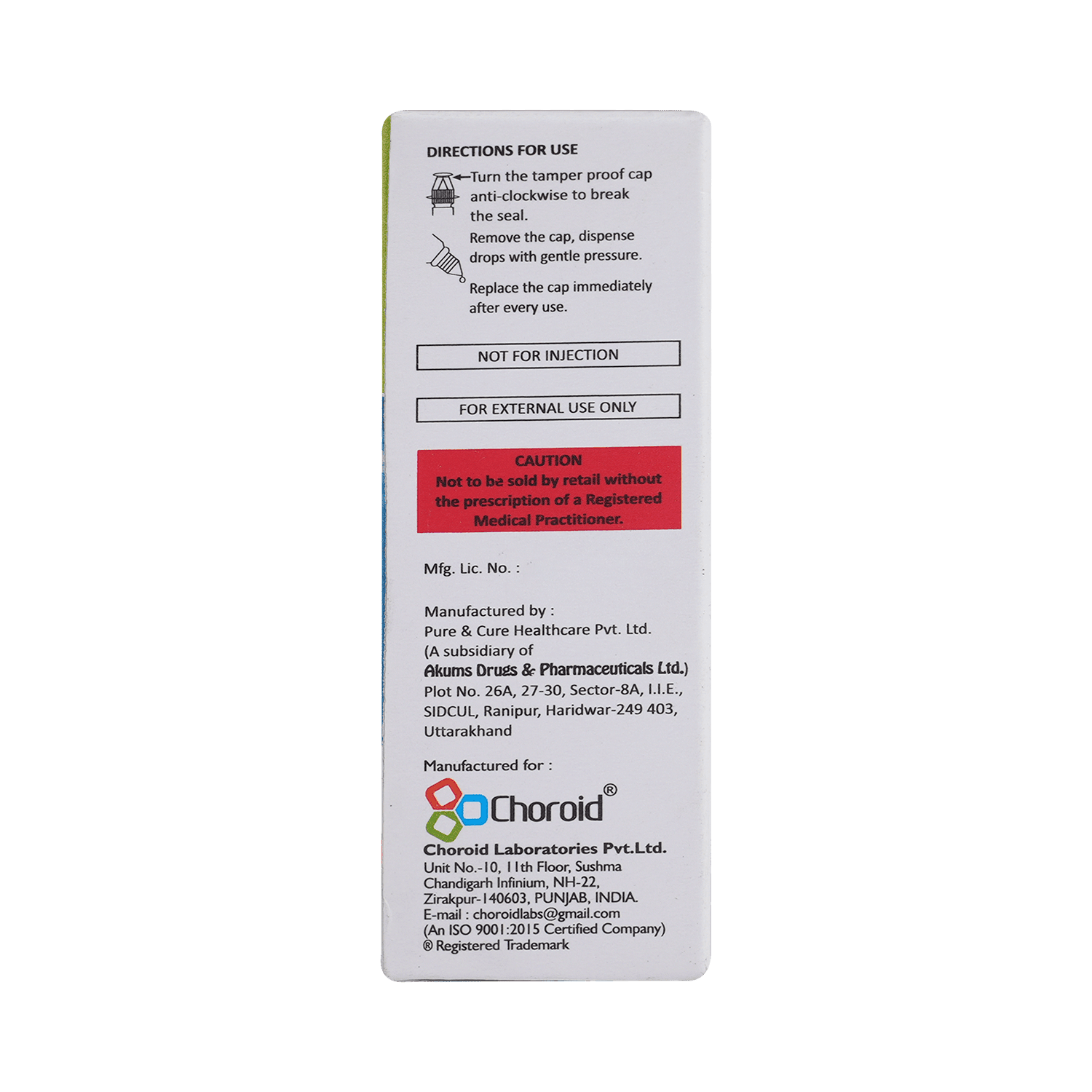
This medicine is for external use only. Use it in the dose and duration as advised by your doctor. Check the label for directions before use. Hold the dropper close to the eye without touching it. Gently squeeze the dropper and place the medicine inside the lower eyelid. Wipe off the extra liquid.
- Your doctor has prescribed Osmolube HY Eye Drop to treat dry eye disease.
- It stabilizes the natural tear film and maintains necessary lubrication so your eyes don’t get dry and irritated.
- May require long-term use.
- Apply pressure on the corner of the eye (close to the nose) for about 1 minute immediately after instilling the drop.
- Wait for at least 5-10 minutes before delivering the next medication in the same eye to avoid dilution.
- Stinging sensation may occur for 1-2 mins. Notify your doctor if it persists for longer.
- No common side effects listed

Alcohol
No interaction found/established

Breastfeed
Osmolube HY Eye Drop is probably safe to use during breastfeeding. Limited human data suggests that the drug does not represent any significant risk to the baby.

Pregnancy
Osmolube HY Eye Drop is generally considered safe to use during pregnancy. Animal studies have shown low or no adverse effects to the developing baby; however, there are limited human studies.