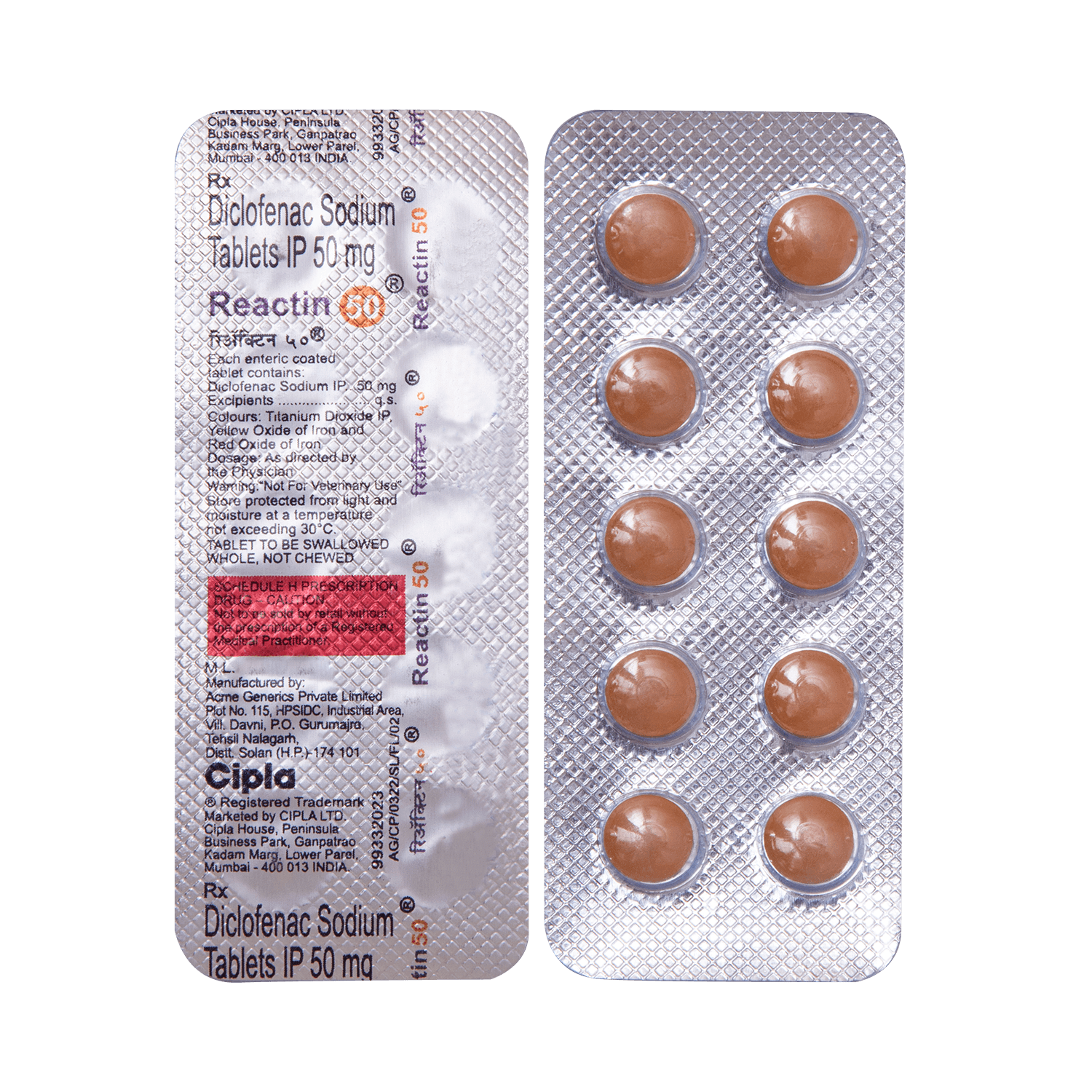
Nufenac 50mg Tablet
strip of 10.0 tablets.Prescription required
About this product:
| Salt Composition: | Diclofenac (50mg) |
| Manufacturer: | Karnataka Antibiotics & Pharmaceuticals Ltd |
| Storage: | Below 25 degree celcius |
Out of Stock
Have doubts about this medicine?
Have doubts about this medicine?
Nufenac 50mg Tablet is a pain-relieving medicine used to treat pain, swelling, stiffness, and joint pain in conditions like rheumatoid arthritis, osteoarthritis, and acute musculoskeletal injuries. Nufenac 50mg Tablet is a pain-relieving medicine used to treat pain, swelling, stiffness, and joint pain in conditions like rheumatoid arthritis, osteoarthritis, and acute musculoskeletal injuries. It is commonly used in back pain, shoulder pain, neck pain, sprains, and spasms.
Nufenac 50mg Tablet is a non-steroidal anti-inflammatory drugs (NSAID). It works by blocking the release of certain chemical messengers that cause pain and inflammation (redness and swelling).
Is Nufenac 50mg Tablet an effective pain reliever?
Nufenac 50mg Tablet is effective in relieving pain and inflammation. It is used for various types of pain, such as sprains, strains, and other injuries. It is also helpful in many types of arthritis, gout, post-surgical pain and inflammation.
Is Nufenac 50mg Tablet a narcotic?
No, Nufenac 50mg Tablet is not a narcotic. It belongs to the non-steroidal anti-inflammatory drugs (NSAIDs) class of medicines.
Does Nufenac 50mg Tablet make you high?
No, Nufenac 50mg Tablet does not make you high. It does not have an abuse potential (drug-seeking behavior), nor does it cause physical or psychological dependence. However, if you do not feel well, consult your doctor.
Can Nufenac 50mg Tablet damage my kidneys?
Long-term use and high doses of Nufenac 50mg Tablet may cause renal problems such as protein or blood in the urine and painful urination. Patients who are at a higher risk of developing kidney problems include those who are dehydrated, have heart failure, impaired kidney function, hypertension, elderly individuals, those taking diuretics (medicines which increase urination), or those whose medication has significant impact on kidney function. Therefore, for these patients, regular monitoring of kidney function is recommended.
Does Nufenac 50mg Tablet cause drowsiness?
Nufenac 50mg Tablet can cause drowsiness and dizziness, fatigue (tiredness), and visual disturbances. However, it is not very common and may not affect everyone. If you experience these symptoms, avoid driving or operating heavy machinery.
What is the most important information I need to know about Nufenac 50mg Tablet?
It's crucial to understand that Nufenac 50mg Tablet may increase your risk of heart attack or stroke. The risk is higher if you take higher doses and have used the medication for longer periods. Additionally, it can cause stomach ulcers, bleeding, or holes in the stomach and intestines. These problems can happen without warning symptoms at any time during treatment and can even lead to death. Therefore, if you experience these issues, consult your doctor immediately.
Can Nufenac 50mg Tablet be taken during pregnancy?
You should not take Nufenac 50mg Tablet during the last three months of pregnancy as it may cause harmful effects on your baby. Using Nufenac 50mg Tablet can also lead to premature labor (birth before term). Therefore, it is generally advised to avoid Nufenac 50mg Tablet during the first six months of pregnancy as well. In some cases, Nufenac 50mg Tablet may be prescribed in pregnant women only if the benefits outweigh the potential risks involved with its use in pregnant women. If you are unsure, consult your doctor.
Take this medicine in the dose and duration as advised by your doctor. Swallow it as a whole. Do not chew, crush or break it. Nufenac 50mg Tablet is to be taken with food.
- Take it with food or milk to prevent upset stomach.
- Take it as per the dose and duration prescribed by your doctor. Long term use may lead to serious complications such as stomach bleeding and kidney problems.
- It may cause dizziness, drowsiness or visual disturbances. Use caution while driving or doing anything that requires concentration.
- Use caution while taking Nufenac 50mg Tablet as it can cause excessive drowsiness and increase your risk of stomach problems.
- Inform your doctor if you have a history of heart disease or stroke.
- No common side effects listed.

Alcohol
It is unsafe to consume alcohol with Nufenac 50mg Tablet.

Breastfeed
Nufenac 50mg Tablet is probably safe to use during breastfeeding. Limited human data suggests that the drug does not represent any significant risk to the baby.

Pregnancy
Nufenac 50mg Tablet is unsafe to use during pregnancy as there is definite evidence of risk to the developing baby. However, the doctor may rarely prescribe it in some life-threatening situations if the benefits are more than the potential risks. Please consult your doctor.