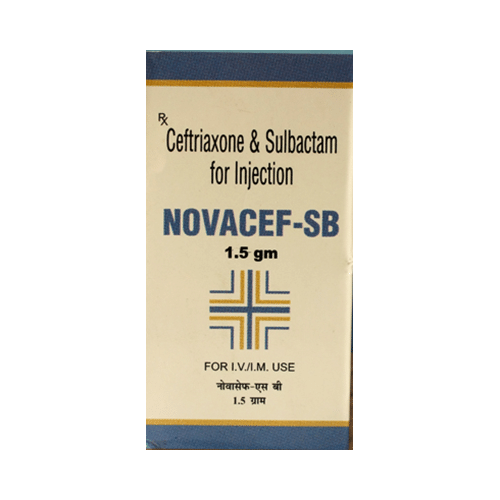
Novasef-SB 1.5gm Injection
vial of 1.0 Injection.Prescription required
About this product:
| Salt Composition: | Ceftriaxone (1000mg) + Sulbactam (500mg) |
| Manufacturer: | Novus Life Sciences Pvt Ltd |
| Storage: | Below 25 degree celcius |
Out of Stock
Have doubts about this medicine?
Have doubts about this medicine?
Novasef-SB 1.5gm Injection is a combination medicine used to treat various types of bacterial infections. It fights against microorganisms to prevent their growth and further spread of the infection. Novasef-SB 1.5gm Injection should only be administered under the supervision of a healthcare professional. Do not miss any scheduled appointments for taking this medicine. The course of the treatment must be completed even if you feel better. Sudden discontinuation of the treatment may affect the potency of the medicine. Some common side effects of this medicine are nausea, vomiting, diarrhea, indigestion, etc. If any of the side effects get aggravated, you must consult your doctor immediately. If you experience any allergic reaction (rashes, itching, swelling, shortness of breath, etc.), you must seek immediate medical help. Before taking this medicine, you should tell your doctor if you are taking any medicines for any health condition. Pregnant or breastfeeding women should also consult with their doctor before taking it. Avoid drinking alcohol as it can cause excessive drowsiness with this medicine. It usually does not impair your ability to drive, but you should not drive if it makes you feel sleepy or dizzy. You must take adequate rest for a faster recovery, also take a healthy diet and drink plenty of water. Your doctor may ask for a few laboratory and diagnostic tests to know the effects of the medicine on your body.
Novasef-SB 1.5gm Injection is a combination of two medicines: Ceftriaxone and Sulbactam. Ceftriaxone is an antibiotic. It works by preventing the formation of the bacterial protective covering which is essential for the survival of bacteria. Sulbactam is a beta-lactamase inhibitor which reduces resistance and enhances the activity of Ceftriaxone against bacteria.
Does Novasef-SB 1.5gm Injection carry a risk of allergic reaction?
Yes, Novasef-SB 1.5gm Injection can cause an allergic reaction. It is particularly harmful for individuals with known allergies to cephalosporin antibiotics. Seek immediate medical help if you experience any signs of an allergic reaction like hives, difficulty breathing, swelling of your face, lips, tongue, or throat.
Can Novasef-SB 1.5gm Injection lead to diarrhea?
Yes, Novasef-SB 1.5gm Injection can cause diarrhea. It is an antibiotic that kills harmful bacteria. However, it may also disrupt the balance of helpful bacteria in your stomach or intestines, leading to diarrhea. If you experience severe diarrhea, consult your doctor for further guidance.
How quickly does Novasef-SB 1.5gm Injection begin working?
Typically, Novasef-SB 1.5gm Injection begins to work promptly after administration. However, it might take several days for all harmful bacteria to be killed and for your symptoms to subside completely.
What should I do if I don't improve after using Novasef-SB 1.5gm Injection?
If you haven't noticed any improvement after completing the entire course of treatment, inform your doctor immediately. Also, let him know if your symptoms are worsening during this time.
Can I stop taking Novasef-SB 1.5gm Injection before feeling better?
No, do not stop taking Novasef-SB 1.5gm Injection and complete the entire course of treatment even if you feel better. Your symptoms may improve before the infection is completely cured.
Your doctor or nurse will give you this medicine. Kindly do not self-administer.
- You have been prescribed this combination medicine to treat bacterial infections even if they have developed resistance.
- Finish the prescribed course even if you start to feel better. Stopping it early may make the infection come back and harder to treat.
- Diarrhea may occur as a side effect. Taking probiotics along with Novasef-SB 1.5gm Injection may help. Talk to your doctor if you notice bloody stools or develop abdominal cramps.
- Stop taking Novasef-SB 1.5gm Injection and inform your doctor immediately if you develop an itchy rash, swelling of the face, throat or tongue or breathing difficulties while taking it.

Alcohol
Consuming alcohol with Novasef-SB 1.5gm Injection does not cause any harmful side effects.

Breastfeed
Novasef-SB 1.5gm Injection should be used with caution during breastfeeding. Breastfeeding should be held until the treatment of the mother is completed and the drug is eliminated from her body.

Pregnancy
Novasef-SB 1.5gm Injection is generally considered safe to use during pregnancy. Animal studies have shown low or no adverse effects to the developing baby; however, there are limited human studies.