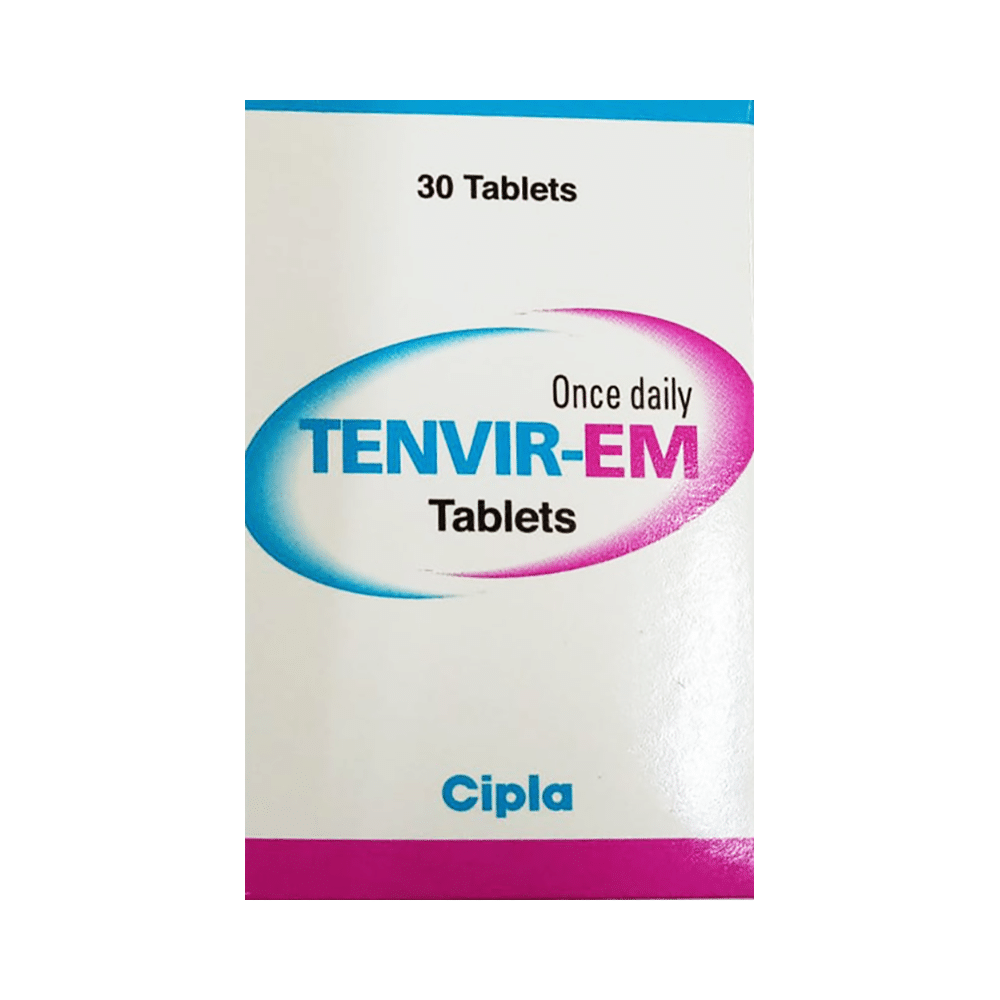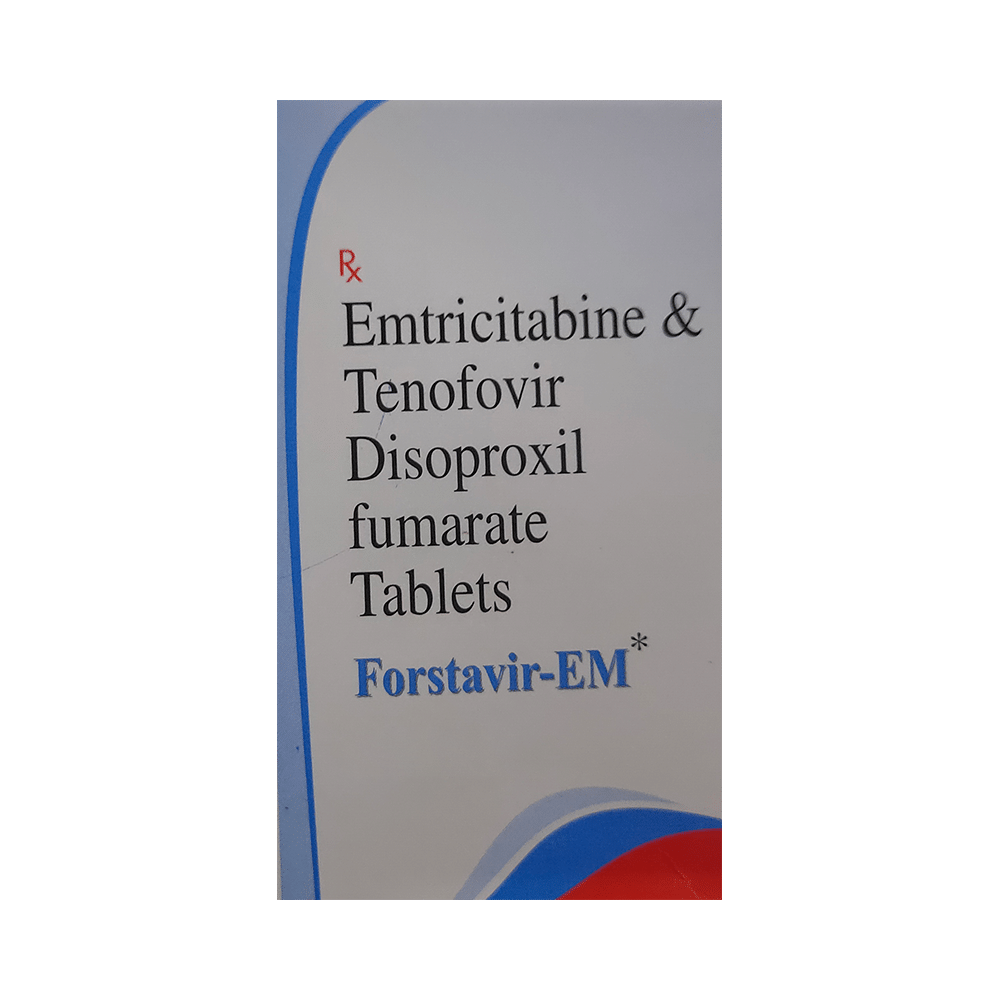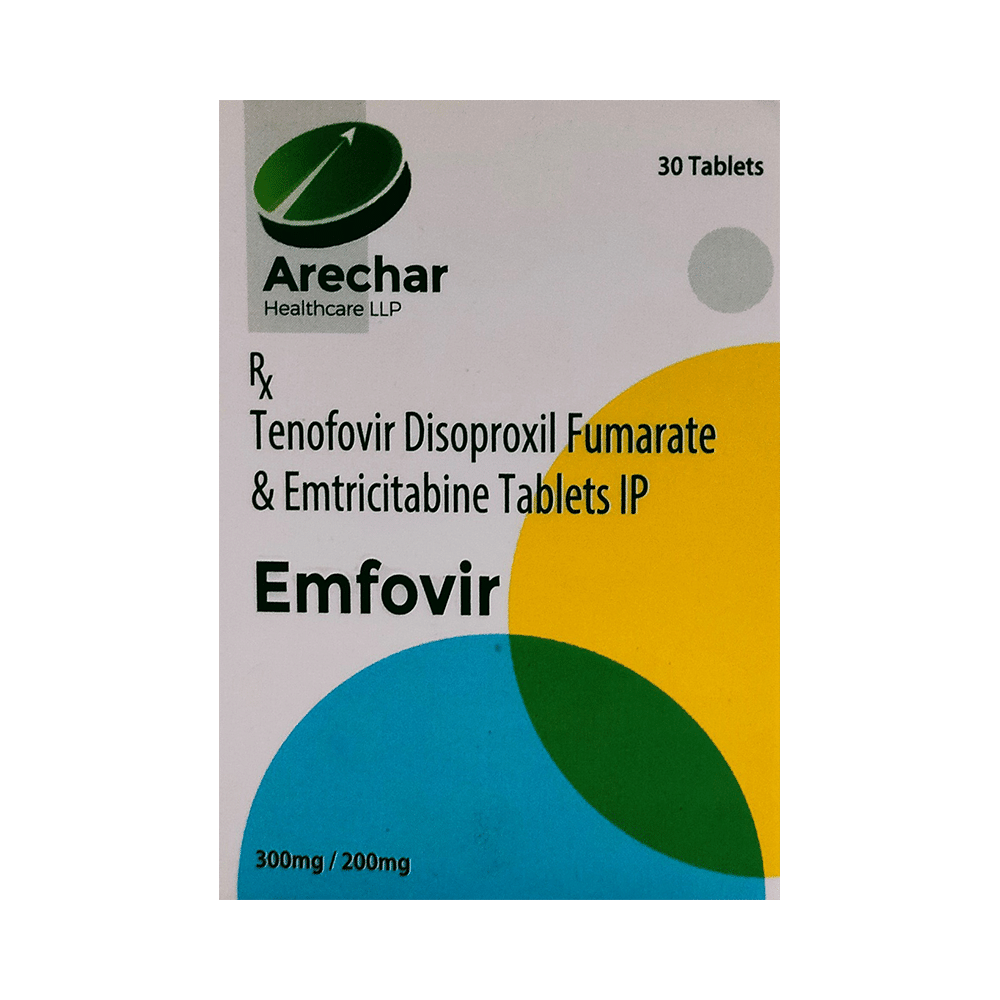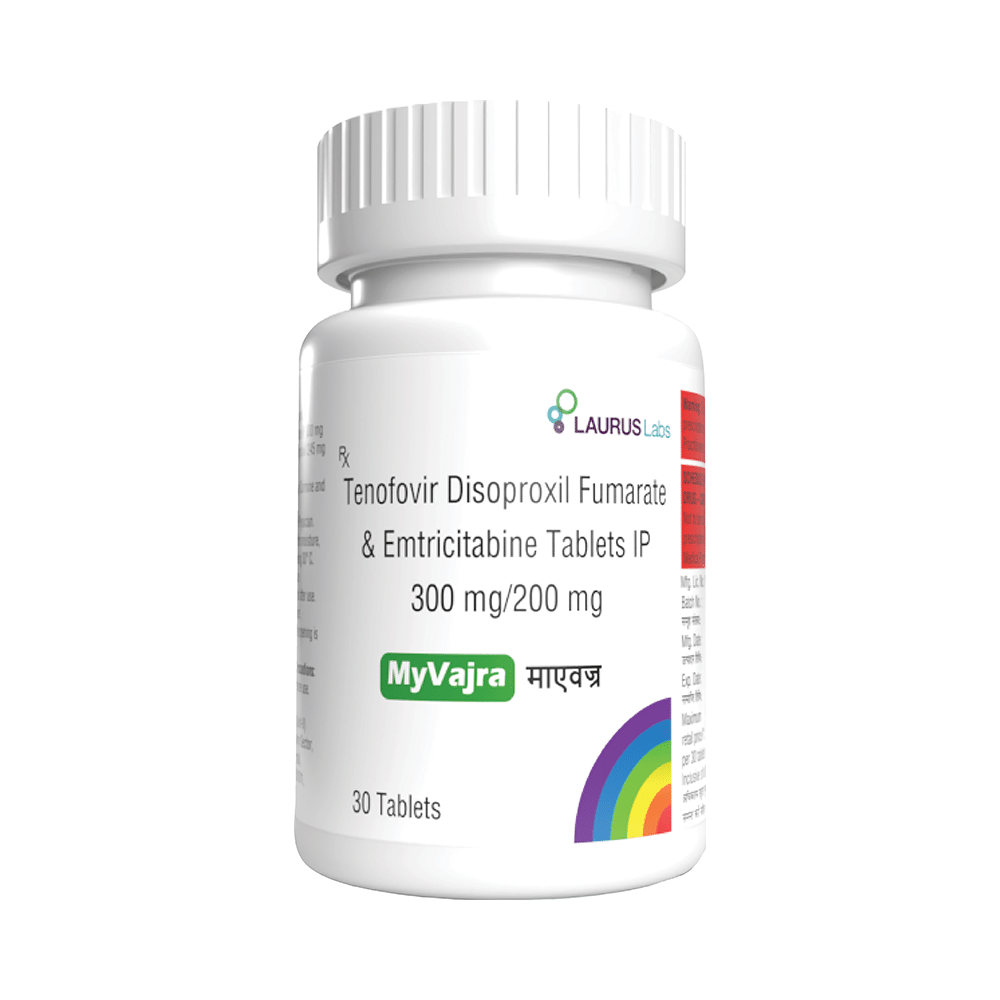
Myvajra Tablet
bottle of 30.0 tablets.Prescription required
About this product:
| Salt Composition: | Emtricitabine (200mg) + Tenofovir disoproxil fumarate (300mg) |
| Manufacturer: | Laurus Labs Limited |
| Storage: | Below 25 degree celcius |
Out of Stock
Have doubts about this medicine?
Have doubts about this medicine?
Myvajra Tablet is an antiretroviral medicine used to treat HIV (human immunodeficiency virus) and prevent its progression to AIDS (acquired immunodeficiency syndrome). Myvajra Tablet is not a cure for HIV/AIDS and only helps to decrease the amount of HIV in your body. This helps to lower your risk of getting HIV-related complications and improves your lifespan. It may also be used to prevent HIV infection in some people at high risk. It may be prescribed alone or in combination with other HIV medicines. Your doctor will recommend the best medicines for you and will decide the doses that you need. Follow carefully the instructions for all the medicines that you are given. This medicine is best taken with food. Taking these medicines regularly at the right time greatly increases their effectiveness and reduces the chances of HIV becoming resistant to them. It is important not to miss doses and to keep taking them until your doctor tells you it is safe to stop.
Myvajra Tablet is a combination of two anti-HIV medicines: Emtricitabine and Tenofovir disoproxil fumarate. They prevent HIV (virus) from multiplying thereby reducing the amount of virus in your body. They also increase the CD4 cell (white blood cells that protect against infection) count in your blood.
Take this medicine in the dose and duration as advised by your doctor. Swallow it as a whole. Do not chew, crush or break it. Myvajra Tablet is to be taken with food.
- Take it with food as this increases the absorption of the medicine into the body.
- Do not drive or do anything requiring concentration until you know how it affects you.
- Skipping doses increases the risk of treatment failure. Make sure that you take all your doses at the correct time.
- Always practice safe sex while taking Myvajra Tablet. Do not share needles or personal items that can have blood or body fluids on them.

Alcohol
It is not known whether it is safe to consume alcohol with Myvajra Tablet. Please consult your doctor.

Breastfeed
Myvajra Tablet is probably safe to use during breastfeeding. Limited human data suggests that the drug does not represent any significant risk to the baby.

Pregnancy
Myvajra Tablet is generally considered safe to use during pregnancy. Animal studies have shown low or no adverse effects to the developing baby; however, there are limited human studies.