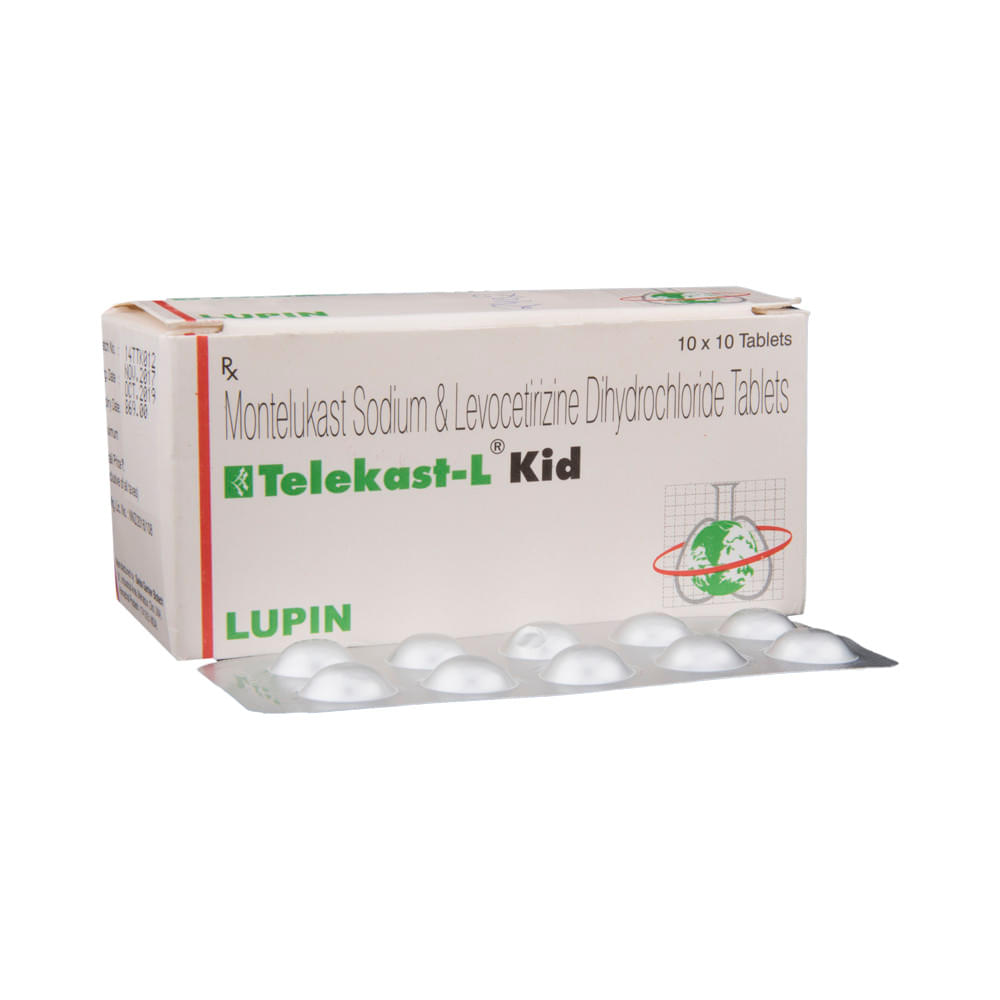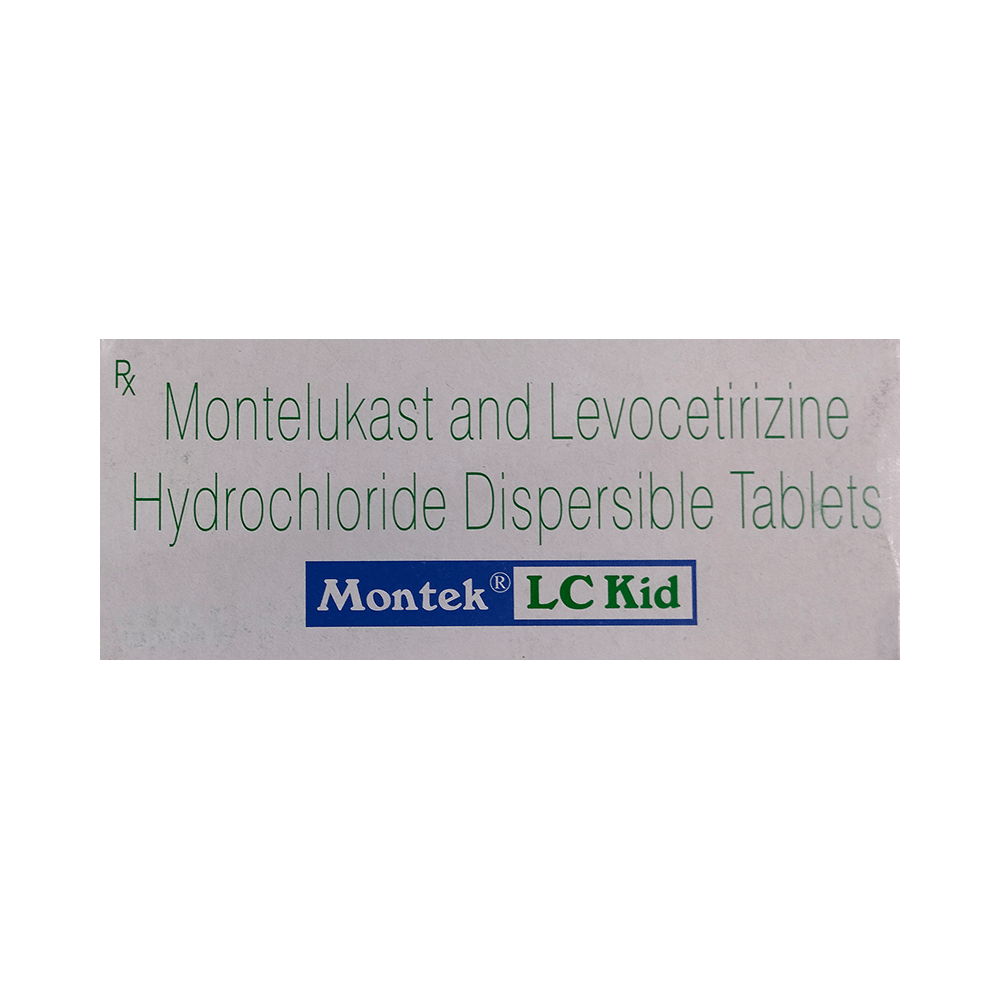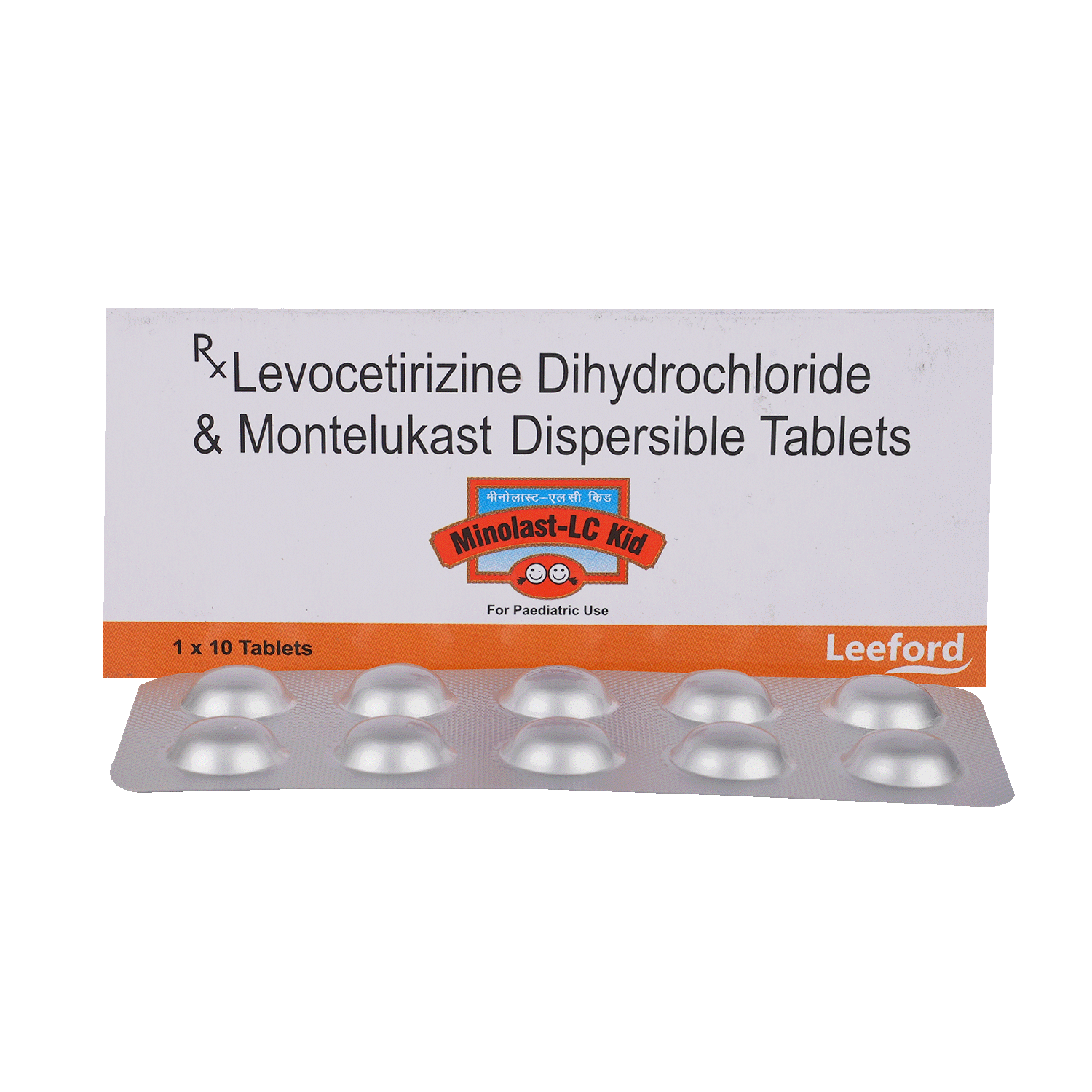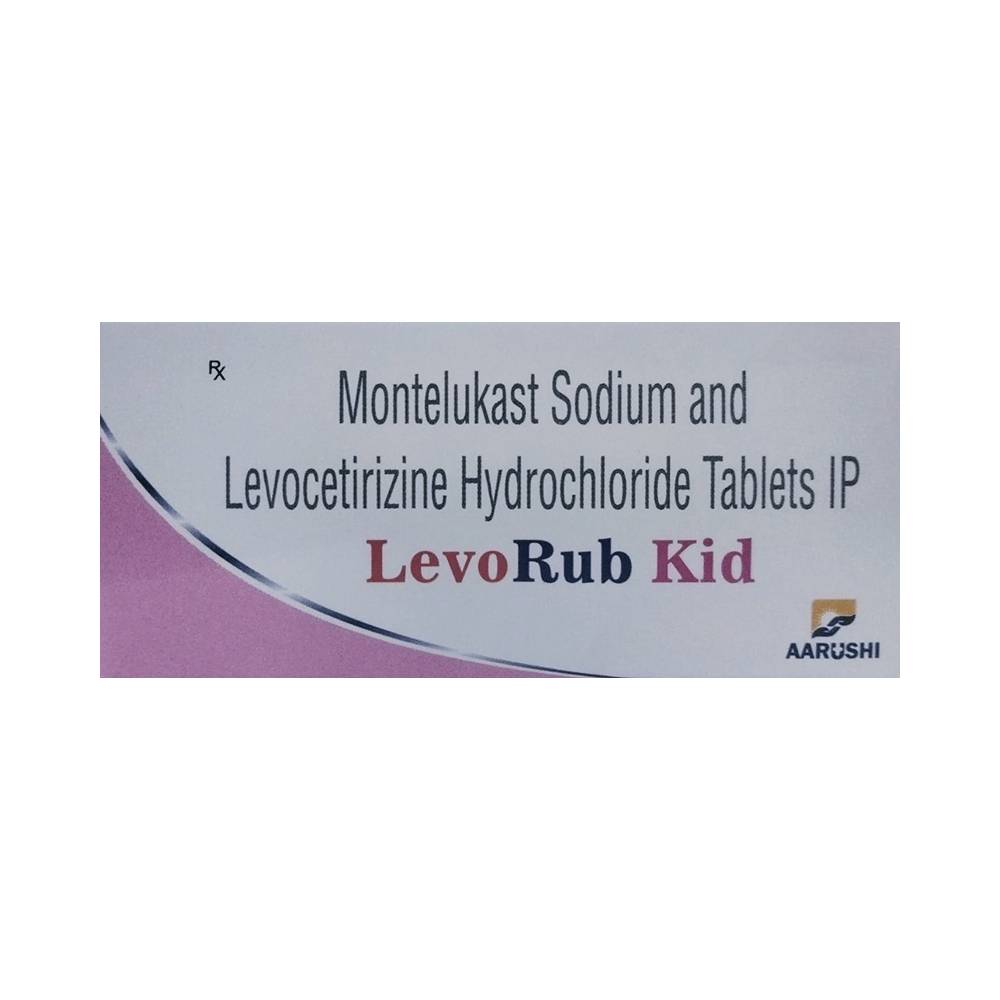
Medtan LC Kid 2.5mg/4mg Tablet
strip of 10.0 tablets.Prescription required
About this product:
| Salt Composition: | Levocetirizine (2.5mg) + Montelukast (4mg) |
| Manufacturer: | Medstanz Lifesciences |
| Storage: | Below 25 degree celcius |
Out of Stock
Have doubts about this medicine?
Have doubts about this medicine?
Medtan LC Kid 2.5mg/4mg Tablet is a medication used to treat symptoms of allergy in children, such as runny nose, sneezing, itching, swelling, congestion, and watery eyes. Medtan LC Kid 2.5mg/4mg Tablet is commonly prescribed in children to treat symptoms of allergy such as runny nose, sneezing, itching, swelling, congestion, and watery eyes. It may also help in the treatment of asthma and skin allergies.
Medtan LC Kid 2.5mg/4mg Tablet contains Levocetirizine and Montelukast. Together these two relieve sneezing and runny nose caused due to allergies. Levocetirizine is an antiallergic that blocks a chemical messenger (histamine) responsible for runny nose, watery eyes, and sneezing. Montelukast is a leukotriene antagonist. It works by blocking another chemical messenger (leukotriene). This reduces inflammation (swelling) in the airways and nose and improves symptoms.
What happens if I give my child a cough and allergy medicine together?
Do not mix cough and allergy medicines because they usually both contain similar ingredients, which may result in double dosing of the active ingredients, causing serious side effects. Instead, use these medications as directed for each condition separately.
Can I adjust the dose of Medtan LC Kid 2.5mg/4mg Tablet if my child starts to feel better?
No, it's essential to adhere to the prescribed dose by your child's doctor. Increasing or decreasing the dose yourself can impact their health and lead to unwanted effects like sedation and depression, or rebound reversal of all symptoms.
How should I store Medtan LC Kid 2.5mg/4mg Tablet?
Store Medtan LC Kid 2.5mg/4mg Tablet at room temperature in a dry place, away from direct heat and light. Keep all medicines out of the reach and sight of children to avoid accidental intake.
Can Medtan LC Kid 2.5mg/4mg Tablet make my child sleepy?
Medtan LC Kid 2.5mg/4mg Tablet may cause mild drowsiness, but it's essential not to give this medicine to your child to induce sleep. Forced sleep could mask any underlying sleep disorder like insomnia.
Can I start the course of Medtan LC Kid 2.5mg/4mg Tablet if my child is an athlete and has a sports event in two days?
Do not start Medtan LC Kid 2.5mg/4mg Tablet without consulting your child's doctor, as it may cause mild sedation, dizziness, and sleepiness, which can hamper their performance.
Can I stop the medicine by myself?
No, all symptoms may reappear on sudden withdrawal of Medtan LC Kid 2.5mg/4mg Tablet, usually if taken for a long-term. It's advised to stop this medicine gradually under the guidance of your child's doctor.
Is it safe to give Medtan LC Kid 2.5mg/4mg Tablet to my child with a mood disorder?
Some studies show that Medtan LC Kid 2.5mg/4mg Tablet can cause mood disorders, hallucinations, depression, anxiety, suicidal thoughts, shakiness, and trouble controlling body movements. Consult your child's doctor before giving this medicine.
Can I use Medtan LC Kid 2.5mg/4mg Tablet to treat acute asthma attacks in my child?
Medtan LC Kid 2.5mg/4mg Tablet should only be used to prevent asthma attacks, not to stop an attack that has already started. Use your child's reliever medicine to help with an attack that has already begun.
Take this medicine in the dose and duration as advised by your doctor. Swallow it as a whole. Do not chew, crush or break it. Medtan LC Kid 2.5mg/4mg Tablet may be taken with or without food, but it is better to take it at a fixed time.
- Never combine Medtan LC Kid 2.5mg/4mg Tablet with other cold and flu medicines as that may have side effects.
- Medtan LC Kid 2.5mg/4mg Tablet helps prevent asthma attacks. Never use it to stop an attack that has already started as it will not help.
- If you are giving Medtan LC Kid 2.5mg/4mg Tablet to your child for asthma or allergy, you need not give another dose to prevent exercise-induced breathing problems. In case of any confusion, consult your child’s doctor as soon as possible.
- Make sure that you always have enough medicine.
- Practice self-care tips: Abstain your child from coming in contact with allergens, Encourage your child to wear a face mask and avoid dusty places, Give plenty of fluids as it helps in thinning and loosening the mucus in the lungs.

Alcohol
Medtan LC Kid 2.5mg/4mg Tablet may cause excessive drowsiness with alcohol.

Breastfeed
Medtan LC Kid 2.5mg/4mg Tablet is probably safe to use during breastfeeding. Limited human data suggests that the drug does not represent any significant risk to the baby.

Pregnancy
Medtan LC Kid 2.5mg/4mg Tablet is generally considered safe to use during pregnancy. Animal studies have shown low or no adverse effects to the developing baby; however, there are limited human studies.