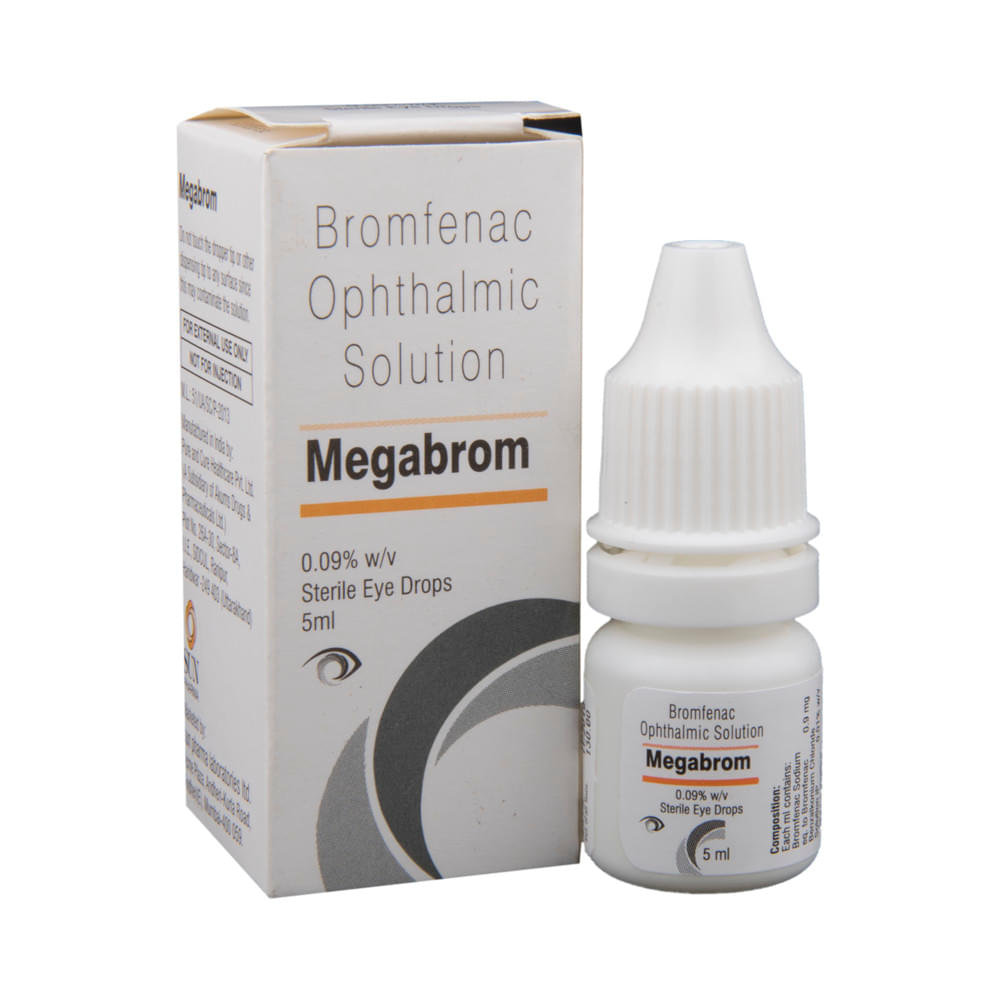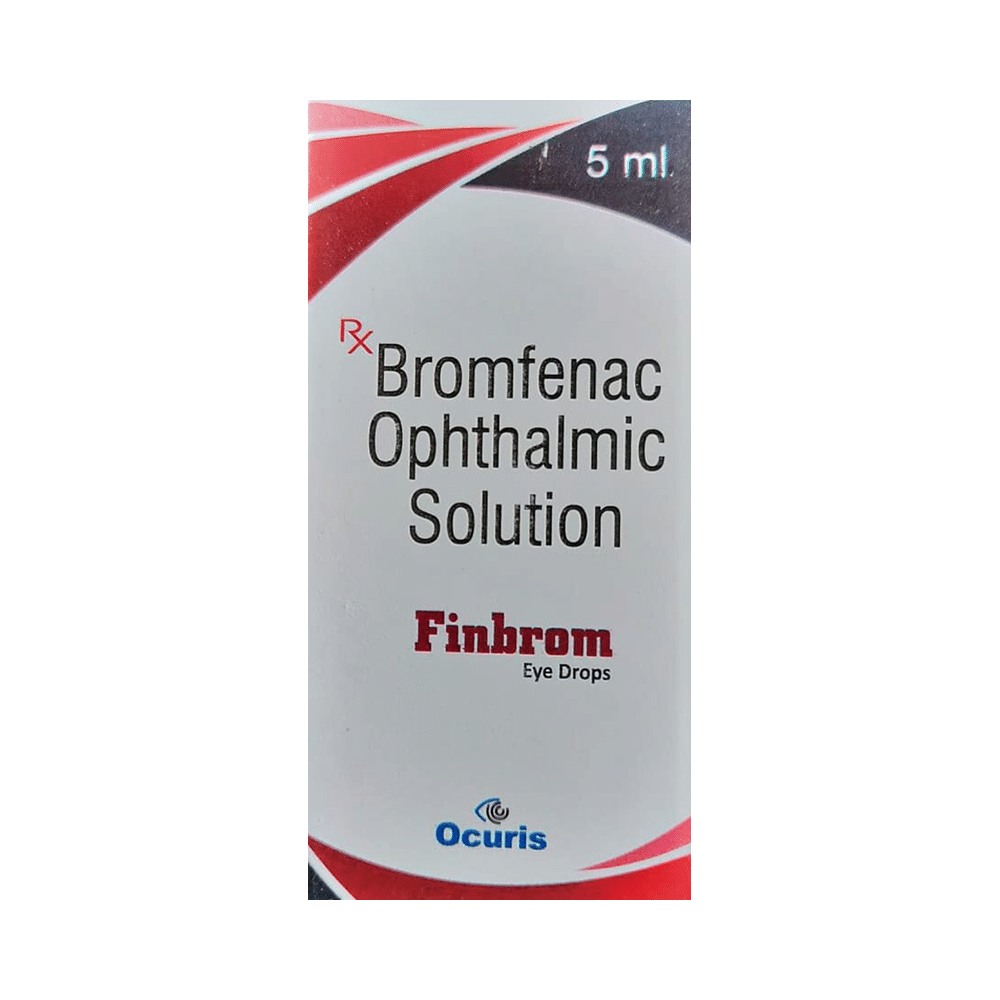
Hybrom 0.09% Eye Drop
bottle of 5.0 ml Ophthalmic Solution.Prescription required
About this product:
| Salt Composition: | Bromfenac (0.09% w/v) |
| Manufacturer: | Jainson Biotech (India) Pvt Ltd |
| Storage: | Below 25 degree celcius |
Out of Stock
Have doubts about this medicine?
Have doubts about this medicine?
Hybrom 0.09% Eye Drop is a pain-relieving medicine used to treat postoperative eye pain and inflammation in patients who have undergone cataract surgery. Always wash your hands before using Hybrom 0.09% Eye Drop. Use only the number of drops that your doctor has prescribed and wait for about five minutes between each drop. If you wear contact lenses, remove them before using the drops and wait for at least 15 minutes before putting them back in. You should not touch the tip of the dropper or bottle. This may lead to infection. Use of the medicine may cause blurred vision, increased sensitivity to light, change in color vision, decreased vision, eye pain, sore eyes, and teary eye. These are usually temporary and resolve with time. However, if they persist or get worse, you should let your doctor know. Your doctor may be able to suggest ways of preventing or reducing the symptoms. Before using this medicine, you should tell your doctor about all the other medicines you are taking. You should also tell your doctor if you have any other medical conditions or disorders. Pregnant and breastfeeding women should consult with their doctors before using the medicine.
Hybrom 0.09% Eye Drop is a non-steroidal anti-inflammatory drug (NSAID). It works by stopping the release of certain natural substances in the eye that are responsible for pain and inflammation (redness and swelling).
What is the correct way to use Hybrom 0.09% Eye Drop?
Always wash your hands before and after using Hybrom 0.09% Eye Drop. This helps prevent transferring infection between eyes. Remove the cap just before applying the medicine and replace it immediately after finishing. Avoid touching the bottle nozzle with your fingers. Tilt your head back and gently pull down your lower eyelid with a clean finger. Hold the bottle over your eye and allow one drop to fall into the space between your lower lid and your eye. Close your eye and gently press your finger over the inside corner of your eye (over the eyelid) for about a minute. This helps prevent the drop from draining out of the eye. Repeat in your other eye if your doctor has instructed you to do so.
How often can I use Hybrom 0.09% Eye Drop?
Use one drop in the affected eye once daily, starting one day before surgery, continuing on the day of surgery, and for up to 14 days after surgery. Always follow your doctor's instructions regarding dosage as it might vary from patient to patient.
When should I seek medical advice?
Contact your doctor immediately if you experience abnormal sensations in your eye, eye irritation (burning/stinging), eye pain, eye allergy, eye redness, headache, and iritis (inflammation of the colored part of your eye).
Can I use any other eye drops with Hybrom 0.09% Eye Drop?
Consult your doctor before using any other eye drops in conjunction with Hybrom 0.09% Eye Drop. It is recommended to avoid using them simultaneously and to allow a minimum of five-minute gap between medications.
Can I use other topical pain relievers while using Hybrom 0.09% Eye Drop?
Using other topical pain relievers with Hybrom 0.09% Eye Drop may slow or delay healing of the operated eye. Consult your doctor if you have any doubts about this.
This medicine is for external use only. Take it in the dose and duration as advised by your doctor. Check the label for directions before use. Hold the dropper close to the eye without touching it. Gently squeeze the dropper and place the medicine inside the lower eyelid. Wipe off extra liquid.
- Your doctor has prescribed Hybrom 0.09% Eye Drop for the relief of post-operative eye pain and inflammation (redness and swelling).
- Apply pressure on the corner of the eye (close to the nose) for about 1 minute immediately after instilling the drop.
- Usually a 4 to 6-week course may be necessary.
- Wait for at least 5-10 minutes before delivering the next medication in the same eye to avoid dilution.
- Stinging sensation may occur for 1-2 mins. Notify your doctor if it persists for longer.
- Notify your doctor if you are on blood thinners or have bleeding problems.
- Use the eye drops within 4 weeks of opening the bottle.
- No common side effects listed.

Alcohol
No interaction found/established

Breastfeed
Hybrom 0.09% Eye Drop is probably safe to use during breastfeeding. Limited human data suggests that the drug does not represent any significant risk to the baby.

Pregnancy
Hybrom 0.09% Eye Drop may be unsafe to use during pregnancy. Although there are limited studies in humans, animal studies have shown harmful effects on the developing baby. Your doctor will weigh the benefits and any potential risks before prescribing it to you. Please consult your doctor.