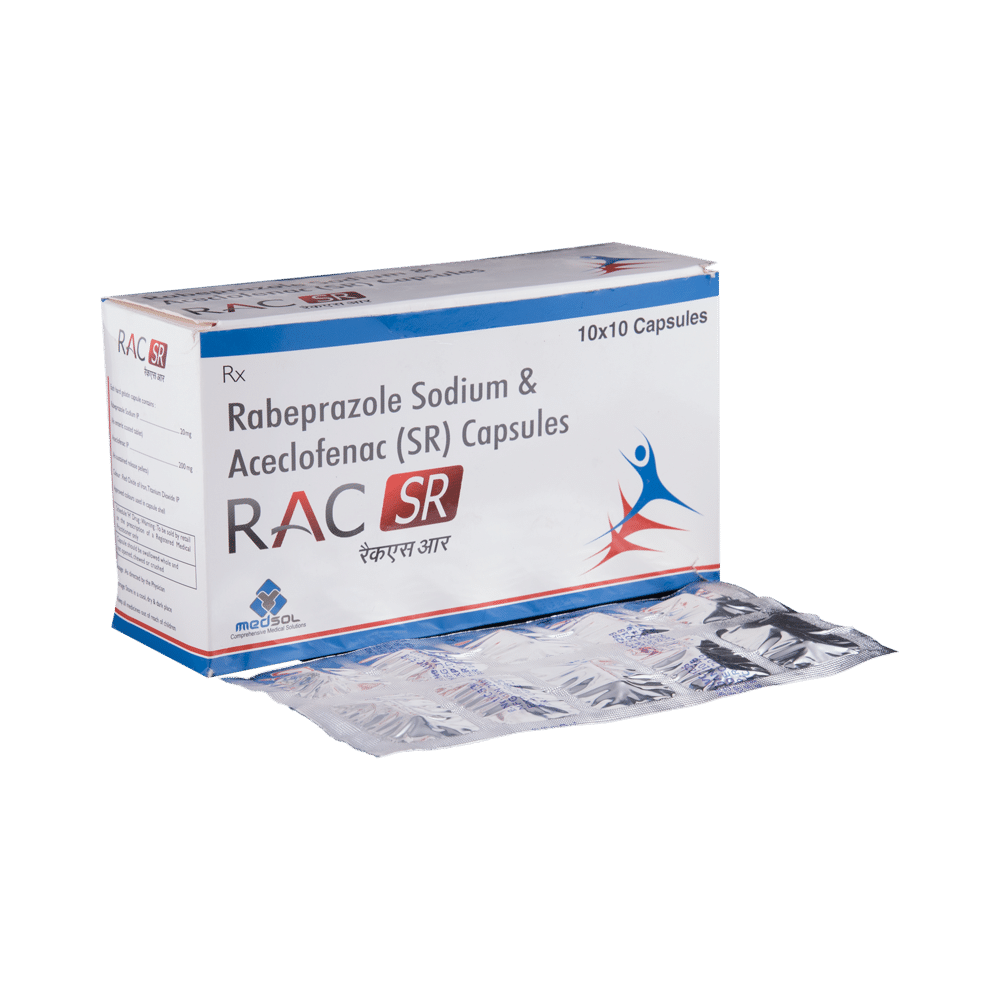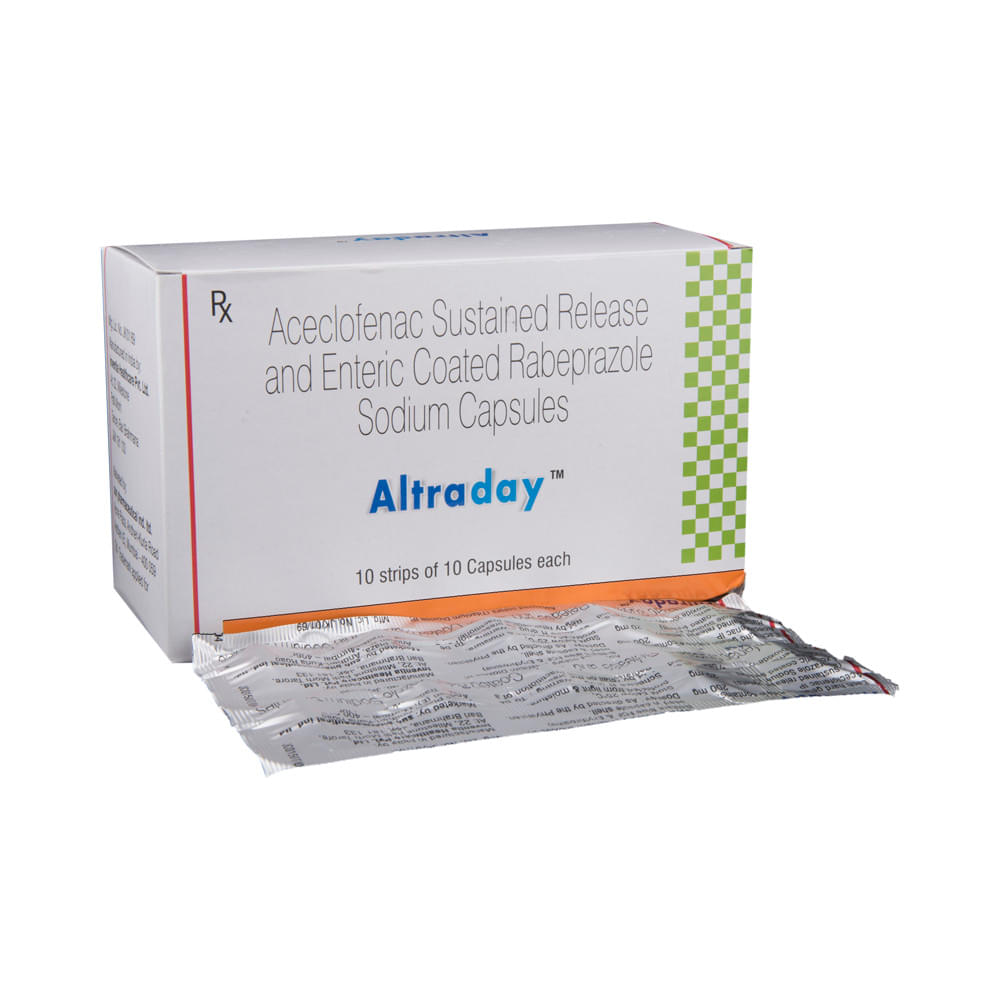
Flezorab 200mg/20mg Capsule SR
strip of 10.0 capsule.Prescription required
About this product:
| Salt Composition: | Aceclofenac (200mg) + Rabeprazole (20mg) |
| Manufacturer: | Human Biolife India Pvt Ltd |
| Storage: | Below 25 degree celcius |
Out of Stock
Have doubts about this medicine?
Have doubts about this medicine?
Flezorab 200mg/20mg Capsule SR is a combination of two medicines used to reduce pain and inflammation in conditions like rheumatoid arthritis, ankylosing spondylitis, and osteoarthritis. Flezorab 200mg/20mg Capsule SR can be taken with or without food. The dose will depend on what you are taking it for and how well it helps your symptoms. You should take it as advised by your doctor. Do not take more or use it for a longer duration than recommended by the doctor. The most common side effects of this medicine include nausea, flatulence, indigestion, diarrhea, and constipation. If any of these side effects bother you or get worse, you should speak to your doctor. Your doctor may be able to suggest ways of preventing or reducing the side effects.
Flezorab 200mg/20mg Capsule SR is a combination of two medicines: Aceclofenac and Rabeprazole, which relieves pain. Aceclofenac is a non-steroidal anti-inflammatory drug (NSAID) which works by blocking the release of certain chemical messengers that cause pain and inflammation (redness and swelling). Rabeprazole is a proton-pump inhibitor which prevents damage to the stomach lining caused by Aceclofenac.
What is Flezorab 200mg/20mg Capsule SR?
Flezorab 200mg/20mg Capsule SR is a combination medication containing Aceclofenac and Rabeprazole. It works to alleviate pain and inflammation, while also preventing digestive problems associated with Aceclofenac.
Can I stop taking Flezorab 200mg/20mg Capsule SR when my pain is relieved?
If you are using Flezorab 200mg/20mg Capsule SR for long-term pain relief, it is essential to continue the medication as advised by your physician. If you are taking it for short-term pain relief, you can discontinue use when the pain subsides.
Can the use of Flezorab 200mg/20mg Capsule SR cause nausea and vomiting?
Yes, Flezorab 200mg/20mg Capsule SR may cause nausea and vomiting. To alleviate this, it is recommended to avoid consuming fatty or fried foods while taking the medication. If you experience persistent vomiting, please drink plenty of water or other fluids by taking small frequent sips. If symptoms persist and you notice signs of dehydration, such as dark-colored and strong-smelling urine, and a low frequency of urination, consult your doctor. Do not take any additional medicine without consulting your doctor.
Can the use of Flezorab 200mg/20mg Capsule SR cause dizziness?
Flezorab 200mg/20mg Capsule SR may cause dizziness in some patients. If you feel dizzy or lightheaded, it is advisable to rest for a while and resume once you feel better.
Can I take Flezorab 200mg/20mg Capsule SR with Vitamin B-complex?
Yes, Flezorab 200mg/20mg Capsule SR can be taken with Vitamin B-complex preparations. While the former relieves pain, the latter helps to correct vitamin deficiencies that might be causing your symptoms.
What is the recommended storage condition for Flezorab 200mg/20mg Capsule SR?
To store Flezorab 200mg/20mg Capsule SR, keep it in its original container or pack, tightly closed. Dispose of any unused medicine and ensure it is not accessible to pets, children, or other individuals.
Take this medicine in the dose and duration as advised by your doctor. Swallow it as a whole. Do not chew, crush or break it. Flezorab 200mg/20mg Capsule SR may be taken with or without food, but it is better to take it at a fixed time.
- Take it as per the dose and duration prescribed by your doctor. Long term use may lead to serious side effects.
- It may cause dizziness and sleepiness. Don't drive or do anything that requires mental focus until you know how Flezorab 200mg/20mg Capsule SR affects you.
- Inform your doctor if you are pregnant, planning to conceive or breastfeeding.
- Your doctor may regularly monitor your kidney function, liver function and levels of blood components if you are taking this medicine for long duration.
- nausea
- flatulence
- indigestion
- diarrhea
- constipation

Alcohol
It is unsafe to consume alcohol with Flezorab 200mg/20mg Capsule SR.

Breastfeed
Information regarding the use of Flezorab 200mg/20mg Capsule SR during breastfeeding is not available. Please consult your doctor.

Pregnancy
Flezorab 200mg/20mg Capsule SR may be unsafe to use during pregnancy. Although there are limited studies in humans, animal studies have shown harmful effects on the developing baby. Your doctor will weigh the benefits and any potential risks before prescribing it to you. Please consult your doctor.