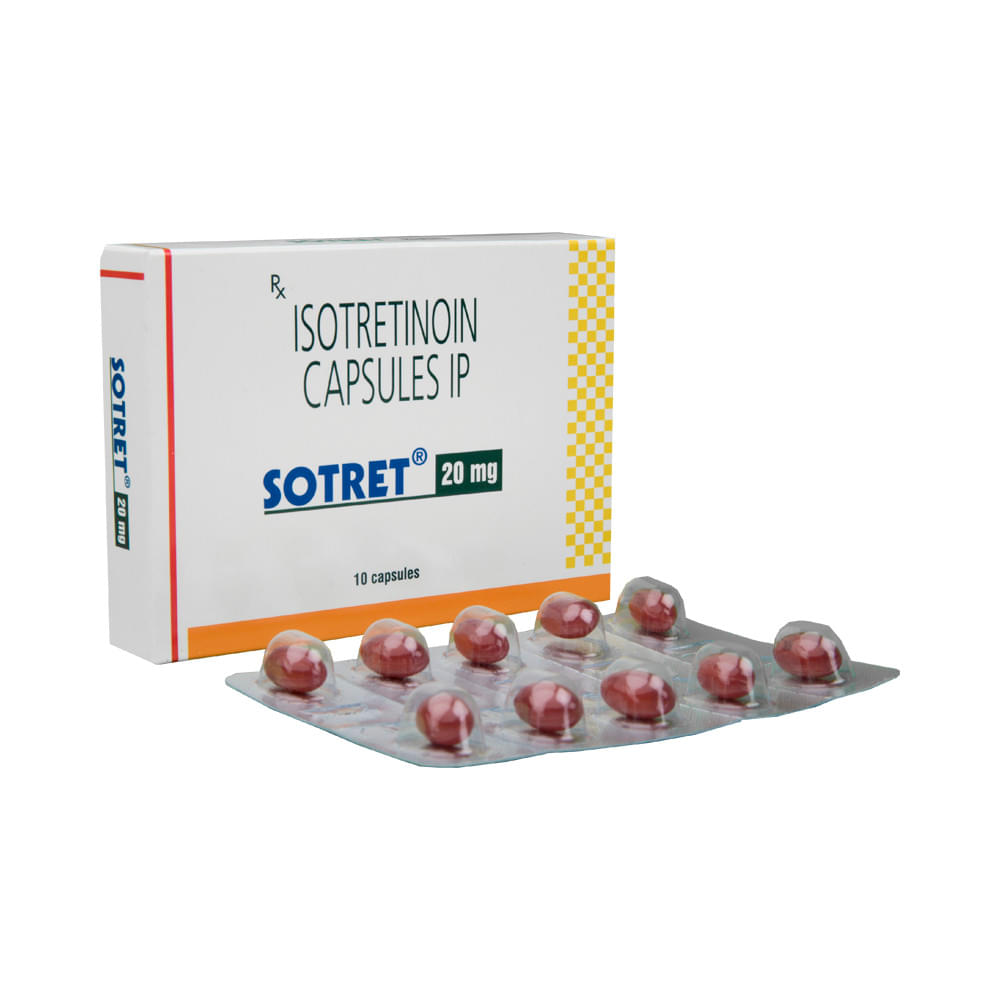
Ethitret 20mg Capsule
strip of 10.0 capsules.Prescription required
About this product:
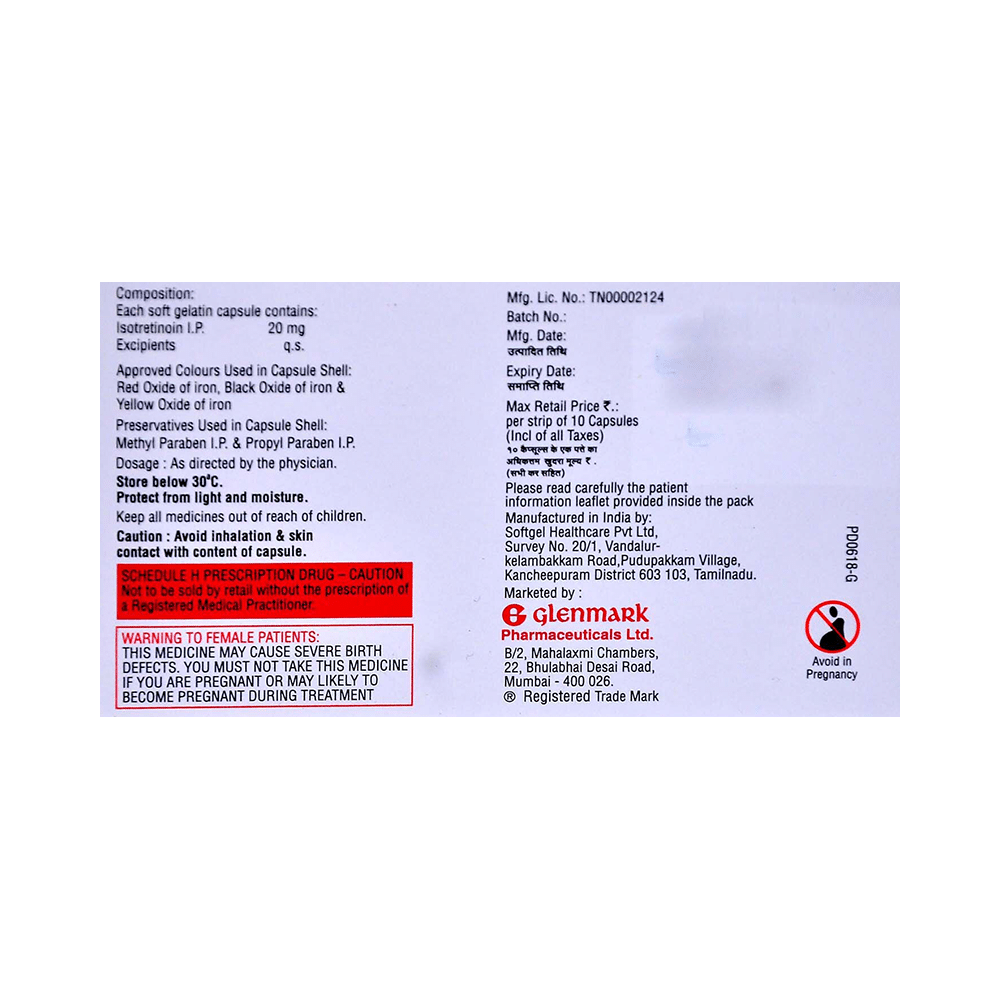
| Salt Composition: | Isotretinoin (20mg) |
| Manufacturer: | Ethinext Pharma |
| Storage: | Below 25 degree celcius |
Out of Stock
Have doubts about this medicine?
Have doubts about this medicine?
Ethitret 20mg Capsule is a retinoid (vitamin A derivative) used to treat severe acne that has not responded to other treatments. Ethitret 20mg Capsule should be used in the dose and duration as advised by your doctor. Take it with food, preferably at the same time each day to avoid a missed dose. It may take several weeks for your symptoms to improve but keep taking the medicine regularly to get the most benefit. If you notice no improvement after a few weeks, see your doctor again.
Ethitret 20mg Capsule is a derivative of vitamin A. It acts on glands (sebaceous) to reduce the production of a natural substance (sebum) that causes acne. Also, the controlled sebum production kills acne-causing bacteria. It also works as an anti-inflammatory to decrease inflammation (redness and swelling).
Is Ethitret 20mg Capsule safe to use?
When using Ethitret 20mg Capsule, it's essential to exercise caution due to its potential for significant adverse reactions. This medication should only be prescribed to patients with severe nodular acne who have not responded to conventional therapy, including systemic antibiotics. Additionally, pregnant women should avoid taking Ethitret 20mg Capsule as it can cause severe birth defects.
Is Ethitret 20mg Capsule a steroid?
No, Ethitret 20mg Capsule is classified as a retinoid (vitamin A), specifically used to treat severe types of acne. It does not belong to the steroid category.
What are the recommended tests during Ethitret 20mg Capsule therapy?
Prior to starting treatment, your liver enzymes and serum lipids will be checked. These levels will also be monitored one month after treatment initiation and subsequently at three-month intervals unless more frequent monitoring is clinically indicated.
Is the effect of Ethitret 20mg Capsule permanent?
In many patients, a single 15-20 week course has been observed to effectively cure the condition and prevent it from recurring. If a second course is required, wait at least eight weeks after completing the first course. This is because symptoms in patients with acne may continue to improve following treatment with Ethitret 20mg Capsule.
Why is Ethitret 20mg Capsule so dangerous during pregnancy?
If pregnancy occurs during treatment with Ethitret 20mg Capsule, there is an extremely high risk that the baby may be born with severe birth defects.
Can Ethitret 20mg Capsule cause cancer?
No, there are no reports of Ethitret 20mg Capsule causing cancer. In fact, it may be useful in some forms of head, skin, and neck cancers.
What are the long-term side effects of Ethitret 20mg Capsule?
A normal course of treatment is 15–20 weeks. Therefore, the long-term effects of low doses have not been studied. However, it may have some effect on bone mineral density, potentially leading to osteoporosis or fractures in some patients.
Does Ethitret 20mg Capsule affect male fertility?
No, Ethitret 20mg Capsule does not affect the fertility of male patients. No significant effects were seen on ejaculate volume, sperm count, total sperm motility, morphology, or seminal plasma fructose.
Does Ethitret 20mg Capsule damage your liver?
There may be a transient increase in liver enzymes with Ethitret 20mg Capsule use. Regular laboratory tests are required to monitor these values. If levels remain elevated for an extended period, the doctor may discontinue the use of Ethitret 20mg Capsule.
Take this medicine in the dose and duration as advised by your doctor. Ethitret 20mg Capsule is to be taken with food.
- You have been prescribed Ethitret 20mg Capsule for the treatment of severe acne.
- Take it with food.
- Avoid exposure to sunlight while using Ethitret 20mg Capsule. Use protective measures such as sunscreen or protective clothing.
- Avoid face waxing and laser treatment while using this medicine as it makes your skin more fragile.
- It may cause dryness of mouth, lips, and eyes. Drink plenty of water, use moisturiser and avoid wearing contact lenses. Inform your doctor if it bothers you.

Alcohol
Caution is advised when consuming alcohol with Ethitret 20mg Capsule. Please consult your doctor.

Breastfeed
Ethitret 20mg Capsule is probably unsafe to use during breastfeeding. Limited human data suggests that the drug may pass into the breastmilk and harm the baby.

Pregnancy
Ethitret 20mg Capsule is highly unsafe to use during pregnancy. Seek your doctor's advice as studies on pregnant women and animals have shown significant harmful effects to the developing baby.