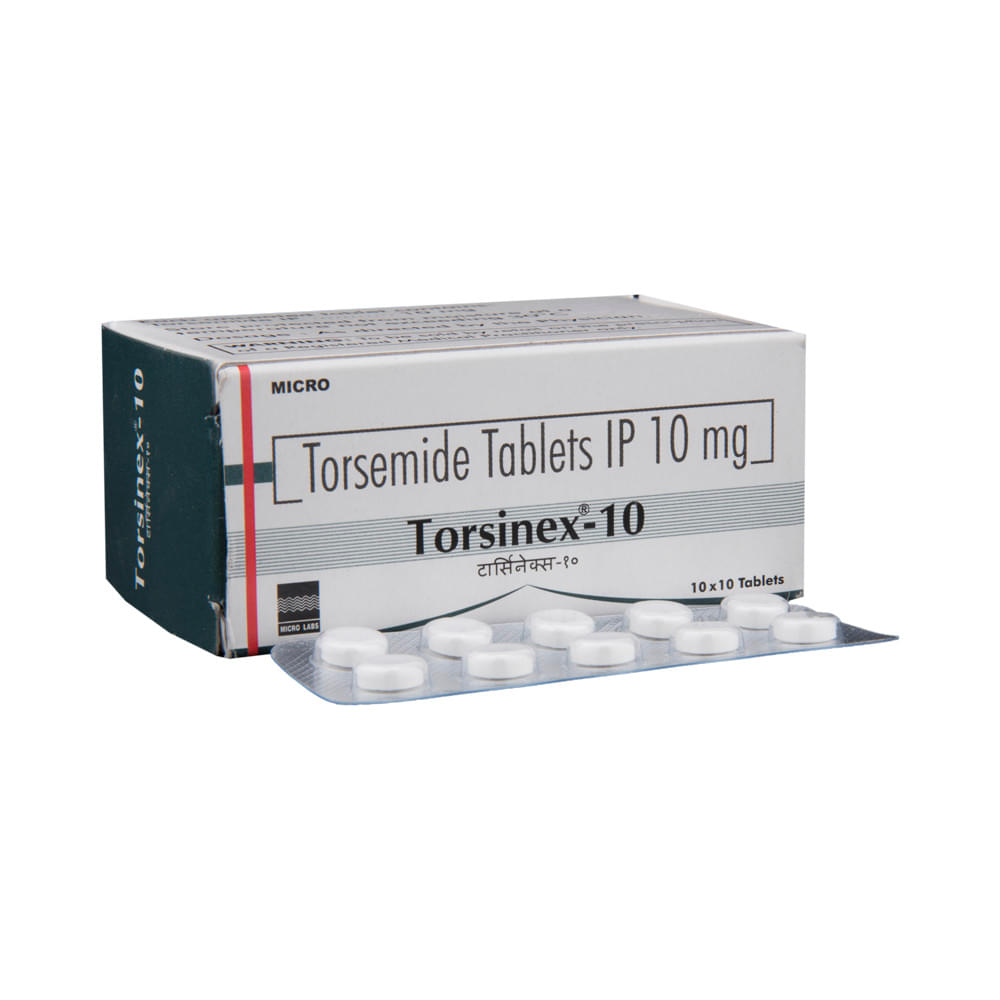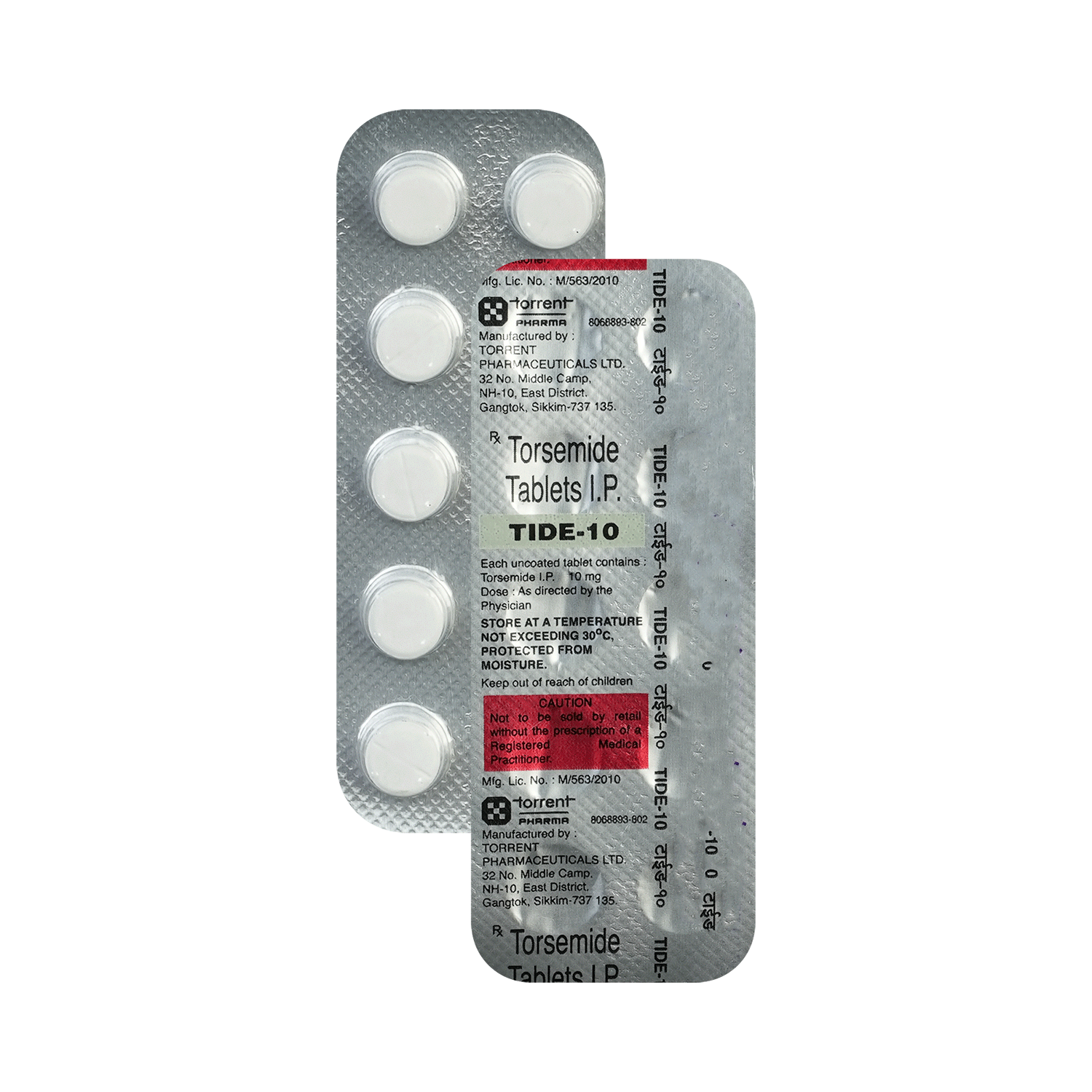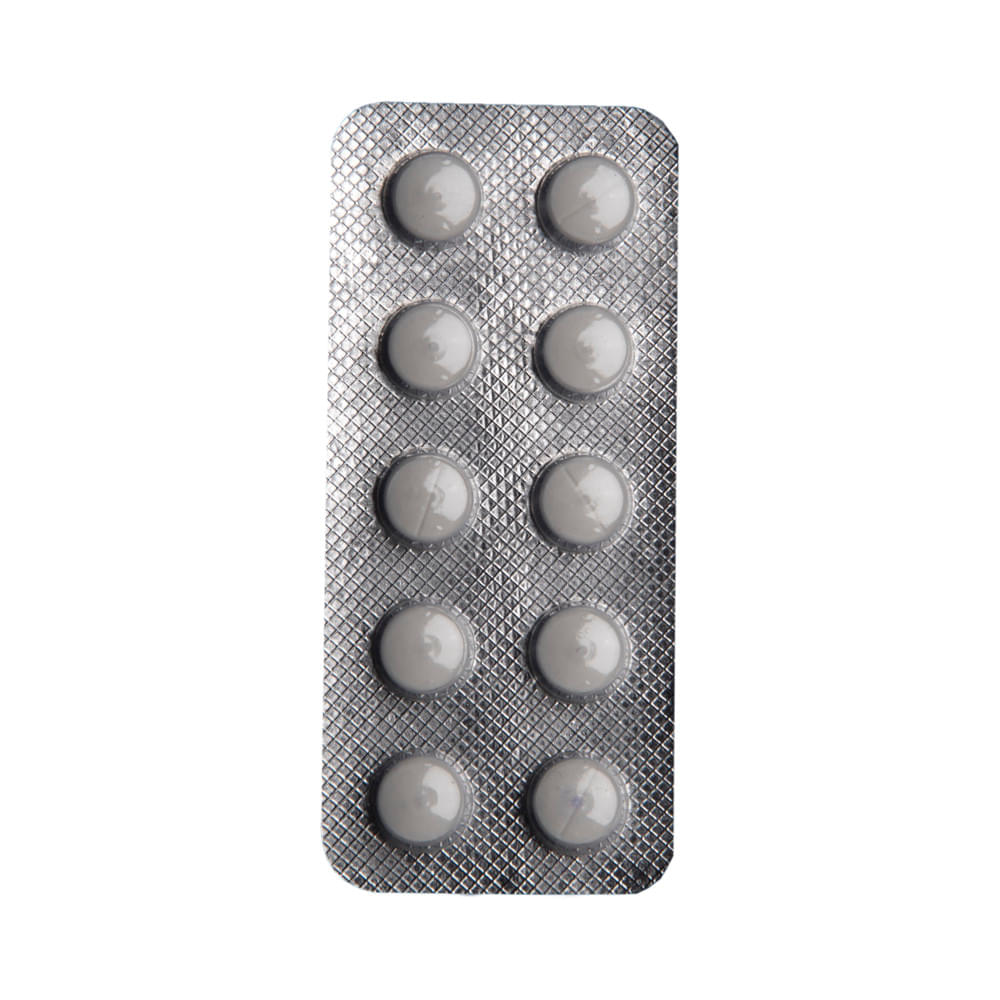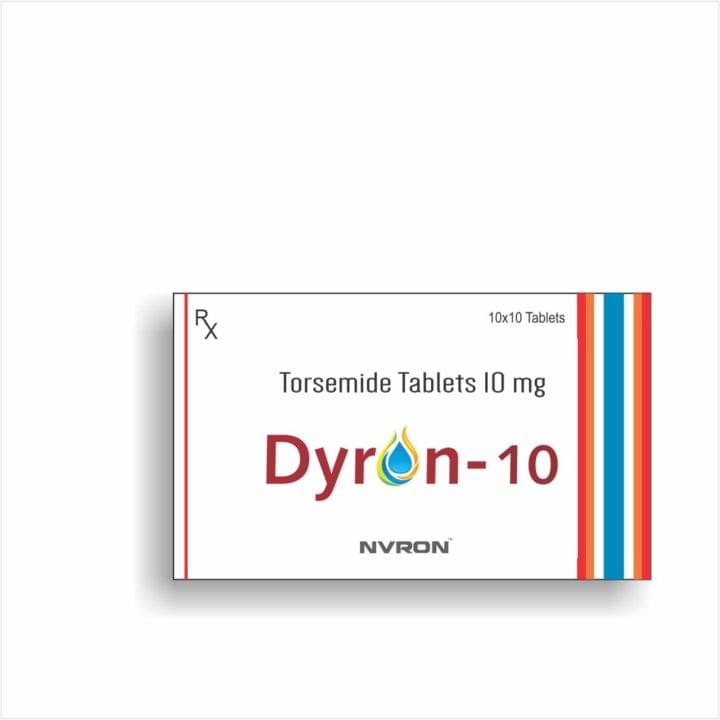
Dyron 10 Tablet
strip of 10.0 tablets.Prescription required
About this product:
| Salt Composition: | Torasemide (10mg) |
| Manufacturer: | Nvron Life Science Ltd |
| Storage: | Below 25 degree celcius |
Out of Stock
Have doubts about this medicine?
Have doubts about this medicine?
Dyron 10 Tablet is a diuretic used to reduce swelling caused by excess water in the body in people with heart failure, liver disease, or kidney disease. It is also used to treat high blood pressure. Dyron 10 Tablet helps your body get rid of extra water and salt through urine. It may be used alone or in combination with other medicines as per the dose advised by your doctor. It can be taken with or without food and should be taken at the same time each day. It is best to avoid taking this medicine within 4 hours of your bedtime to prevent having to get up at night to urinate. It is important to continue taking this medication even if you feel well. If you stop taking it without consulting your doctor, your condition may worsen. Lifestyle changes like reducing stress, restricting salt intake, and stopping smoking may help this medication work better.
Dyron 10 Tablet is a diuretic. It removes extra water and certain electrolytes from the body by increasing the amount of urine produced.
Does Dyron 10 Tablet raise blood sugar?
Yes, Dyron 10 Tablet may cause a rise in blood glucose levels, leading to hyperglycemia. It is essential to monitor your blood sugar levels throughout the treatment period with Dyron 10 Tablet.
What are the potential side effects of Dyron 10 Tablet?
Common side effects may include headaches, dizziness, dehydration, constipation, decreased blood pressure, and stomach discomfort. In some cases, more severe side effects can occur, such as dehydration, electrolyte imbalance, rapid or excessive weight loss, vomiting blood, chest pain, difficulty breathing or swallowing, blisters or peeling skin, hives, rash, and itching. If you experience any of these symptoms, please consult your doctor immediately.
Does Dyron 10 Tablet increase creatinine levels?
Yes, Dyron 10 Tablet may lead to a slight increase in creatinine values, particularly with long-term use. However, creatinine levels typically return to normal once treatment is discontinued.
Can Dyron 10 Tablet cause potassium loss?
While Dyron 10 Tablet itself does not directly cause potassium loss, it may contribute to dehydration through excessive urination. This can indirectly lead to a decrease in potassium levels, as well as sodium, calcium, and magnesium.
Should I stop taking Dyron 10 Tablet if my blood pressure is under control?
It is not recommended to discontinue Dyron 10 Tablet without consulting your doctor. Stopping the medication may lead to a resurgence of blood pressure levels as they were before treatment. Discuss this with your doctor, who will advise on whether to modify the medicine or dosage according to your needs.
How should I take Dyron 10 Tablet?
Take Dyron 10 Tablet exactly as directed by your doctor. Generally, it is advised to take one tablet daily at the same time each day. As Dyron 10 Tablet can cause increased urination, it's best taken in the morning.
Is Dyron 10 Tablet stronger than furosemide?
Both Dyron 10 Tablet and furosemide have similar safety and effectiveness profiles. The primary difference is that Dyron 10 Tablet has a longer duration of action, while the effects of both medications start within an hour of intake.
How long does it take for Dyron 10 Tablet to show its effects?
Dyron 10 Tablet starts acting within an hour after oral administration and can last for about 6-8 hours when taken orally.
Take this medicine in the dose and duration as advised by your doctor. Swallow it as a whole. Do not chew, crush or break it. Dyron 10 Tablet may be taken with or without food, but it is better to take it at a fixed time.
- Take it in the morning with breakfast to avoid getting up at night to urinate.
- Monitor your blood pressure after starting Dyron 10 Tablet and notify your doctor if it does not lower down.
- Consult your doctor if you experience dizziness, tiredness, or muscle weakness that does not go away.
- Take potassium supplements or potassium-rich diet (banana, spinach, coconut water, etc.) as Dyron 10 Tablet can decrease your potassium levels and lead to dehydration.
- You may be asked to get regular blood tests done to monitor your kidney function.
- No common side effects listed.

Alcohol
It is not known whether it is safe to consume alcohol with Dyron 10 Tablet. Please consult your doctor.

Breastfeed
Dyron 10 Tablet is probably safe to use during breastfeeding. Limited human data suggests that the drug does not represent any significant risk to the baby.

Pregnancy
Dyron 10 Tablet is generally considered safe to use during pregnancy. Animal studies have shown low or no adverse effects to the developing baby; however, there are limited human studies.