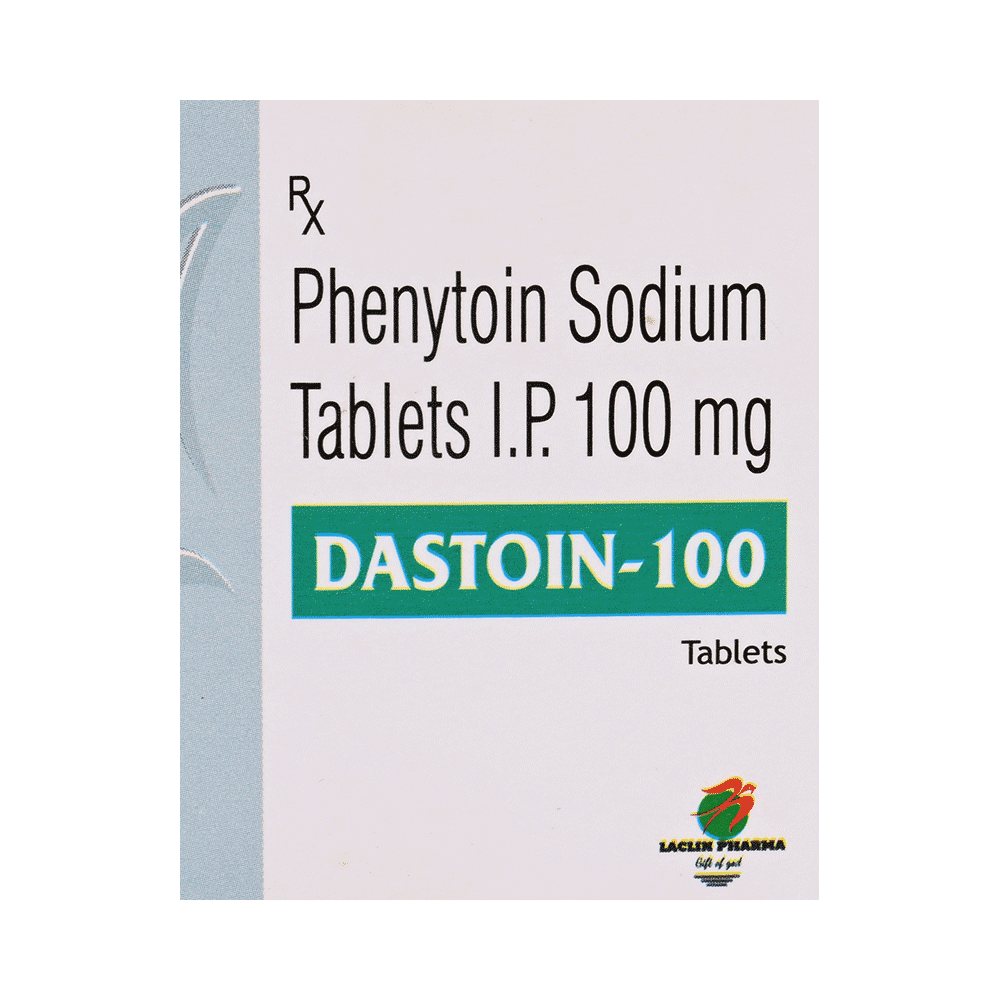
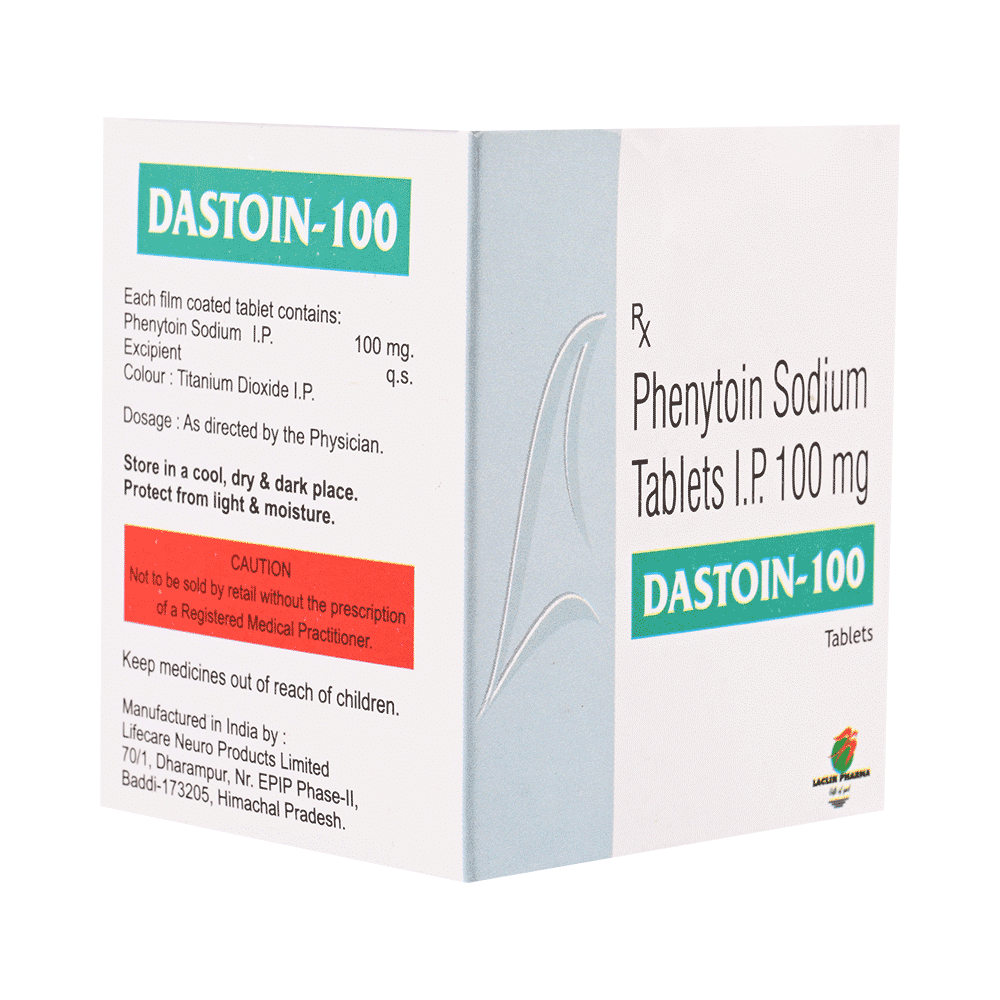
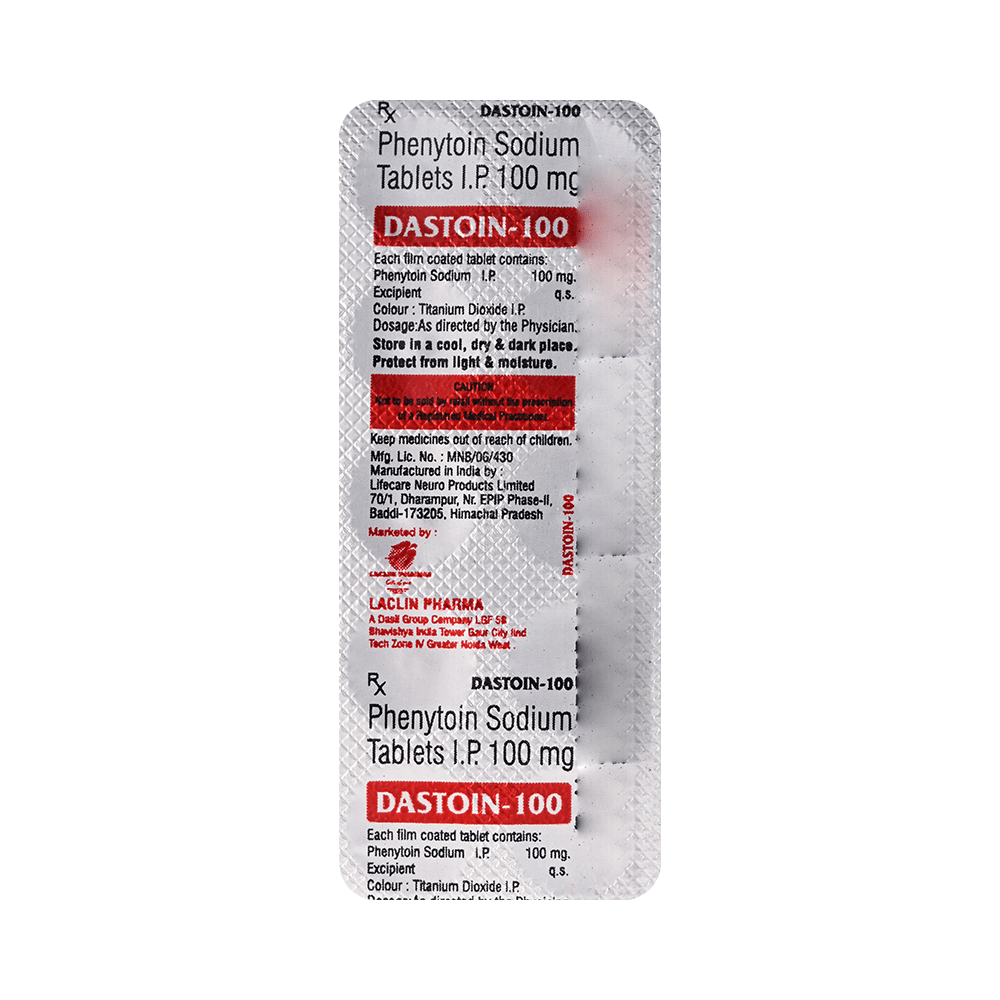
Dastoin 100 Tablet
strip of 10.0 tablets.Prescription required
About this product:
| Salt Composition: | Phenytoin (100mg) |
| Manufacturer: | Laclin Pharma Pvt Ltd |
| Storage: | Below 25 degree celcius |
Out of Stock
Have doubts about this medicine?
Have doubts about this medicine?
Dastoin 100 Tablet is a prescription medicine used to treat and prevent epilepsy (seizures) by decreasing the abnormal and excessive activity of the nerve cells in the brain. Dastoin 100 Tablet is an antiepileptic medication used to treat and prevent epilepsy (seizures). It controls seizures by decreasing the abnormal and excessive activity of the nerve cells in the brain. It is important to take this medicine regularly as directed by your doctor to prevent seizures.
Dastoin 100 Tablet is an antiepileptic medication. It controls seizures or fits by decreasing the abnormal and excessive activity of the nerve cells in the brain.
How long does Dastoin 100 Tablet stay in your system on average?
Dastoin 100 Tablet can remain in your system for approximately 5-6 days, although this duration may vary from person to person and can be up to 9-10 days in some cases.
What happens if I stop taking Dastoin 100 Tablet abruptly?
Suddenly discontinuing Dastoin 100 Tablet can lead to status epilepticus, a life-threatening condition. It is essential to consult your doctor before stopping the medication, as they will guide you on how to taper off the dose safely.
What are the symptoms of an overdose with Dastoin 100 Tablet?
Overdosing on Dastoin 100 Tablet can cause nystagmus (jerky eye movements), unclear speech, loss of balance, tremors, muscle weakness or stiffness, nausea, vomiting, dizziness, fainting, blurred vision, slow and shallow breathing, and even coma. In severe cases, it can lead to very low blood pressure and respiratory problems.
Who should avoid taking Dastoin 100 Tablet?
You should not take Dastoin 100 Tablet if you have liver disease or a history of developing liver problems due to the medication. Additionally, patients taking Delavirdine (an HIV treatment) should avoid Dastoin 100 Tablet as it may reduce the effectiveness of Delavirdine and make the virus resistant to it. Inform your doctor about any pre-existing heart conditions before receiving Dastoin 100 Tablet.
Can I take Dastoin 100 Tablet with ibuprofen?
Dastoin 100 Tablet can be taken with ibuprofen, but it is recommended to consult your doctor first, as interactions may occur. However, no significant drug-drug interactions have been reported between the two medications.
What are the effects of Dastoin 100 Tablet on children?
In children, common side effects include nystagmus and gum overgrowth. Higher doses can lead to problems with thinking or behavior, mood changes, slow or clumsy movements, loss of energy, unsteadiness in hands and feet, sleepiness, and vomiting. These symptoms may be avoidable if the dose is increased slowly.
Does Dastoin 100 Tablet cause weight gain?
There is no reported association between Dastoin 100 Tablet use and weight gain. However, longer-term use of higher doses may lead to weight loss.
Can I feel sleepy after taking Dastoin 100 Tablet?
Yes, Dastoin 100 Tablet can cause sedation, somnolence, and drowsiness in some individuals. If you experience excessive sleepiness, especially during the first few weeks of treatment or following a dose increase, consult your doctor for guidance.
Does Dastoin 100 Tablet affect birth control?
Dastoin 100 Tablet can decrease the effectiveness of oral contraceptives, making it unreliable for birth control. If you are taking both medications, consult your doctor about using extra protection for birth control.
Take this medicine in the dose and duration as advised by your doctor. Swallow it as a whole. Do not chew, crush or break it. Dastoin 100 Tablet may be taken with or without food but it is better to take it at a fixed time.
- Take your medication regularly as directed by your doctor as missing doses can trigger seizures.
- Do not change the brand of your medicine and make sure that you have sufficient amount of medicine present with you.
- Practice yoga every day.
- Get enough sleep at nighttime.
- Limit the use of screen time such as mobile/laptop.
- Take your medication on time.
- It may cause dizziness and sleepiness. Do not drive or do anything that requires mental focus until you know how it affects you.
- It may increase blood sugar levels. Inform your doctor if you are taking any medicines to treat diabetes.
- It may cause swollen gum (gum hypertrophy) hence take care of oral or dental hygiene.
- Talk to your doctor if you notice sudden mood changes or develop suicidal thoughts.
- Do not stop taking the medication suddenly without talking to your doctor as it may increase the seizure frequency.

Alcohol
It is unsafe to consume alcohol with Dastoin 100 Tablet.

Breastfeed
Dastoin 100 Tablet is probably unsafe to use during breastfeeding. Limited human data suggests that the drug may pass into the breastmilk and harm the baby.

Pregnancy
Dastoin 100 Tablet is unsafe to use during pregnancy as there is definite evidence of risk to the developing baby. However, the doctor may rarely prescribe it in some life-threatening situations if the benefits are more than the potential risks. Please consult your doctor.