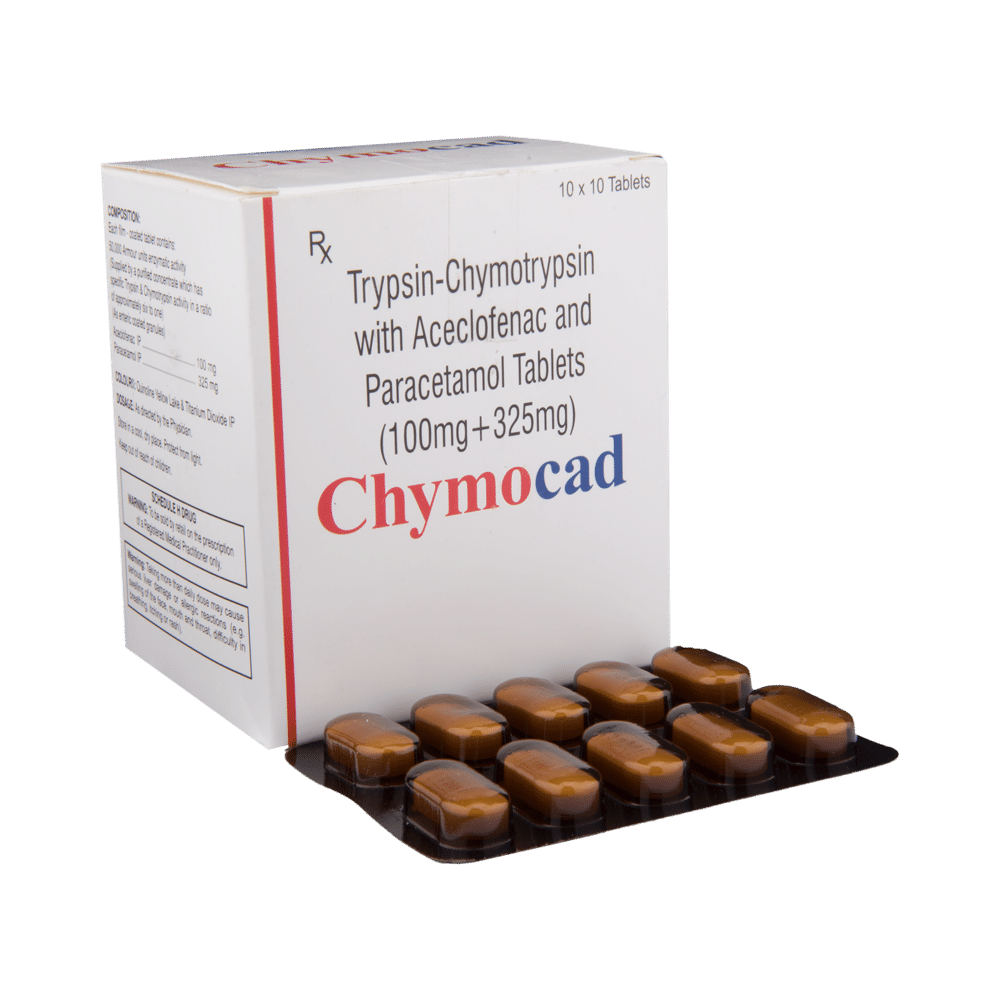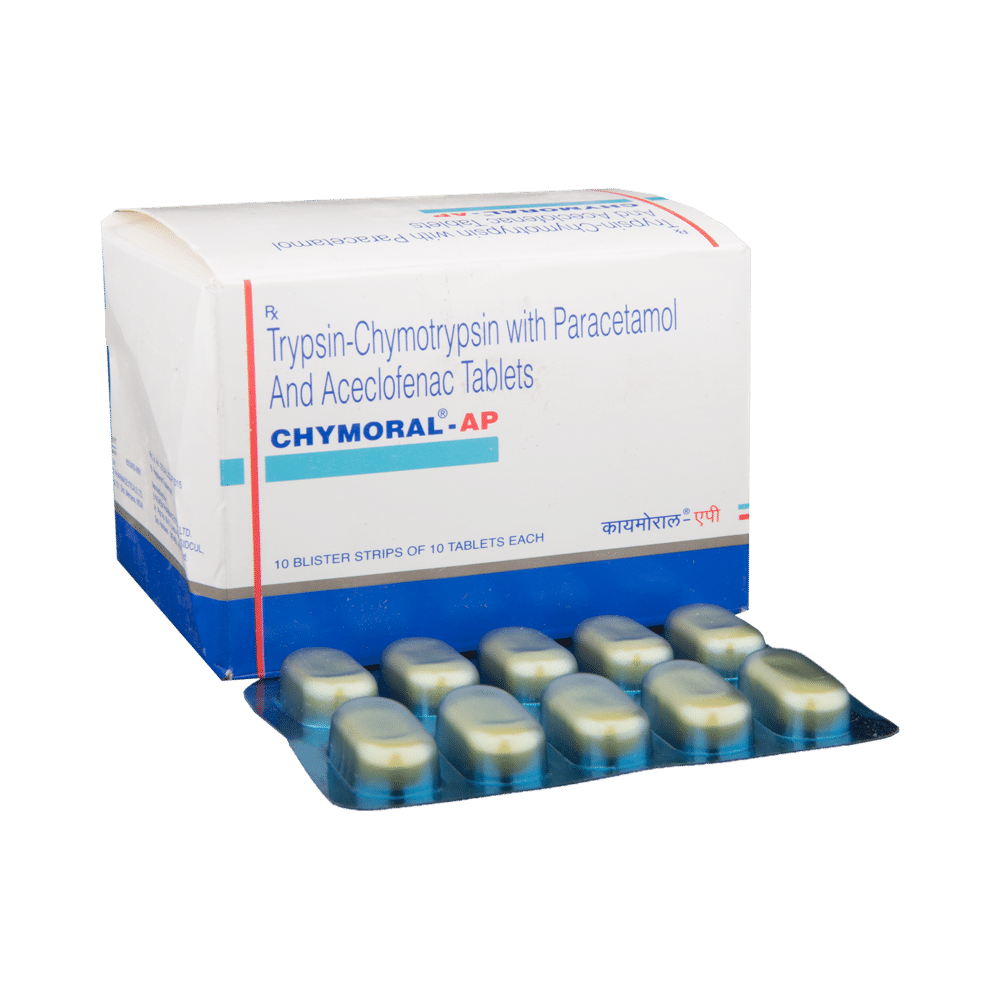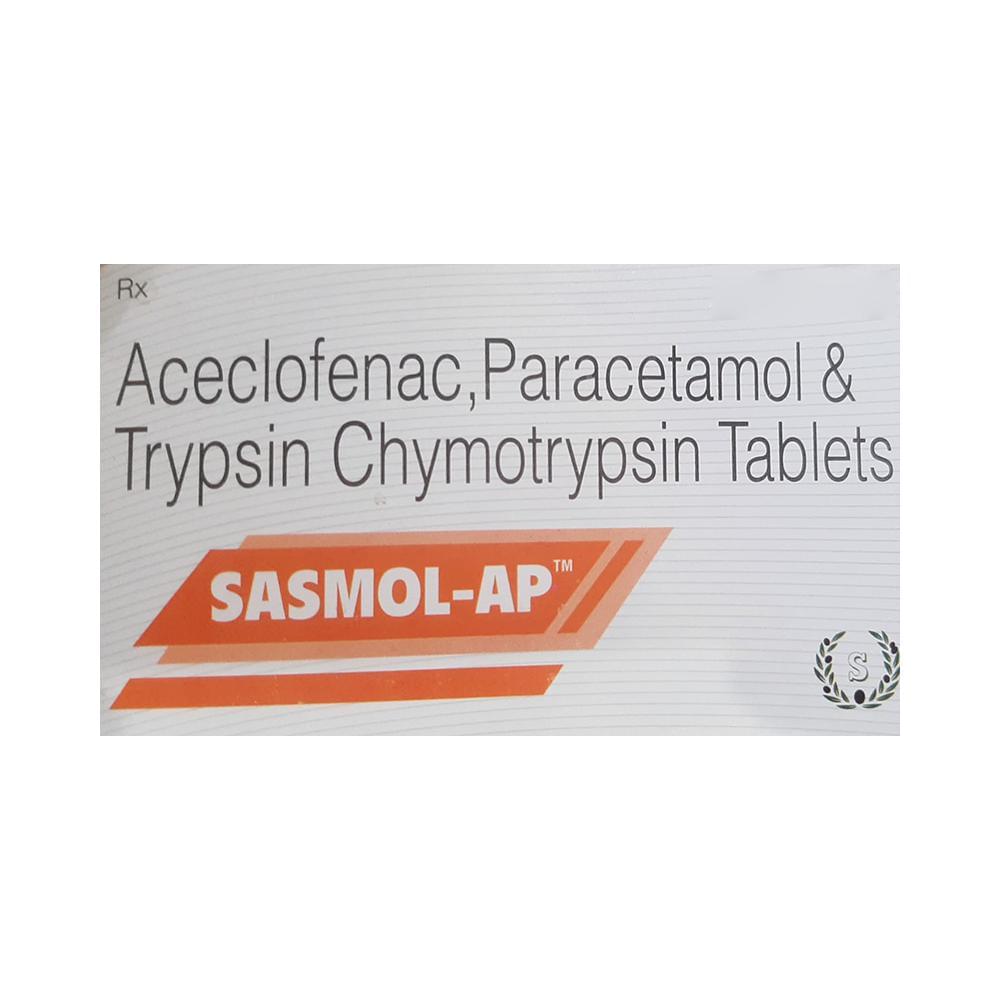
Chymoheal Tablet
strip of 10.0 tablets.Prescription required
About this product:
| Salt Composition: | Aceclofenac (100mg) + Paracetamol (325mg) + Trypsin Chymotrypsin (50000AU) |
| Manufacturer: | Megde Healthcare |
| Storage: | Below 25 degree celcius |
Out of Stock
Have doubts about this medicine?
Have doubts about this medicine?
Chymoheal Tablet is a pain relieving medicine used to treat pain and inflammation in conditions like rheumatoid arthritis, ankylosing spondylitis, and osteoarthritis. Chymoheal Tablet should be taken with food. This will prevent you from getting an upset stomach. The dose and duration will depend on what you are taking it for and how well it helps your symptoms. You should take it as advised by your doctor. Do not take more or use it for longer duration than recommended by the doctor.
Chymoheal Tablet is a combination of three medicines: Aceclofenac, Paracetamol and Trypsin Chymotrypsin. They work by blocking the release of certain chemical messengers in the brain that cause pain and fever. Trypsin Chymotrypsin is a combination of enzymes which break down proteins into smaller fragments, thereby making them available for absorption into the blood. Once absorbed, they increase blood supply in the affected area and reduce swelling.
What is Chymoheal Tablet?
Chymoheal Tablet is a combination medication containing Aceclofenac, Paracetamol, Trypsin, and Chymotrypsin. It works by reducing pain and inflammation in the body.
Can I get addicted to Chymoheal Tablet?
No, there have been no reported cases of addiction with Chymoheal Tablet.
Can I stop taking Chymoheal Tablet when my pain is relieved?
Chymoheal Tablet is typically used for short-term relief. However, it's essential to continue using the medication as directed by your doctor if they advise you to do so.
Can the use of Chymoheal Tablet cause dizziness?
Yes, some patients may experience dizziness or lightheadedness when taking Chymoheal Tablet. If this occurs, it's recommended to rest for a while and resume once you feel better.
Can the use of Chymoheal Tablet cause damage to kidneys?
Yes, long-term use of Chymoheal Tablet can potentially harm your kidneys. This is because the medication lowers prostaglandin levels in the body, which can protect the kidneys from damage. Patients with pre-existing kidney disease should avoid using this medication.
Can the use of Chymoheal Tablet cause damage to liver?
Chymoheal Tablet contains Paracetamol, which can be toxic to the liver in high doses or when combined with alcohol consumption. Patients with pre-existing liver disease should avoid using this medication and seek medical attention if they experience any signs of liver damage.
How long will Chymoheal Tablet take to act?
You may start experiencing pain relief within about an hour after taking Chymoheal Tablet.
What if I forget to take Chymoheal Tablet?
If you miss a dose, skip it and continue with your regular dosing schedule. Do not take a double dose to make up for the missed one, as this may increase the risk of side effects.
Will a higher than the recommended dose of Chymoheal Tablet be more effective?
No, taking a higher dose than recommended will not provide additional benefits but may increase the risk of adverse effects. If your symptoms persist or worsen despite taking the recommended dose, consult with your doctor for further evaluation.
Are there any specific contraindications associated with the use of Chymoheal Tablet?
Yes, patients with a known allergy to any component or excipient should avoid using Chymoheal Tablet. Additionally, individuals with a history of stomach ulcers, active or recurrent bleeding, heart failure, high blood pressure, liver disease, or kidney disease should not use this medication.
Take this medicine in the dose and duration as advised by your doctor. Swallow it as a whole. Do not chew, crush or break it. Chymoheal Tablet is to be taken with food.
- You have been prescribed this combination medicine for relieving pain and inflammation.
- Take it with food to avoid getting an upset stomach.
- It may cause dizziness and sleepiness. Don't drive or do anything that requires mental focus until you know how it affects you.
- Avoid consuming alcohol when taking Chymoheal Tablet as it may cause excessive drowsiness and increase the risk of liver damage.
- Do not take it with any other medicine containing acetaminophen (drugs for pain/fever or cough-and-cold) without asking your doctor first.

Alcohol
It is unsafe to consume alcohol with Chymoheal Tablet.

Breastfeed
Information regarding the use of Chymoheal Tablet during breastfeeding is not available. Please consult your doctor.

Pregnancy
Chymoheal Tablet may be unsafe to use during pregnancy. Although there are limited studies in humans, animal studies have shown harmful effects on the developing baby. Your doctor will weigh the benefits and any potential risks before prescribing it to you. Please consult your doctor.