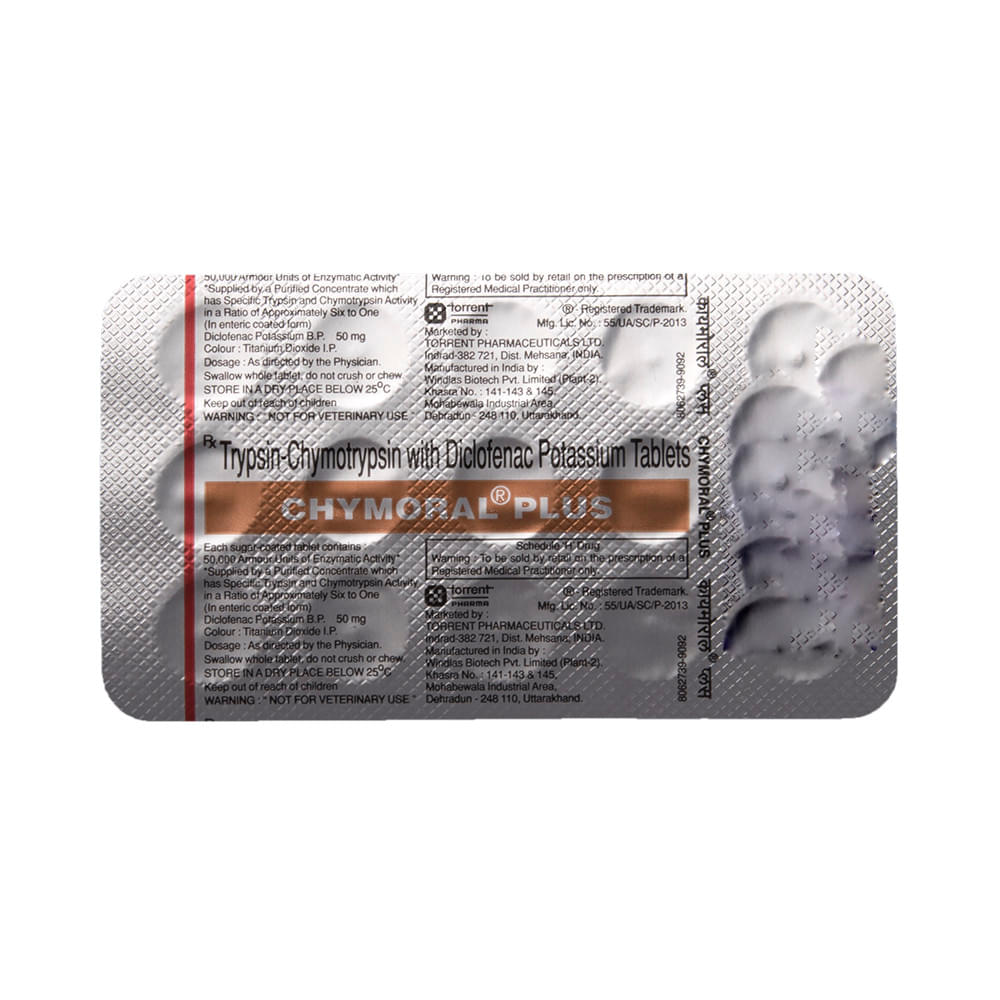
Chymogo-D Tablet
strip of 15.0 tablets.Prescription required
About this product:
| Salt Composition: | Diclofenac (50mg) + Trypsin Chymotrypsin (000IU) |
| Manufacturer: | Accilex Nutricorp |
| Storage: | Below 25 degree celcius |
Out of Stock
Have doubts about this medicine?
Have doubts about this medicine?
Chymogo-D Tablet is a combination of two medicines used to relieve pain and inflammation in conditions like rheumatoid arthritis, ankylosing spondylitis, and osteoarthritis. Chymogo-D Tablet is to be taken with food. This will prevent you from getting an upset stomach. The dose will depend on what you are taking it for and how well it helps your symptoms. You should take it as advised by your doctor. Do not take more or use it for longer duration than recommended by the doctor.
Chymogo-D Tablet is a combination of two medicines: Diclofenac and Trypsin Chymotrypsin which relieve pain and inflammation. Diclofenac is a non-steroidal anti-inflammatory drug (NSAID) which works by blocking the release of certain chemical messengers in the brain that are responsible for pain, fever and inflammation (redness and swelling). Trypsin Chymotrypsin is a combination of enzymes which break down proteins into smaller fragments, thereby making them available for absorption into the blood. Once absorbed, they increase blood supply in the affected area and reduce swelling.
What happens if I take more Chymogo-D Tablet than recommended?
Taking more Chymogo-D Tablet than recommended may not make it more effective, but it can increase the risk of serious side effects and toxicity. If your symptoms worsen despite taking the recommended dose, consult your doctor for re-evaluation.
Are there any specific conditions where I shouldn't take Chymogo-D Tablet?
Chymogo-D Tablet is not suitable for patients with a known allergy to its components or excipients. It's also best avoided in those with a history of stomach ulcers, active recurrent stomach ulcer/bleeding, heart failure, high blood pressure, liver disease, or kidney problems.
Does Chymogo-D Tablet expire?
Yes, Chymogo-D Tablet has an expiration date. Check the packaging for the expiry date and do not use it after that date.
What is Chymogo-D Tablet used for?
Chymogo-D Tablet is a combination of Diclofenac, Trypsin, and Chymotrypsin. It helps to reduce pain and swelling by lowering the levels of chemical substances in the body that cause these symptoms.
Can I get addicted to Chymogo-D Tablet?
No, there's no reported risk of addiction with Chymogo-D Tablet.
When can I stop taking Chymogo-D Tablet if my pain is relieved?
You can usually discontinue Chymogo-D Tablet when your pain is relieved. However, follow your doctor's advice on whether to continue or stop the medication.
Can Chymogo-D Tablet cause dizziness?
Yes, some patients may experience dizziness after taking Chymogo-D Tablet. If you feel dizzy or lightheaded, sit or lie down until you feel better and do not drive or use any machines.
Can Chymogo-D Tablet cause kidney damage?
Yes, long-term use of Chymogo-D Tablet can cause kidney damage. This is because the medication lowers prostaglandins in the body, which normally protect the kidneys from harm. Using painkillers like this is not recommended for patients with underlying kidney disease.
How quickly will I feel the effects of Chymogo-D Tablet?
It may take about an hour to notice initial benefits in pain relief after taking Chymogo-D Tablet.
What if I forget to take a scheduled dose of Chymogo-D Tablet?
If you miss a dose and it's almost time for your next one, skip the missed dose and go back to your regular schedule. Do not take an extra dose or try to make up for the missed one, as this can increase the risk of unwanted side effects.
Take this medicine in the dose and duration as advised by your doctor. Swallow it as a whole. Do not chew, crush or break it. Chymogo-D Tablet is to be taken with food.
- Take it with food to help prevent an upset stomach.
- Take it as per the dose and duration prescribed by your doctor. Long term use may lead to serious side effects.
- It may cause dizziness, drowsiness or visual disturbances. Use caution while driving or doing anything that requires concentration.
- Avoid consuming alcohol while taking this medicine as it can cause excessive drowsiness and increase your risk of stomach problems.
- Inform your doctor if you have a history of heart disease, stroke, liver or kidney disease or problems with your blood clotting mechanism.

Alcohol
It is unsafe to consume alcohol with Chymogo-D Tablet.

Breastfeed
Information regarding the use of Chymogo-D Tablet during breastfeeding is not available. Please consult your doctor.

Pregnancy
Chymogo-D Tablet is unsafe to use during pregnancy as there is definite evidence of risk to the developing baby. However, the doctor may rarely prescribe it in some life-threatening situations if the benefits are more than the potential risks. Please consult your doctor.