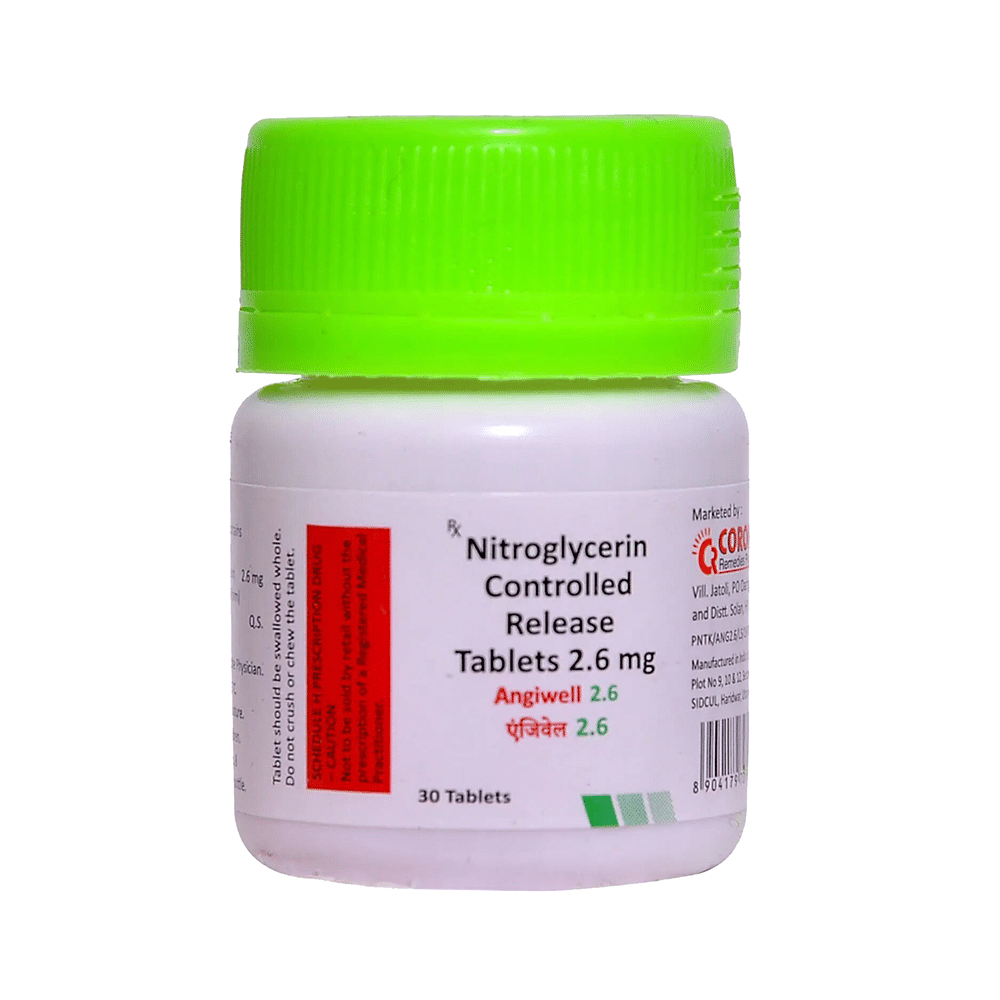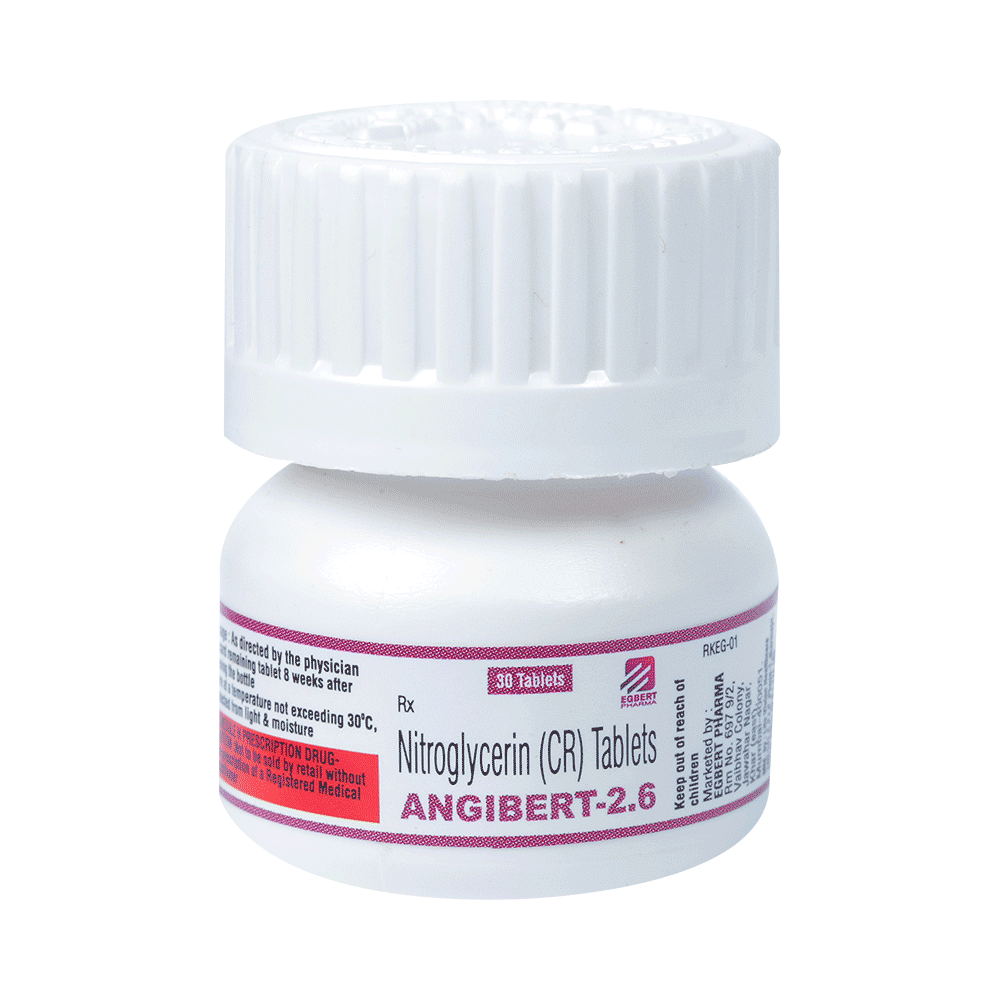
CADRIN 2.6MG TABLET
strip of 30.0 tablets.Prescription required
About this product:
| Salt Composition: | Nitroglycerin (2.6mg) |
| Manufacturer: | Caddes Life Sciences |
| Storage: | Below 25 degree celcius |
Out of Stock
Have doubts about this medicine?
Have doubts about this medicine?
CADRIN 2.6MG TABLET is used to treat and prevent heart-related chest pain (angina). CADRIN 2.6MG TABLET should be taken in the dose and duration as advised by your doctor. It may be taken with or without food, preferably at a fixed time each day. Do not consume more than the recommended dose as this may have harmful effects on your body. You can develop tolerance to this medicine over time, which means that the same dose becomes less effective. You have to stick to a really specific dosing schedule to prevent this from happening.
CADRIN 2.6MG TABLET is a nitrate. It works by relaxing the blood vessels and increasing the supply of blood and oxygen to the heart while reducing its work load thereby preventing/treating attacks of angina (chest pain)
Can I take sildenafil if I'm taking CADRIN 2.6MG TABLET?
No, you should not take sildenafil if you're taking CADRIN 2.6MG TABLET. Combining these medications can cause a significant drop in blood pressure, which may be life-threatening. It's essential to consult your doctor before taking any new medication, especially if you're already taking CADRIN 2.6MG TABLET.
What effect does CADRIN 2.6MG TABLET have on blood pressure?
CADRIN 2.6MG TABLET lowers blood pressure by relaxing blood vessels. However, it's not recommended for treating high blood pressure. The decrease in blood pressure may cause dizziness, especially when changing positions suddenly. It's crucial to follow your doctor's guidance and monitor your blood pressure regularly while taking CADRIN 2.6MG TABLET.
Does the effect of CADRIN 2.6MG TABLET wear off after some time?
Yes, prolonged use of CADRIN 2.6MG TABLET may lead to tolerance, which means the medication may lose its effectiveness over time. To maintain its effectiveness, your doctor may prescribe the lowest dose necessary to manage your condition. It's essential to follow your doctor's instructions and not increase your dose without consulting them.
What does too much CADRIN 2.6MG TABLET do?
Taking excessive amounts of CADRIN 2.6MG TABLET can cause low blood pressure, sweating, nausea, vomiting, headaches, a weak and fast pulse, and even fainting. If you experience any of these symptoms, seek immediate medical attention. It's crucial to follow your doctor's guidance and not exceed the recommended dose.
Can I stop using CADRIN 2.6MG TABLET as I feel better now?
Stopping CADRIN 2.6MG TABLET abruptly may trigger angina attacks, especially if you've been taking it for several weeks or more. To avoid this, consult your doctor about gradually reducing your dose over 4 to 6 weeks before stopping the medication completely. They will provide personalized guidance tailored to your specific situation.
Does CADRIN 2.6MG TABLET stop heart attacks?
CADRIN 2.6MG TABLET is prescribed to prevent angina attacks in patients with coronary artery disease. This condition causes the coronary arteries to narrow, making it difficult for the heart to receive enough oxygen. CADRIN 2.6MG TABLET relaxes blood vessels, reducing the heart's workload and increasing oxygen supply. While it doesn't directly stop heart attacks, it helps prevent angina attacks and reduces the risk of heart-related complications.
Take this medicine in the dose and duration as advised by your doctor. Swallow it as a whole. Do not chew, crush or break it. CADRIN 2.6MG TABLET may be taken with or without food but it is better to take it at a fixed time.
- CADRIN 2.6MG TABLET may cause dizziness or sleepiness. Do not drive or do anything that requires concentration until you know how it affects you.
- Do not consume alcohol while taking CADRIN 2.6MG TABLET as it may cause increased dizziness.
- It may cause headaches which usually go away after a few days of continued treatment. Inform your doctor if it persists.
- You may develop tolerance to CADRIN 2.6MG TABLET with time meaning that the same dose may be less effective next time. Follow the prescribed dosing schedule to avoid this.
- Stop taking medications (prescribed for erectile dysfunction) like sildenafil or tadalafil while on treatment with CADRIN 2.6MG TABLET as it may cause low blood pressure.

Alcohol
Consuming alcohol while taking CADRIN 2.6MG TABLET may cause symptoms such as flushing, increased heart beat, nausea, thirst, chest pain and low blood pressure (Disulfiram reaction).

Breastfeed
CADRIN 2.6MG TABLET is probably safe to use during breastfeeding. Limited human data suggests that the drug does not represent any significant risk to the baby.

Pregnancy
CADRIN 2.6MG TABLET is generally considered safe to use during pregnancy. Animal studies have shown low or no adverse effects to the developing baby; however, there are limited human studies.