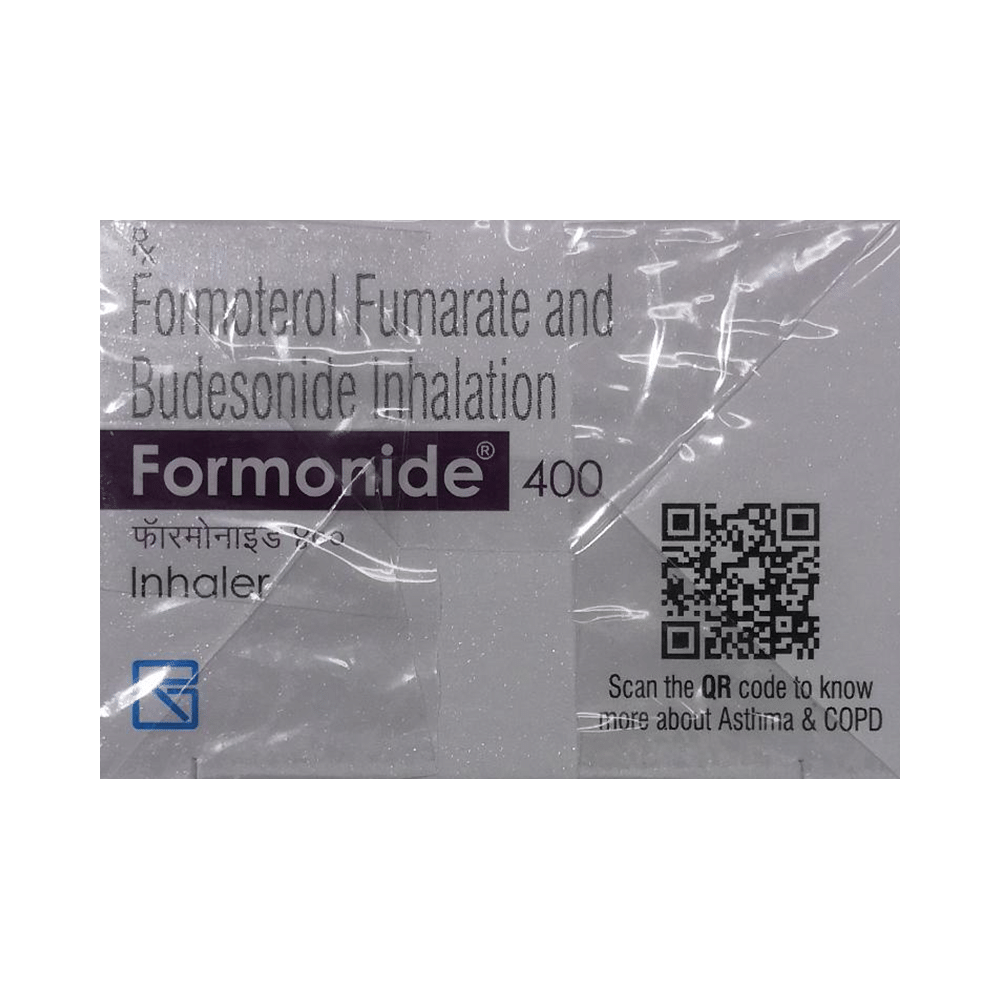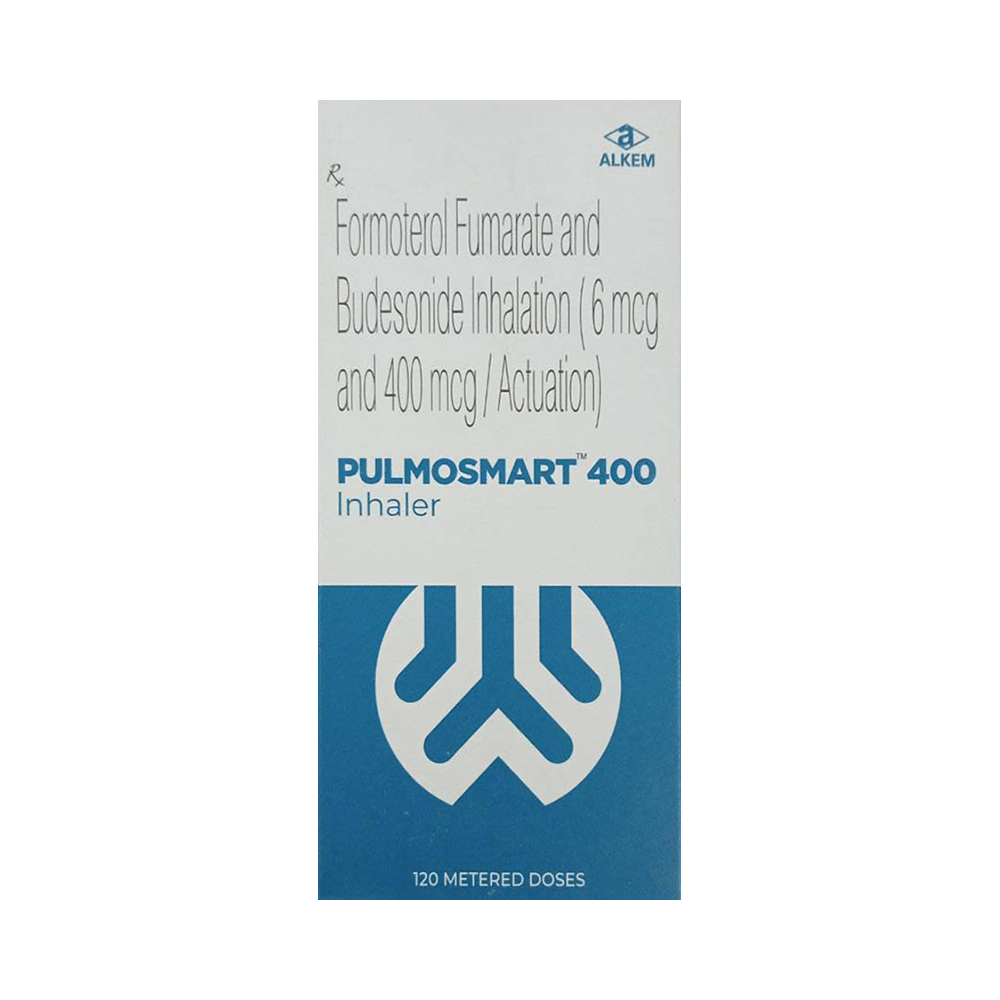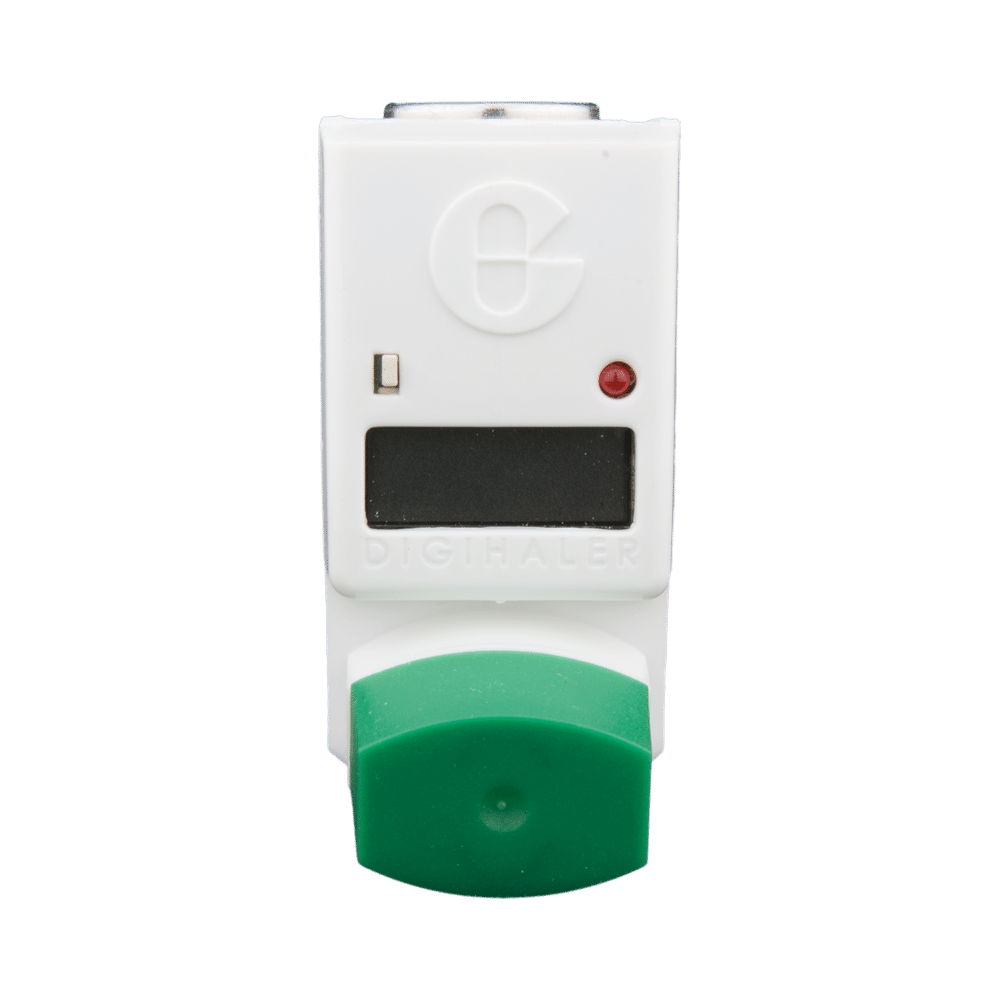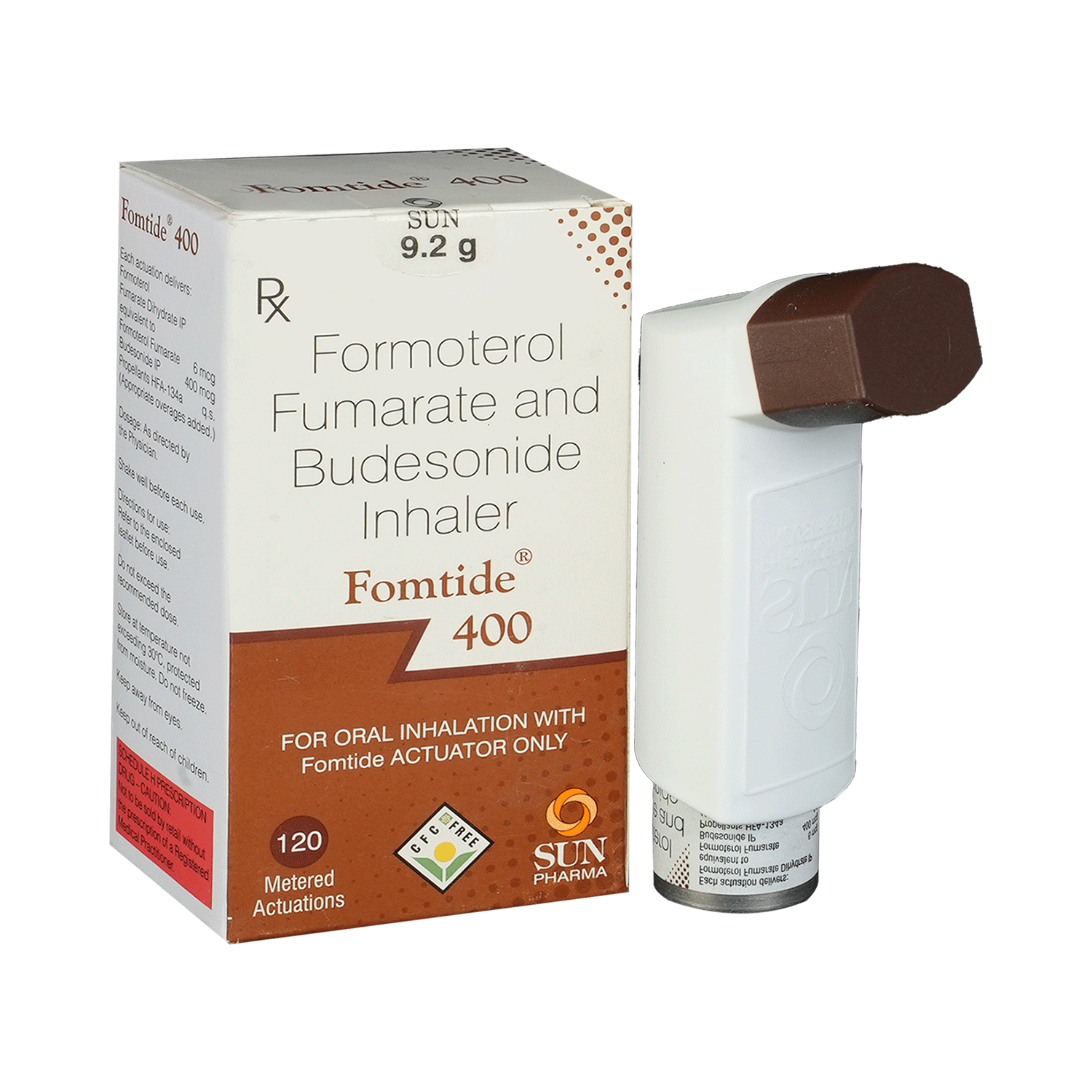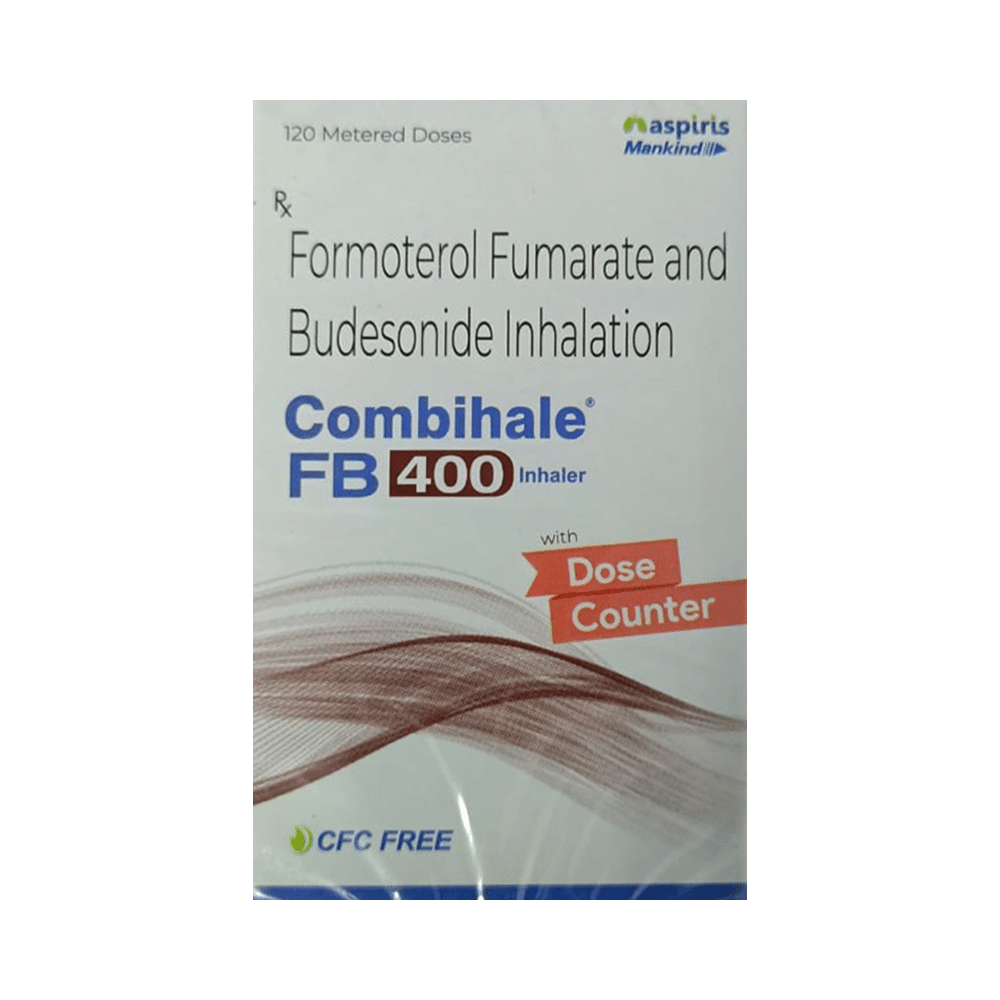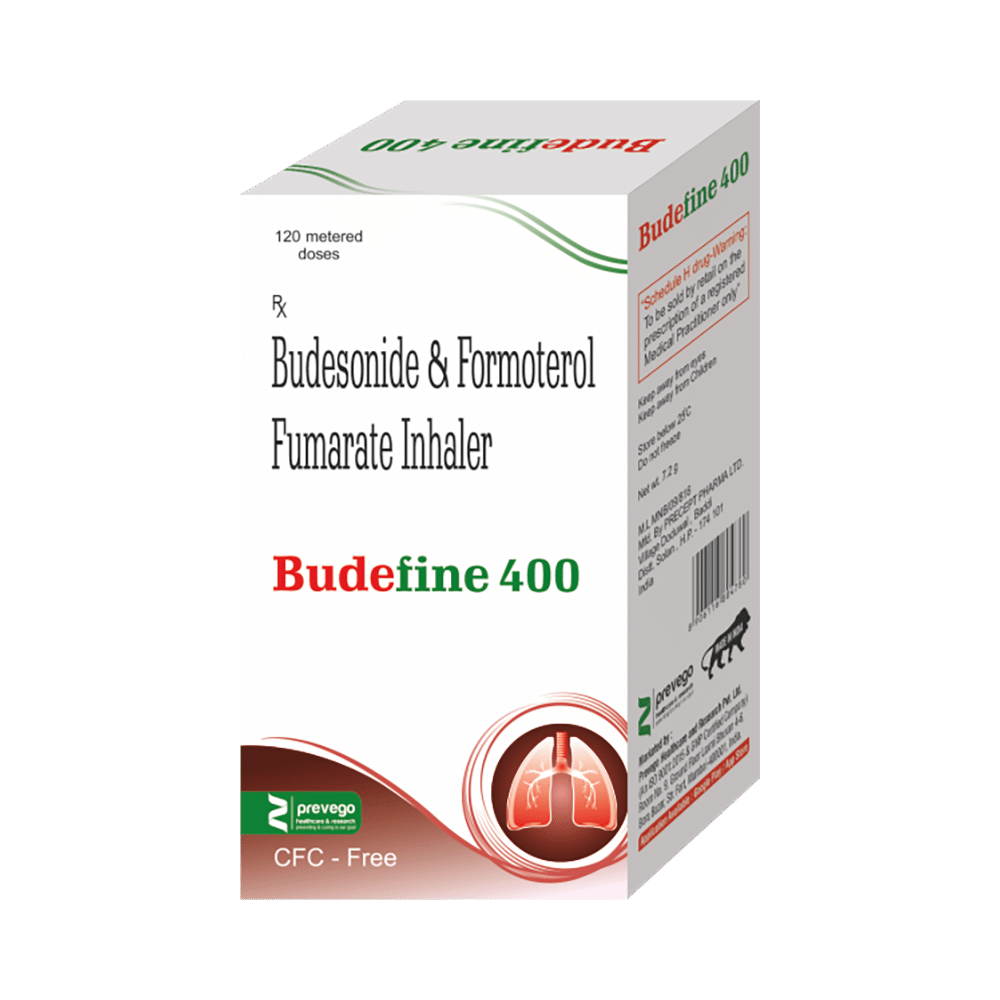
Breemax F Inhaler
packet of 120.0 MDI Inhaler.Prescription required
About this product:
| Salt Composition: | Formoterol (6mcg) + Budesonide (400mcg) |
| Manufacturer: | Intra Life |
| Storage: | Below 25 degree celcius |
Out of Stock
Have doubts about this medicine?
Have doubts about this medicine?
Breemax F Inhaler is a combination of two medicines used to relieve long-term symptoms of asthma and COPD, making breathing easier. Breemax F Inhaler is a combination of two medicines: Formoterol and Budesonide. It is used to relieve long-term symptoms of asthma and chronic obstructive pulmonary disease (COPD). Formoterol is a long-acting bronchodilator that relaxes the muscles in the airways, while Budesonide is a steroid that inhibits the release of chemical messengers causing inflammation. This combination helps in making breathing easier. It is important to note that this inhaler does not relieve sudden symptoms and a rescue inhaler should be used for that purpose. Common side effects are not listed, but it is crucial to consult a doctor if any adverse effects are experienced.
Breemax F Inhaler is a combination of Formoterol and Budesonide. Formoterol is a long-acting bronchodilator that relaxes the muscles in the airways and widens them. Budesonide is a steroid that stops the release of certain chemical messengers causing inflammation in the airways. Together, they make breathing easier.
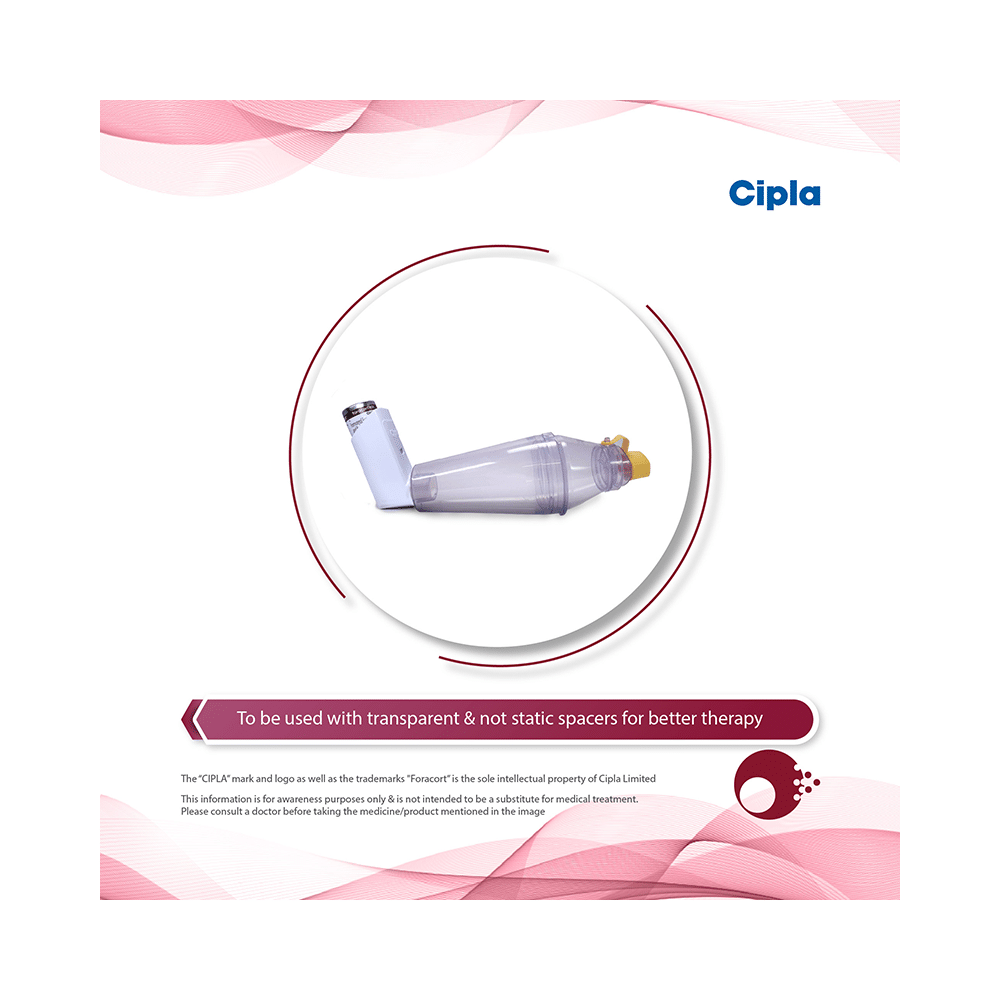
Check the label for directions before use. Shake the inhaler. While breathing in from the mouth, press down on the inhaler one time to release the medication and hold your breath for 10 seconds. Repeat until you have inhaled the number of puffs as suggested by the doctor. Afterwards, rinse your mouth thoroughly with water and spit it out.
- It contains two medicines in one inhaler for control of long-term asthma and COPD symptoms.
- It does not relieve sudden symptoms. Always use a rescue inhaler to treat sudden symptoms.
- Tell your doctor immediately if your breathing problem worsens or if the rescue inhaler does not relieve symptoms.
- Do not discontinue unless advised by your doctor.
- Rinse your mouth with water after each use to prevent infections in the mouth and throat.
- Carry your rescue inhaler wherever you go.

Alcohol
It is unsafe to consume alcohol with Breemax F Inhaler.

Breastfeed
Breemax F Inhaler is probably safe to use during breastfeeding. Limited human data suggests that the drug does not represent any significant risk to the baby.

Pregnancy
Breemax F Inhaler is generally considered safe to use during pregnancy. Animal studies have shown low or no adverse effects to the developing baby; however, there are limited human studies.