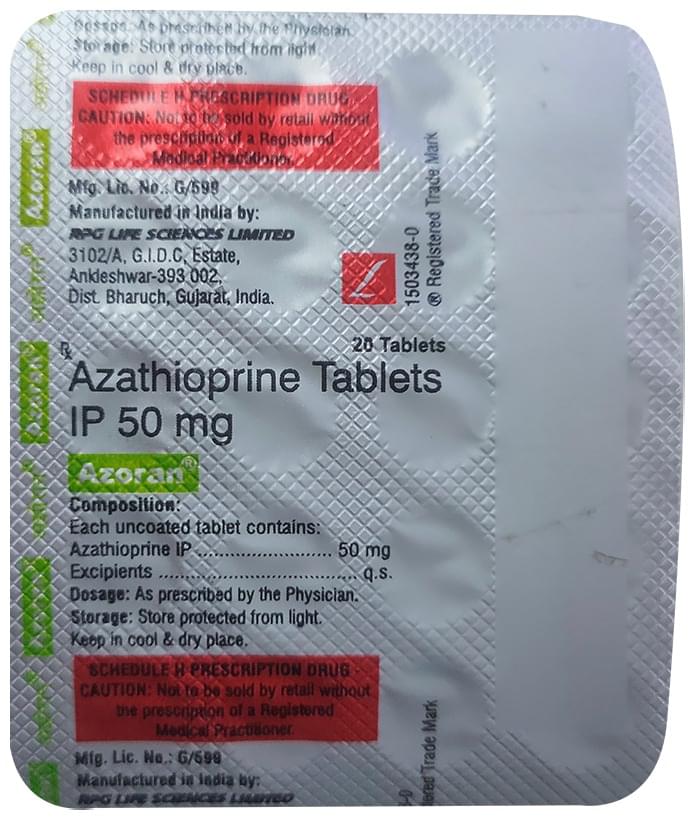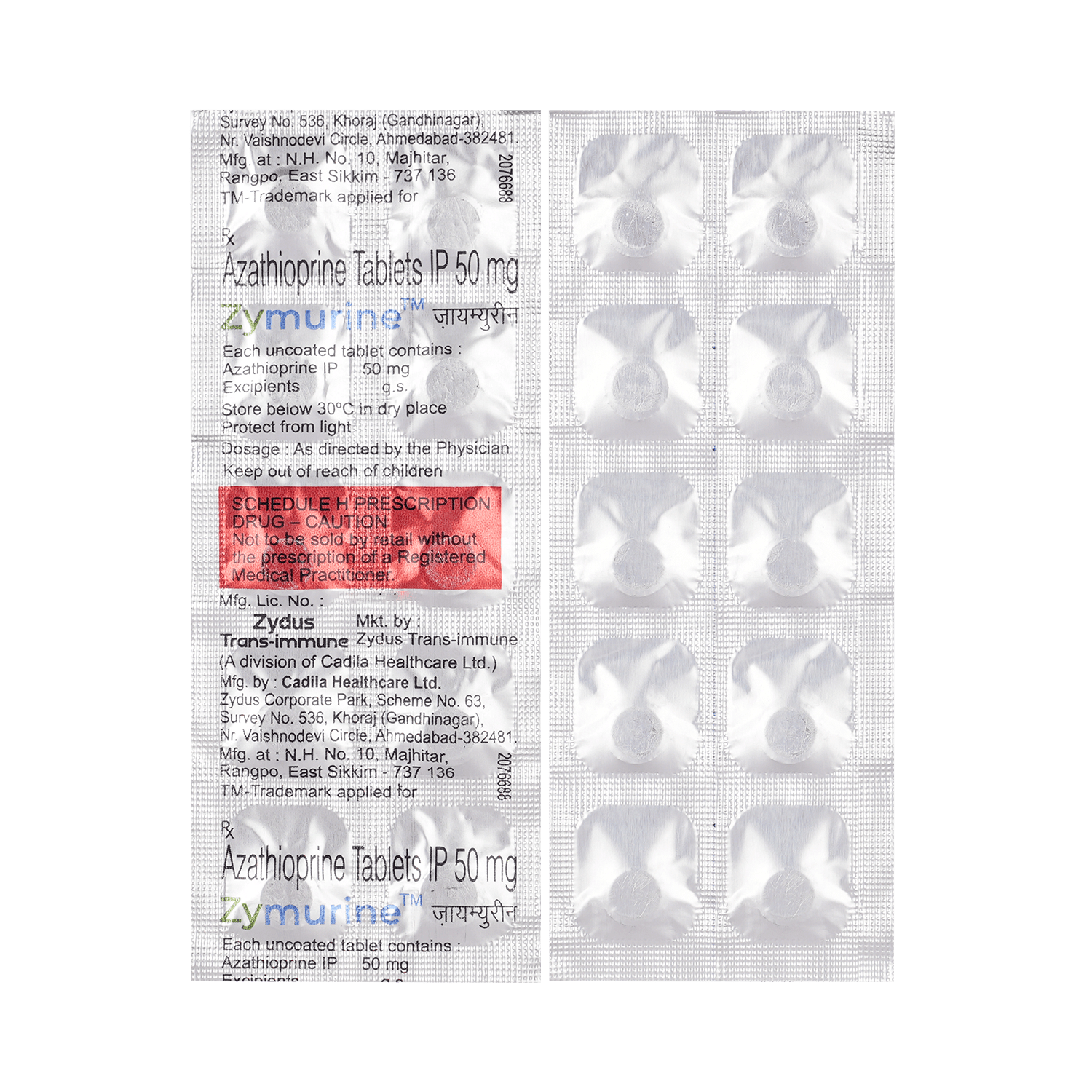
Azin Tablet
strip of 10.0 tablets.Prescription required
About this product:
| Salt Composition: | Azathioprine (50mg) |
| Manufacturer: | Nexgen Rx Life Science Pvt Ltd |
| Storage: | Below 25 degree celcius |
Out of Stock
Have doubts about this medicine?
Have doubts about this medicine?
Azin Tablet is an immunosuppressant used to prevent organ rejection after a transplant and treat rheumatoid arthritis. Azin Tablet works by weakening the body’s immune system so it does not attack the new organ. The amount of medicine to be taken and how often you need to take it will depend on the type of transplant you have. Follow your doctor’s instructions on this. You should take it along with food. Take the medicine regularly to get the most benefit and keep taking it even if you feel well. If you stop taking it, you may increase the chances of rejecting your transplanted organ.
Azin Tablet is an immunosuppressant. It reduces the action of body's own defense system (the immune system) and prevents rejection of the transplanted organ. It also blocks the action of certain chemical messengers that are responsible for inflammation, swelling, and redness associated with certain joint diseases.
What is Azin Tablet prescribed for and how does it work?
Azin Tablet is an immunosuppressant medication that works by suppressing the immune system's defense mechanism. It helps to prevent rejection of transplanted organs, such as kidneys, hearts, or livers, and treats conditions caused by abnormal immune system activity, including chronic active hepatitis, severe rheumatoid arthritis, systemic lupus erythematosus (SLE), idiopathic thrombocytopenic purpura, acquired hemolytic anemia, pemphigus vulgaris, dermatomyositis, polyarteritis nodosa, and pyoderma gangrenosa.
How long does it take for Azin Tablet to start working?
It may take 3-12 weeks to see benefits from taking Azin Tablet. Continue taking the medication as directed by your doctor, even if you do not notice any improvements.
What should I do if I forget to take Azin Tablet?
If you miss a dose of Azin Tablet, take it as soon as you remember. However, skip the missed dose if it is time for your next scheduled dose. Do not take a double dose to make up for the missed dose.
How long do I need to take Azin Tablet?
The duration of treatment with Azin Tablet varies depending on individual medical conditions and will be determined by your doctor.
Is breastfeeding safe while taking Azin Tablet?
No, breastfeeding should be avoided while taking Azin Tablet, as it may harm the baby and cause serious side effects.
What are the long-term side effects of Azin Tablet?
As an immunosuppressant, Azin Tablet can increase the risk of severe infections, decrease in blood cell counts, and malignancy. Be aware of signs such as infection or fever, unexpected bruising or bleeding, black tarry stools, or blood in urine or stool. Inform your doctor immediately if you notice any new skin sores or lumps.
Do I need special tests while taking Azin Tablet?
Regular blood tests may be necessary to monitor the effects of Azin Tablet on your blood cell counts and liver function. Your doctor will determine the frequency of testing based on individual needs.
Can Azin Tablet cause cancer?
Azin Tablet may increase the risk of certain cancers, such as skin cancer, lymphoma, sarcomas, and cervical cancer. Take precautions to avoid prolonged exposure to sunlight and wear protective clothing, sunglasses, and sunscreen to minimize this risk.
Can I take cyclosporine and Azin Tablet together?
Yes, you can take cyclosporine and Azin Tablet together without interference with each other's working. However, follow your doctor's advice for taking these medications.
Take this medicine in the dose and duration as advised by your doctor. Swallow it as a whole. Do not chew, crush or break it. Azin Tablet is to be taken with food.
- Your doctor has prescribed Azin Tablet to stop the body from rejecting a transplanted organ (e.g. kidney, heart or liver).
- Azin Tablet also relieves joint pain and inflammation in rheumatoid arthritis.
- You may have to take additional medications along with Azin Tablet for better relief of symptoms.
- Avoid contact with people who have cold, flu or other contagious illness.
- Notify your doctor if you have any signs of infection such as a fever or sore throat.
- Inform your doctor if you are pregnant or planning to conceive or breastfeeding.

Alcohol
It is not known whether it is safe to consume alcohol with Azin Tablet. Please consult your doctor.

Breastfeed
Azin Tablet is probably unsafe to use during breastfeeding. Limited human data suggests that the drug may pass into the breastmilk and harm the baby.

Pregnancy
Azin Tablet is unsafe to use during pregnancy as there is definite evidence of risk to the developing baby. However, the doctor may rarely prescribe it in some life-threatening situations if the benefits are more than the potential risks. Please consult your doctor.