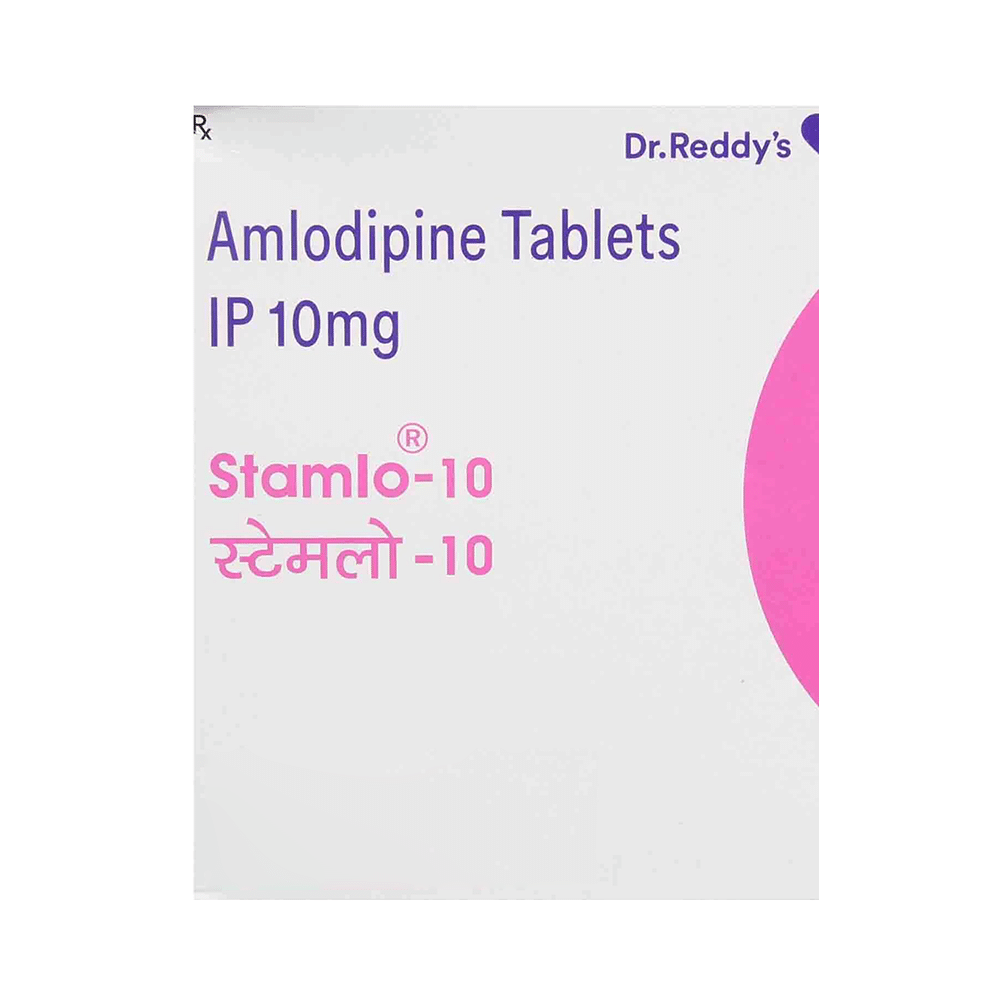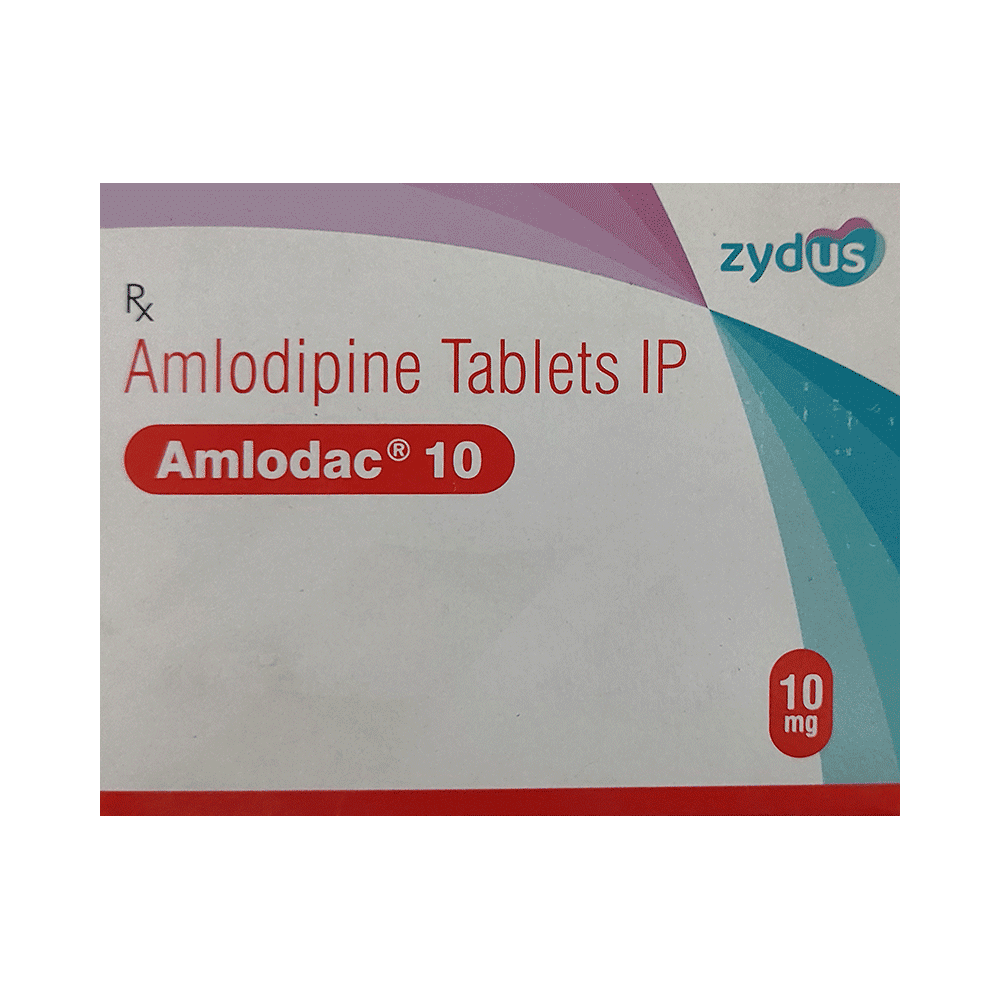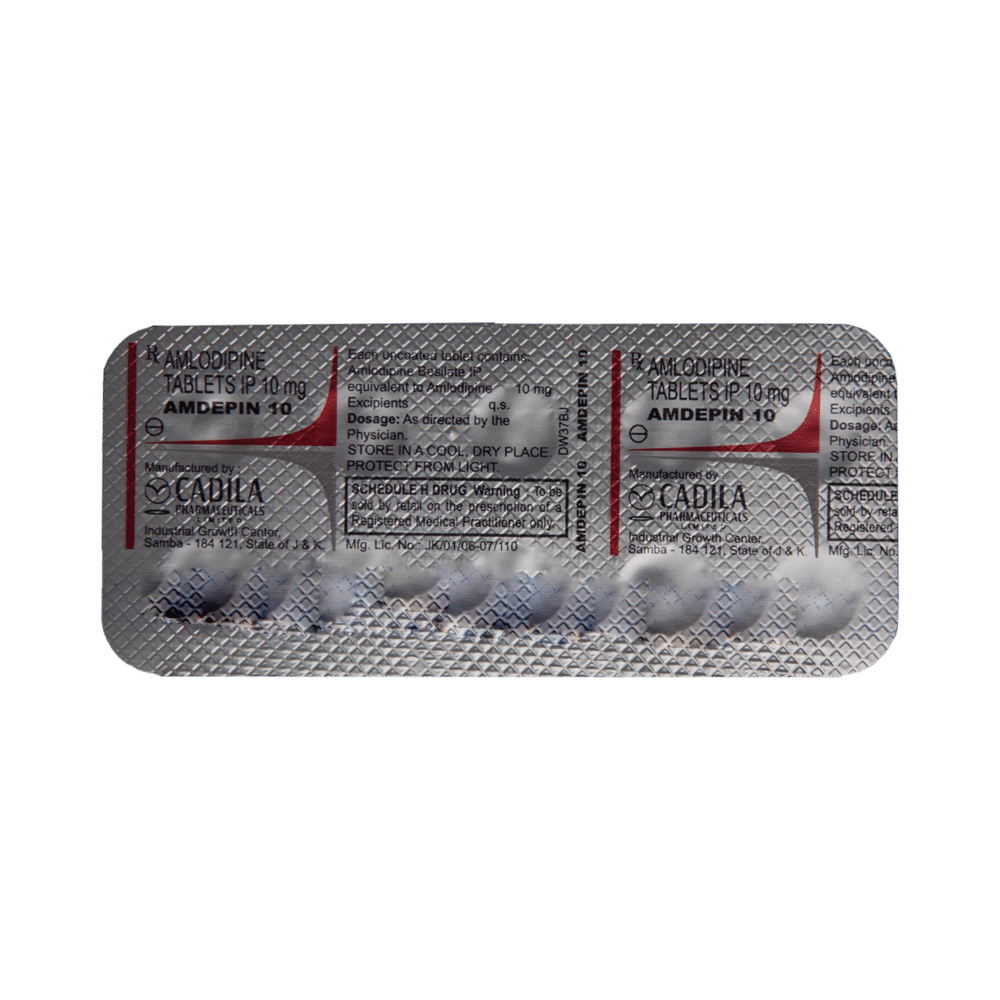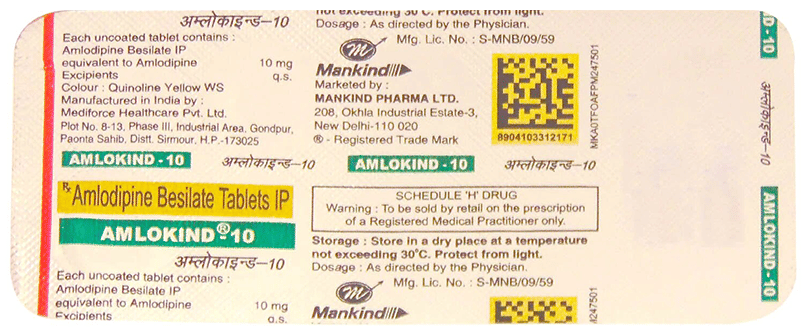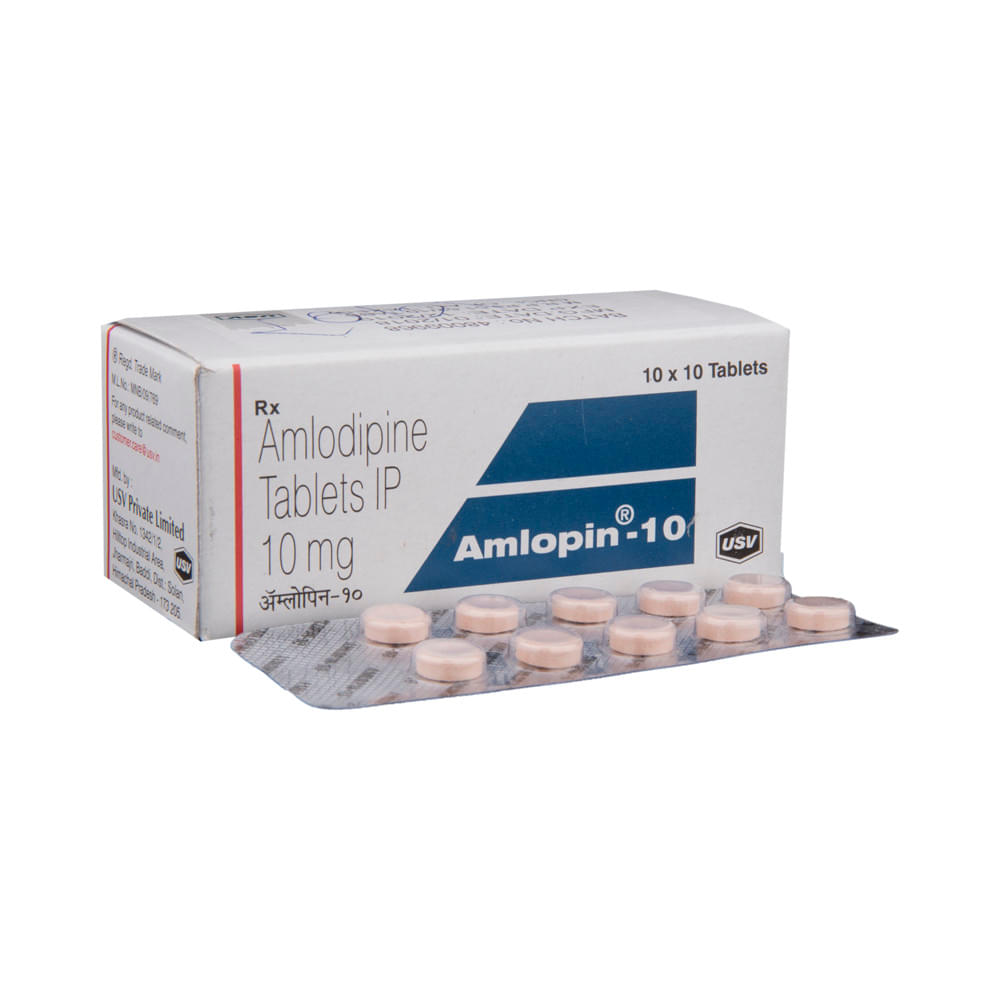
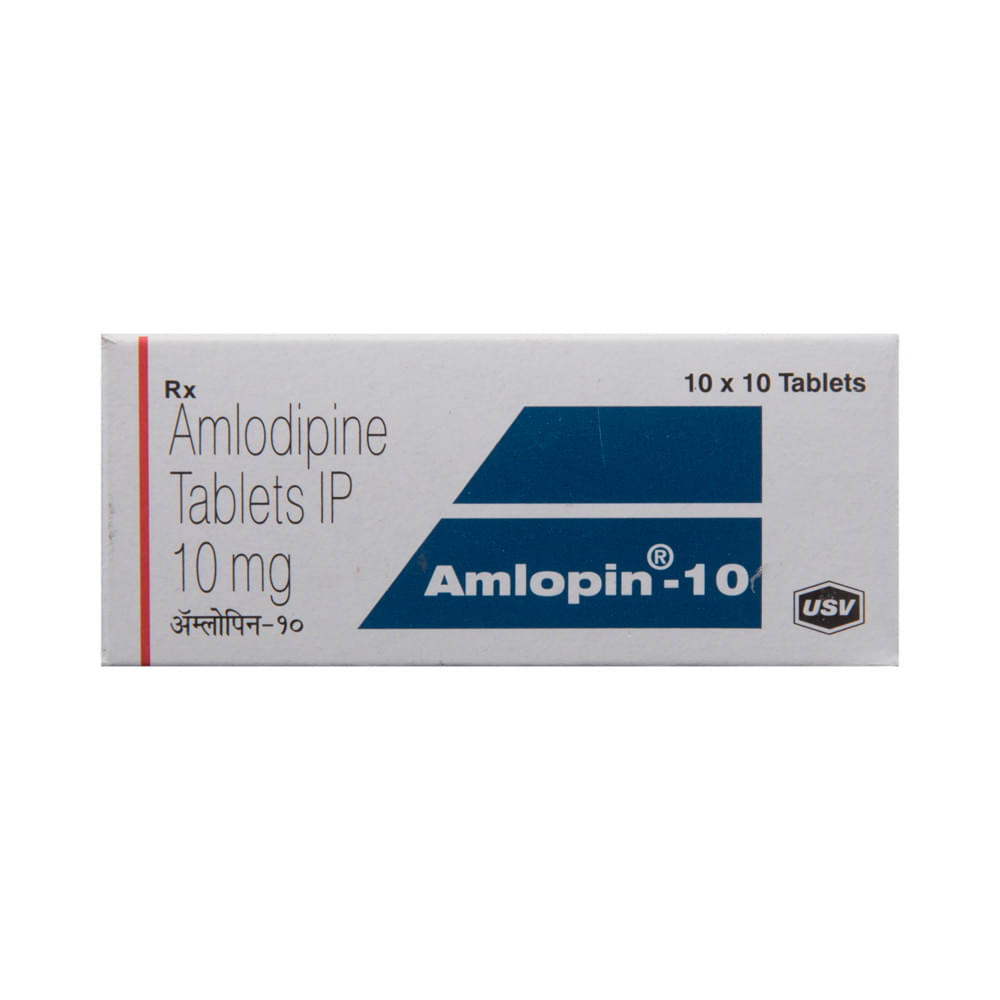
Amlopin 10 Tablet
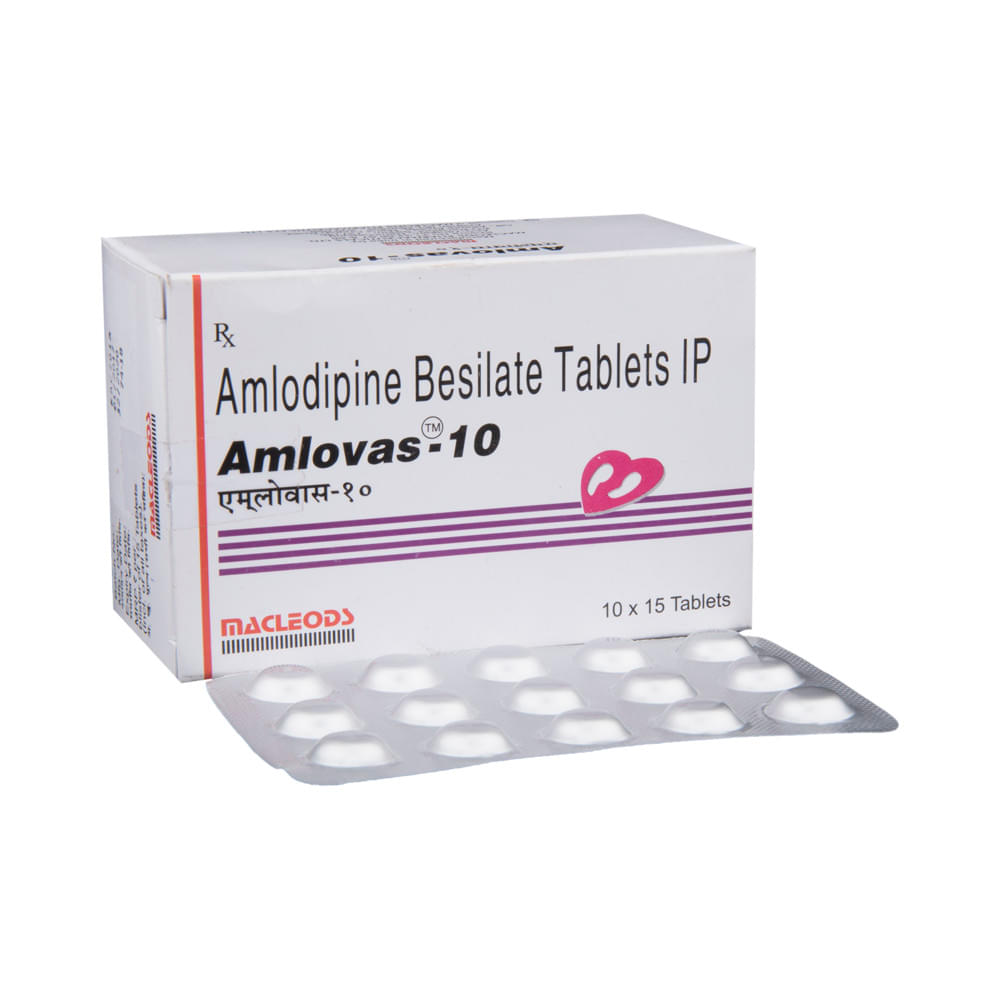
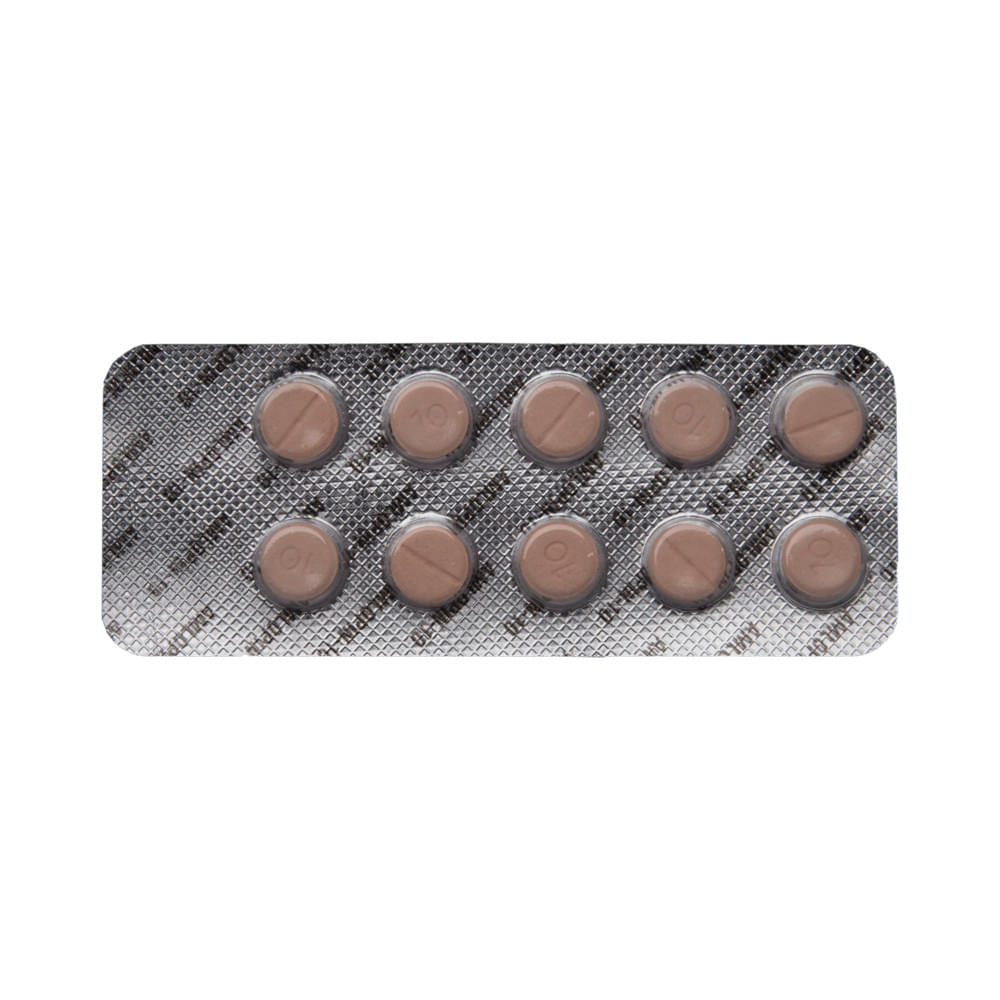
strip of 10.0 tablets.Prescription required
About this product:
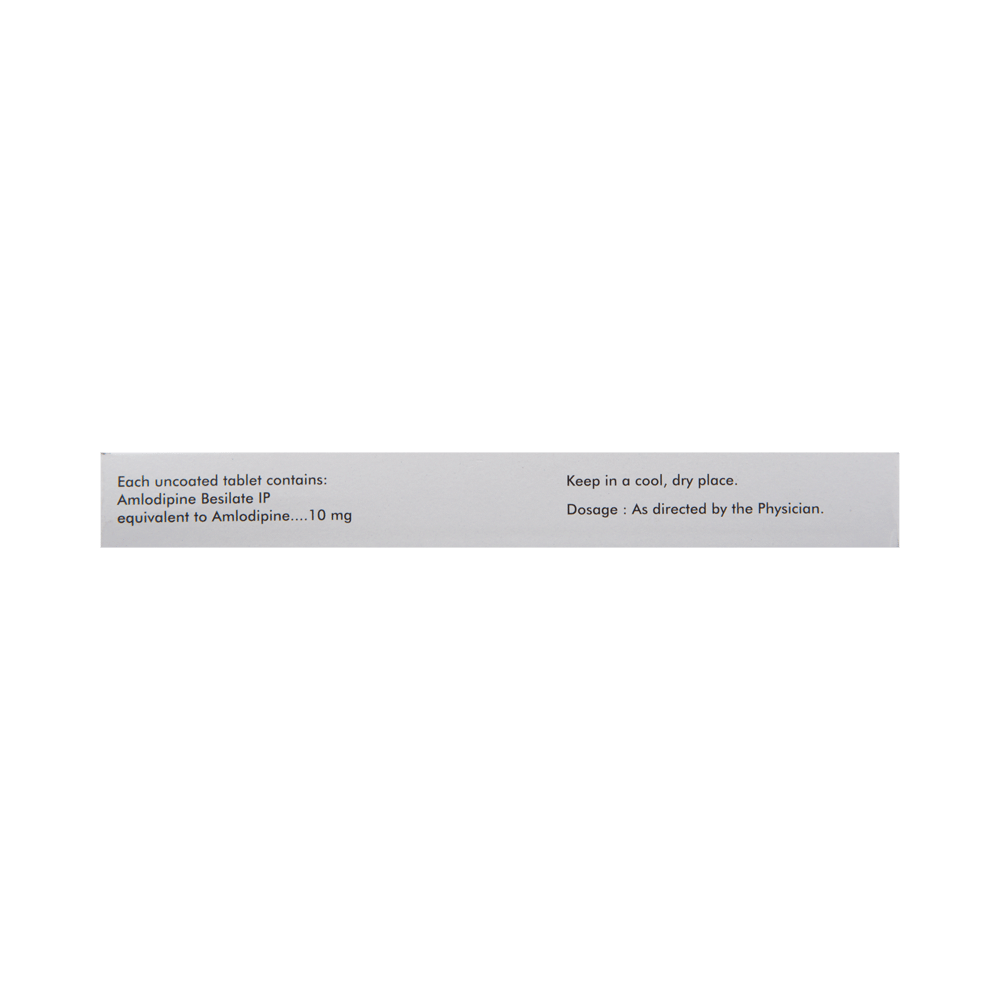
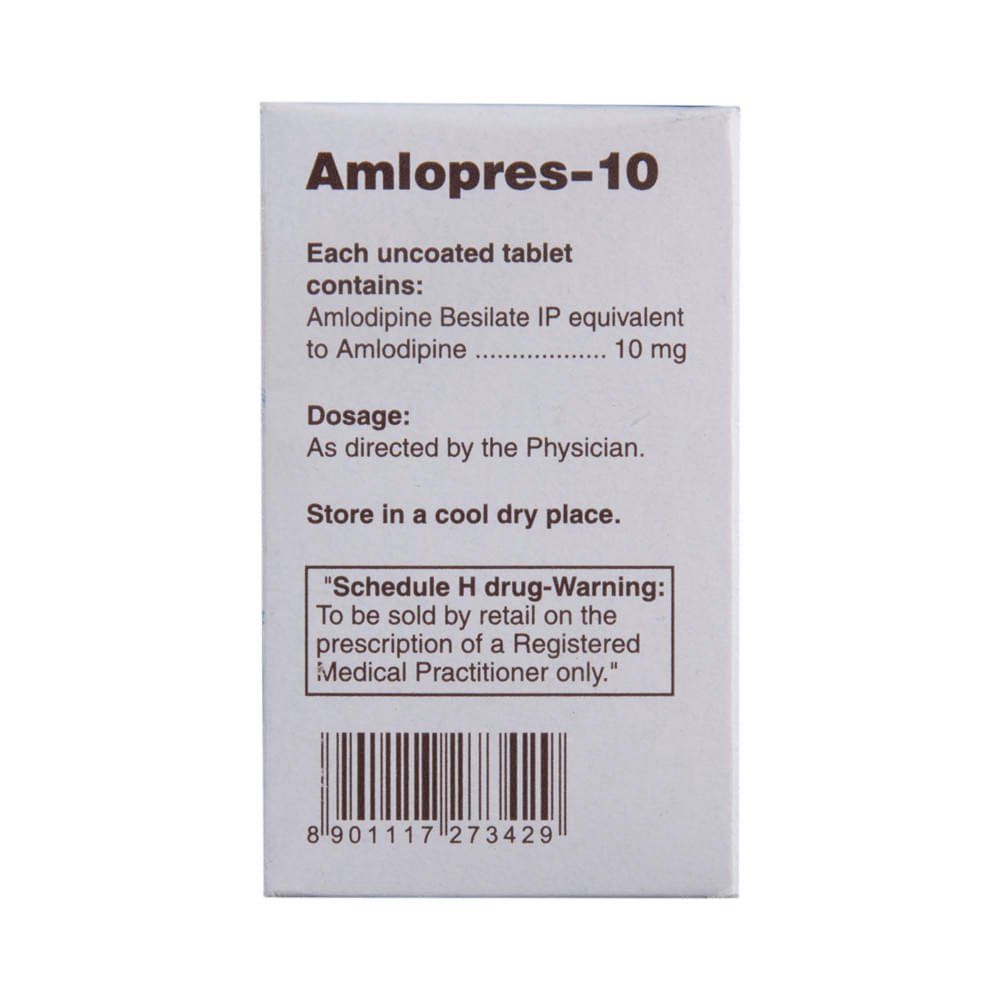
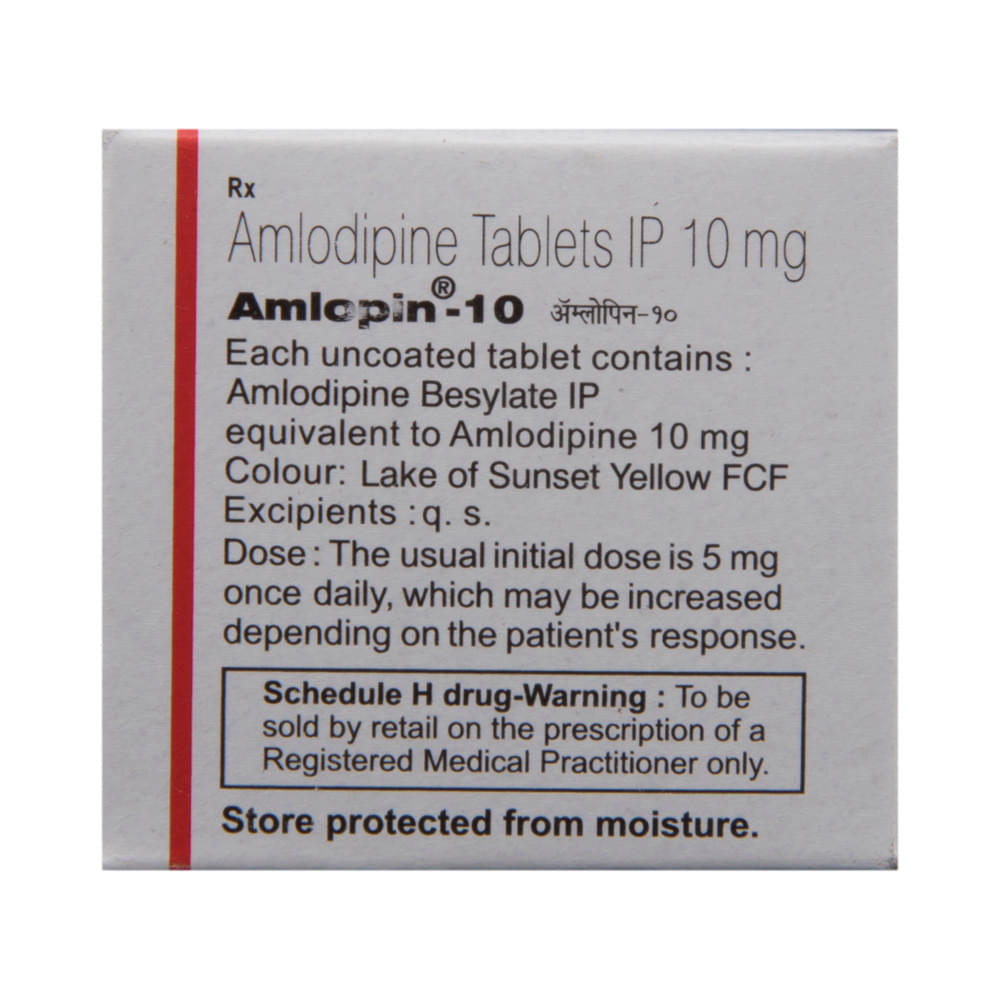
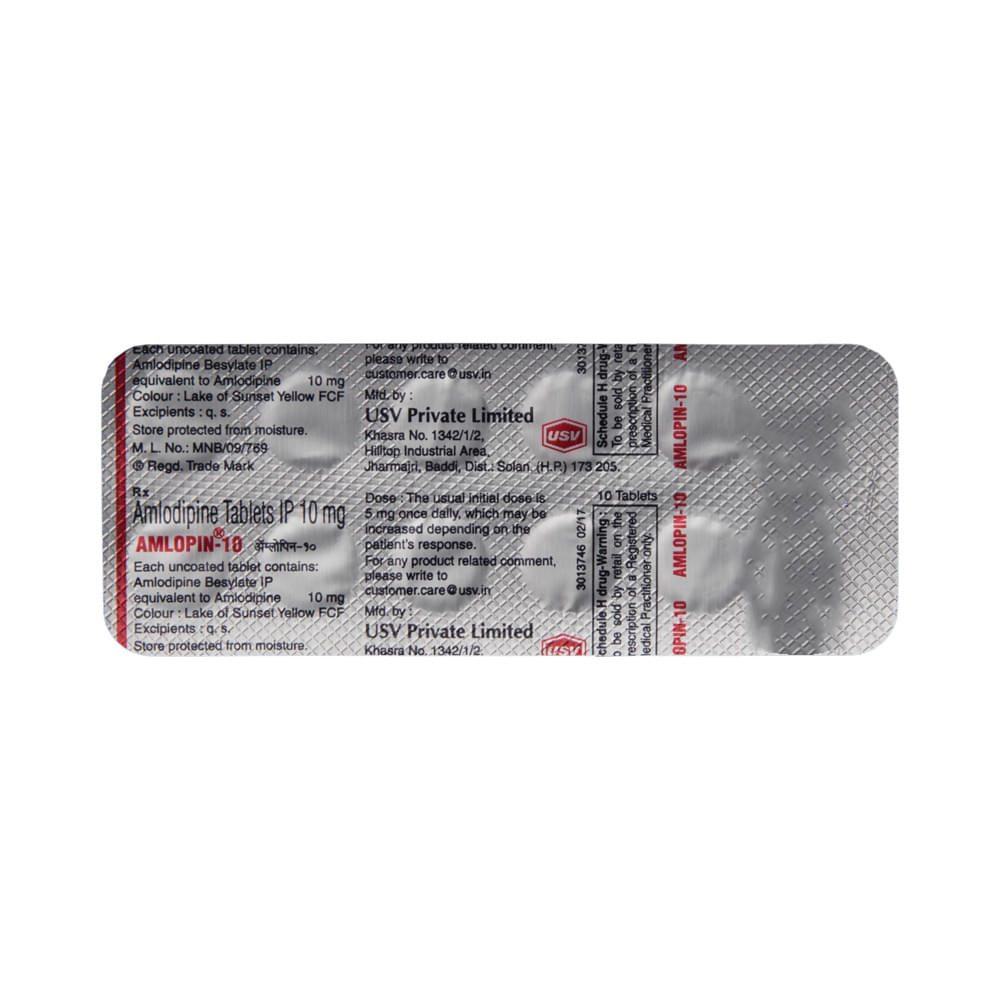
| Salt Composition: | Amlodipine (10mg) |
| Manufacturer: | USV Ltd |
| Storage: | Below 25 degree celcius |
Out of Stock
Have doubts about this medicine?
Have doubts about this medicine?
Amlopin 10 Tablet is a calcium channel blocker used to treat high blood pressure and prevent angina (heart-related chest pain). Amlopin 10 Tablet belongs to a class of medicines known as calcium channel blockers. It is used to treat high blood pressure (hypertension) and prevent angina (heart-related chest pain). It lowers blood pressure and reduces the heart's workload, which helps prevent heart attacks and strokes.
Amlopin 10 Tablet is a calcium channel blocker. In high blood pressure, it normalizes the blood pressure by relaxing the blood vessels to reduce the pressure on them, thereby improving the blood flow in the body. In heart-related chest pain (angina), the enhanced blood flow in the body relaxes the heart muscles by reducing the workload on the heart. It also improves the oxygen flow in the body, thereby preventing any heart-related chest pain.
How long does Amlopin 10 Tablet take to work?
Amlopin 10 Tablet starts working on the day it is taken, but full effects may take several weeks. Continue taking the medicine even if you feel better or don't notice significant changes, and consult your doctor with any concerns or worsening symptoms.
Does Amlopin 10 Tablet cause itching?
Some patients experience itching while taking Amlopin 10 Tablet. However, this is an uncommon side effect. If you experience severe itching, contact your doctor immediately.
Is Amlopin 10 Tablet harmful to the kidneys?
There's no evidence that Amlopin 10 Tablet causes kidney problems. Amlopin 10 can be safely used by patients with existing kidney conditions and even helps prevent kidney damage due to hypertension.
When should I take Amlopin 10 Tablet?
You can take Amlopin 10 Tablet anytime of the day. Your doctor may advise taking it in the evening as well, but generally it's advisable to take it in the morning for consistency.
How long do I need to take Amlopin 10 Tablet?
You should continue taking Amlopin 10 Tablet for as long as your doctor recommends, potentially lifelong. Do not stop taking it without consulting your doctor. Stopping the medication may lead to increased blood pressure and a worsening of your condition.
Is Amlopin 10 Tablet a beta-blocker?
Amlopin 10 Tablet is not a beta-blocker. It belongs to a class of medicines called calcium channel blockers, which lower blood pressure by relaxing blood vessels for easier blood flow.
What are the serious side effects of Amlopin 10 Tablet?
Serious side effects of Amlopin 10 Tablet can include liver problems (yellowing of skin, nausea, vomiting, and loss of appetite), pancreatitis (severe stomach pain, nausea, and vomiting), and recurrent chest pain which may indicate a heart attack. These side effects are rare.
What should I avoid while taking Amlopin 10 Tablet?
Before starting any new medications or supplements, consult your doctor. Adhere to a low-sodium and low-fat diet. Avoid grapefruit (chakotra) and its juice while on this medication. Quit smoking and limit alcohol intake as these activities can lower blood pressure and help prevent heart problems.
I have developed ankle edema and swelling over my feet after using Amlopin 10 Tablet, what should I do?
Amlopin 10 Tablet can cause ankle or foot swelling. Raising your legs while sitting down may help reduce the swelling. If the swelling persists, consult your doctor.
Take this medicine in the dose and duration as advised by your doctor. Swallow it as a whole. Do not chew, crush or break it. Amlopin 10 Tablet may be taken with or without food, but it is better to take it at a fixed time.
- You have been prescribed Amlopin 10 Tablet to improve your blood pressure and/or to reduce the number and severity of angina attacks.
- Lowering blood pressure reduces the chance of future heart attack and stroke.
- Take it at the same time every day to help you remember to take it.
- A sudden drop in your blood pressure may occur especially when you first start taking Amlopin 10 Tablet. To lower the chance of feeling dizzy or passing out, rise slowly if you have been sitting or lying down.
- It can cause ankle or foot swelling. To reduce the swelling, raise your legs while you are sitting down. Talk to your doctor if it does not go away.
- No common side effects listed.

Alcohol
Caution is advised when consuming alcohol with Amlopin 10 Tablet. Please consult your doctor.

Breastfeed
Amlopin 10 Tablet is probably safe to use during breastfeeding. Limited human data suggests that the drug does not represent any significant risk to the baby.

Pregnancy
Amlopin 10 Tablet may be unsafe to use during pregnancy. Although there are limited studies in humans, animal studies have shown harmful effects on the developing baby. Your doctor will weigh the benefits and any potential risks before prescribing it to you. Please consult your doctor.