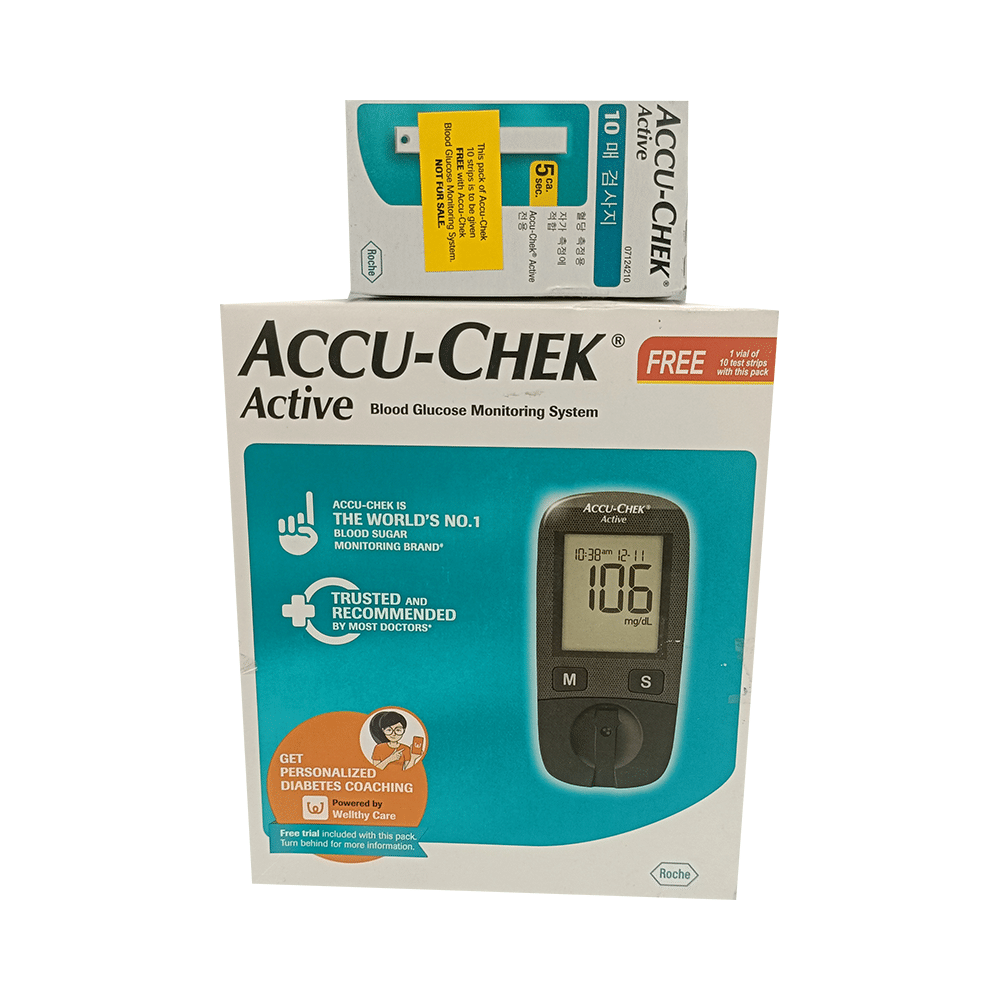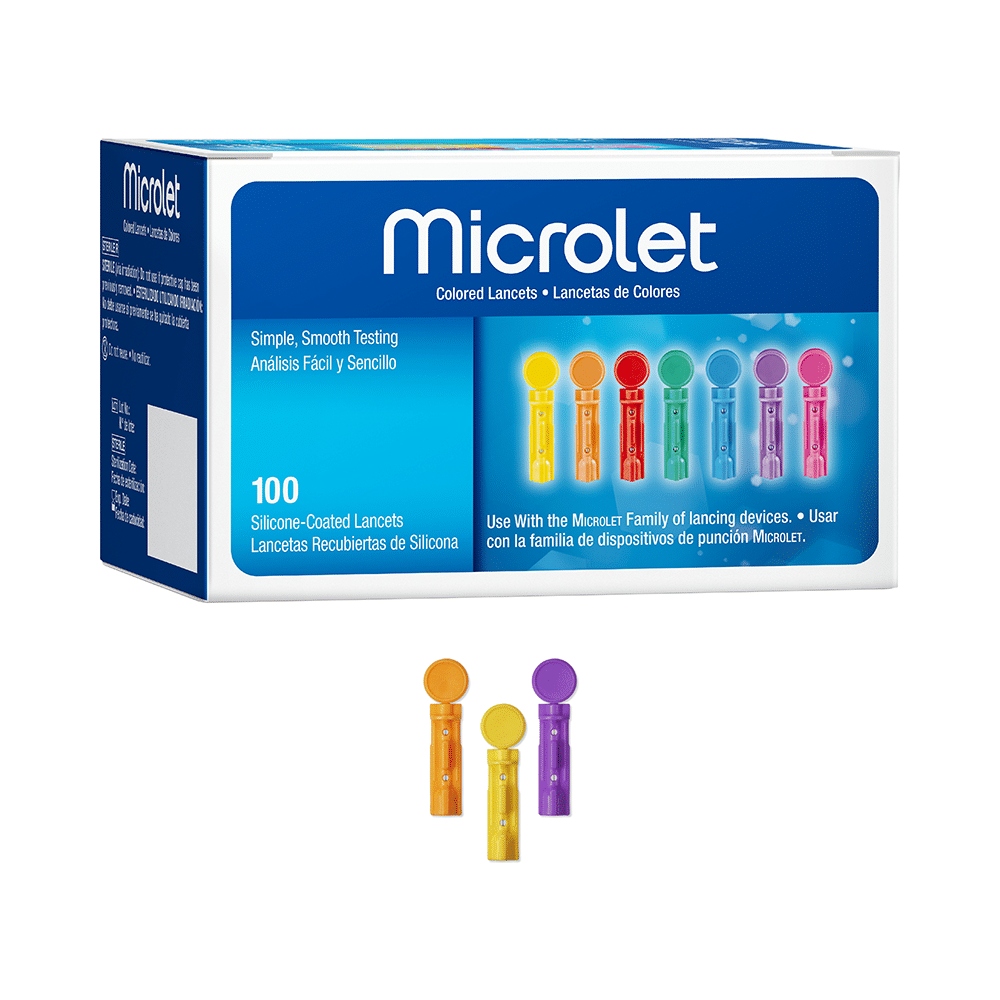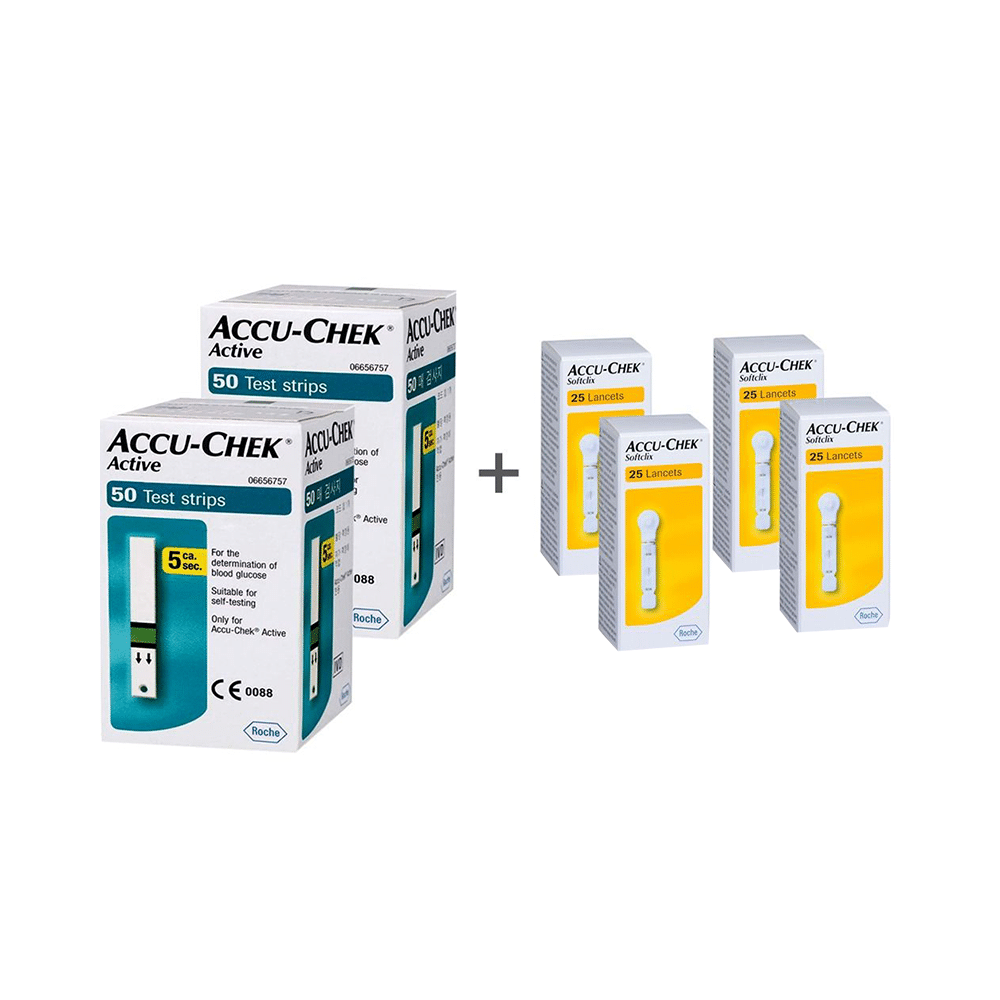
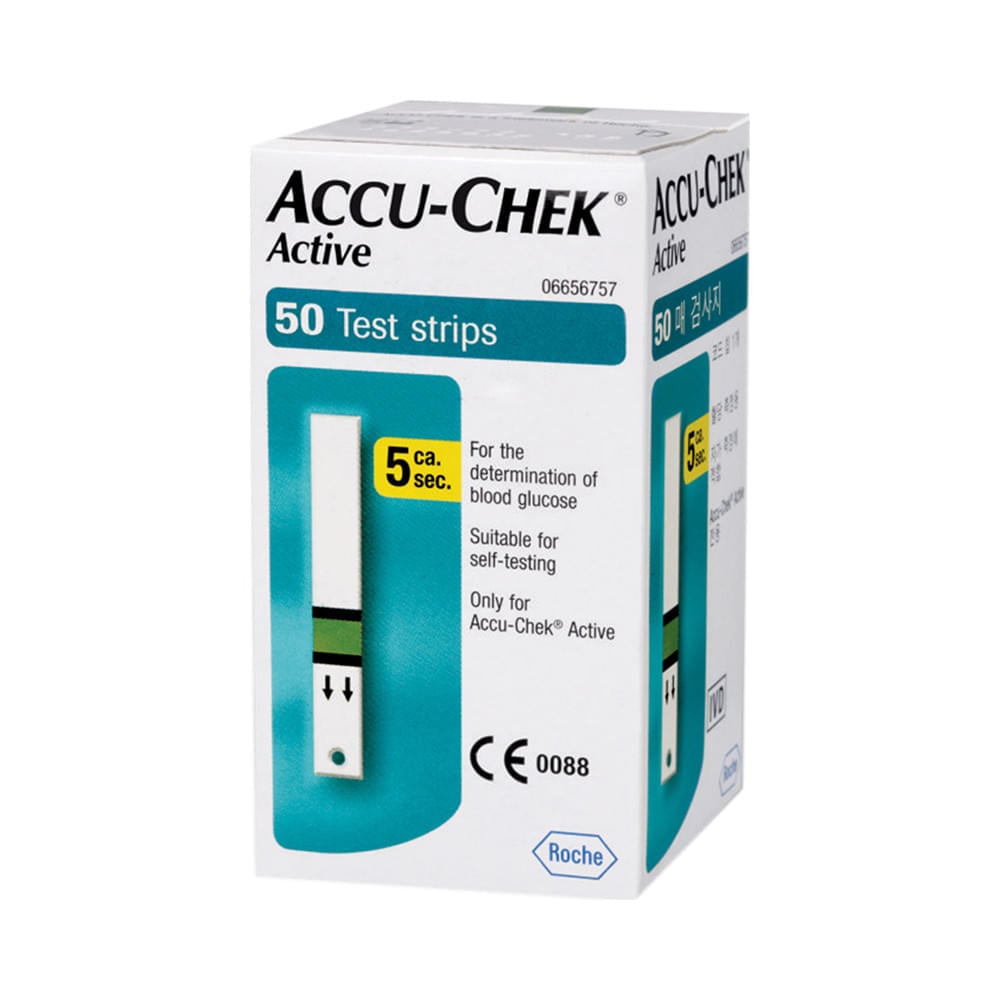
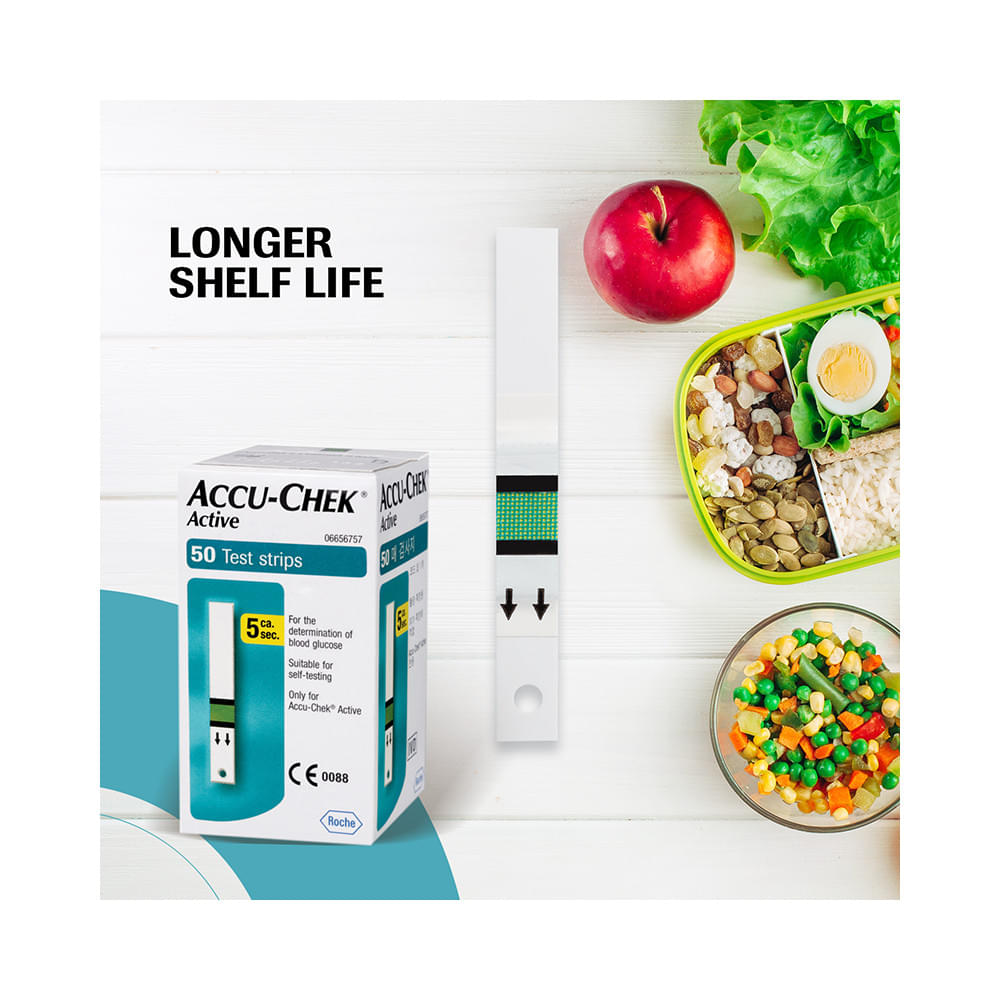
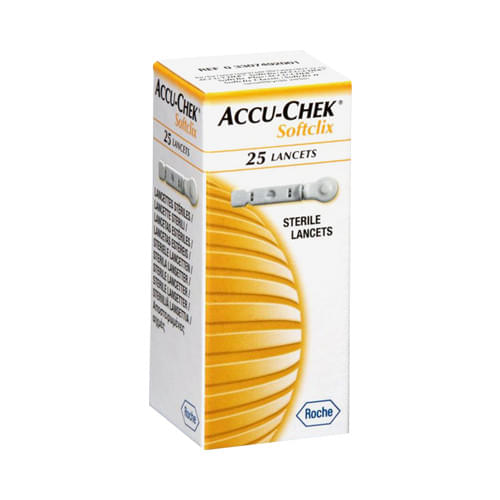
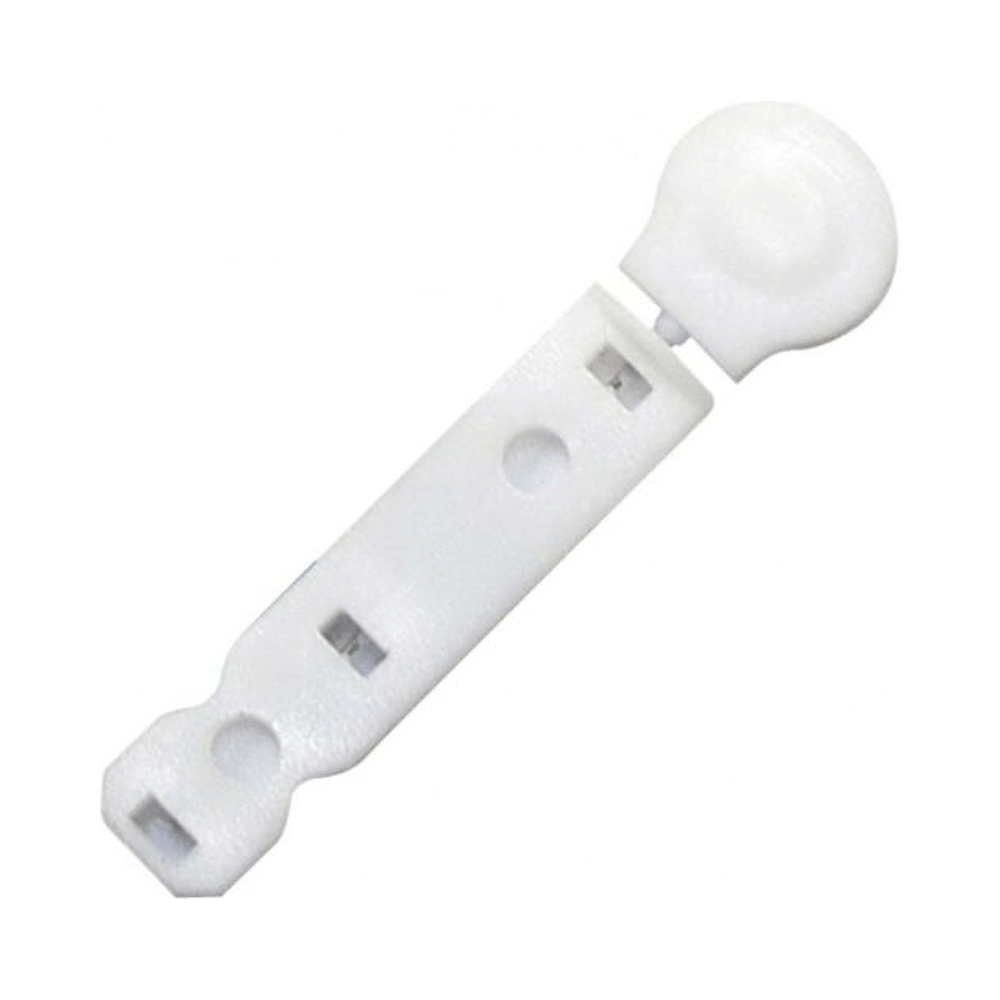
Accu-Chek Combo Pack of 2 Pack Active Test Strip (50 Each) & 4 Pack Softclix Lancet (25 Each)
6 units
About this product:
| Manufacturer: | |
| Storage: | Below 25 degree celcius |
Out of Stock
Have doubts about this medicine?
Have doubts about this medicine?
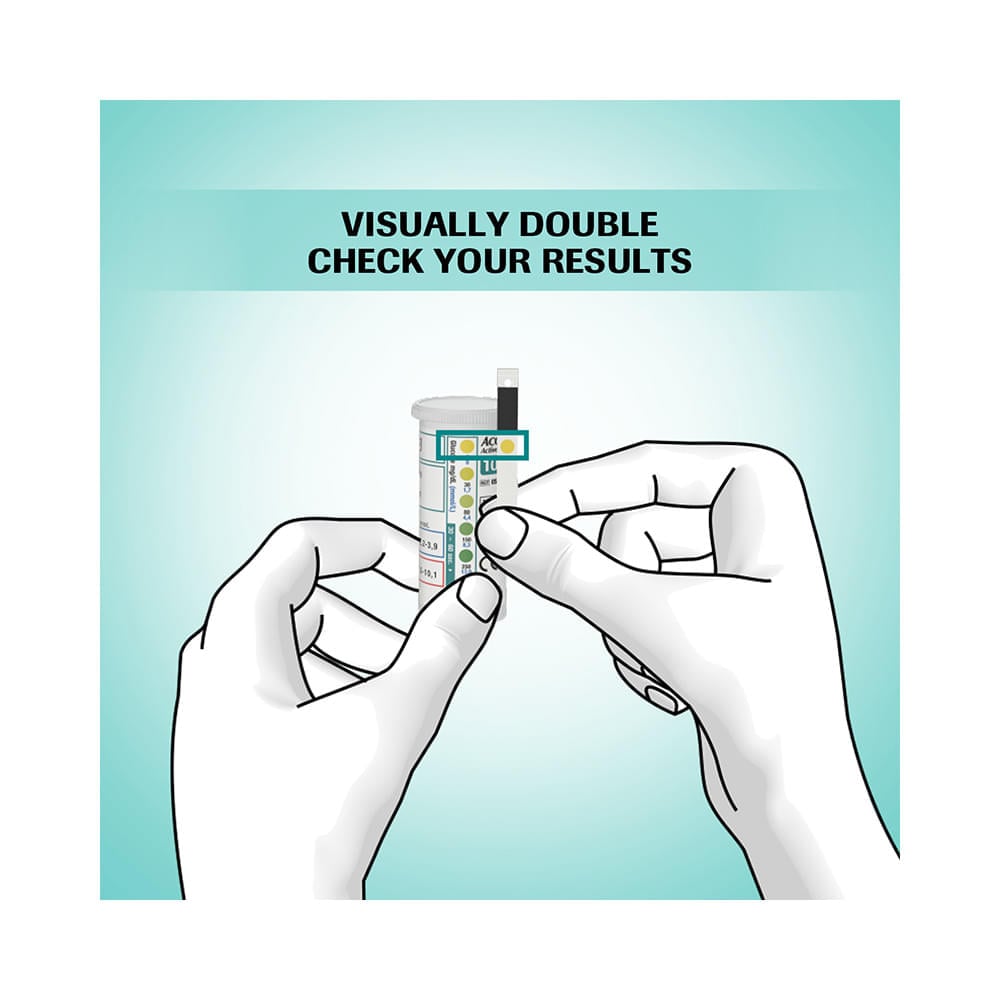
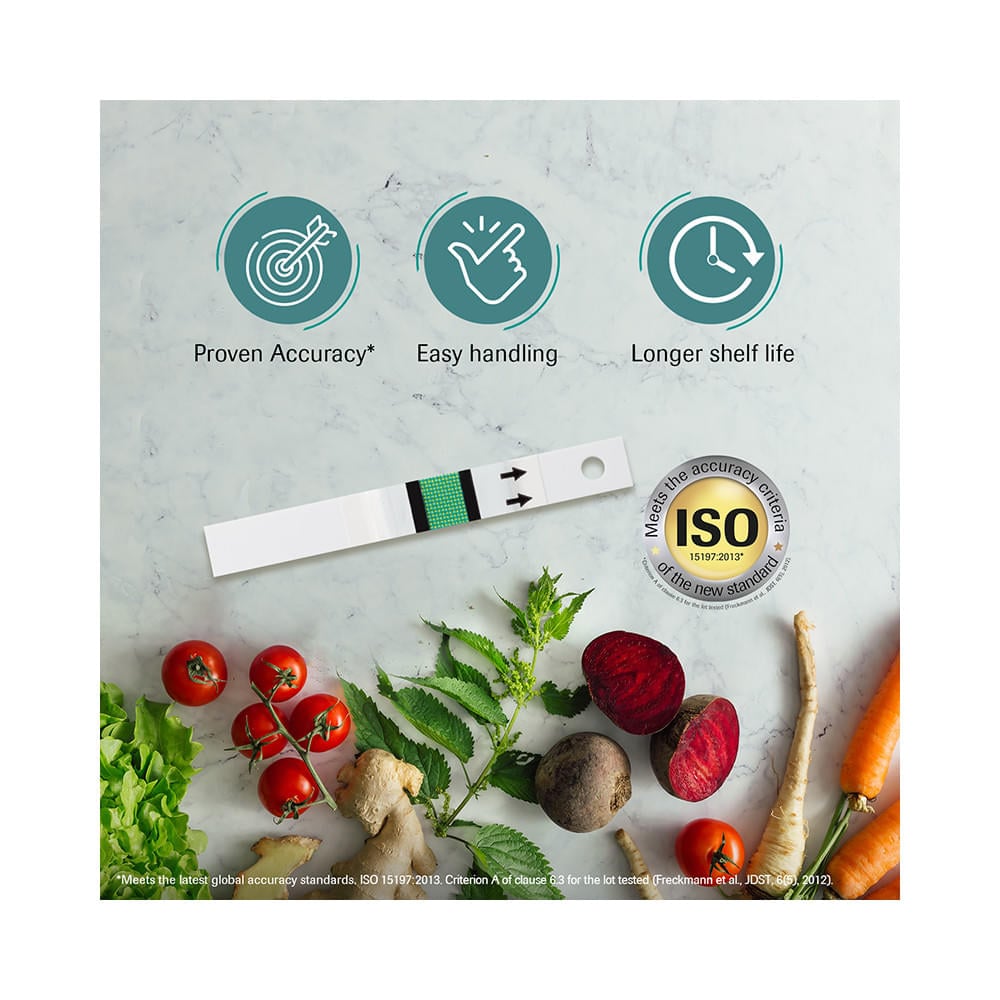
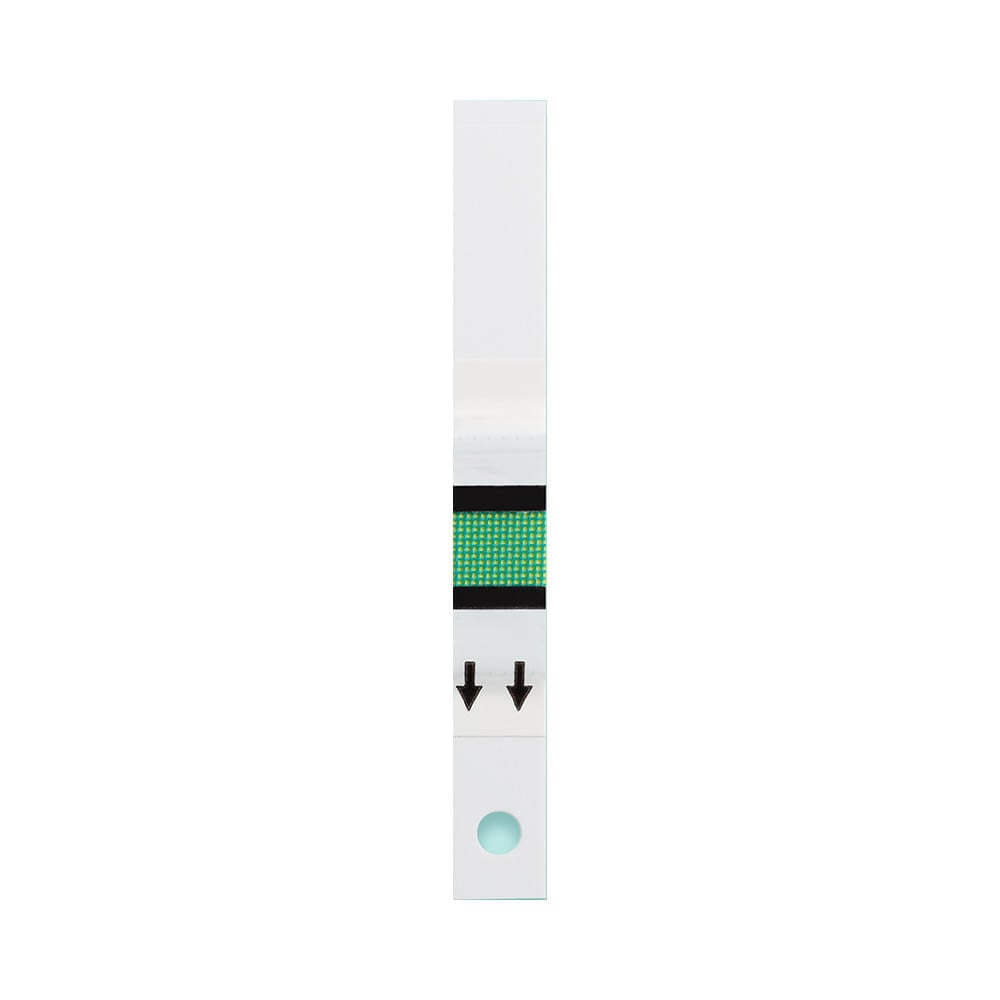
Accu-Chek Active Test Strip is a reliable and convenient self-testing method for determining blood sugar levels. It is a hassle-free product that does not require manual coding and provides quick and accurate results. Accu-Chek Active Test Strip is a self-testing method for determining blood sugar levels. It is a hassle-free product that does not require manual coding and provides quick and accurate results. The kit includes Accu-Chek Active strips that can be used until the expiration date printed on the pack. These sugar strips absorb blood easily and show reliable results in a few seconds.
The diabetes devices or glucometers test the amount of glucose in the blood. The test strips present in glucometers contain an enzyme called glucose oxidase, which reacts with glucose in the blood and sends the result as an electronic signal, which is displayed on the monitor.
Can blood sugar strips be reused?
No. All blood glucose test strips are for single use only. Re-using a test strip may not provide you with appropriate results. Hence, it is strongly advised to always discard the test strip after use.
What are the benefits of glucometers?
It is well known that testing blood glucose levels with a glucometer at home is one of the major pillars of diabetes management. It can help you to test your blood glucose anywhere, at any time of the day. Using a portable glucometer is the best way to test glucose when traveling. Charting of blood glucose levels becomes easy with glucometers especially with devices having memory options to store previous readings. By helping you to keep your blood glucose level in check, blood glucose monitors can help you manage diabetes better.
What is a normal glucometer reading?
According to the American Diabetes Association, the fasting or preprandial blood glucose levels for diabetics should be between 80 – 130 mg/dl and postprandial (1-2 hours after meals) should be less than 180 mg/dl. However, the range mentioned in your glucose monitor may be a little different. So, you need to speak to your doctor to calibrate the results with your lab reports.
How do blood glucose monitors work?
The diabetes devices or glucometers test the amount of glucose in the blood. The test strips present in glucometers contain an enzyme called glucose oxidase, which reacts with glucose in the blood and sends the result as an electronic signal, which is displayed on the monitor.
How often should you test your blood glucose with a glucometer?
If you have type 1 diabetes, you may need to check your blood glucose levels several times a day such as before and after meals and before and after exercise or as advised by your doctor. Whereas, if you have type 2 diabetes, the frequency of monitoring your sugar levels might be based on the severity of the condition which can be several times a day, once a day, or thrice a week. Hence, talk to your doctor about how often you should test your blood glucose.
Place the test strip inside the meter. Draw a drop of blood by pricking the finger with the lancet. Then, place the drop of blood on the test strip and wait for a few seconds for the result.
- For in-vitro diagnostic use only.
- For accurate results, it is advised to use it with Accu-Chek glucose meter.
- Store in a capped vial in a cool and dry space between 4-30 degree celsius.
- It can be used until the expiry date mention on the pack, even after opening the pack.
- The test strip is for single use only, never reuse.
- Refer to the manual for the details before using this product.
- Do not take any medical decision without consulting a doctor.
- Always discuss your results with a registered medical practitioner.