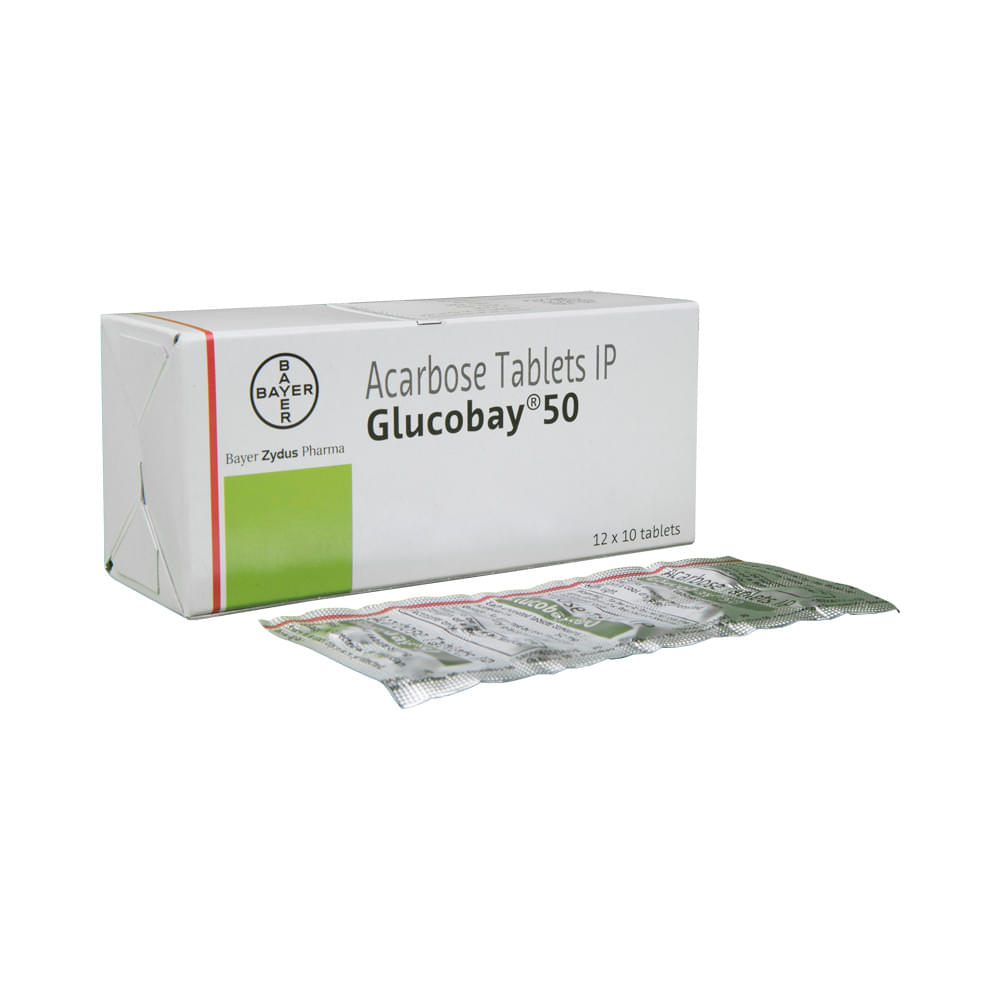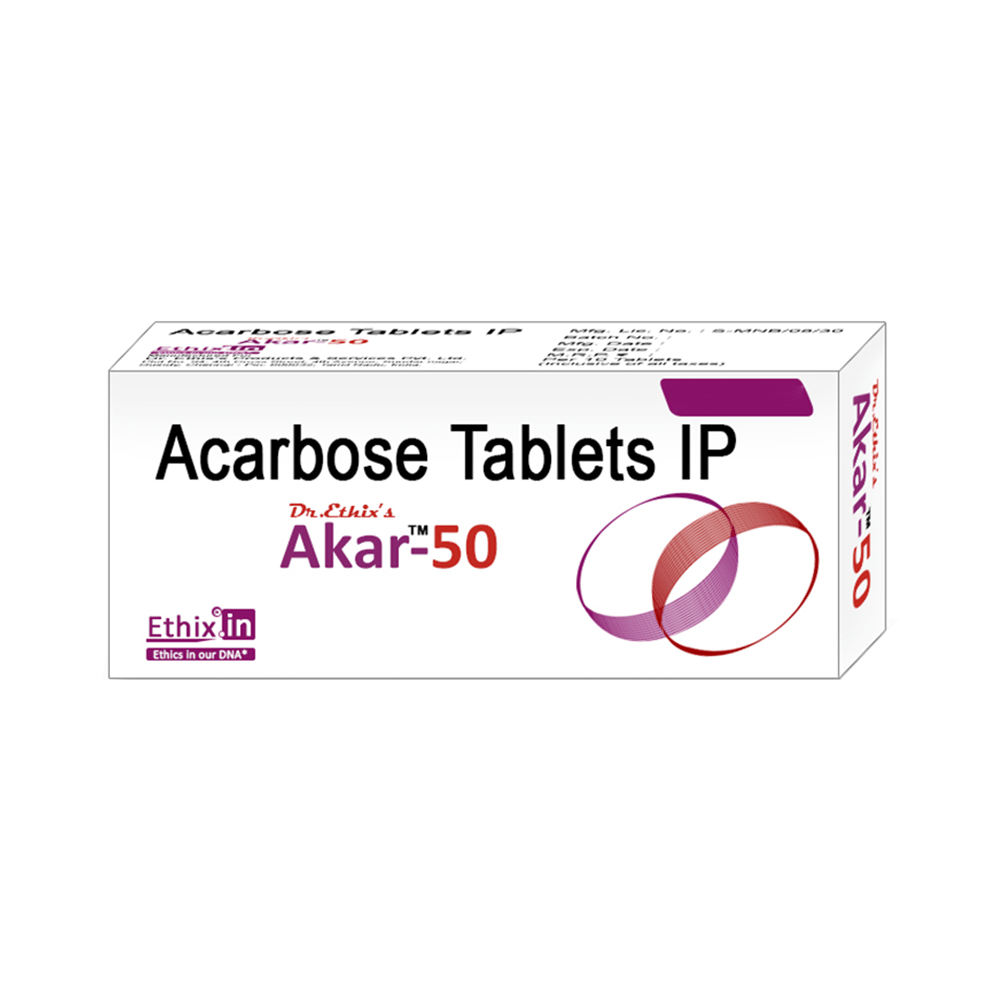
Acarb 50mg Tablet
strip of 10.0 tablets.Prescription required
About this product:
| Salt Composition: | Acarbose (50mg) |
| Manufacturer: | Mano Pharma Pvt Ltd |
| Storage: | Below 25 degree celcius |
Out of Stock
Have doubts about this medicine?
Have doubts about this medicine?
Acarb 50mg Tablet is used to treat people with type 2 diabetes mellitus, helping to lower blood sugar levels after meals. Acarb 50mg Tablet should be taken just before or along with the first few bites of the meal. The dose and how often you need it will be decided by your doctor so that you get the right amount to control your blood sugar levels. It may be increased gradually. Do not stop taking it without consulting your doctor. If you do, your blood sugar levels may increase and put you at risk of serious complications like kidney damage and blindness.
Acarb 50mg Tablet is an anti-diabetic medicine. It inhibits the intestinal enzymes responsible for breaking complex sugars into simple sugars such as glucose. This prevents blood glucose levels from rising very high immediately after meals.
Does Acarb 50mg Tablet pose a risk of hypoglycemia?
Acarb 50mg Tablet itself does not cause hypoglycemia, but it may contribute to low blood sugar levels when used in combination with other diabetes medications or insulin. If you experience symptoms of hypoglycemia, such as dizziness or shakiness, seek medical attention and adjust your dosage accordingly.
Why can Acarb 50mg Tablet lead to flatulence?
Acarb 50mg Tablet works by blocking carbohydrate digestion in the small intestine. This results in undigested carbohydrates being fermented by bacteria in the colon, leading to gas accumulation and flatulence. Additionally, some people may experience abdominal pain due to increased fermentation.
Is diarrhea a common side effect of Acarb 50mg Tablet?
Yes, diarrhea is a frequent adverse effect associated with Acarb 50mg Tablet use. Consuming foods containing carbohydrates, such as household sugar (cane sugar), can exacerbate this symptom and lead to severe abdominal pain. If persistent or severe diarrhea occurs, consult your doctor immediately.
How should I take Acarb 50mg Tablet?
Acarb 50mg Tablet is best taken with meals and swallowed whole with water or chewed with the first bite of food. Initially, it's usually prescribed to be taken twice daily, then gradually increased to three times a day.
What if I miss a dose of Acarb 50mg Tablet?
If you forget to take your Acarb 50mg Tablet, simply wait for the next scheduled dose and meal. Do not take an extra dose between meals or double up on the missed dose.
What are the potential consequences of taking more than the recommended dose of Acarb 50mg Tablet?
Overdosing on Acarb 50mg Tablet may lead to increased flatulence, diarrhea, and abdominal discomfort. To alleviate symptoms, avoid consuming foods containing carbohydrates for the next 4-6 hours.
Who should not take Acarb 50mg Tablet?
You should avoid taking Acarb 50mg Tablet if you are allergic to it or have severe liver disease, intestinal inflammation (e.g., Crohn's disease), an intestinal obstruction, a large hernia, or poor digestion/absorption of food. Additionally, women who are pregnant or breastfeeding should not use this medication.
What are the consequences of taking more than the recommended dose of Acarb 50mg Tablet?
If you take more than the recommended dose of Acarb 50mg Tablet then it may cause temporary increase in flatulence (accumulation of gas), diarrhea, and abdominal discomfort. It is advised to avoid meals or drinks containing carbohydrates for the next 4-6 hours.
Take this medicine in the dose and duration as advised by your doctor. Swallow it as a whole. Do not chew, crush or break it. Acarb 50mg Tablet is to be taken with food.
- Along with your regular doctor visit
- You might also need regular check-ups with an eye clinic and a foot clinic as well.
- Your doctor will also advise you to test for sugar in your blood using a home diabetes test kit regularly to check that your sugar level is being controlled.
- Along with a healthy diet, indulge in light exercises regularly and quit smoking and drinking.
- If you feel excessively thirsty, pass urine more frequently, and get tired easily, then let your doctor know.

Alcohol
Caution is advised when consuming alcohol with Acarb 50mg Tablet. Please consult your doctor.

Breastfeed
Acarb 50mg Tablet is probably unsafe to use during breastfeeding. Limited human data suggests that the drug may pass into the breastmilk and harm the baby.

Pregnancy
Acarb 50mg Tablet may be unsafe to use during pregnancy. Although there are limited studies in humans, animal studies have shown harmful effects on the developing baby.