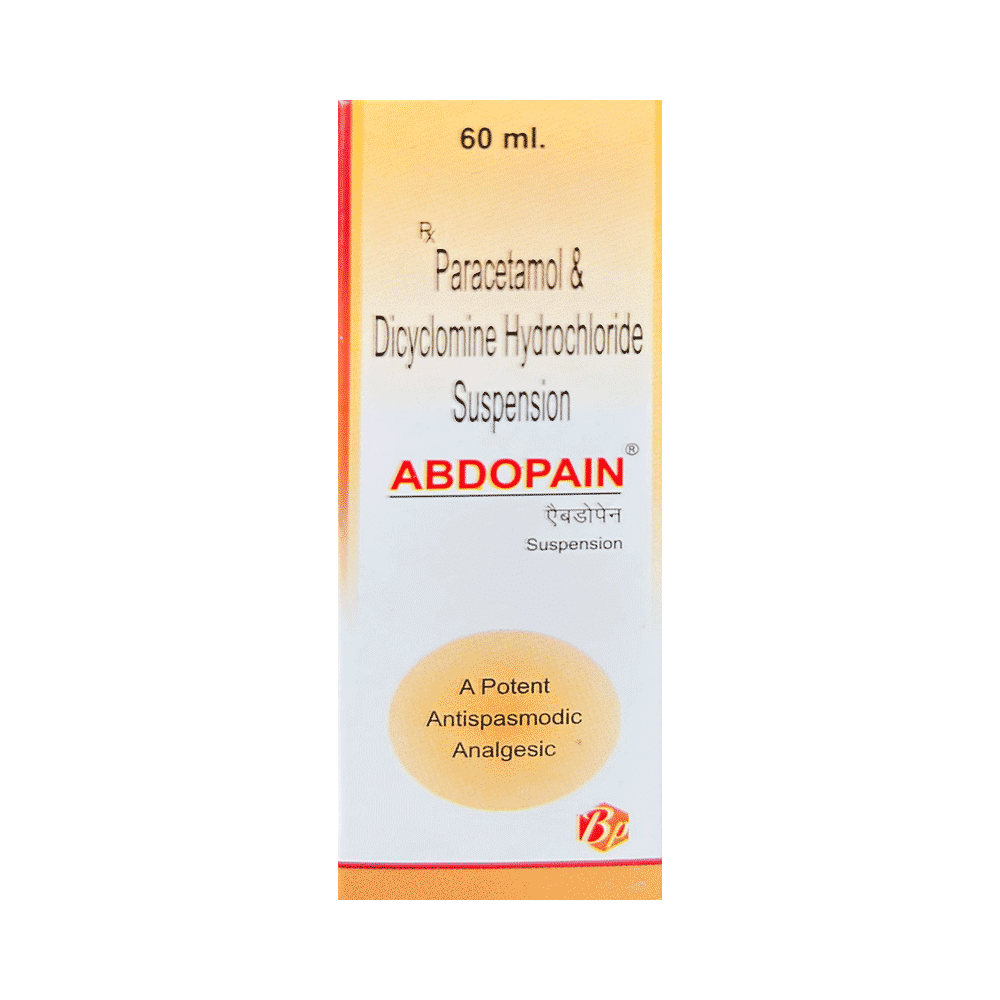
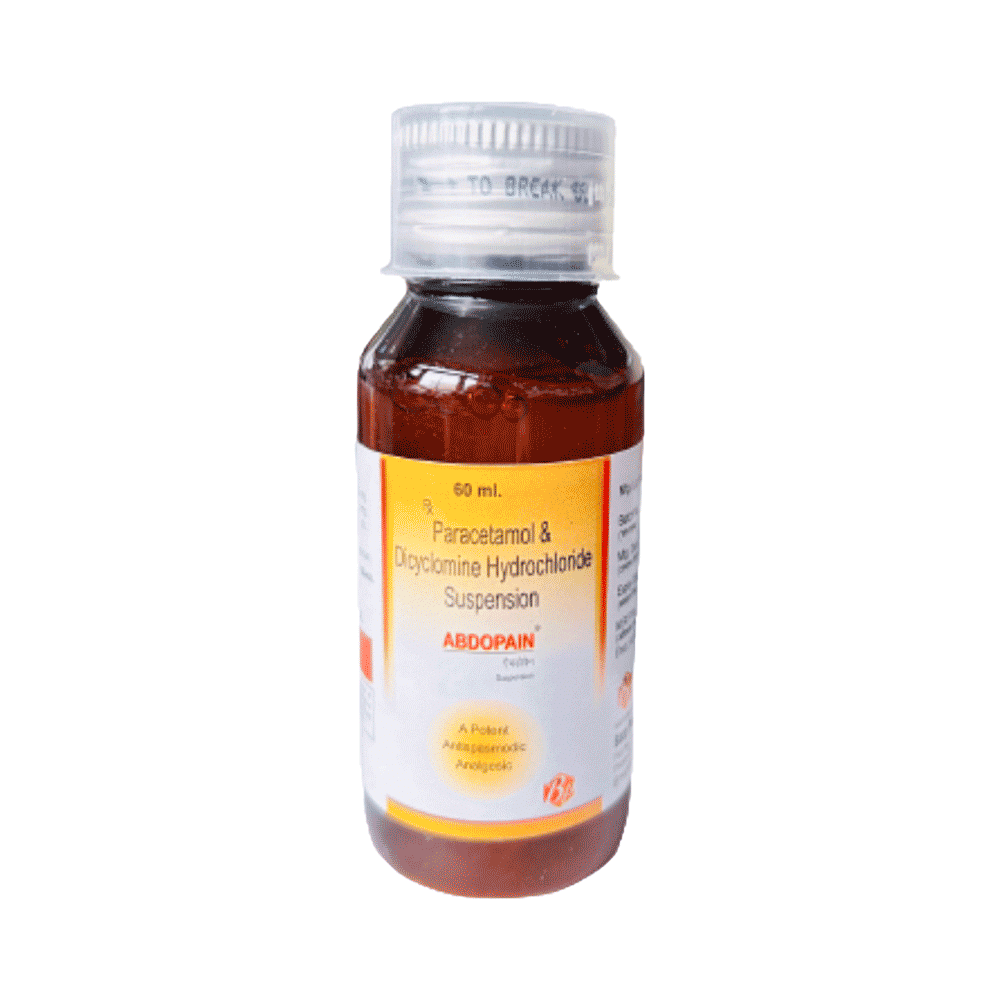
Abdopain Oral Suspension
bottle of 60.0 ml Oral Suspension.Prescription required
About this product:
| Salt Composition: | Dicyclomine (5mg) + Paracetamol (12mg) |
| Manufacturer: | Baxy Pharmaceutical |
| Storage: | Below 25 degree celcius |
Out of Stock
Have doubts about this medicine?
Have doubts about this medicine?
Abdopain Oral Suspension is commonly given to treat abdominal pain in children. It relieves the pain by relaxing the muscles of the stomach. Give Abdopain Oral Suspension to your child at a fixed time either before or after food. If your child develops a stomach upset, it is best to give this medicine with food. It is usually given four times a day. However, this may vary based on your child's clinical condition, body weight, and age. It is most likely that the doctor will start with a low dose of Abdopain Oral Suspension and gradually increase the dose. Stick to the dose, time, and way as prescribed. If your child vomits within 30 minutes of taking this medicine, give the same dose again, but skip it if it is already time for the next dose.
Abdopain Oral Suspension is a combination of two medicines: dicyclomine and paracetamol, which relieves abdominal pain and cramps. Dicyclomine is an anticholinergic that relaxes the muscles in the stomach and gut (intestine). It stops sudden muscle contractions (spasms) thereby relieving cramps, pain, bloating, and discomfort. Paracetamol is an analgesic (pain reliever) that works by blocking the release of certain chemical messengers that cause pain.
Take this medicine in the dose and duration as advised by your doctor. Check the label for directions before use. Measure it with a measuring cup and take it by mouth. Shake well before use. Abdopain Oral Suspension may be taken with or without food, but it is better to take it at a fixed time.
- Do not give Abdopain Oral Suspension to infants who are less than 6 months of age.
- Do not give Abdopain Oral Suspension with antacids as they can decrease its absorption.
- Taking frequent sips of water may help if dry mouth occurs with the use of Abdopain Oral Suspension.
- Rule out the psychological causes of abdominal pain in children before giving Abdopain Oral Suspension.
- Do not practice self-medication. Never give any stomach pain medicine to your child without consulting a doctor.
- Never give the medicines meant for adults to children as they can be harmful for your child.
- Give Abdopain Oral Suspension for whom it is prescribed. Do not share the medicine as it can do harm.
- Some self-care tips: Divide your child's meal into proportions. Give an easily digestible meal to your child. You may place a hot water bottle on your child's abdomen during pain. Avoid giving caffeinated foods such as coffee, chocolates to your child as these can trigger the pain.
- No common side effects listed

Alcohol
It is unsafe to consume alcohol with Abdopain Oral Suspension.

Breastfeed
Abdopain Oral Suspension is probably unsafe to use during breastfeeding. Limited human data suggests that the drug may pass into the breastmilk and harm the baby.

Pregnancy
Abdopain Oral Suspension is generally considered safe to use during pregnancy. Animal studies have shown low or no adverse effects to the developing baby; however, there are limited human studies.