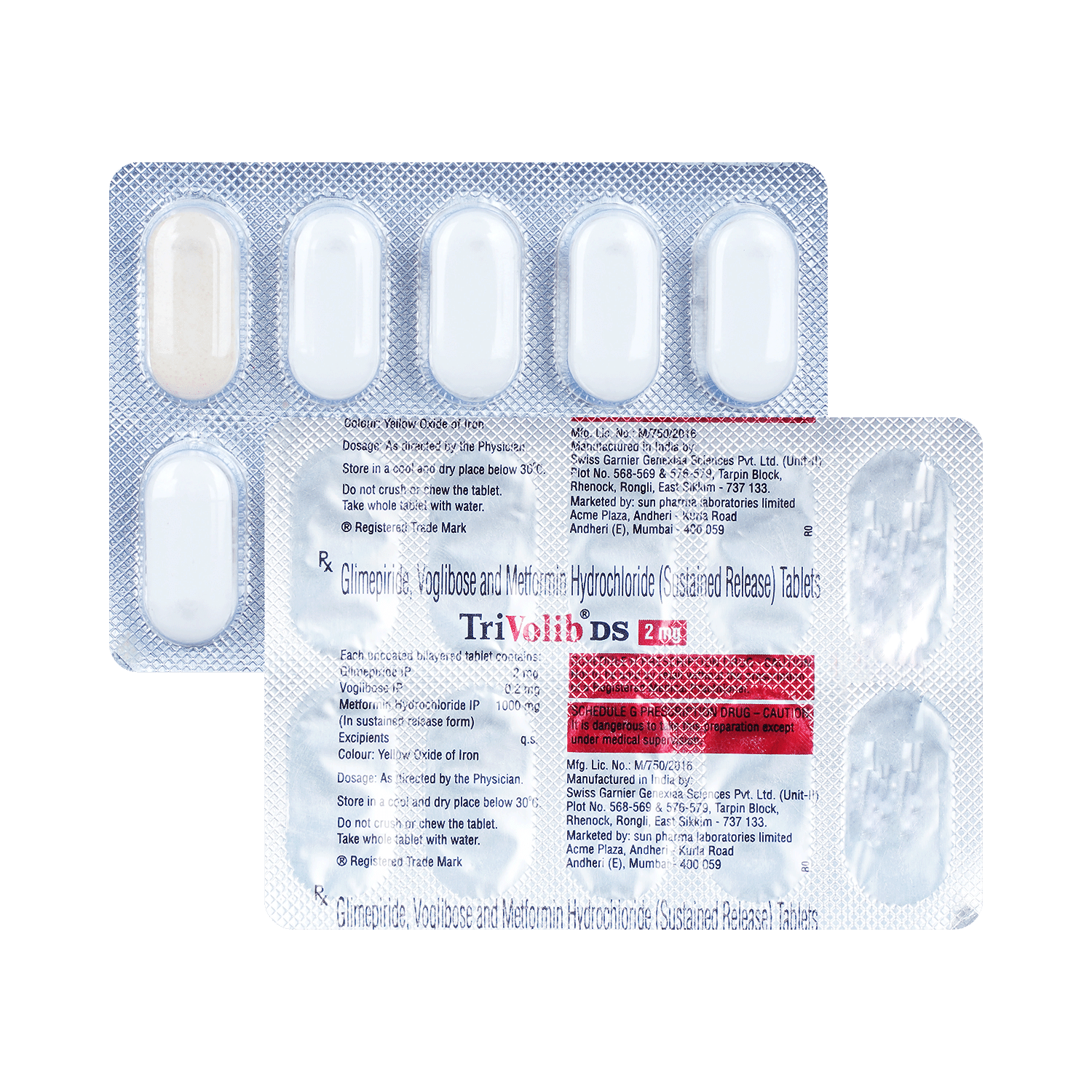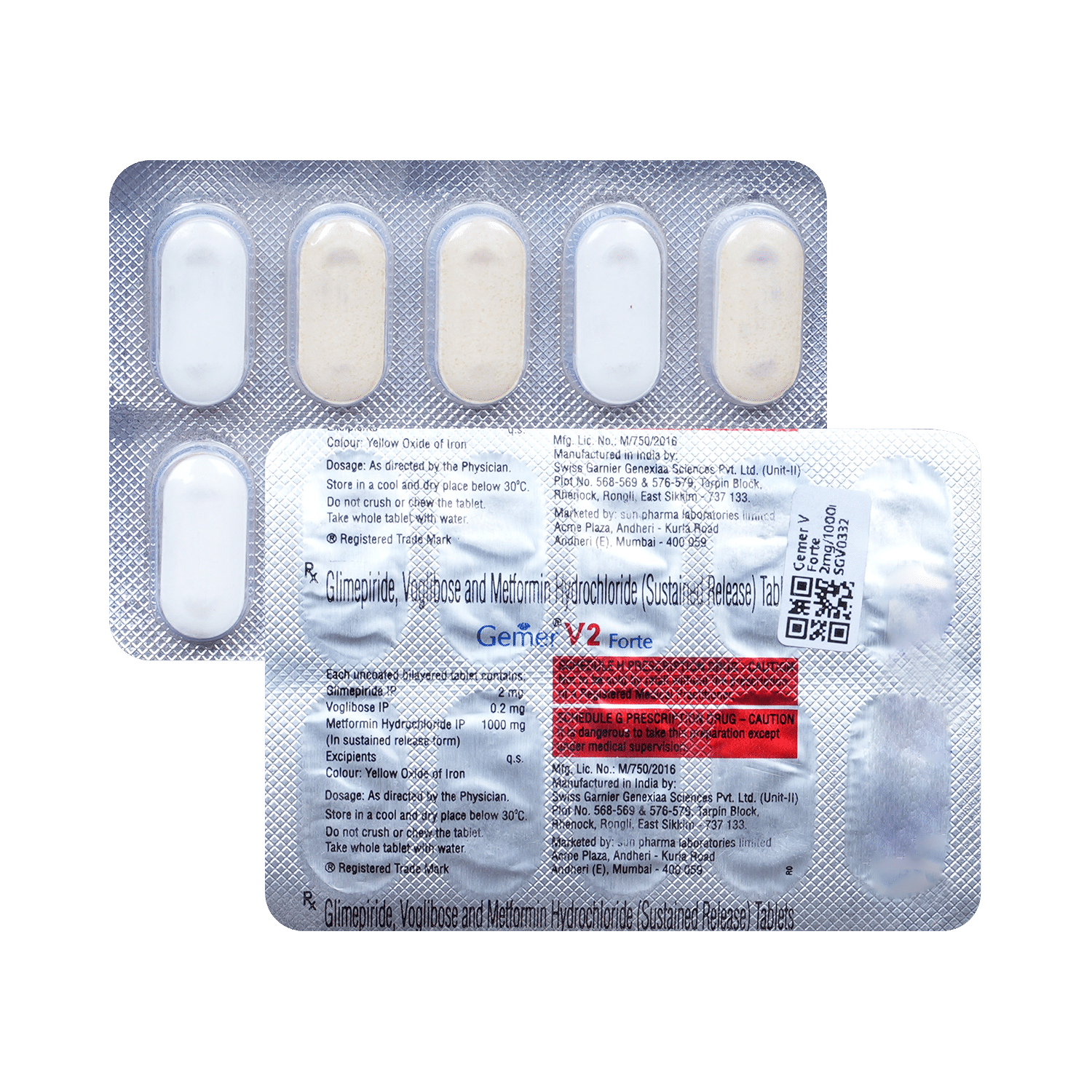
Tribetrol Plus 2mg/1000mg/0.2mg Tablet
strip of 15.0 tablets.Prescription required
About this product:
| Salt Composition: | Glimepiride (2mg) + Metformin (1000mg) + Voglibose (0.mg) |
| Manufacturer: | Nicholas Healthcare Limited |
| Storage: | Below 25 degree celcius |
Out of Stock
Have doubts about this medicine?
Have doubts about this medicine?
Tribetrol Plus 2mg/1000mg/0.2mg Tablet is a combination of medicines used to treat type 2 diabetes mellitus in adults, helping to control blood sugar levels. Tribetrol Plus 2mg/1000mg/0.2mg Tablet is a combination of three antidiabetic medicines used to treat type 2 diabetes mellitus in adults. It helps control blood sugar levels in people with diabetes. Take it with food to lower your chance of having an upset stomach. It can cause hypoglycemia (low blood sugar level) when used with other antidiabetic medicines, alcohol, or if you delay or miss a meal. Carry a sugar source with you for immediate relief.
Tribetrol Plus 2mg/1000mg/0.2mg Tablet is a combination of three antidiabetic medicines:
What is Tribetrol Plus 2mg/1000mg/0.2mg Tablet?
Tribetrol Plus 2mg/1000mg/0.2mg Tablet is a combination of three medicines: Glimepiride, Metformin and Voglibose. This medication is used in the treatment of type 2 diabetes mellitus (DM). It improves blood glucose levels in adults when taken along with proper diet and regular exercise. Glimepiride lowers blood glucose levels by increasing insulin release from the pancreas. Metformin works by lowering glucose production in the liver and improving insulin sensitivity. Voglibose is an alpha-glucosidase inhibitor, which lowers postprandial (after meals) glucose levels in the body. This combination is not indicated for the treatment of Type 1 DM.
What are the possible side effects of Tribetrol Plus 2mg/1000mg/0.2mg Tablet?
Common side effects associated with Tribetrol Plus 2mg/1000mg/0.2mg Tablet include hypoglycemia (low blood sugar level), nausea, diarrhea, altered taste, flatulence, stomach pain, headache, skin rash and respiratory tract infection.
Are there any specific conditions in which Tribetrol Plus 2mg/1000mg/0.2mg Tablet should not be taken?
Tribetrol Plus 2mg/1000mg/0.2mg Tablet should be avoided in patients with known allergy to any of the components or excipients of this medicine. It is also not recommended for individuals with moderate to severe kidney disease and inflammatory bowel diseases, colonic ulcerations and underlying metabolic acidosis including diabetic ketoacidosis.
Is it safe to take alcohol while I am also taking Tribetrol Plus 2mg/1000mg/0.2mg Tablet?
No, it is not safe to take Tribetrol Plus 2mg/1000mg/0.2mg Tablet along with alcohol. This can lower blood sugar levels (hypoglycemia) and increase the risk of lactic acidosis.
Can the use of Tribetrol Plus 2mg/1000mg/0.2mg Tablet cause hypoglycemia?
Yes, Tribetrol Plus 2mg/1000mg/0.2mg Tablet can cause hypoglycemia (low blood sugar level). Symptoms include nausea, headache, irritability, hunger, sweating, dizziness, fast heart rate and feeling anxious or shaky. It is more likely to occur if you miss meals, drink alcohol, exercise excessively or take other antidiabetic medicines together. Regular monitoring of blood glucose levels is essential.
What are the instructions for storage and disposal of Tribetrol Plus 2mg/1000mg/0.2mg Tablet?
Store this medicine in its original container, tightly sealed. Follow the instructions on the packaging or label for proper storage. Discard unused medication to avoid improper use. Ensure that it is not consumed by pets, children, and other individuals.
Take this medicine in the dose and duration as advised by your doctor. Swallow it as a whole. Do not chew, crush or break it. Tribetrol Plus 2mg/1000mg/0.2mg Tablet is to be taken empty stomach.
- Take it with food to lower your chance of having an upset stomach.
- It can cause hypoglycemia (low blood sugar level) when used with other antidiabetic medicines, alcohol, or if you delay or miss a meal. Carry a sugar source with you for immediate relief.
- Your doctor may check your liver function regularly. Inform your doctor if you develop symptoms such as abdominal pain, loss of appetite, or yellowing of the eyes or skin (jaundice).

Alcohol
It is unsafe to consume alcohol with Tribetrol Plus 2mg/1000mg/0.2mg Tablet.

Breastfeed
Tribetrol Plus 2mg/1000mg/0.2mg Tablet is probably unsafe to use during breastfeeding. Limited human data suggests that the drug may pass into the breastmilk and harm the baby.

Pregnancy
Tribetrol Plus 2mg/1000mg/0.2mg Tablet may be unsafe to use during pregnancy. Although there are limited studies in humans, animal studies have shown harmful effects on the developing baby. Your doctor will weigh the benefits and any potential risks before prescribing it to you. Please consult your doctor.