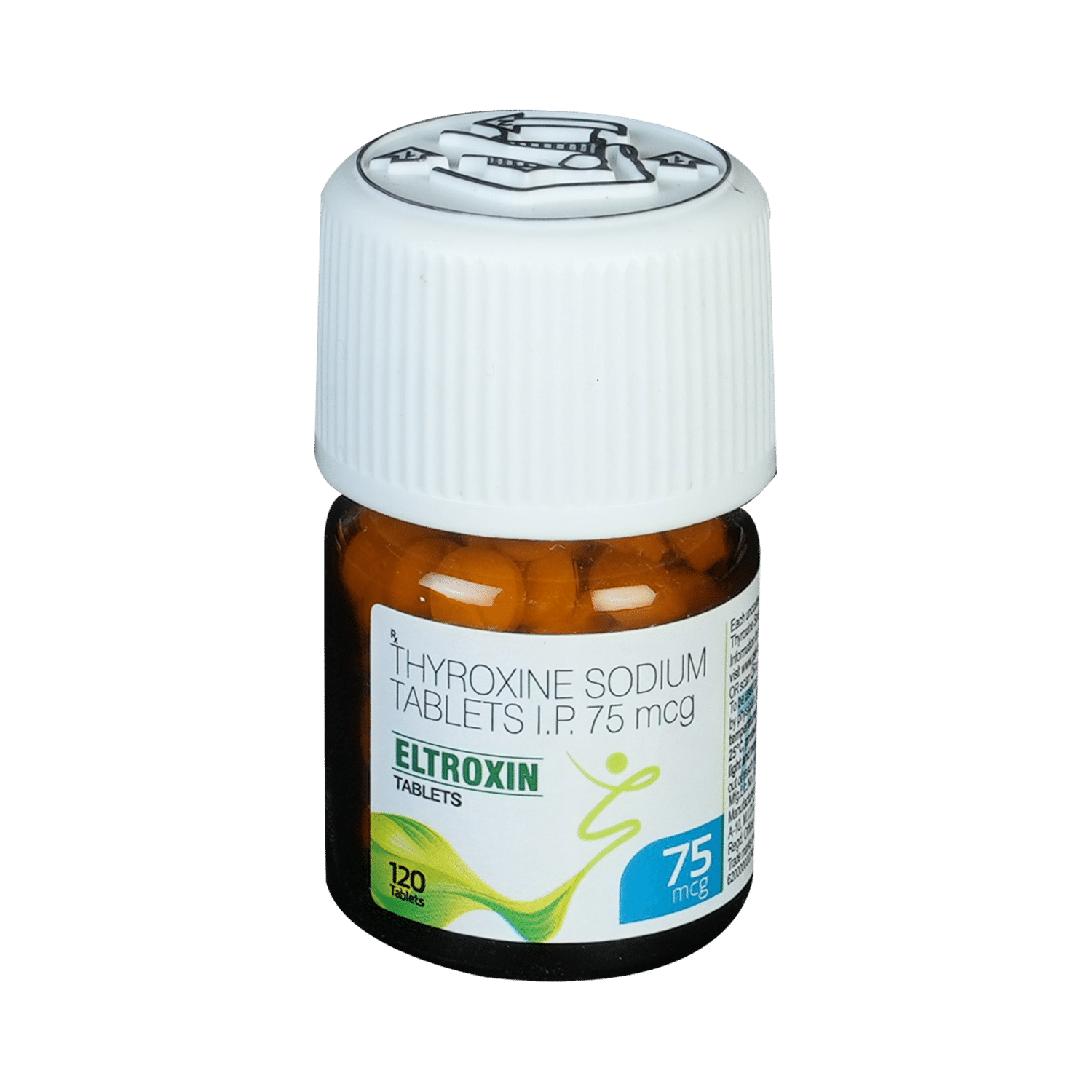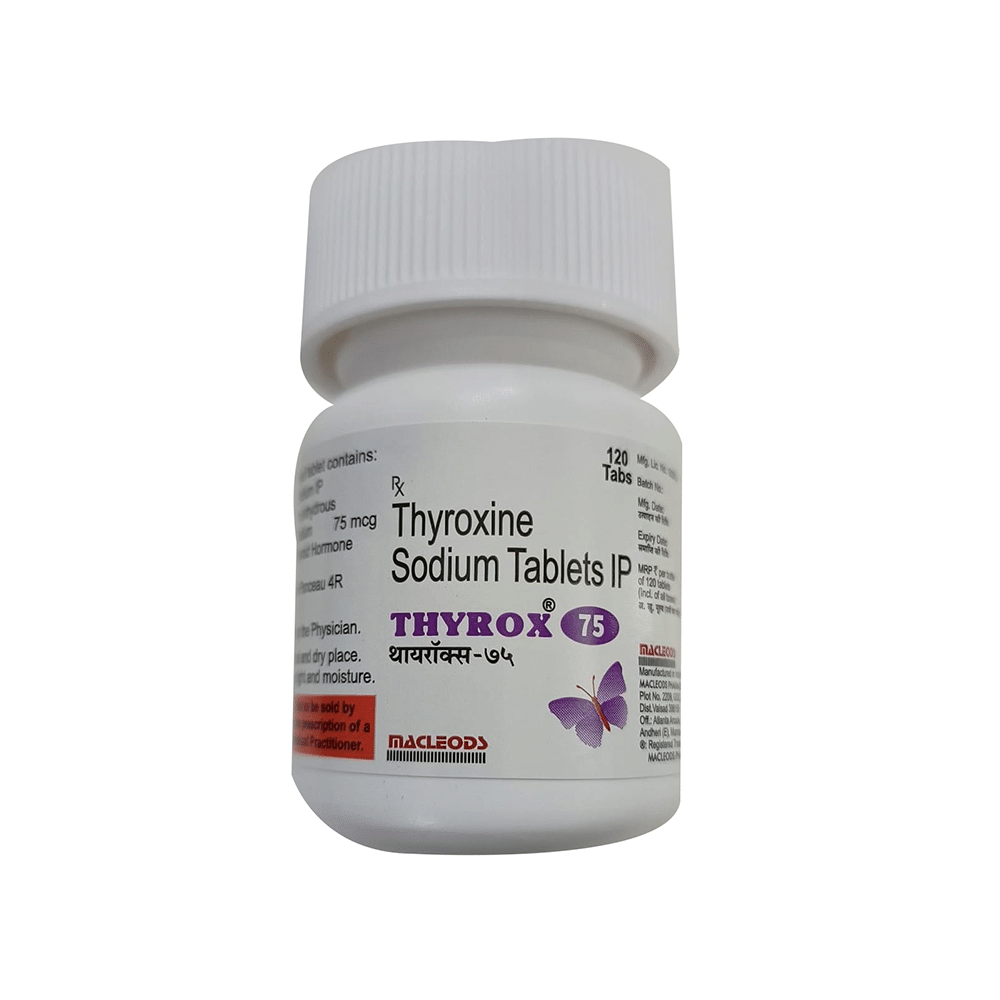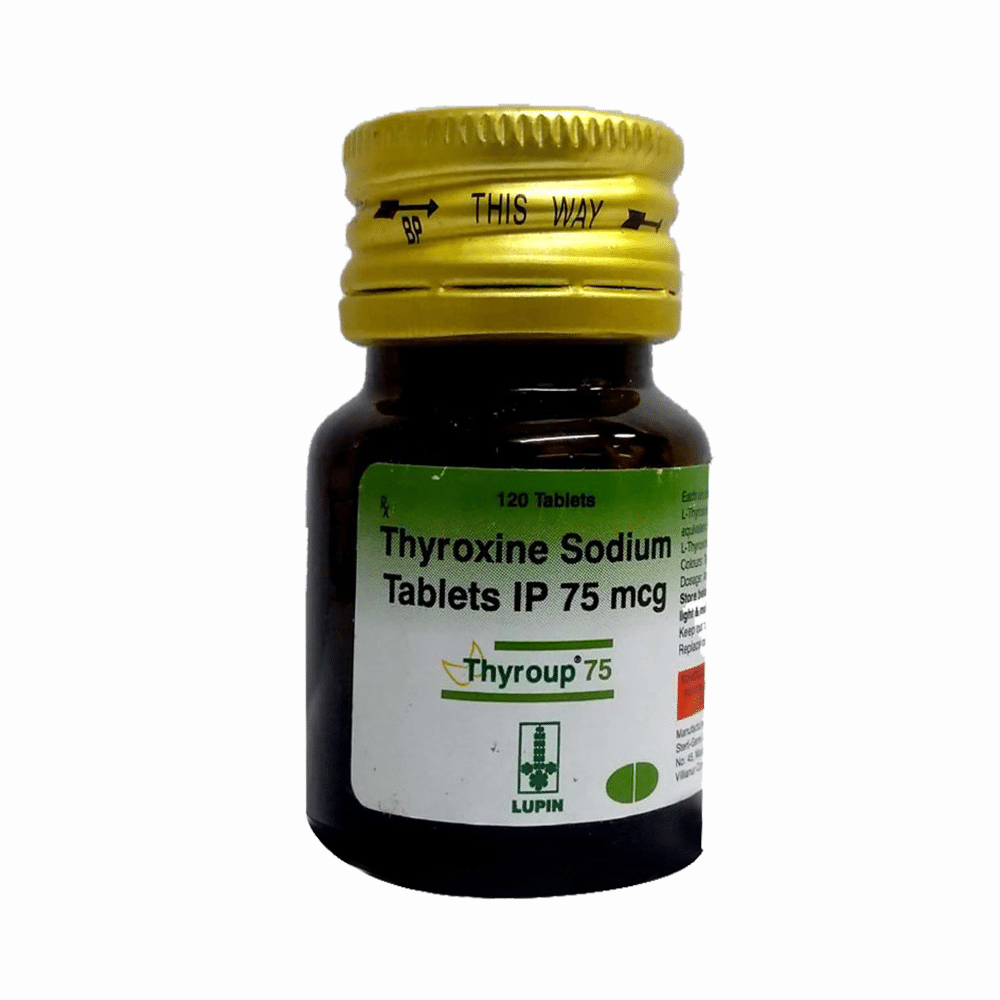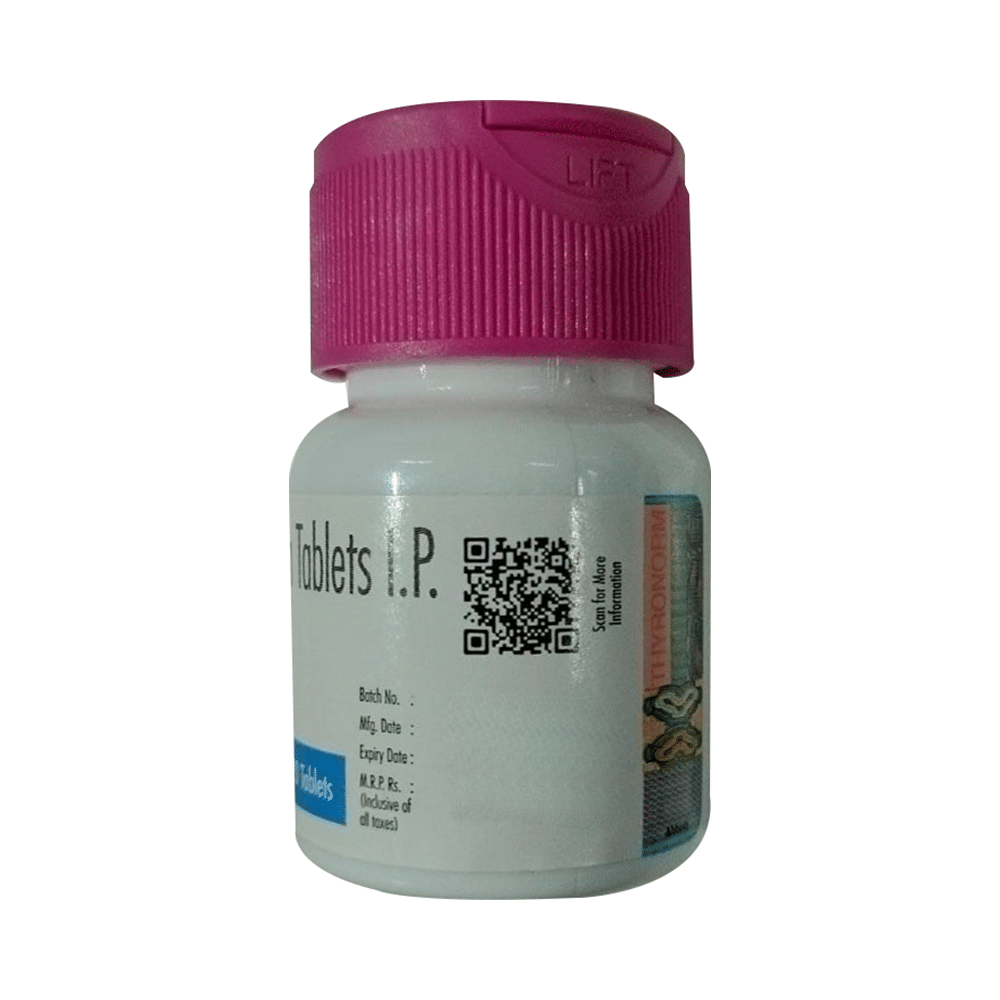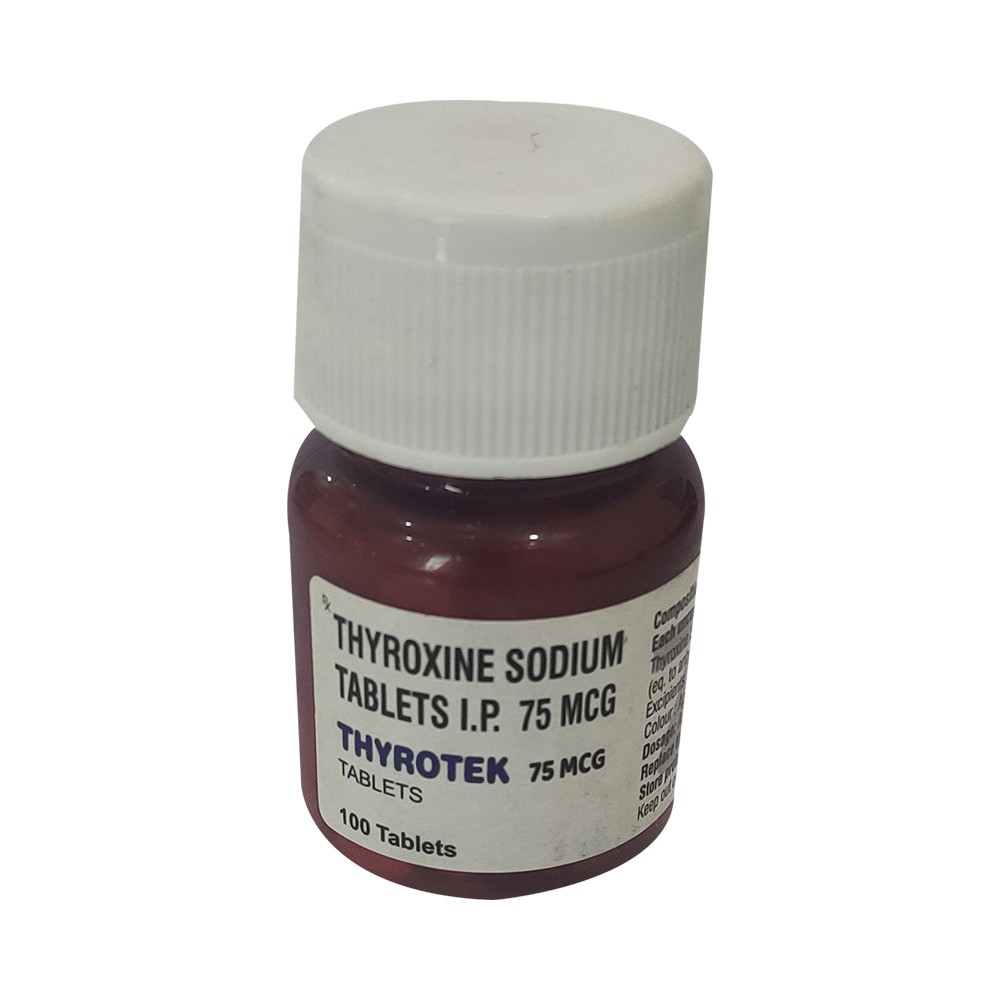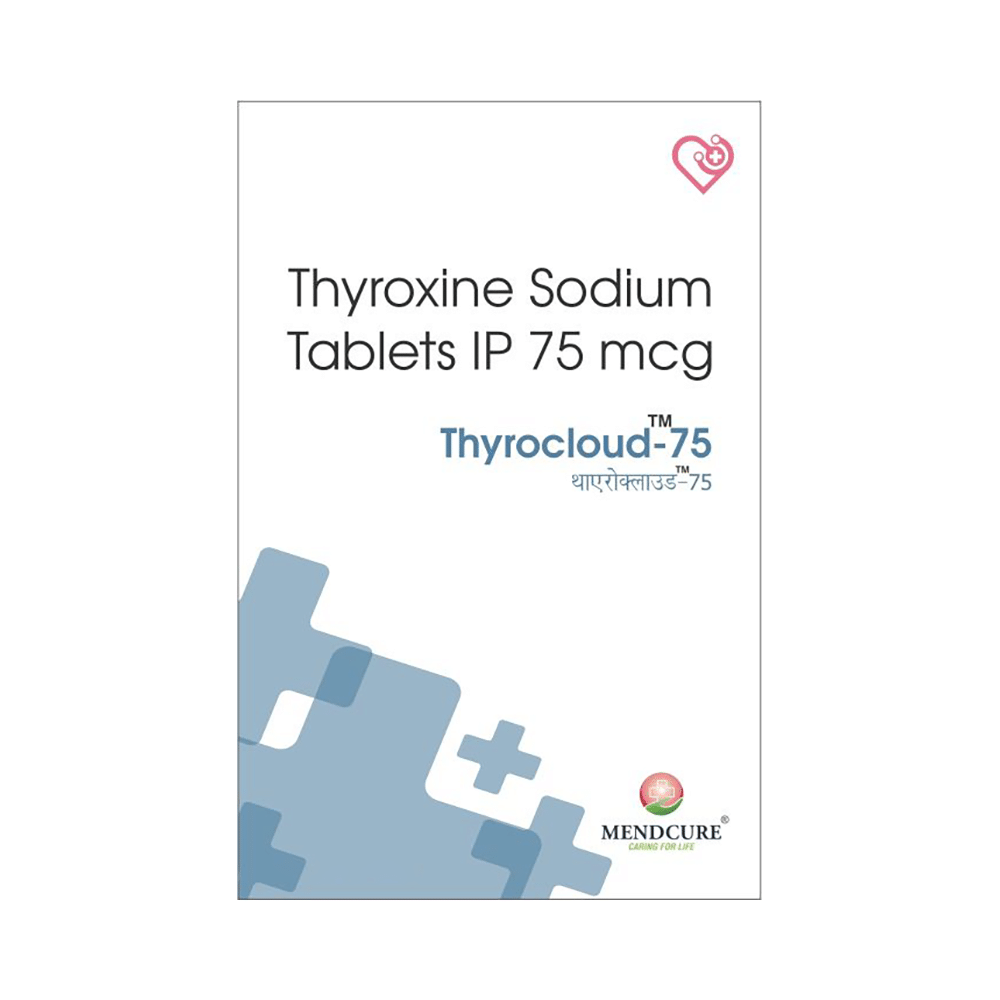
Thyrocloud 75 Tablet
bottle of 100.0 tablets.Prescription required
About this product:
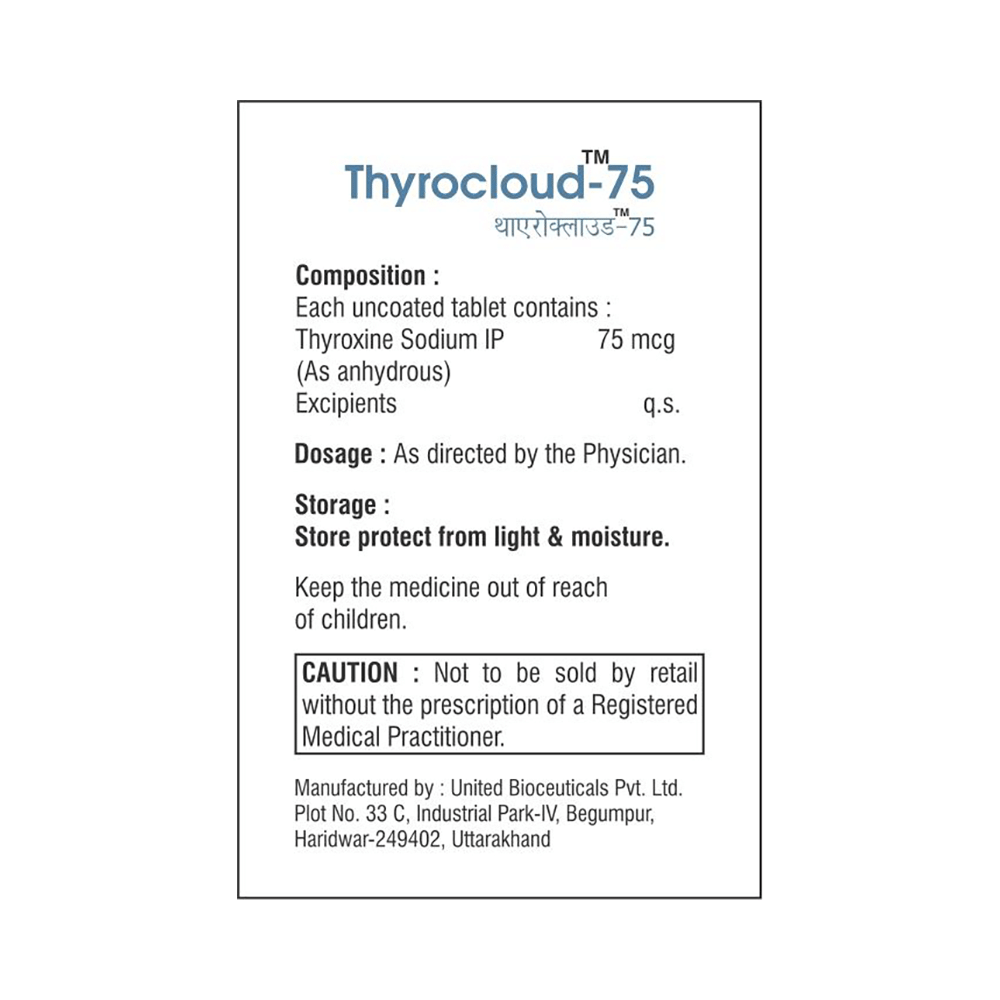
| Salt Composition: | Thyroxine (75mcg) |
| Manufacturer: | Mendcure Life Sciences Pvt Ltd |
| Storage: | Below 25 degree celcius |
Out of Stock
Have doubts about this medicine?
Have doubts about this medicine?
Thyrocloud 75 Tablet is a medicine used to treat an underactive thyroid gland (hypothyroidism). It replaces the hormone which is not being produced by your thyroid gland in sufficient quantity and helps regulate your body’s energy and metabolism. Before you start taking Thyrocloud 75 Tablet, your doctor will do a blood test to see what dose you need. Once you start taking the medicine, you will have regular blood tests to see how well it is working and the dose may be adjusted from time to time. It is best taken on an empty stomach before your first meal of the day. You should take this medicine regularly to get the maximum benefit. It may take several weeks before your symptoms start to improve. You may need to take it for the rest of your life. If you stop taking it, your symptoms are likely to come back.
Thyrocloud 75 Tablet is a synthetic version of a hormone produced by the thyroid gland. It works by replacing the thyroid hormones that your thyroid gland cannot produce in a sufficient quantity and relieves the symptoms of hypothyroidism (tiredness, weight gain, and depression).
What should I do if I accidentally take more than the dose required?
If you have taken more than the recommended dose of Thyrocloud 75 Tablet, please seek immediate medical attention. An overdose may cause symptoms such as nervousness, anxiety, rapid heartbeat, hand tremors, excessive sweating, weight loss, and sleep problems. Your doctor will provide guidance on the best course of action.
How long do I need to take Thyrocloud 75 Tablet?
Thyrocloud 75 Tablet is typically prescribed for long-term use, and it is essential to take it as directed by your doctor. Stopping the medication without consulting your doctor may lead to a recurrence of symptoms related to low thyroid hormone levels. Your doctor will monitor your progress and adjust your treatment plan as needed.
How should Thyrocloud 75 Tablet be taken?
Take Thyrocloud 75 Tablet exactly as instructed by your doctor. The recommended dosage is typically taken orally, preferably before breakfast or with your first meal of the day. Swallow the tablet whole with plenty of water.
Being a diabetic, what should I be aware of while taking Thyrocloud 75 Tablet?
As a diabetic patient, it is crucial to be aware that Thyrocloud 75 Tablet may affect your blood sugar levels and interact with other anti-diabetic medications. Your doctor may need to adjust your dose or monitor your blood sugar levels more frequently. Consult your doctor for personalized guidance on managing your condition.
What does thyroxine do? Why is it important?
Thyroxine, also known as thyroxine hormone, plays a vital role in regulating various bodily functions, including energy metabolism, body weight, muscle strength, body temperature, and mood. It is also essential for digestion, heart muscle function, brain development, and bone health. If you have any concerns about thyroxine or its importance, please consult your doctor.
Does Thyrocloud 75 Tablet affect contraception?
Thyrocloud 75 Tablet may interact with oral birth control pills, which contain both estrogen and progesterone. This interaction may reduce the amount of Thyrocloud 75 Tablet in your body, potentially requiring an increase in dosage. Consult your doctor for personalized guidance on using Thyrocloud 75 Tablet with birth control pills.
Take this medicine in the dose and duration as advised by your doctor. Swallow it as a whole. Do not chew, crush or break it. Thyrocloud 75 Tablet is to be taken empty stomach.
- Take Thyrocloud 75 Tablet on an empty stomach (ideally first thing in the morning). No food, milk, or tea should be taken 1 hour before and 2 hours after taking this medicine.
- It may take 6 to 8 weeks to get the full effect.
- For most people, Thyrocloud 75 Tablet can be a lifelong medication. Do not discontinue it without discussing your doctor.
- Inform your doctor if you have diarrhea, nervousness, irritability, sleep disturbances, shaking hands, or chest pain.
- Leave a gap of at least 4 hours before taking any antacids, calcium or iron supplements, and multivitamins.
- Get your hormone levels checked regularly and inform your doctor if you notice a significant change in your body weight.
- Inform your doctor before changing the brand of Thyrocloud 75 Tablet as all brands may not have the same effect.
- Palpitations (irregular heartbeat)
- Vomiting
- Anxiety
- Diarrhea
- Weight loss
- Tremors
- Increased appetite
- Restlessness

Alcohol
Consuming alcohol with Thyrocloud 75 Tablet does not cause any harmful side effects.

Breastfeed
Thyrocloud 75 Tablet is safe to use during breastfeeding. Human studies suggest that the drug does not pass into the breastmilk in a significant amount and is not harmful to the baby.

Pregnancy
Thyrocloud 75 Tablet is safe to use during pregnancy. Most studies have shown low or no risk to the developing baby.