Thionaid P Tablet
strip of 10.0 tablets.Prescription required
About this product:
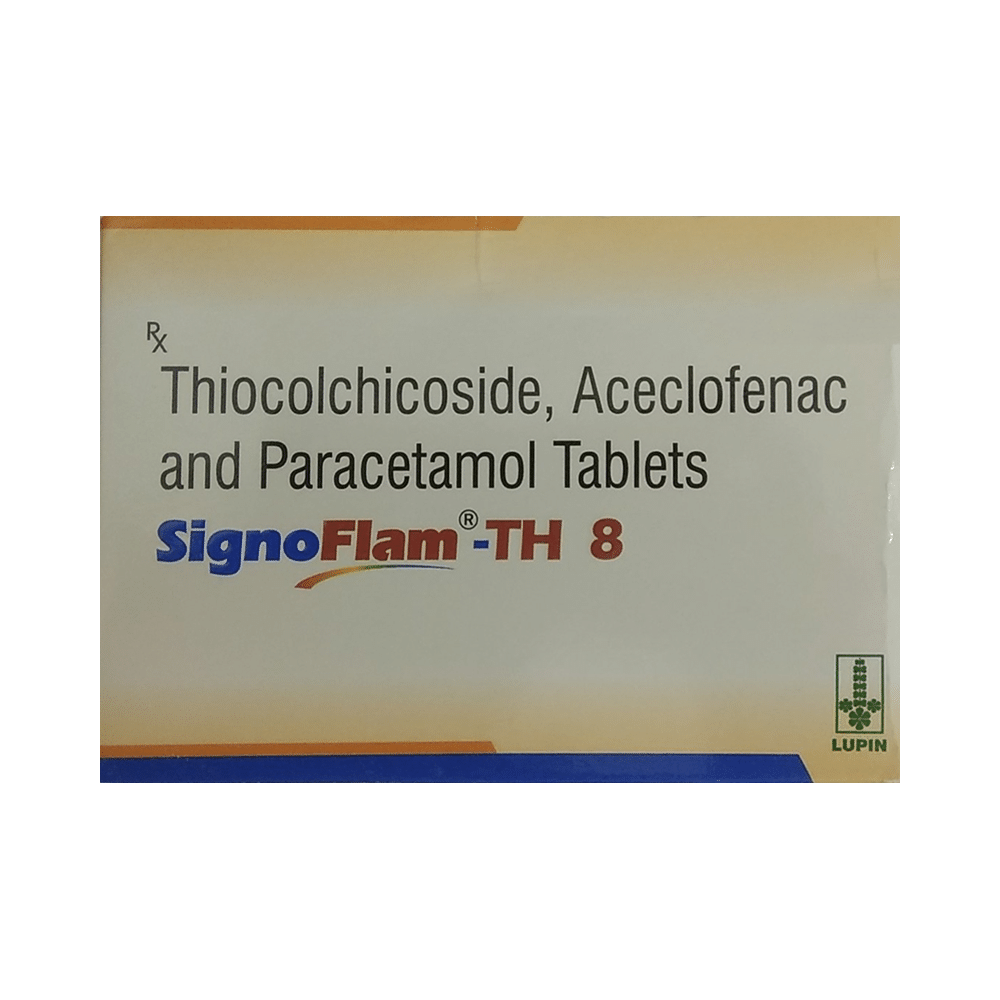
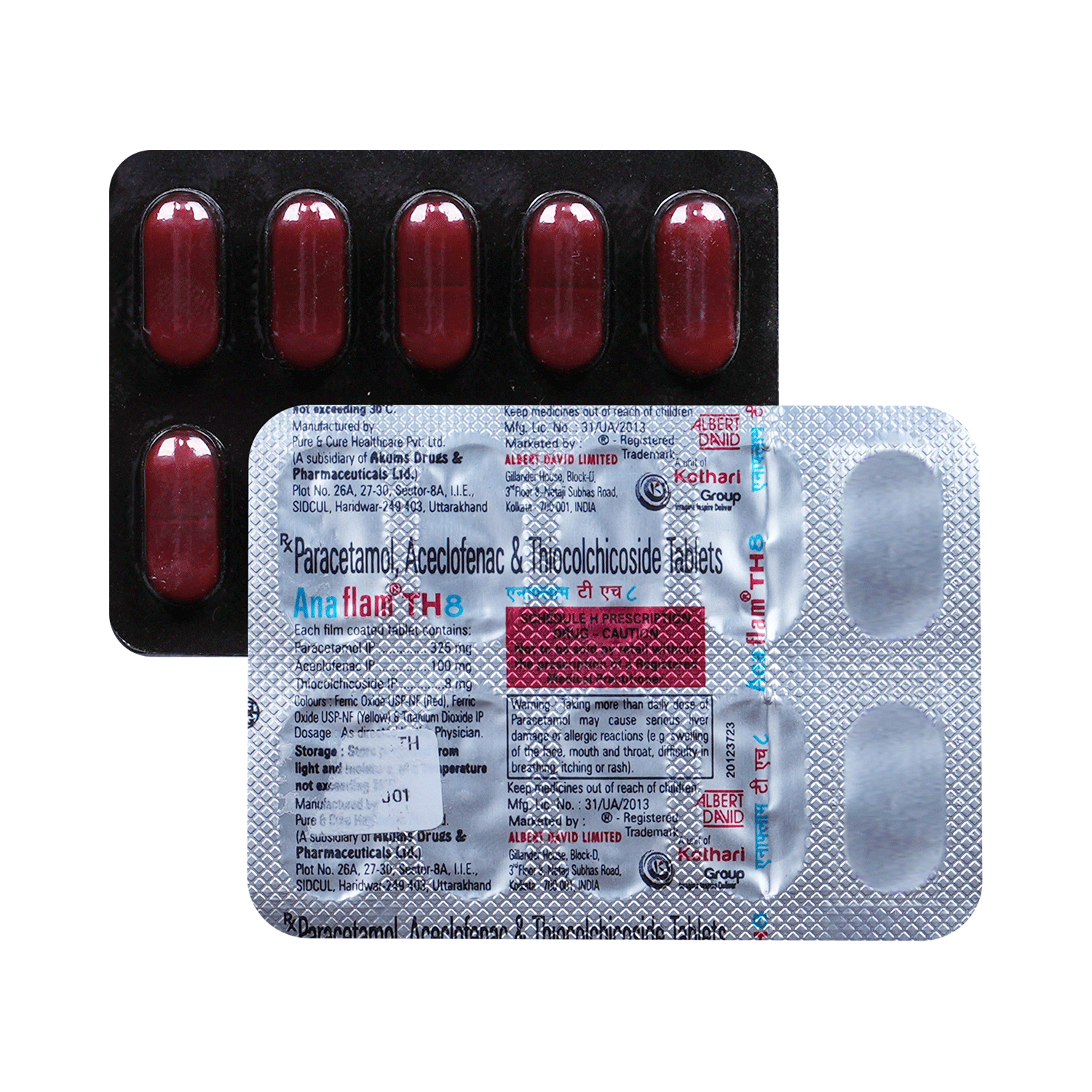
| Salt Composition: | Thiocolchicoside (8mg) + Aceclofenac (100mg) + Paracetamol (325mg) |
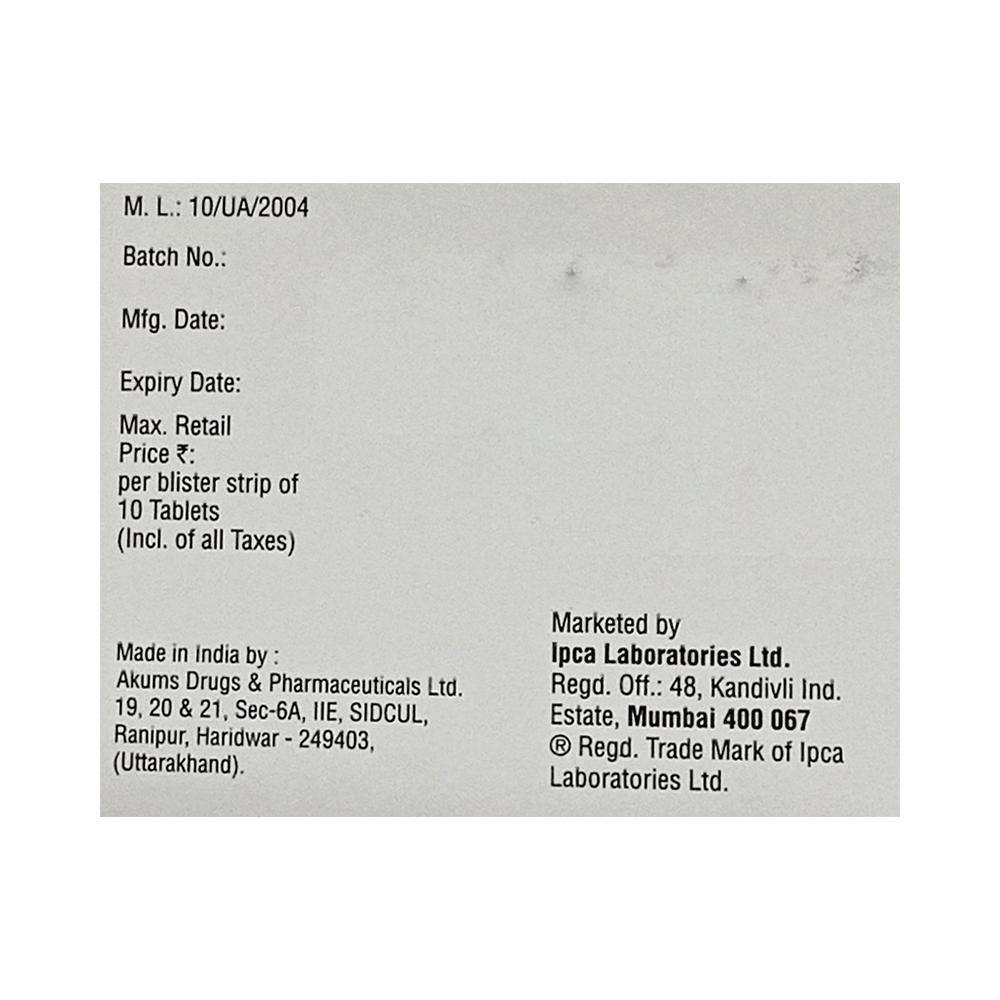
| Manufacturer: | Winsome Bioceuticals |
| Storage: | Below 25 degree celcius |
Out of Stock
Have doubts about this medicine?
Have doubts about this medicine?
Thionaid P Tablet is a combination medicine that helps in relieving muscular pain by blocking the release of certain chemical messengers that cause pain, inflammation, and fever. Thionaid P Tablet should be taken with food. This will prevent you from getting an upset stomach. The dose and duration will depend on the severity of your condition. You should keep taking the medicine even if you feel better until the doctor says it is alright to stop using it. Using this medicine may cause few common side effects such as nausea, vomiting, heartburn, stomach pain, diarrhea, loss of appetite, and dryness in the mouth. If any of these side effects do not resolve with time or get worse, you should let your doctor know. Your doctor may be able to suggest ways of preventing or reducing the side effects. In general, you should try to use the smallest amount necessary to control your symptoms.
Thionaid P Tablet is a combination of a muscle relaxant (Thiocolchicoside) and two pain relievers (Aceclofenac and Paracetamol). The muscle relaxant works on the centers in the brain and spinal cord to relieve muscle stiffness or spasm and improve movement of muscles. The pain relievers work by blocking the release of certain chemical messengers in the brain that cause pain and inflammation (redness and swelling).
Can I stop taking Thionaid P Tablet once my pain is relieved?
Thionaid P Tablet is usually used for short-term pain relief. However, you should continue taking the medication if advised to do so by your doctor.
Are there any specific contraindications associated with the use of Thionaid P Tablet?
The use of Thionaid P Tablet is considered harmful for patients with a known allergy to painkillers or components/excipients. It should also be avoided in patients with a history of stomach ulcers, active/recurrent stomach ulcer/bleeding, heart failure, high blood pressure, and liver/kidney disease.
Can Thionaid P Tablet be taken with vitamin B-complex?
Yes, Thionaid P Tablet can be taken with vitamin B-complex preparations. Vitamin B-complex may help correct any underlying deficiencies contributing to your symptoms.
Can the long-term use of Thionaid P Tablet cause damage to kidneys?
Yes, prolonged use of Thionaid P Tablet may lead to kidney damage due to decreased prostaglandin levels in the body. Patients with pre-existing kidney disease should avoid using painkillers.
Will taking higher doses of Thionaid P Tablet make it more effective?
No, taking more than the recommended dose will not enhance its effectiveness and may increase side effects. If symptoms worsen, consult your doctor for re-evaluation.
Can Thionaid P Tablet cause damage to liver?
Thionaid P Tablet contains Paracetamol, which can be harmful in high doses or with excessive alcohol consumption. Patients with underlying liver disease should avoid using this medication. Contact your doctor if you experience early signs and symptoms of liver damage.
What are the instructions for storage and disposal of Thionaid P Tablet?
Store Thionaid P Tablet according to the label or pack instructions. Dispose of unused medicine properly, ensuring it is not consumed by pets, children, or other people.
Take this medicine in the dose and duration as advised by your doctor. Swallow it as a whole. Do not chew, crush or break it. Thionaid P Tablet is to be taken with food.
- You have been prescribed Thionaid P Tablet to relieve pain due to muscle spasm.
- This medicine is most effective when taken along with proper rest and physical therapy.
- Older adults may have increased drowsiness, confusion, and higher risk of falling as a result of taking Thionaid P Tablet.
- Do not take it with any other medicine containing acetaminophen (drugs for pain/fever or cough-and-cold) without asking your doctor first.
- Avoid consuming alcohol when taking Thionaid P Tablet as it may cause excessive drowsiness and increase the risk of liver damage.

Alcohol
It is not known whether it is safe to consume alcohol with Thionaid P Tablet. Please consult your doctor.

Breastfeed
Information regarding the use of Thionaid P Tablet during breastfeeding is not available. Please consult your doctor.

Pregnancy
Information regarding the use of Thionaid P Tablet during pregnancy is not available. Please consult your doctor.