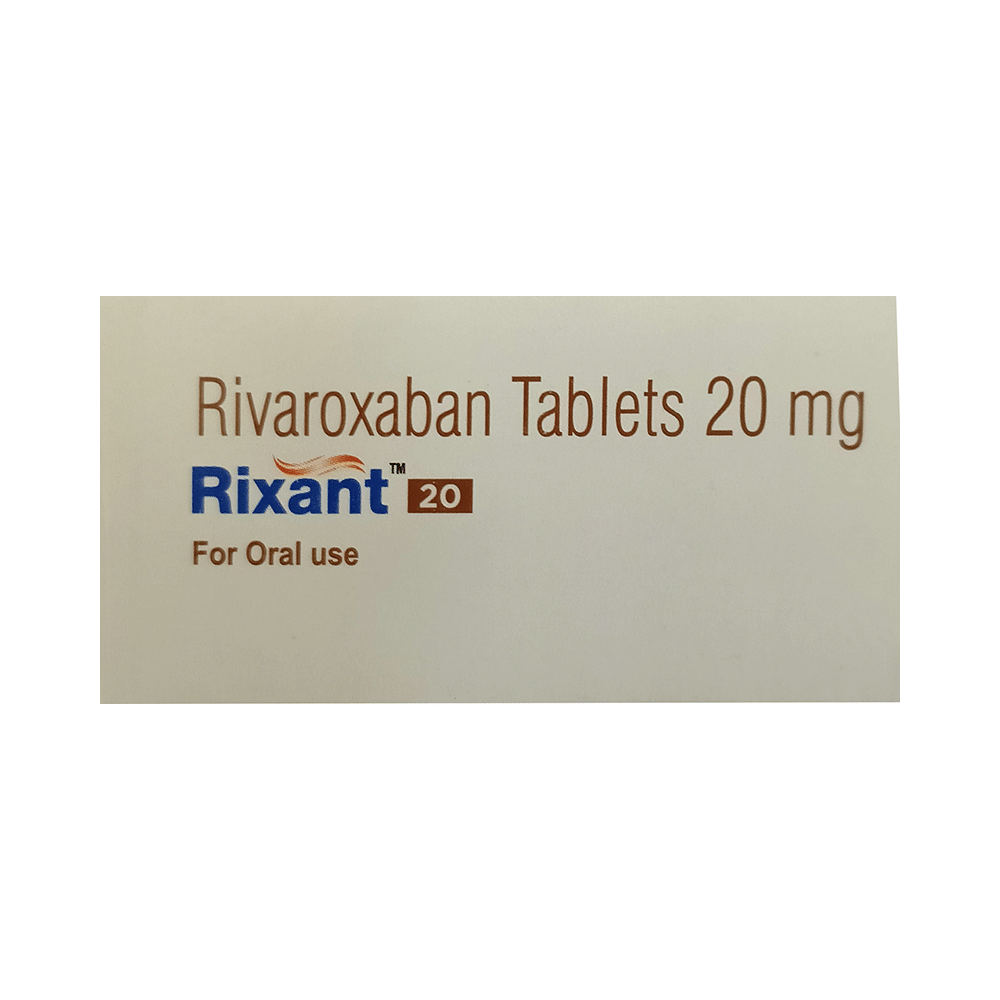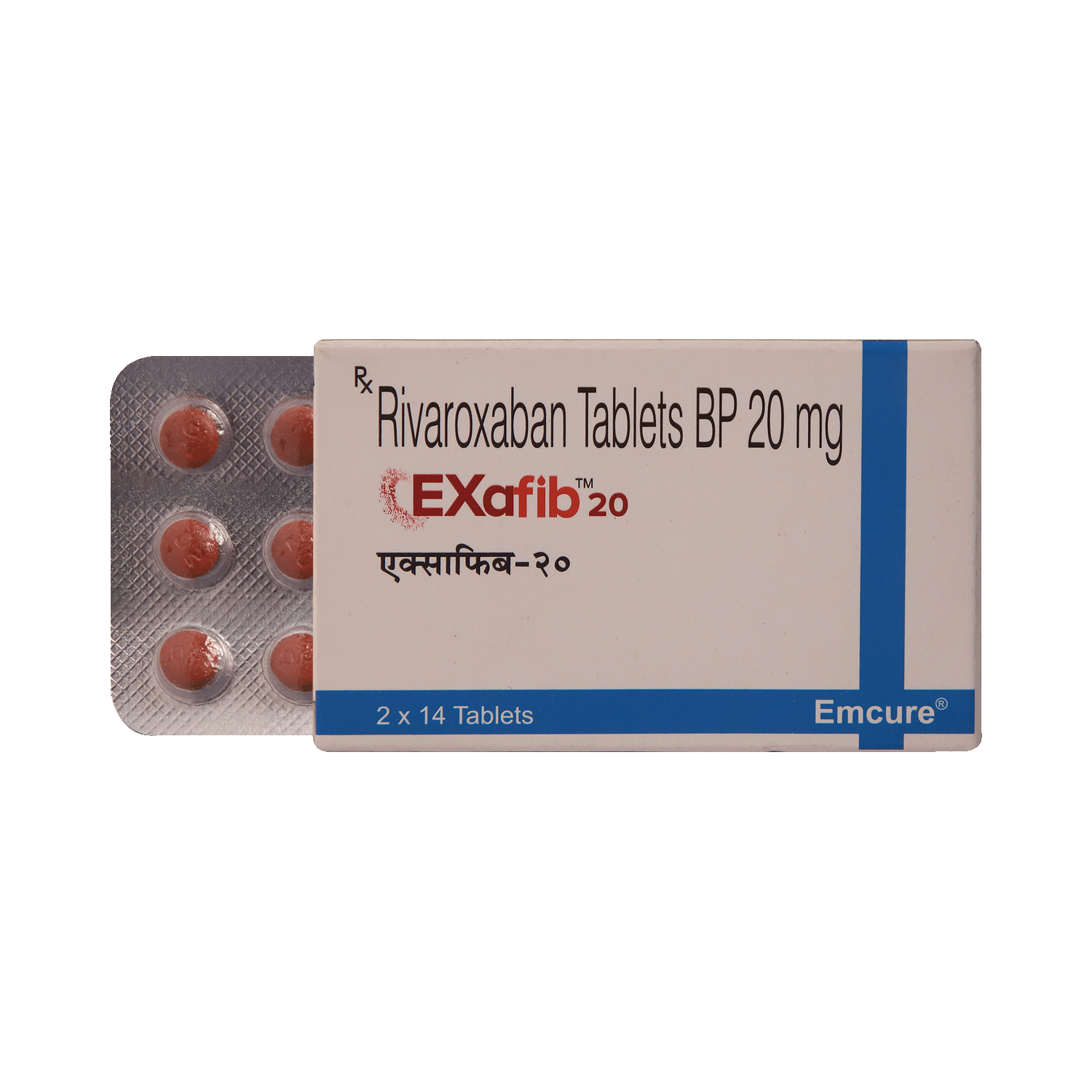
Rivaban 20 Tablet
1 Strip of 10 Tablet.Prescription required
About this product:
| Salt Composition: | Rivaroxaban (20mg) |
| Manufacturer: | Lupin Ltd |
| Storage: | Below 25 degree celcius |
In Stock
Have doubts about this medicine?
Have doubts about this medicine?
Rivaban 20mg Tablet is a medicine known as an anticoagulant or blood thinner. It helps prevent and treat blood clots. It is used to reduce the risk of stroke and heart attack. Rivaban 20mg Tablet is commonly used in patients with irregular heart rhythm (atrial fibrillation) to prevent clot formation. It also reduces the risk of getting clots in people who have undergone knee or hip replacement surgeries. It may be taken with or without food. Take it at the same time each day for maximum benefits. You may need to take this medicine for many years even for life in some cases. Do not stop taking it or change the dose without guidance from your doctor. It could quickly put you more at risk of having a heart attack, stroke, or thrombosis (formation of a blood clot within a blood vessel). You can reduce your risk of having a blood clot by making changes to your lifestyle such as not smoking, eating a healthy diet, getting regular exercise, and losing weight if you need to.
Rivaban 20mg Tablet is a novel oral anticoagulant (NOAC). It works by stopping a clotting factor called factor Xa from working. This helps prevent the formation of blood clots in the body.
What are the potential side effects of taking Rivaban 20mg Tablet?
Common side effects of Rivaban 20mg Tablet include prolonged or excessive bleeding, breathlessness, weakness, tiredness, paleness, dizziness, headache, and unexplained swelling. In rare cases, more severe skin and allergic reactions can occur, as well as bruising, coughing up blood, bleeding from the skin or under the skin, and swelling and pain in the limbs. Additionally, some individuals may experience fainting episodes, a faster heartbeat, and dry mouth. If you notice any of these side effects, it is essential to contact your doctor immediately.
Is Rivaban 20mg Tablet classified as a blood thinner?
Yes, Rivaban 20mg Tablet is indeed a blood thinner medication that works by preventing the blood from clotting within the blood vessels. It also helps prevent recurring blood clots in the blood vessels. Your healthcare provider may prescribe it to treat blood clots in your veins or lungs.
What are the potential risks associated with taking Rivaban 20mg Tablet?
While Rivaban 20mg Tablet has numerous benefits, it does carry a risk of causing excessive bleeding, even from minor injuries. In some cases, this bleeding can be severe and may require urgent medical attention. This risk is higher for individuals taking Rivaban 20mg Tablet along with other blood-thinning medications. If you experience any minor bleeding while on Rivaban 20mg Tablet, it is crucial to contact your doctor promptly.
Which foods should I avoid when taking blood thinners like Rivaban 20mg Tablet?
It's essential to avoid consuming grapefruit or grapefruit juice while on Rivaban 20mg Tablet. Grapefruit contains compounds that slow down the metabolism of this medication, leading to increased bleeding risk. However, if you're taking warfarin, it's recommended to limit foods rich in vitamin K and those known to promote clotting, such as spinach, Brussels sprouts, mustard greens, broccoli, asparagus, and green tea.
Take this medicine in the dose and duration as advised by your doctor. Swallow it as a whole. Do not chew, crush or break it. Rivaban 20mg Tablet may be taken with or without food but it is better to take it at a fixed time.
- Take at the same time every day
- Take with meals
- Interacts less with food or other medicines
- Frequent dose changes are not required
- Increases your risk of bleeding
- Be careful while shaving, cutting fingernails or toenails, using sharp objects or engaging in contact sports
- May cause dizziness, avoid driving or activity requiring mental focus until you know how it affects you
- If you are going to have a surgery or dental treatment, you may be asked to stop taking Rivaban 20mg Tablet temporarily
- Notify your doctor if you have any kidney problem
- Inform your doctor if you are pregnant, planning pregnancy or breastfeeding
- Do not stop taking medication without talking to your doctor

Alcohol
Caution is advised when consuming alcohol with Rivaban 20mg Tablet. Please consult your doctor.

Breastfeed
Rivaban 20mg Tablet is probably unsafe to use during breastfeeding. Limited human data suggests that the drug may pass into the breastmilk and harm the baby.

Pregnancy
Rivaban 20mg Tablet may be unsafe to use during pregnancy. Although there are limited studies in humans, animal studies have shown harmful effects on the developing baby. Your doctor will weigh the benefits and any potential risks before prescribing it to you. Please consult your doctor.