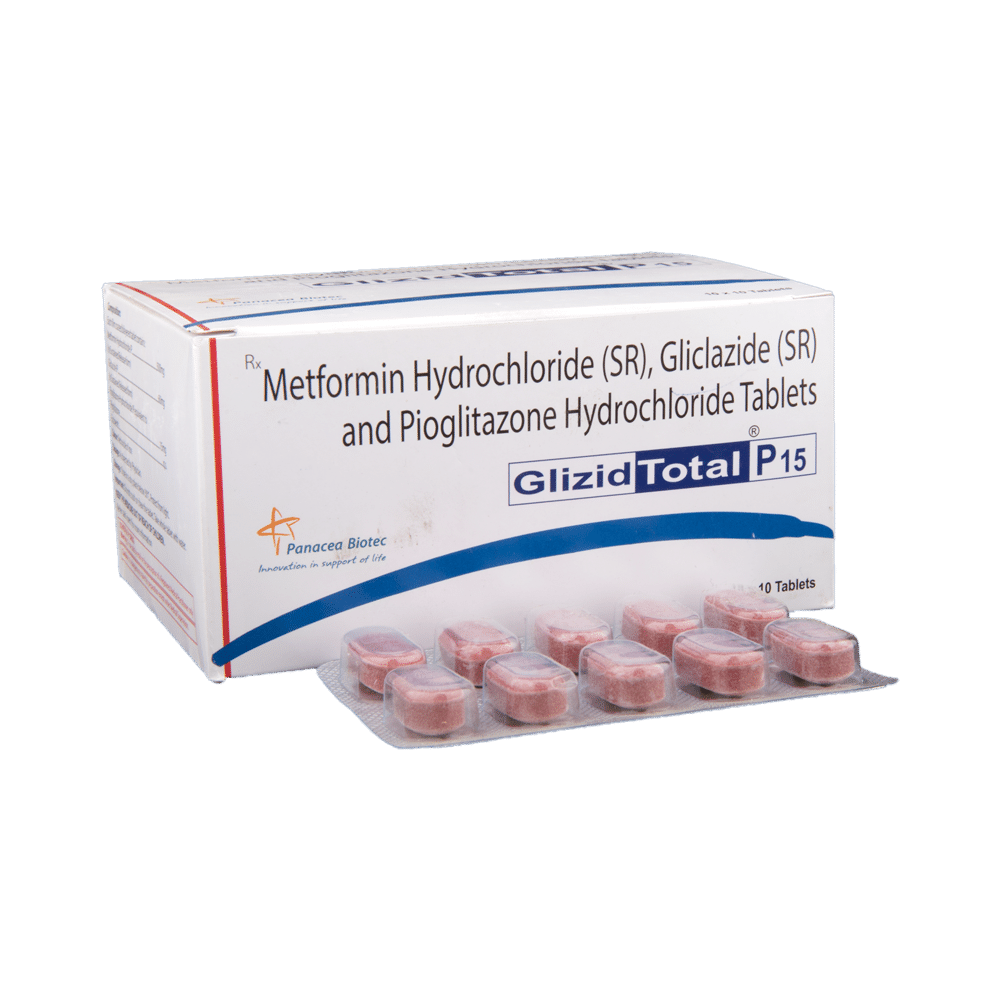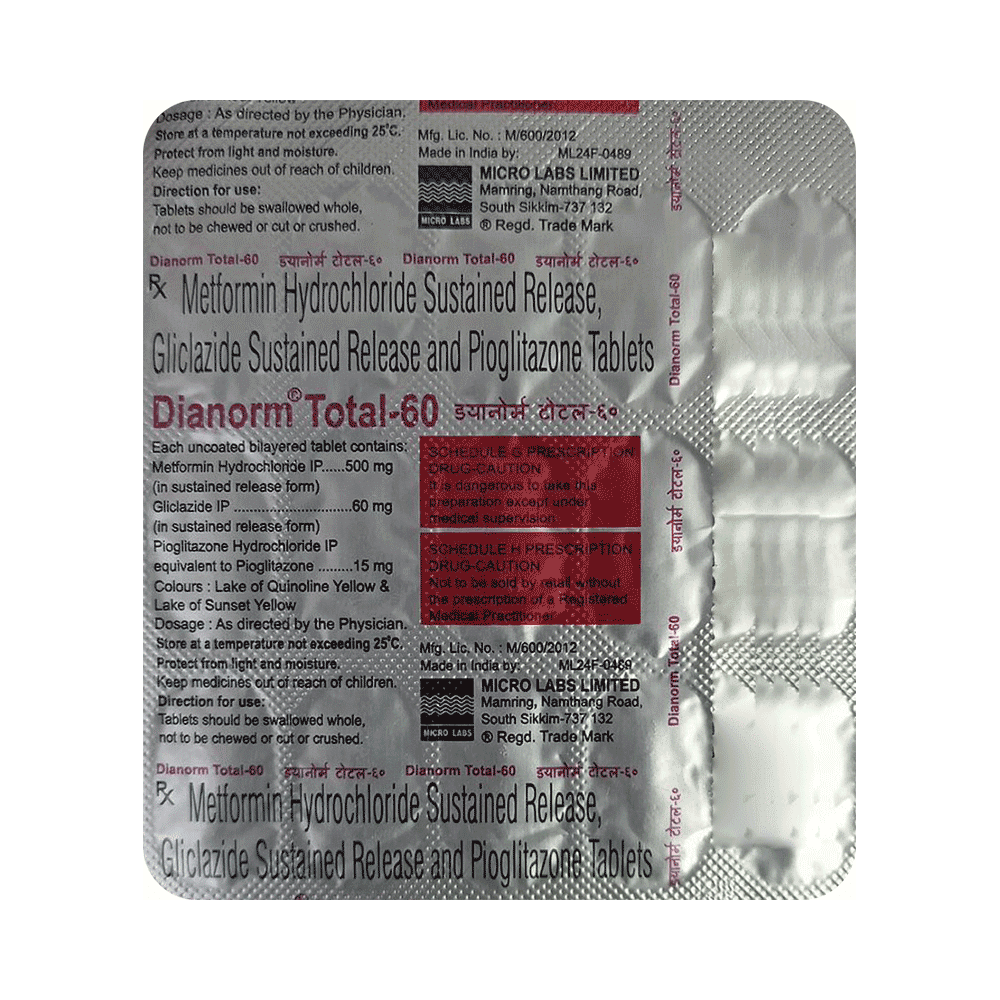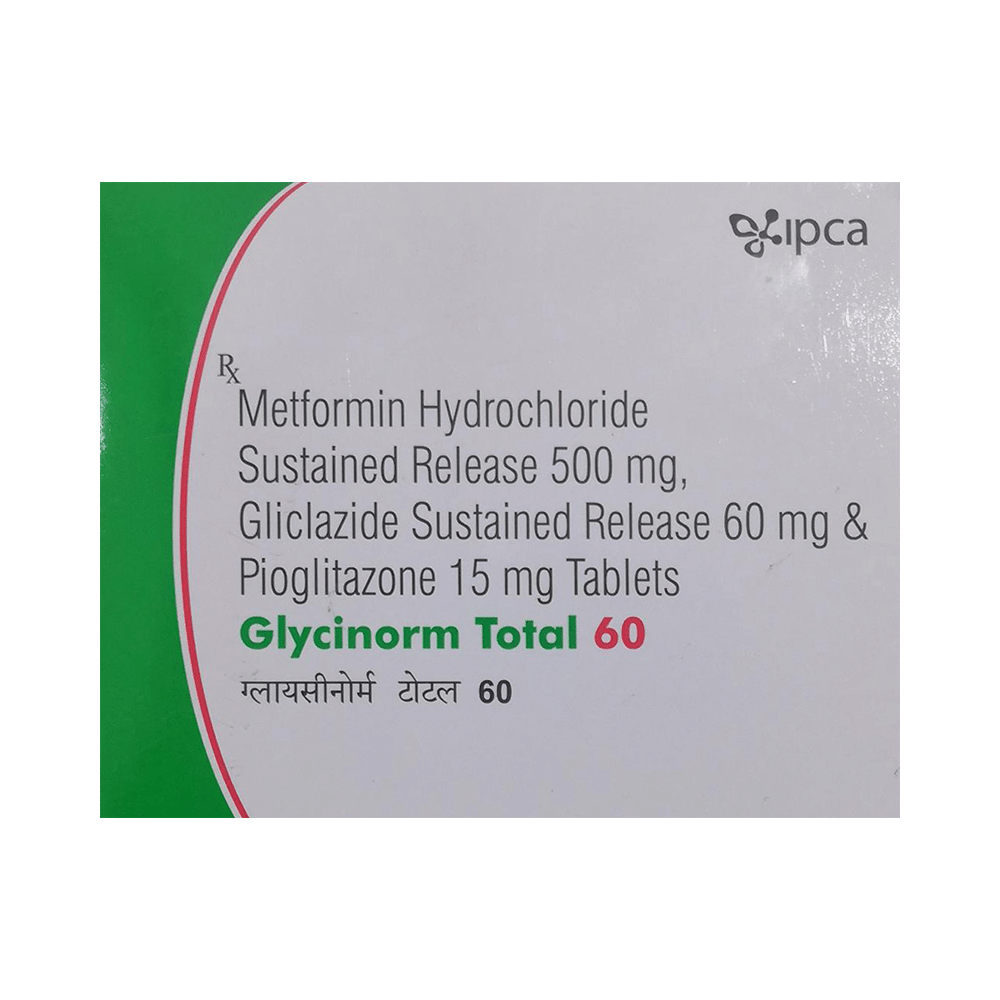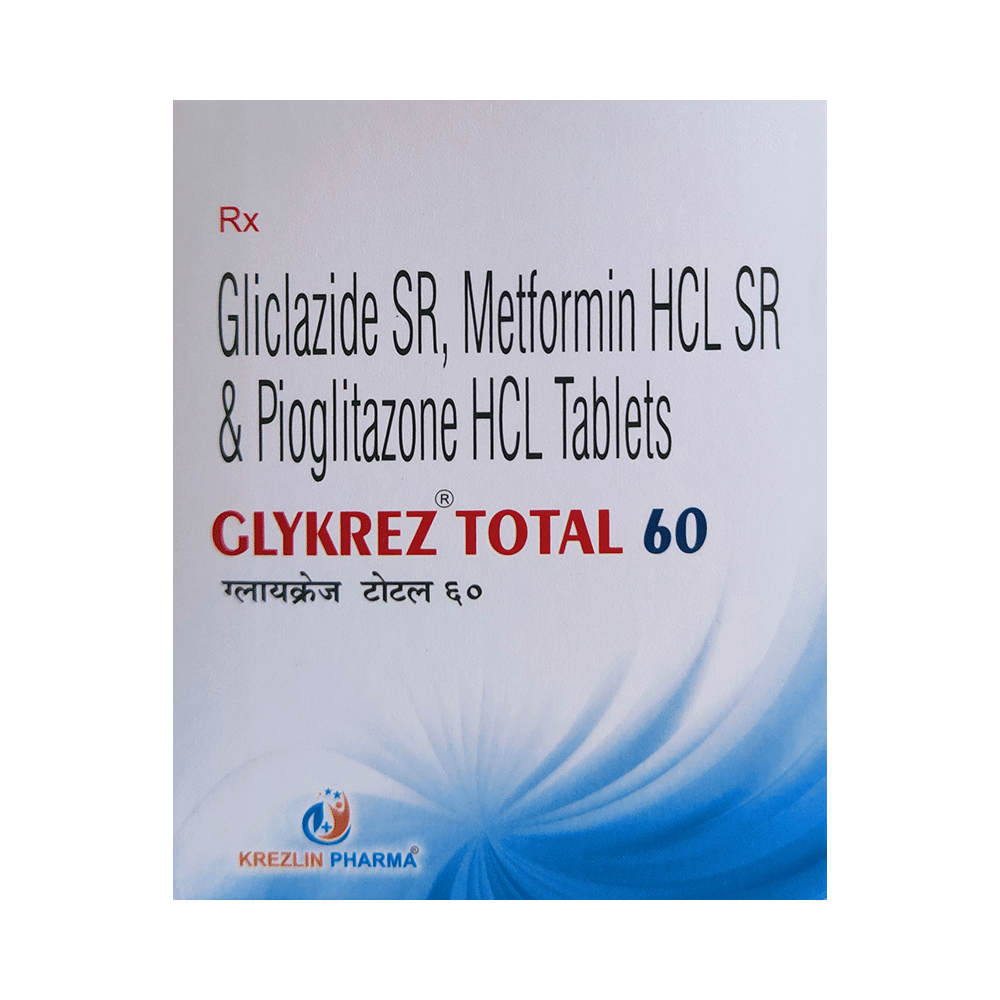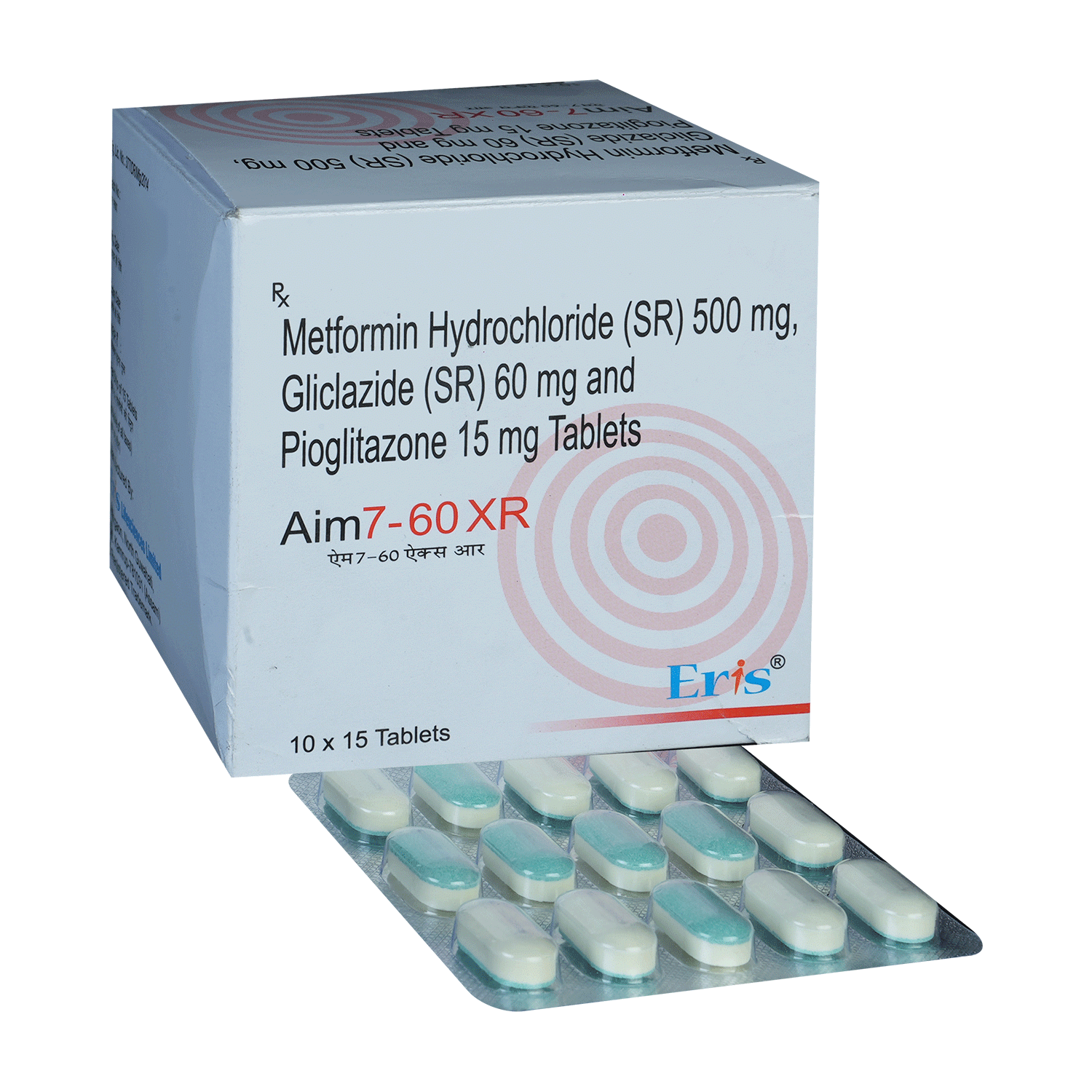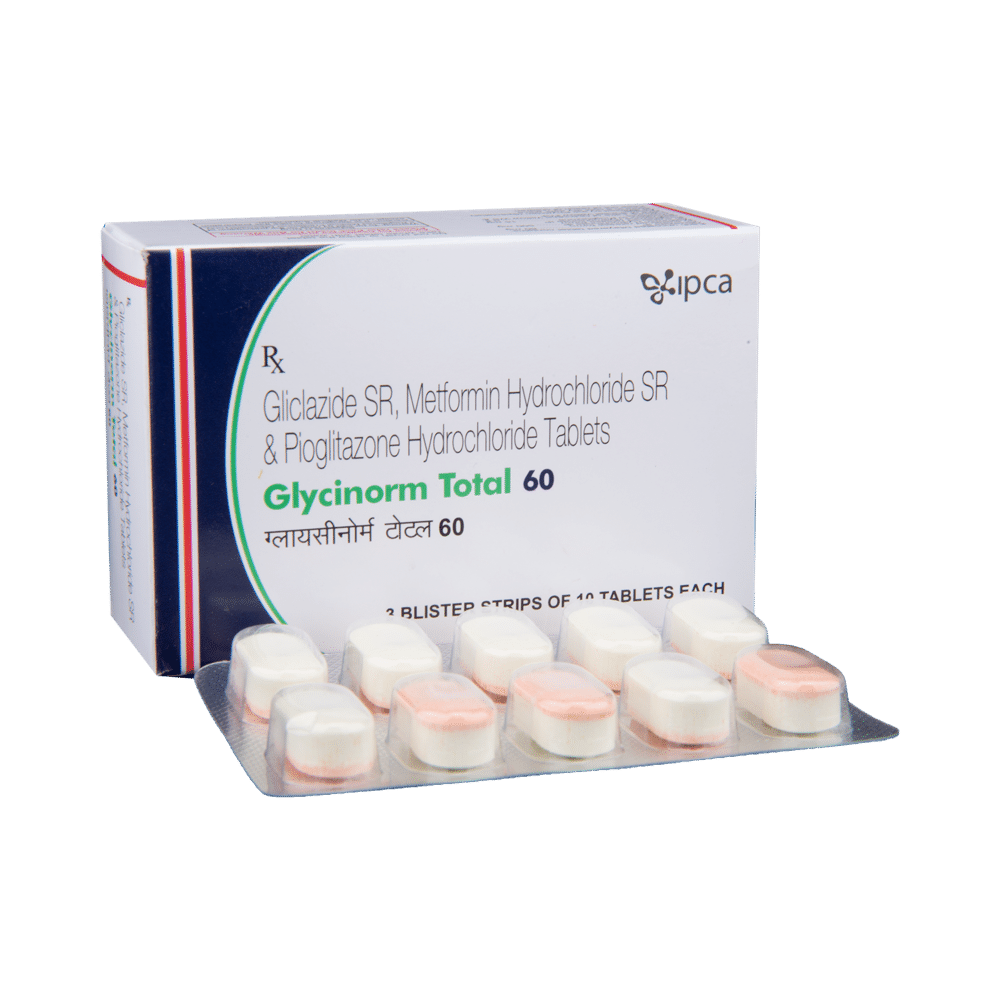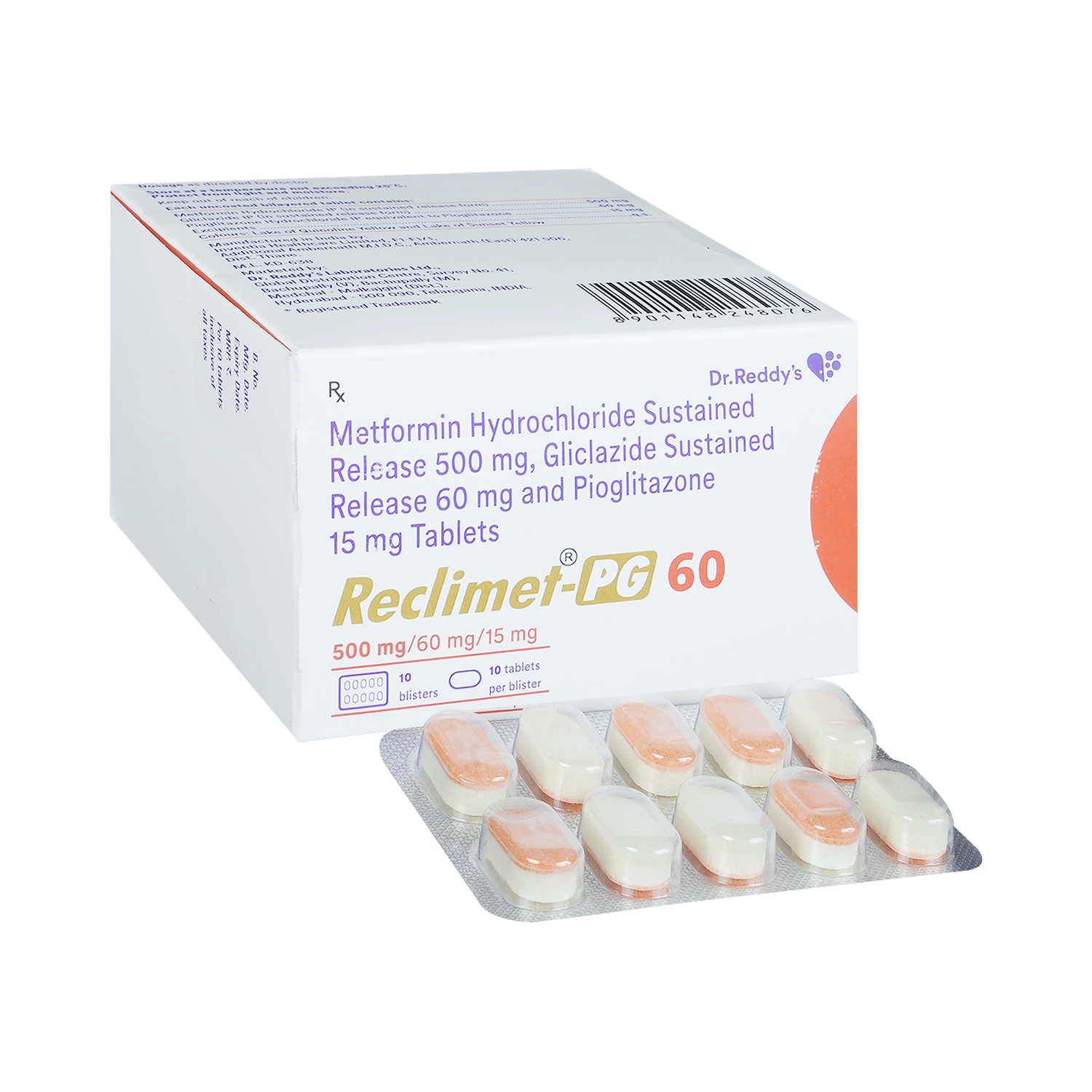
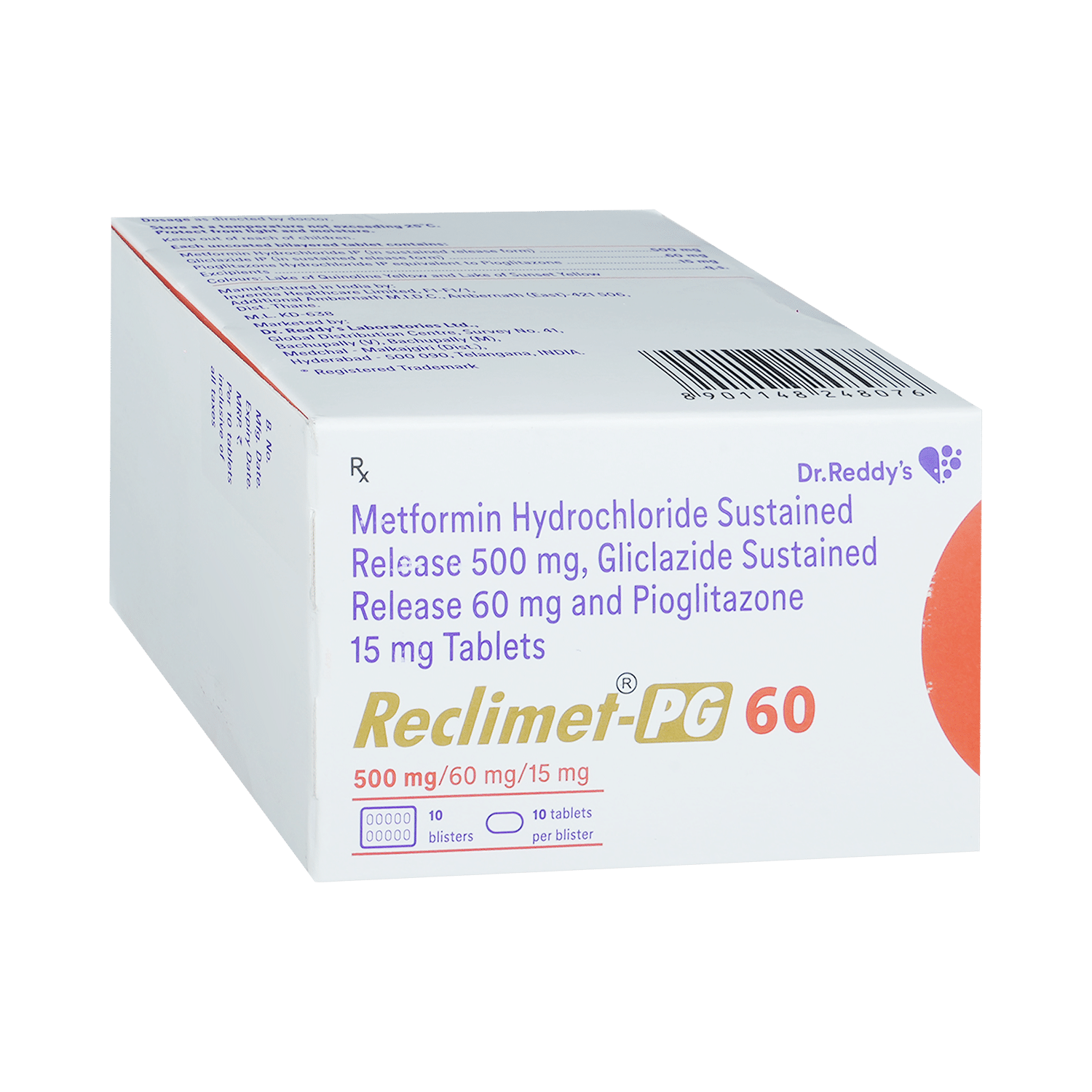
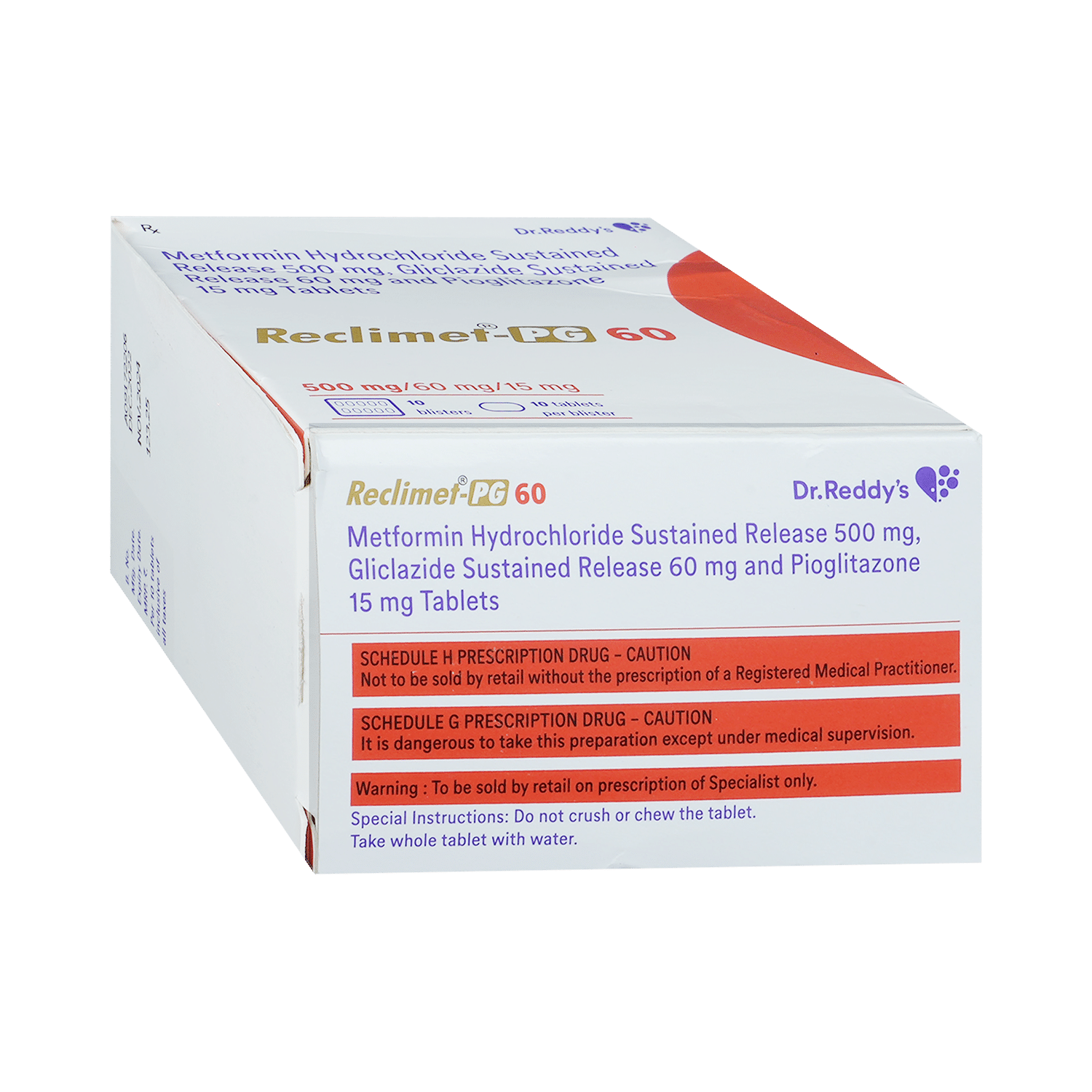
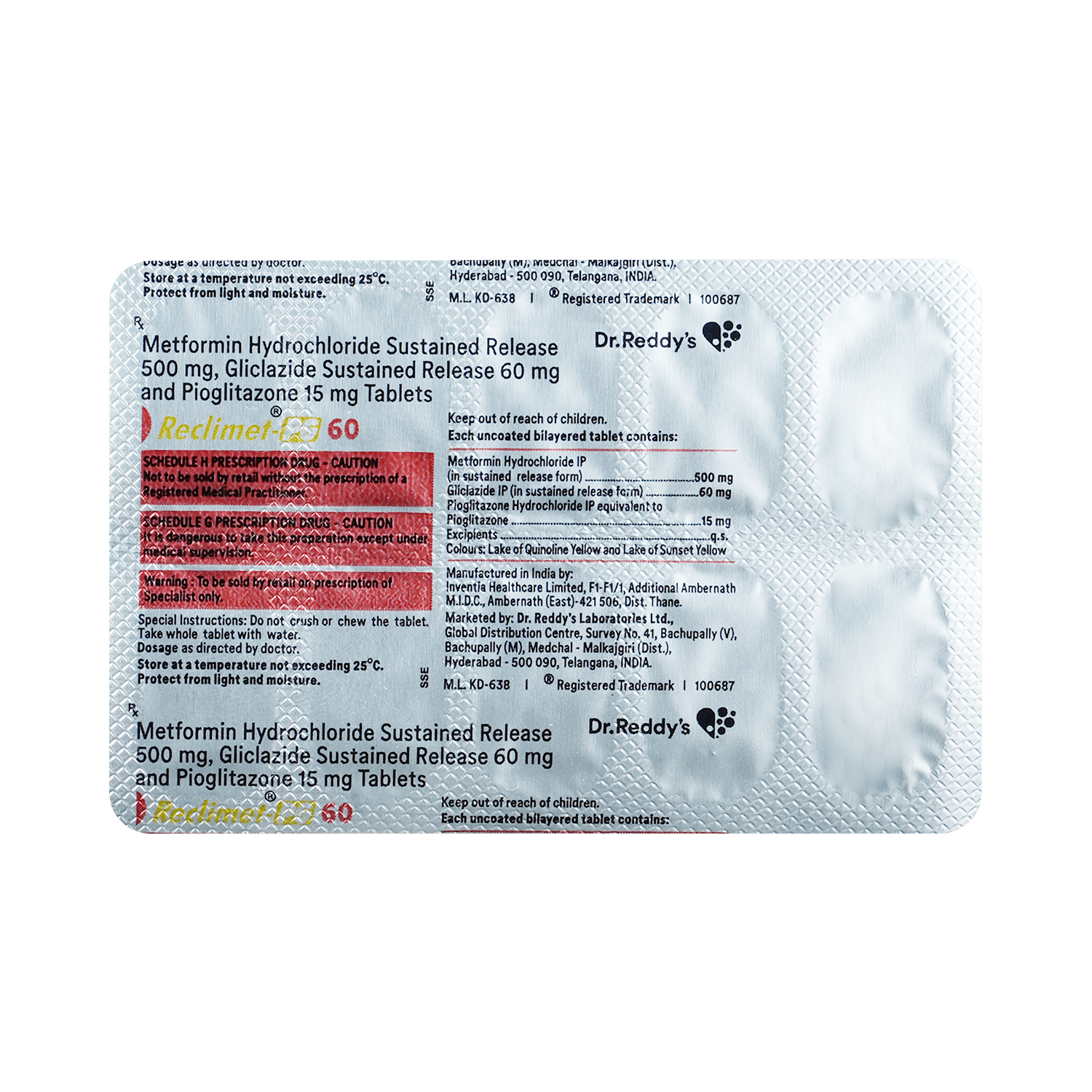
Reclimet-PG 60
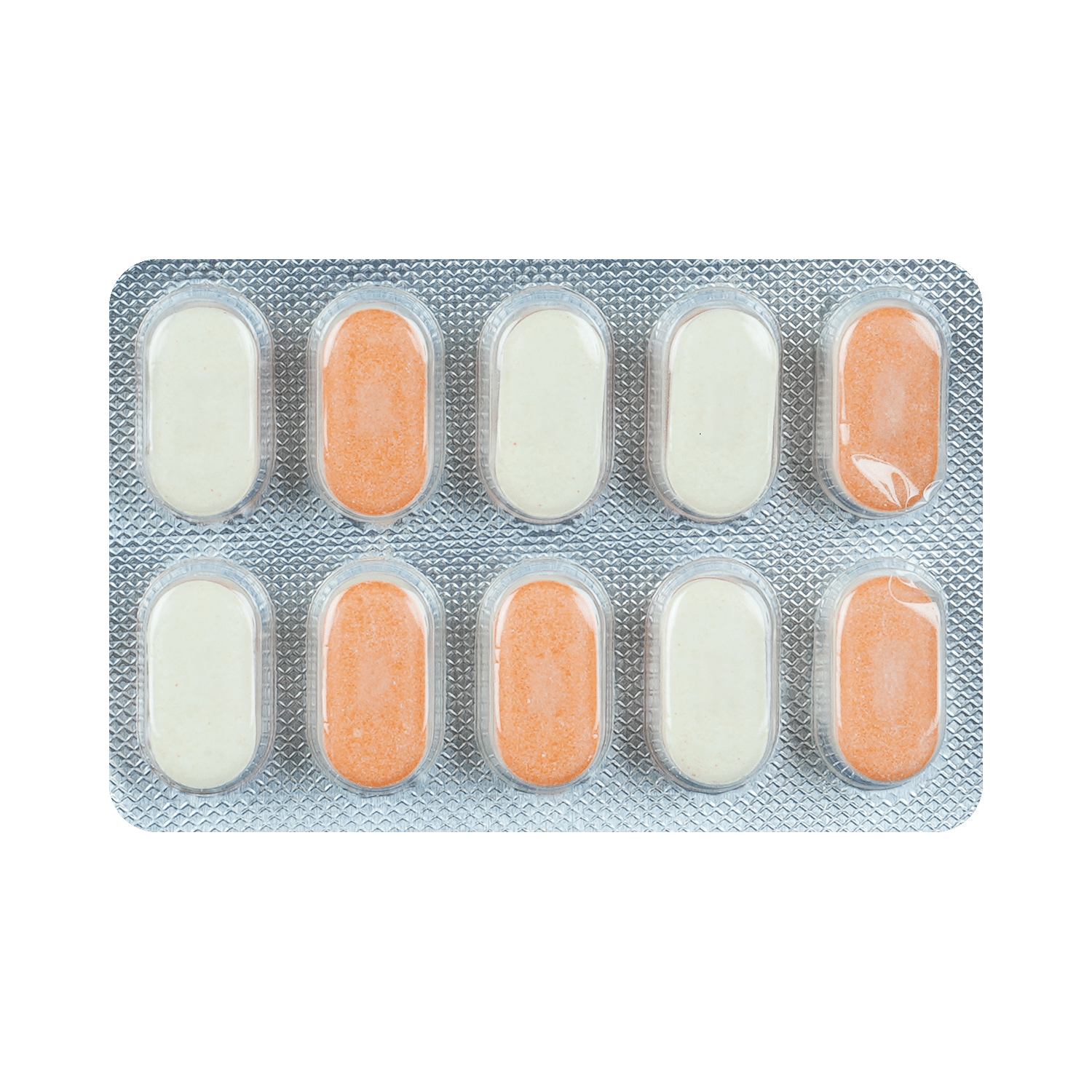
1 Strip of 10 Tablet.Prescription required
About this product:
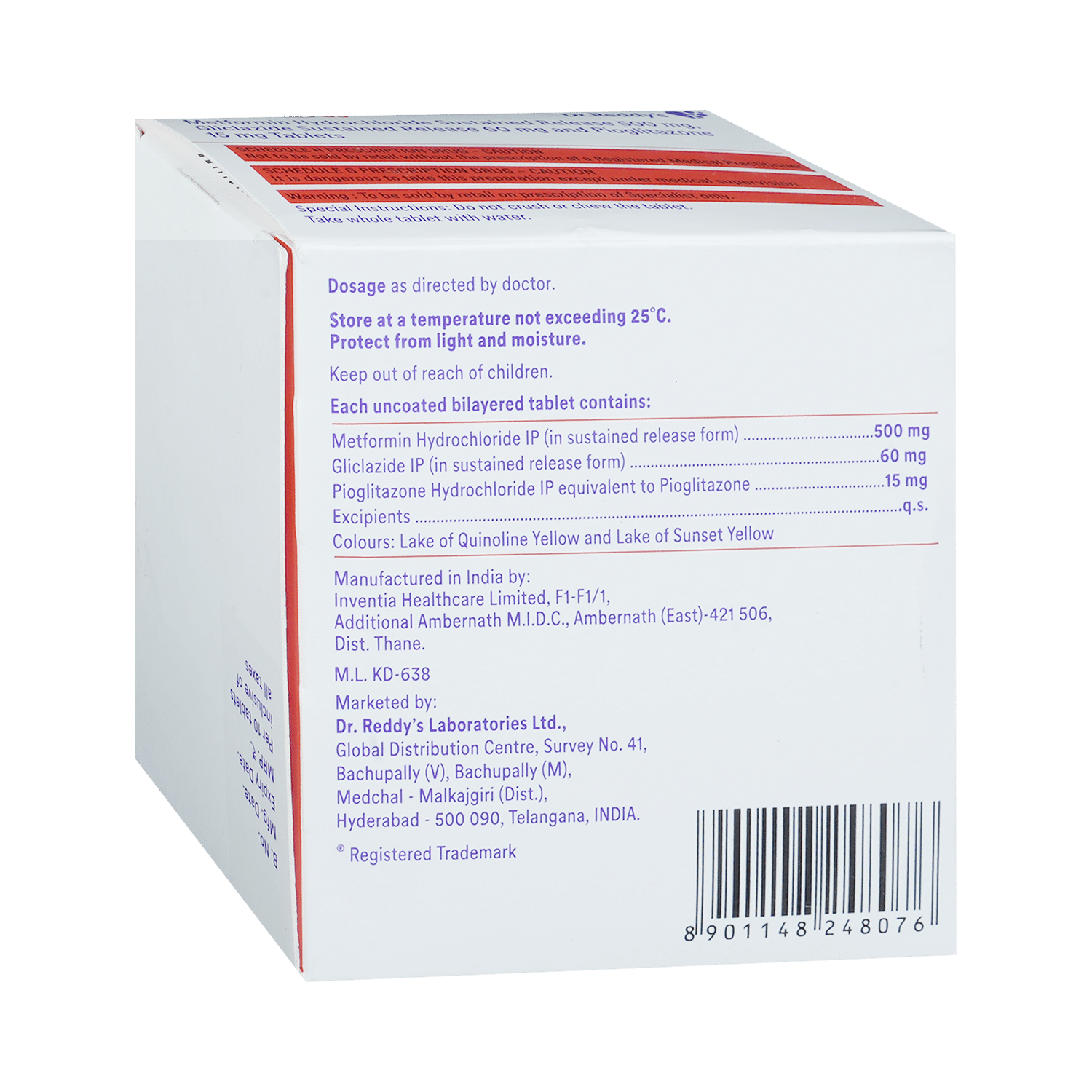
| Salt Composition: | Pioglitazone (15mg) + Gliclazide (60mg) |
| Manufacturer: | Dr Reddy's Laboratories Ltd |
| Storage: | Below 25 degree celcius |
In Stock
Have doubts about this medicine?
Have doubts about this medicine?
Reclimet-PG 60 Tablet SR is an anti-diabetic medicine used to treat type 2 diabetes mellitus, controlling blood sugar levels in adults with diabetes. Reclimet-PG 60 Tablet SR should be taken with food, preferably at the same time each day. Your doctor will decide what dose is best for you and this may change from time to time based on your blood sugar levels. Keep taking this medicine, even if you feel well or your blood sugar levels are controlled. If you stop it without consulting your doctor, your blood sugar levels could rise and put you at risk of kidney damage, blindness, nerve problems, and loss of limbs.
Reclimet-PG 60 Tablet SR is a combination of three antidiabetic medicines: Gliclazide, Pioglitazone, and Metformin. They work by different mechanisms to provide better control of blood sugar when single or dual therapy is not effective.
What is Reclimet-PG 60 Tablet SR used for?
Reclimet-PG 60 Tablet SR is used to treat type 2 diabetes mellitus, controlling blood sugar levels in adults with diabetes.
How should I take Reclimet-PG 60 Tablet SR?
Take this medicine in the dose and duration as advised by your doctor. Swallow it as a whole. Do not chew, crush, or break it. Reclimet-PG 60 Tablet SR is to be taken with food.
What are the common side effects of Reclimet-PG 60 Tablet SR?
The most common side effect of Reclimet-PG 60 Tablet SR is low blood glucose levels (hypoglycemia).
Take this medicine in the dose and duration as advised by your doctor. Swallow it as a whole. Do not chew, crush, or break it. Reclimet-PG 60 Tablet SR is to be taken with food.
- Take it with food to lower your chance of having an upset stomach.
- Monitor your blood sugar level regularly while you are taking this medicine.
- Always carry some sugary food or fruit juice with you in case you experience hypoglycemic symptoms such as cold sweats, cool pale skin, tremor, and anxiety.
- Your doctor may check your liver function regularly. Inform your doctor if you develop symptoms such as abdominal pain, loss of appetite, or yellowing of the eyes or skin (jaundice).
- Low blood glucose levels (hypoglycemia)
- Nausea
- Taste changes
- Diarrhea
- Stomach pain
- Headache
- Edema (swelling)
- Blurred vision
- Bone fracture
- Upper respiratory tract infections

Alcohol
Drinking alcohol can also increase your risk of low blood sugar levels and should be avoided.

Breastfeed
Pregnant or breastfeeding women should also consult their doctor before taking it.

Pregnancy
You should not take it if you have type 1 diabetes mellitus, if you have diabetic ketoacidosis (high levels of acid in your blood), or if you have severe kidney or liver disease.