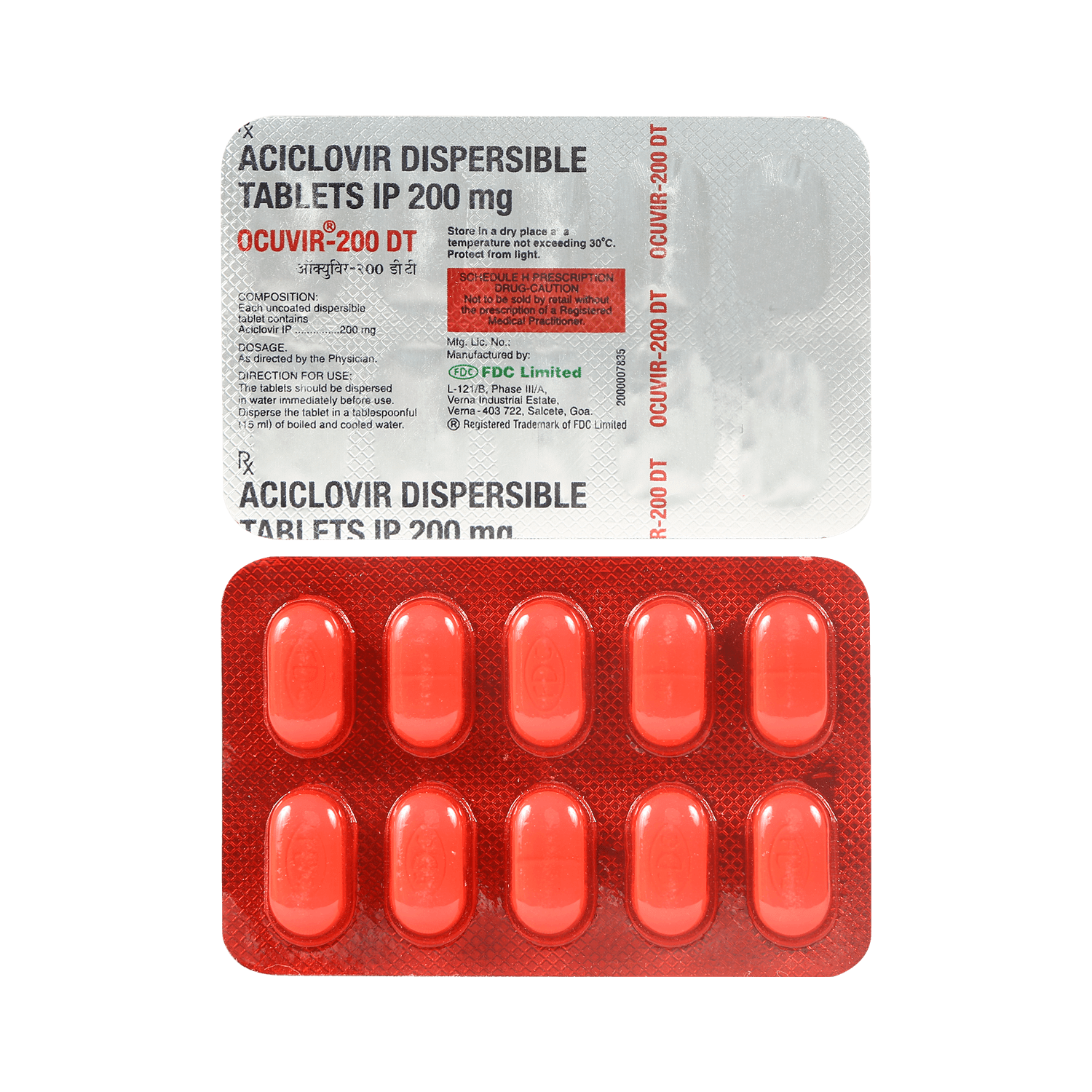
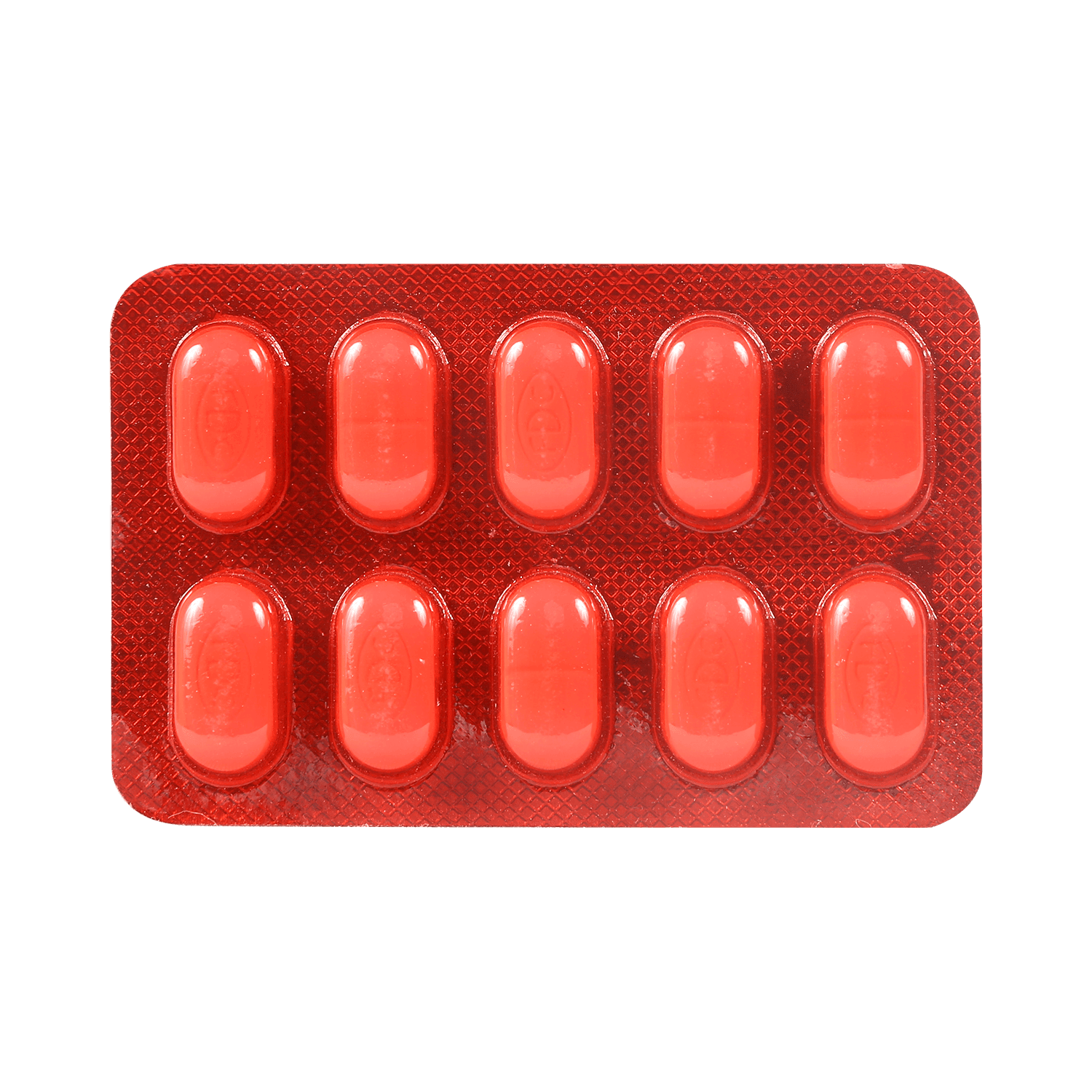
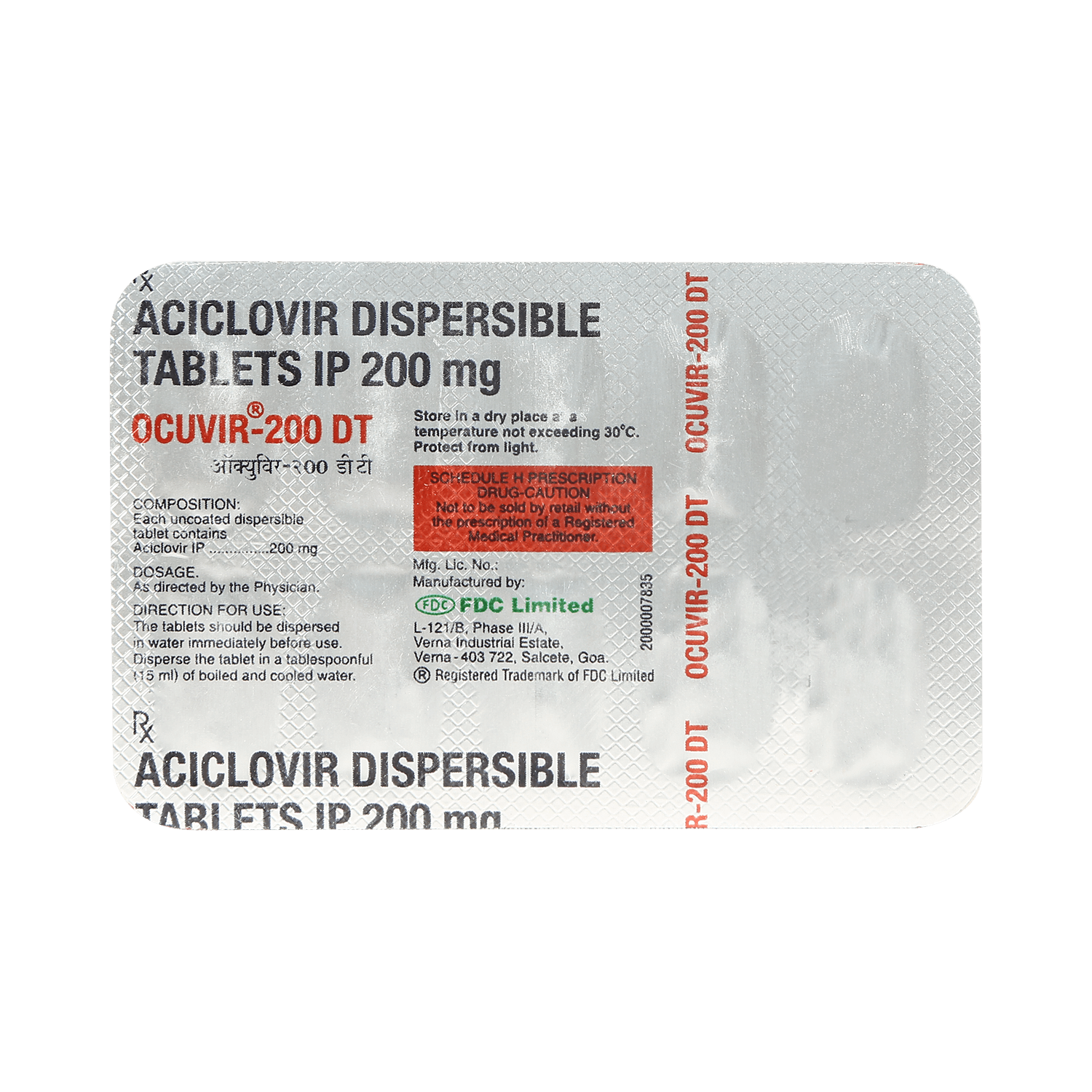
Ocuvir 200 DT Tablet
strip of 10.0 tablet.Prescription required
About this product:
| Salt Composition: | Acyclovir (200mg) |
| Manufacturer: | FDC Ltd |
| Storage: | Below 25 degree celcius |
Out of Stock
Have doubts about this medicine?
Have doubts about this medicine?
Ocuvir 200 DT Tablet is an antiviral medicine used to treat viral infections such as herpes labialis, herpes simplex, shingles, genital herpes infection, and chickenpox. Ocuvir 200 DT Tablet should be taken in the dose and duration as advised by your doctor. Do not skip any doses and finish the full course of treatment even if you feel better. Dissolve it in a glass of water before taking it. It may be taken with or without food, but it is better to take it at a fixed time. If you miss a dose, take it as soon as possible. However, if it is almost time for your next dose, skip the missed dose and go back to your regular schedule. Do not double the dose. You should drink plenty of water while on treatment with this medicine as it helps to prevent dehydration and kidney damage.
Ocuvir 200 DT Tablet is an antiviral medication that prevents the multiplication of virus in human cells. This stops the virus from producing new viruses and clears up your infection.
Will Ocuvir 200 DT Tablet cure shingles?
Ocuvir 200 DT Tablet is an antiviral medicine that is effective against herpes simplex and varicella zoster viruses, which cause shingles. While it can help minimize symptoms and shorten the duration of infection, it does not cure the infection. Instead, it prevents the viruses from dividing and spreading.
Can I prevent transmission of infection to others while taking Ocuvir 200 DT Tablet?
No, you can still infect others while being treated with Ocuvir 200 DT Tablet. Herpes infections are contagious, so it's essential to take precautions to avoid spreading the infection. Avoid touching your eyes after touching an infected area, wash your hands frequently, and practice safe sex by using condoms. If you have genital sores or blisters, avoid having sex.
What are the serious side effects of Ocuvir 200 DT Tablet?
Serious side effects are rare, but if you experience any of the following, seek medical attention immediately: hives, blistering or peeling rash, yellow skin or eyes, unusual bruising or bleeding, loss of consciousness, fits, difficulty breathing, hallucinations, or swelling of the face, tongue, lips, or throat.
Do elderly patients need to be more careful while taking Ocuvir 200 DT Tablet?
Older adults (over 65 years) may experience more side effects due to reduced kidney function. To minimize side effects, elderly patients should drink plenty of water while taking Ocuvir 200 DT Tablet and have their kidney function monitored. They may require a lower dose and should be monitored for neurological problems.
What happens if I take more than the recommended dose of Ocuvir 200 DT Tablet accidentally?
Accidental overdoses of Ocuvir 200 DT Tablet may cause nausea, vomiting, confusion, and headache. If you suspect an overdose, consult your doctor immediately.
Can I develop resistance to Ocuvir 200 DT Tablet treatment?
Patients with advanced HIV disease or impaired immunity may develop resistance to Ocuvir 200 DT Tablet. If you're not responding to treatment, your doctor may check for drug resistance.
Is hair loss caused by Ocuvir 200 DT Tablet permanent?
Hair loss is an uncommon side effect of Ocuvir 200 DT Tablet, and it typically stops when the medicine is discontinued.
Take this medicine in the dose and duration as advised by your doctor. Dissolve it in a glass of water before taking it. Ocuvir 200 DT Tablet may be taken with or without food, but it is better to take it at a fixed time.
- Do not skip any doses and finish the full course of treatment even if you feel better.
- Drink plenty of water while on treatment with this medicine to prevent dehydration and kidney damage.
- Use barrier methods (condoms) for contraception and avoid sexual contact while the sores are present.
- Inform your doctor if you are pregnant or planning to conceive or breastfeeding.
- No common side effects listed.

Alcohol
It is not known whether it is safe to consume alcohol with Ocuvir 200 DT Tablet. Please consult your doctor.

Breastfeed
Ocuvir 200 DT Tablet is safe to use during breastfeeding. Human studies suggest that the drug does not pass into the breastmilk in a significant amount and is not harmful to the baby.

Pregnancy
Ocuvir 200 DT Tablet is generally considered safe to use during pregnancy. Animal studies have shown low or no adverse effects to the developing baby; however, there are limited human studies.