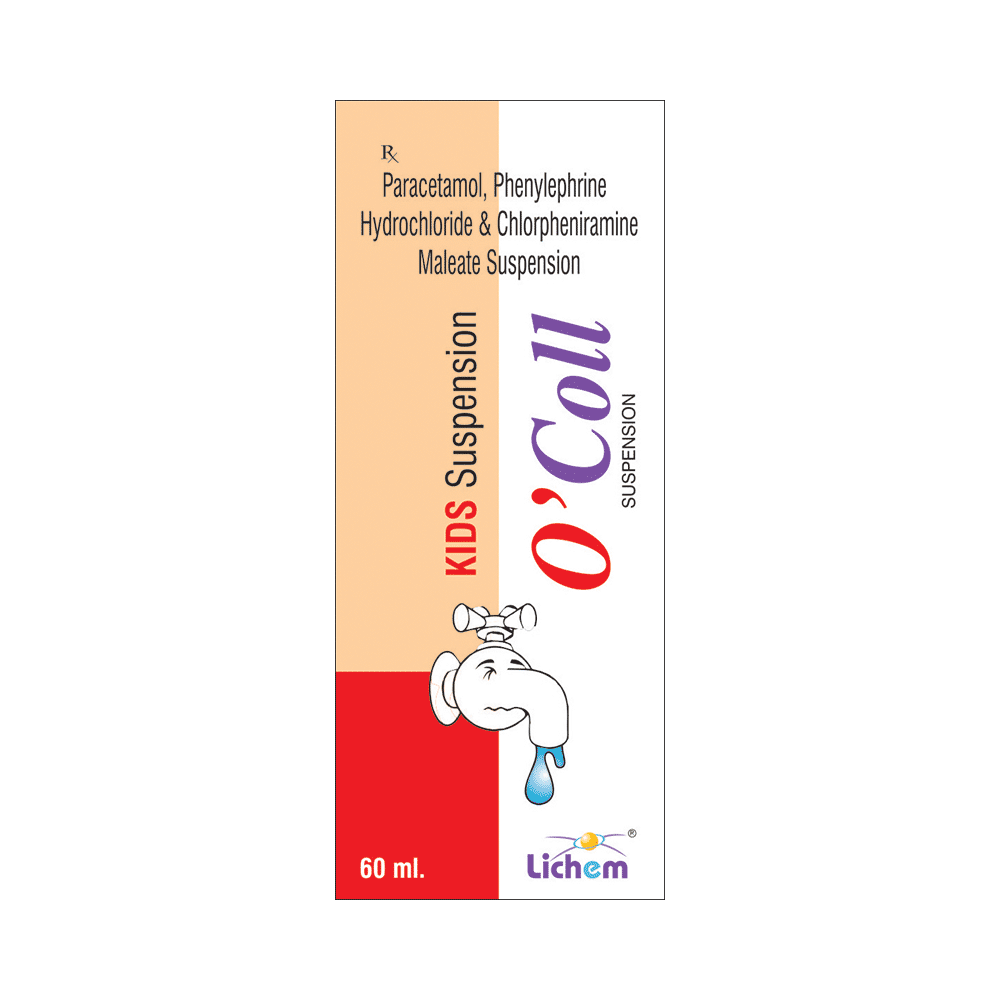
Ocoll Kid Oral Suspension
bottle of 60.0 ml Oral Suspension.Prescription required
About this product:
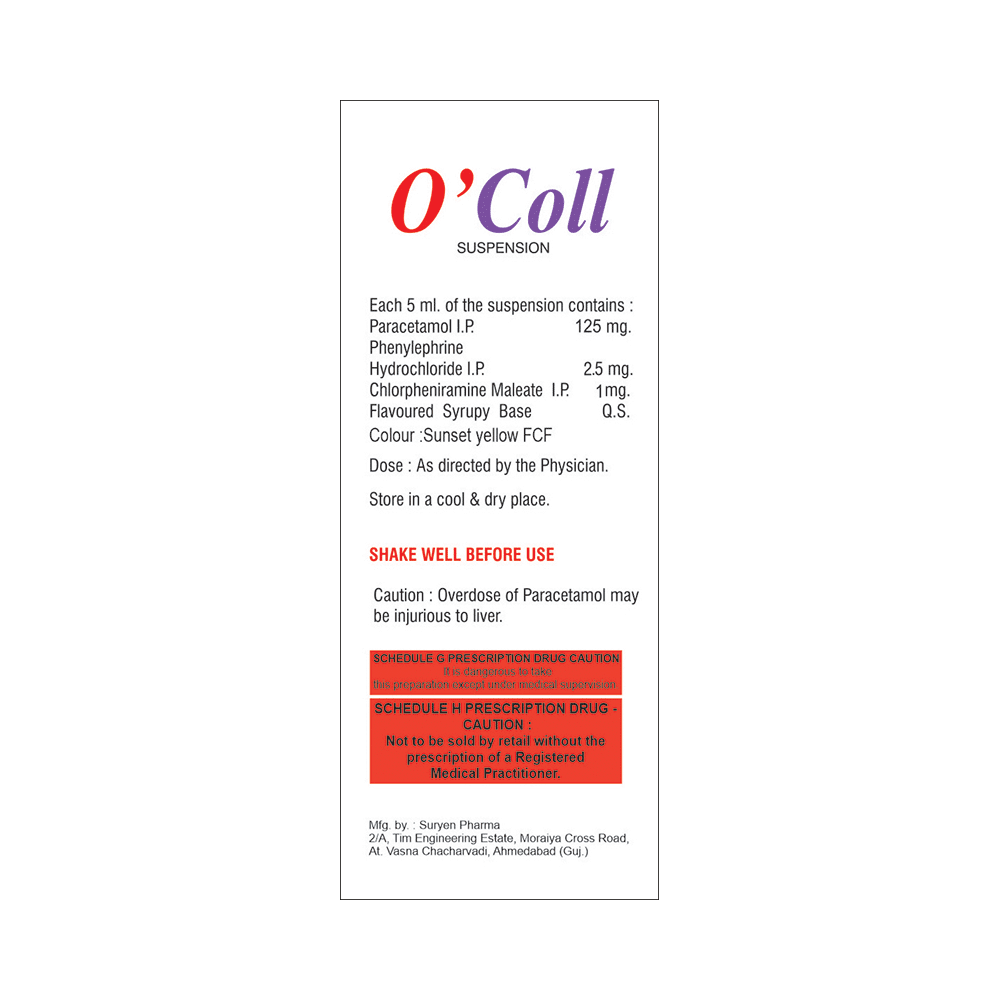
| Salt Composition: | Chlorpheniramine Maleate (1mg/5ml) + Paracetamol (25mg/5ml) + Phenylephrine (2.5mg/5ml) |
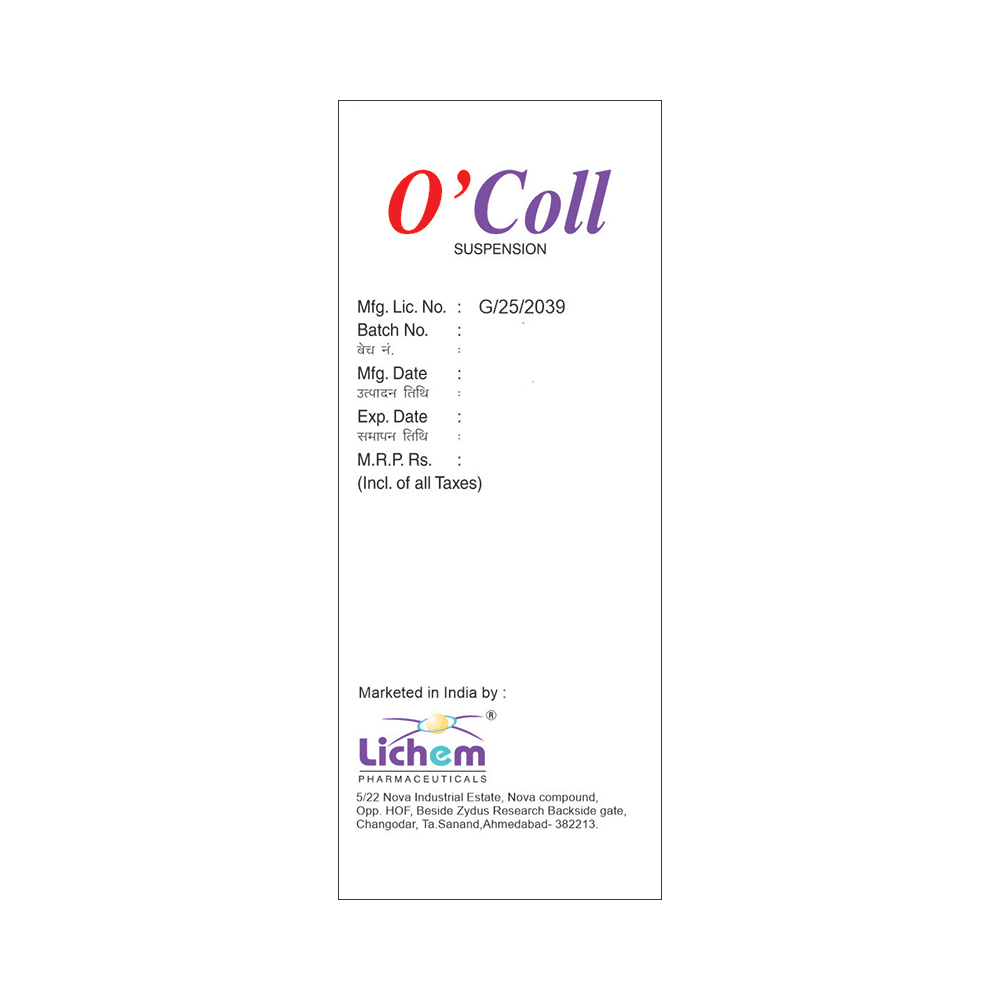
| Manufacturer: | Lichem Pharmaceuticals |
| Storage: | Below 25 degree celcius |
Out of Stock
Have doubts about this medicine?
Have doubts about this medicine?
Ocoll Kid Oral Suspension is commonly prescribed in children to treat common cold symptoms like sore throat, runny nose, cough, sneezing, watery eyes, body ache, and fever. Give Ocoll Kid Oral Suspension to your child by mouth with or without food. Children often have a sensitive stomach and complain of stomach upset while taking medicines. Prefer giving this medicine with food if this happens. Always remember that the dosing schedule provided by your child’s doctor depends on the type of symptoms your child has so make sure to follow the prescribed dose time and way strictly.
Ocoll Kid Oral Suspension is a combination of three medicines: Chlorpheniramine, paracetamol, and phenylephrine which relieves common cold symptoms. Chlorpheniramine is an antiallergic that relieves allergy symptoms like runny nose, watery eyes, and sneezing. Paracetamol is an analgesic (pain reliever) and antipyretic (fever reducer). It blocks the release of certain chemical messengers in the brain that are responsible for pain and fever. Phenylephrine is a nasal decongestant that narrows the small blood vessels providing relief from congestion or stuffiness in the nose.
Take this medicine in the dose and duration as advised by your doctor. Check the label for directions before use. Measure it with a measuring cup and take it by mouth. Shake well before use. Ocoll Kid Oral Suspension may be taken with or without food but it is better to take it at a fixed time.
- Ocoll Kid Oral Suspension may make your child feel sleepy. Ensure your child takes extra care when taking part in physical activities.
- Never combine Ocoll Kid Oral Suspension with other cold and flu medicines as that may lead to side effects.
- Stop Ocoll Kid Oral Suspension and immediately report to the doctor if your child develops an itchy rash, facial swelling, or breathing difficulties.
- Practice self-care tips: Clean and disinfect surfaces after sneezing and coughing to avoid allergy, Give your child plenty of fluids as it helps to thin and to loosen the mucus in the lungs, Restrain your child from having dairy products, coffee, and foods that are spicy and fried. All these can trigger coughing, Make your child gargle with warm saltwater, Ensure your child takes enough rest.
- No common side effects listed.

Alcohol
It is unsafe to consume alcohol with Ocoll Kid Oral Suspension.

Breastfeed
Ocoll Kid Oral Suspension is probably safe to use during breastfeeding. Limited human data suggests that the drug does not represent any significant risk to the baby.

Pregnancy
Ocoll Kid Oral Suspension may be unsafe to use during pregnancy. Although there are limited studies in humans, animal studies have shown harmful effects on the developing baby. Your doctor will weigh the benefits and any potential risks before prescribing it to you. Please consult your doctor.