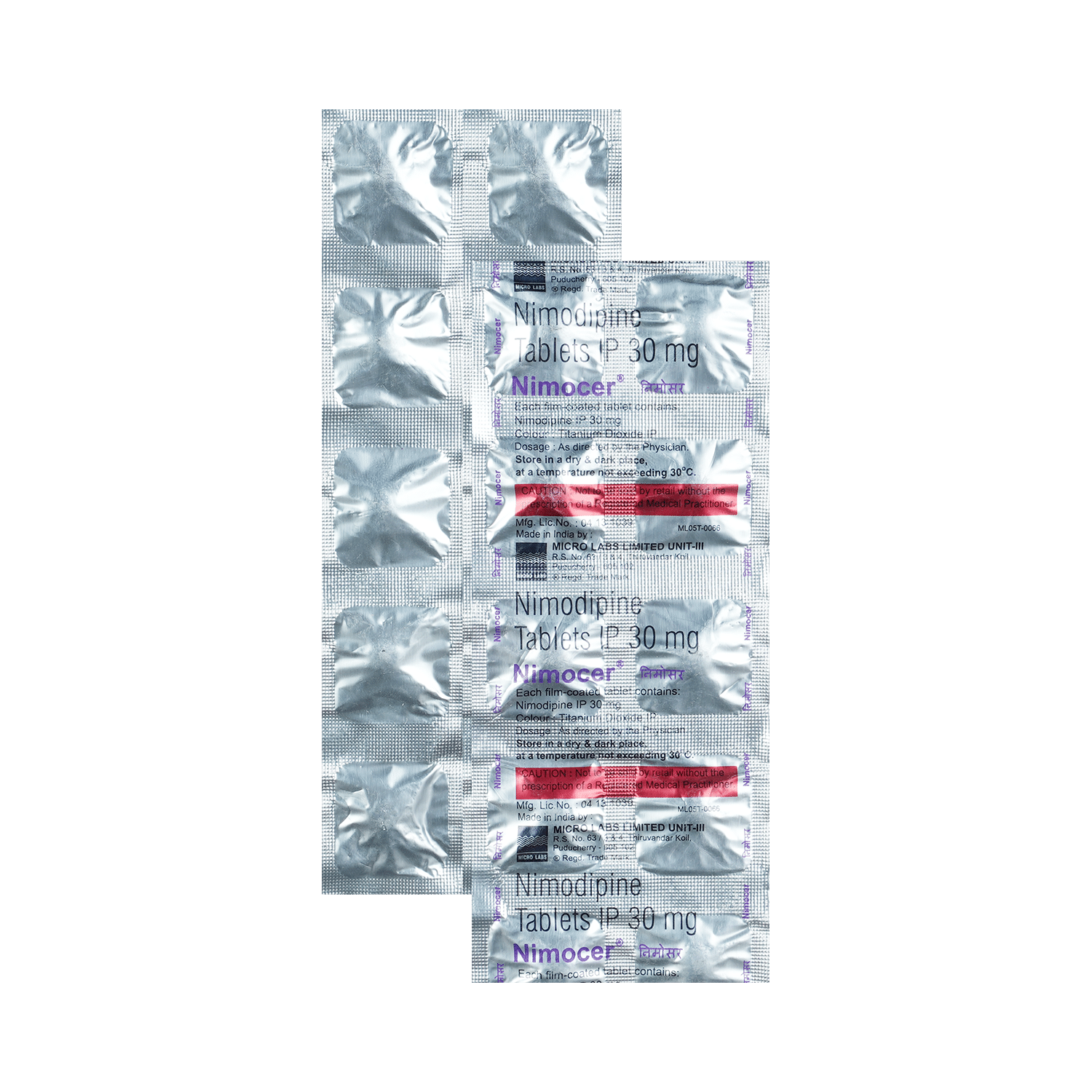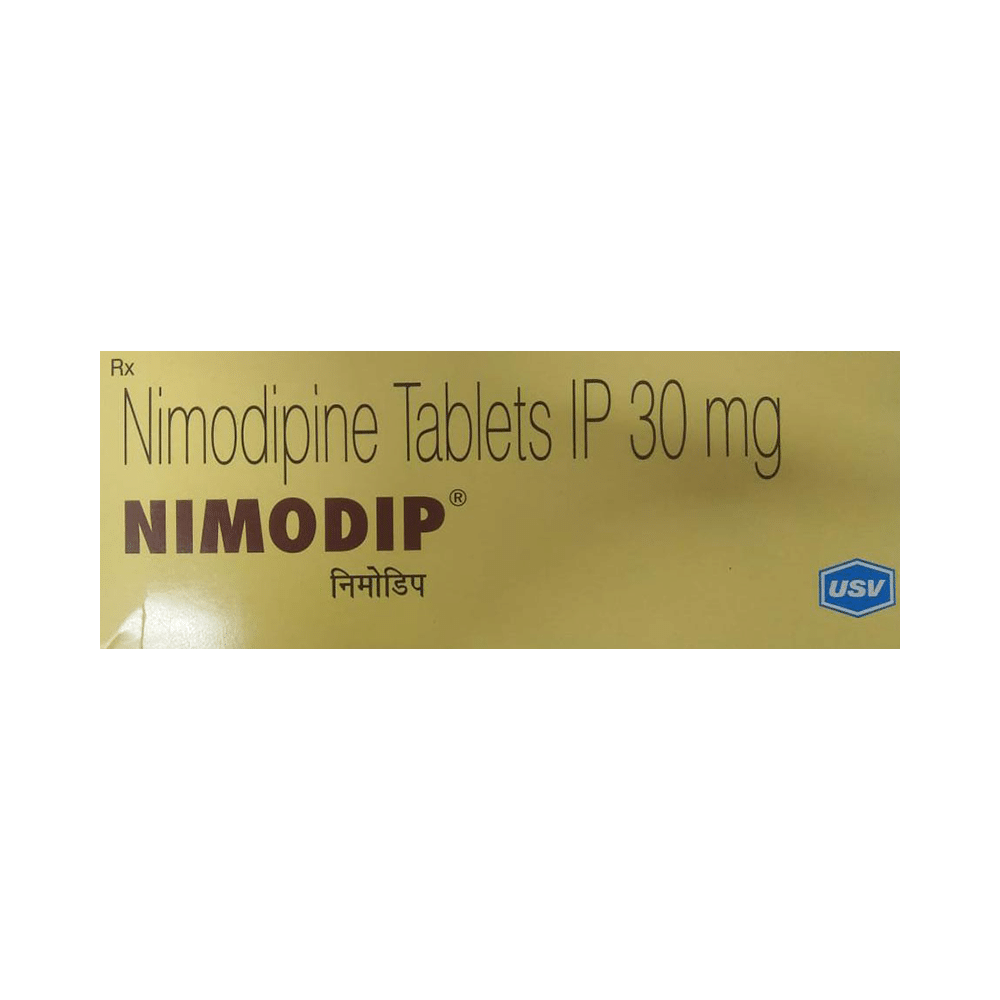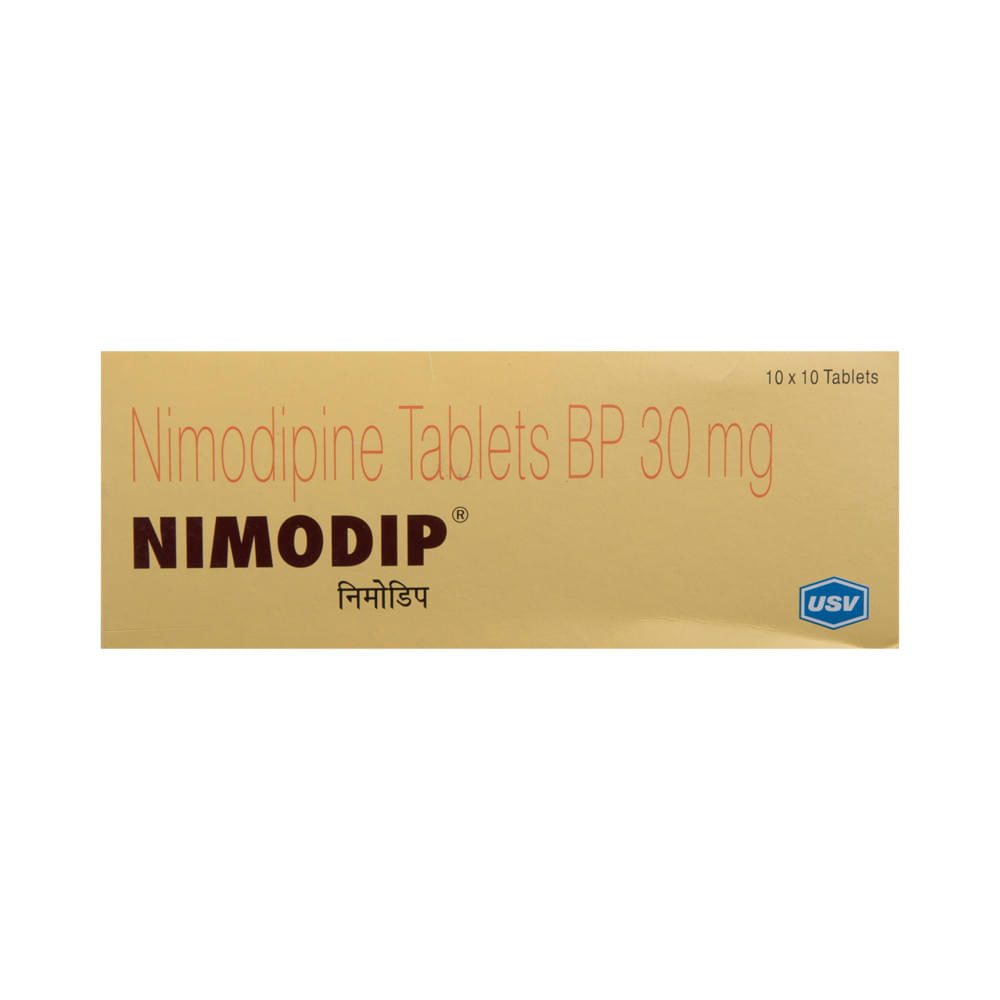
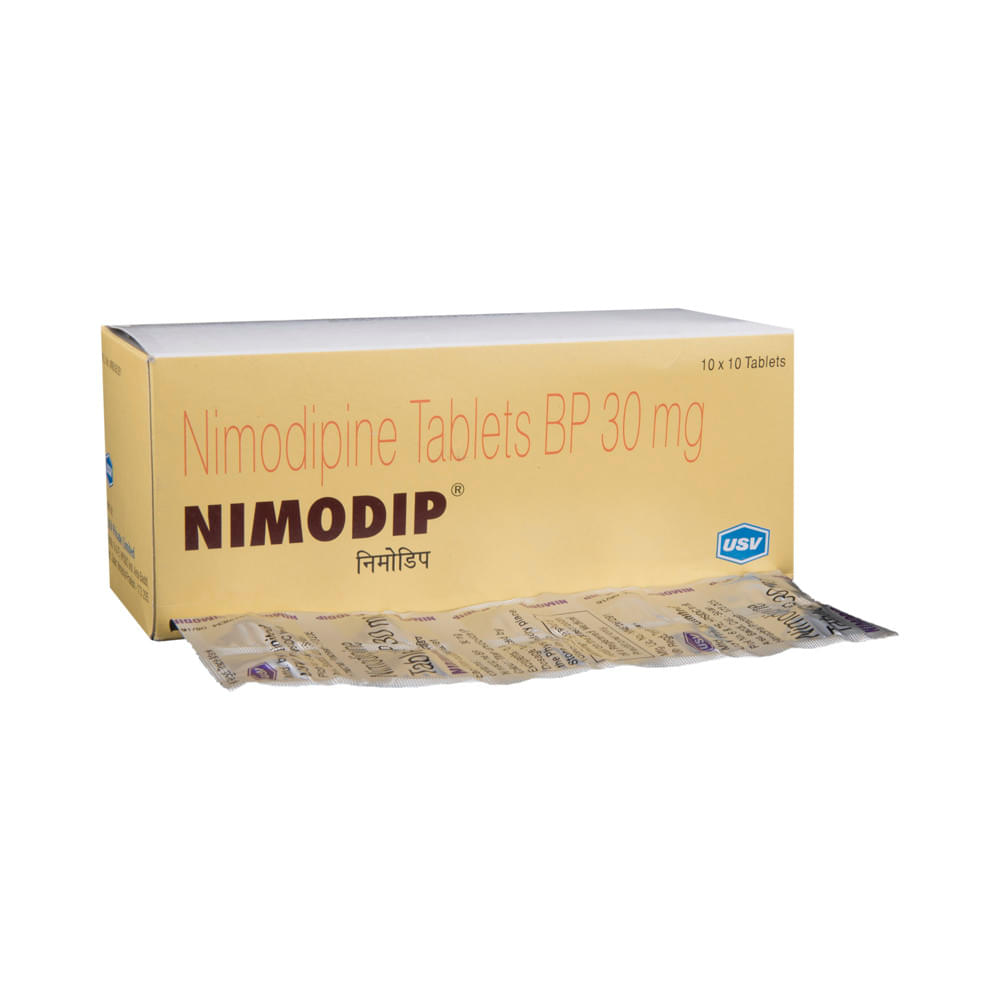
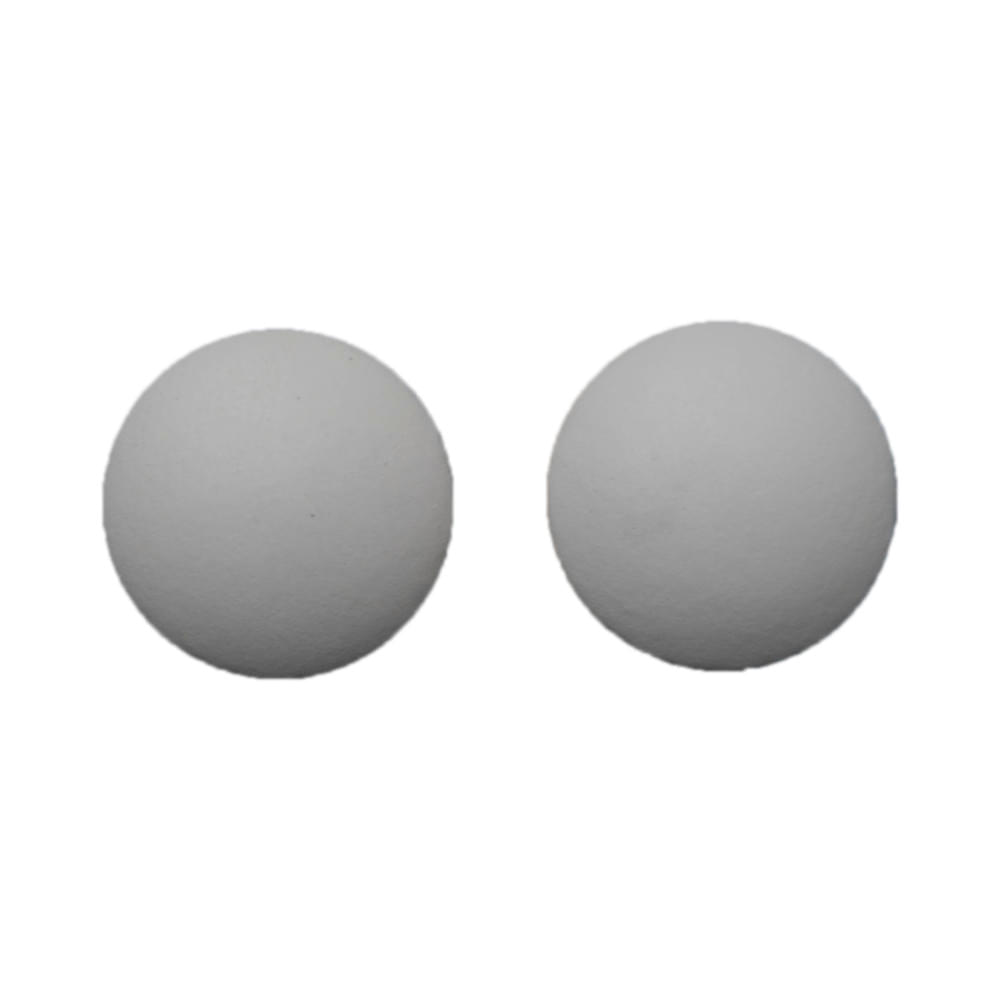
Nimodip Tablet
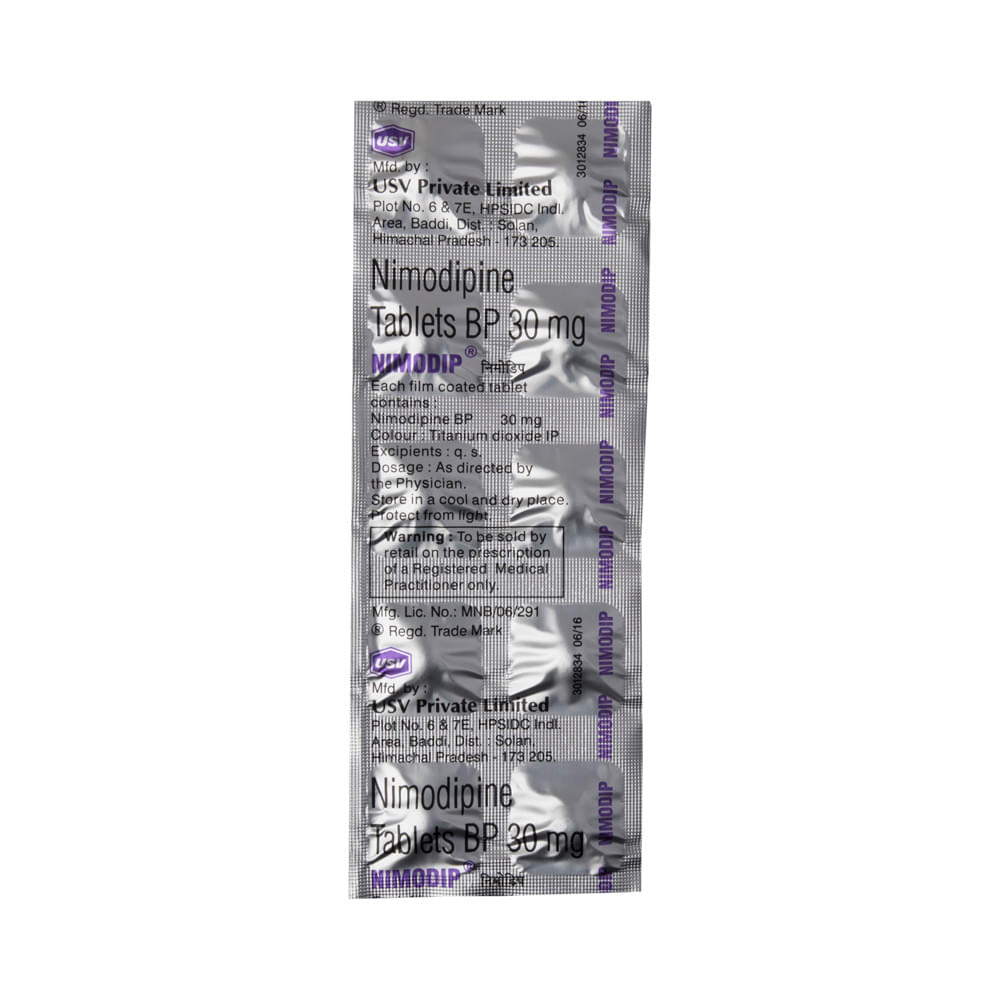
1 Strip of 10 Tablet.Prescription required
About this product:
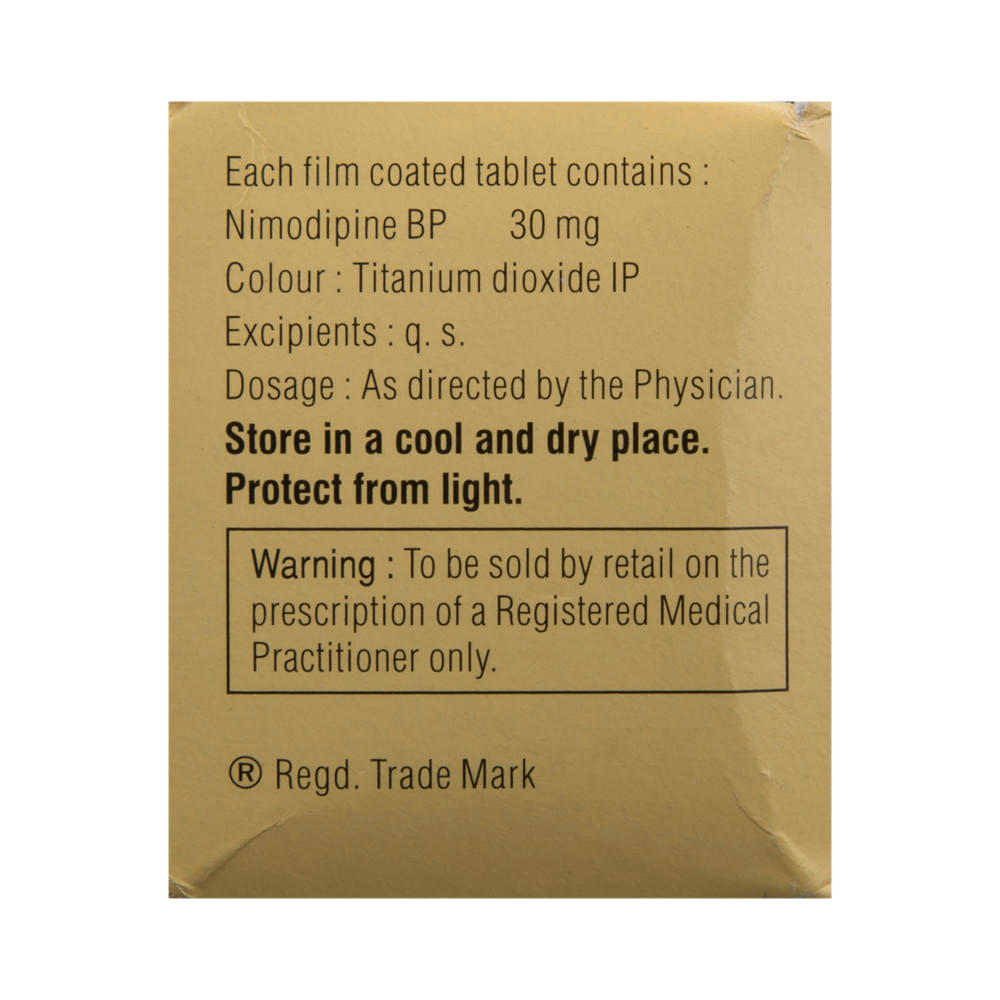
| Salt Composition: | Nimodipine (30mg) |
| Manufacturer: | USV Ltd |
| Storage: | Below 25 degree celcius |
In Stock
Have doubts about this medicine?
Have doubts about this medicine?
Nimodip Tablet is a medicine used to treat and prevent further damage to the brain after bleeding around the brain (subarachnoid hemorrhage or SAH). Nimodip Tablet is usually started as soon as possible after bleeding around the brain (or SAH) is confirmed by the doctor. The exact dose and frequency will be decided by your doctor depending on your medical condition and response to treatment. It may be taken empty stomach or with a meal but take it regularly as per your doctor’s instructions to get the most benefit. Do not take any antacids for 2 hours before or after taking Nimodip Tablet as this can prevent the medicine from working properly. Do not stop taking this medicine without first consulting your doctor. Your condition may worsen if this medicine is stopped too soon.
Nimodip Tablet is a calcium channel blocker. It relaxes the narrow blood vessels in the brain and makes the blood flow more easily. This prevents brain damage after bleeding around the brain.
How does Nimodip Tablet work?
Nimodip Tablet works by relaxing and widening blood vessels, improving blood supply to the brain, which helps decrease brain damage due to internal bleeding in the brain and prevents vasospasm caused by this bleeding.
What is Nimodip Tablet?
Nimodip Tablet belongs to a class of medicines known as calcium channel blockers. It is used to prevent further damage to the brain function after subarachnoid haemorrhage (bleeding around the brain when a weak nerve in the brain bursts).
I am better now after taking Nimodip Tablet. Can I stop taking it?
No, do not stop taking Nimodip Tablet even if you start feeling better after taking it. Continue taking Nimodip Tablet as directed by your doctor for 2 to 4 weeks.
What are the side effects of Nimodip Tablet?
Common side effects include decreased blood pressure, headache, increased or decreased heart rate, nausea, rash, stomach discomfort, edema (swelling), and muscle cramps. Consult your doctor if any of these bother you or worsen.
What precautions do I need to take while taking Nimodip Tablet?
Inform your doctor about head injuries or bleeding in and around the brain. Disclose all other medicines being taken, as they may interact with Nimodip Tablet. Do not take antacids 2 hours before or after taking Nimodip Tablet, and avoid alcohol.
How do I give Nimodip Tablet to a person who is unable to swallow properly?
If the person cannot swallow, the doctor may suggest administering Nimodip Tablet via a nasogastric tube. Do not mix Nimodip Tablet with any other liquid or medicine.
What if I take an overdose of Nimodip Tablet by mistake?
Get emergency medical help if you accidentally take an overdose. Your blood pressure may decrease, causing lightheadedness or fainting, irregular heart rate (fast or slow), and nausea.
What if I forget to take a dose of Nimodip Tablet?
Take the missed dose as soon as possible and continue with the day's scheduled doses at 4-hour intervals. Do not double the dose to make up for the missed one.
Can I take Nimodip Tablet with food?
Nimodip Tablet can be taken with or without food, but avoid eating grapefruit (chakotra) or drinking grapefruit juice while taking it.
Is Nimodip Tablet safe during pregnancy and breastfeeding?
No, Nimodip Tablet is not safe if you are pregnant, planning to conceive, or breastfeeding. Consult your doctor before taking.
Take this medicine in the dose and duration as advised by your doctor. Swallow it as a whole. Do not chew, crush or break it. Nimodip Tablet may be taken with or without food but it is better to take it at a fixed time.
- Take it as per dose and duration suggested by your doctor.
- Do not take any antacids for 2 hours before or after taking Nimodip Tablet as it may affect the working of the medicine.
- A sudden drop in your blood pressure may occur especially when you first start taking Nimodip Tablet. To lower the chance of feeling dizzy or passing out rise slowly if you have been sitting or lying down.
- Your doctor will monitor your blood pressure and heart rate during the treatment with this medicine.
- Inform your doctor if you are pregnant planning a pregnancy or breastfeeding.
- decreased blood pressure
- increased heart rate (tachycardia)
- headache
- stomach discomfort
- nausea
- rash
- muscle cramp
- edema (swelling over the whole body)

Alcohol
Nimodip Tablet may cause excessive drowsiness with alcohol.

Breastfeed
Nimodip Tablet is probably unsafe to use during breastfeeding. Limited human data suggests that the drug may pass into the breastmilk and harm the baby.

Pregnancy
Nimodip Tablet may be unsafe to use during pregnancy. Although there are limited studies in humans, animal studies have shown harmful effects on the developing baby. Your doctor will weigh the benefits and any potential risks before prescribing it to you. Please consult your doctor.