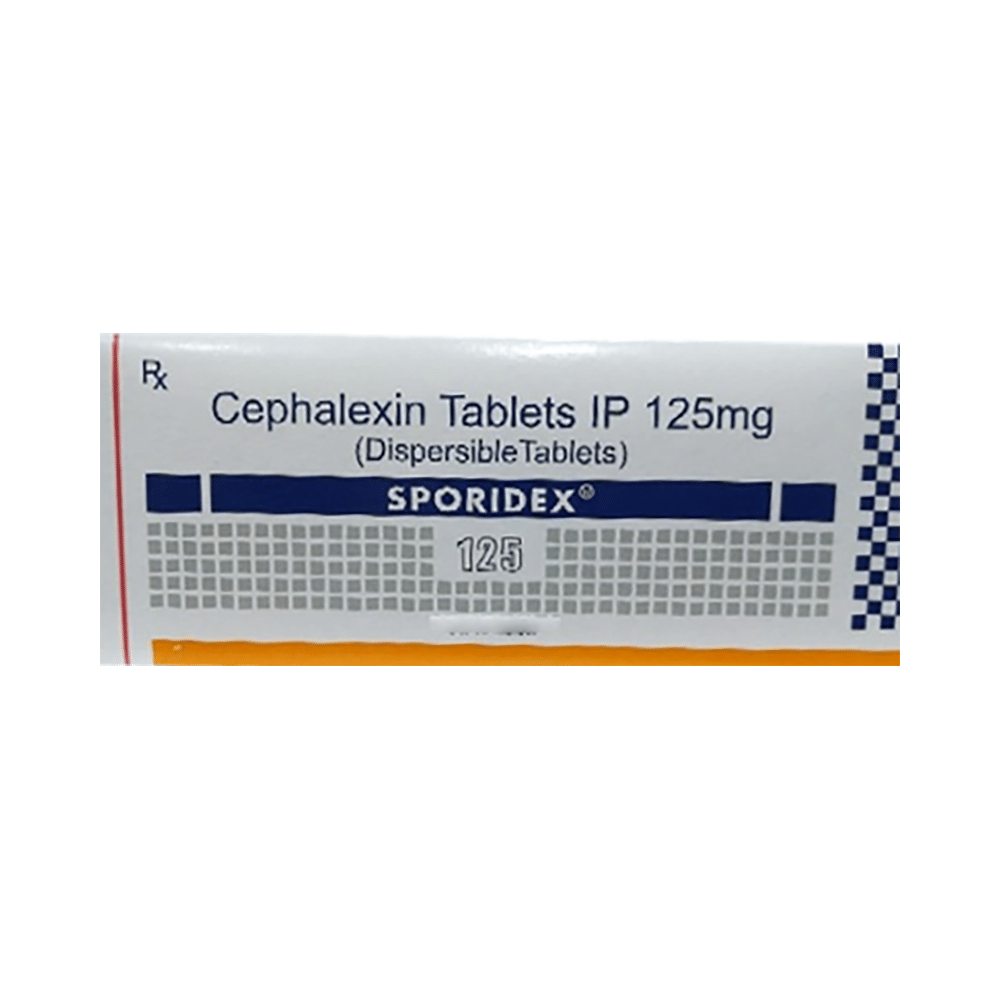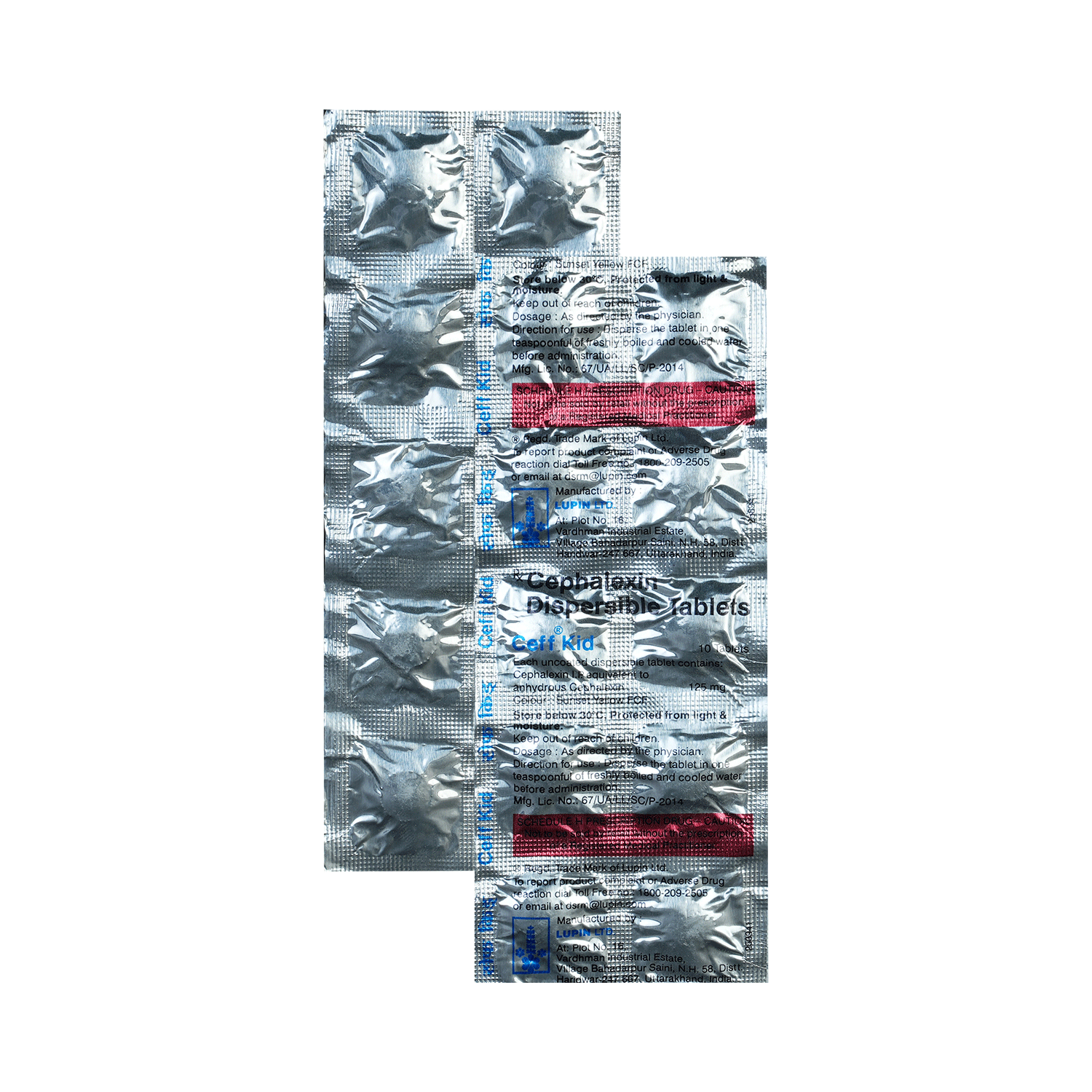
Lexkid 125mg Tablet DT
strip of 10.0 tablet.Prescription required
About this product:
| Salt Composition: | Cefalexin (125mg) |
| Manufacturer: | Pharmafabrikon |
| Storage: | Below 25 degree celcius |
Out of Stock
Have doubts about this medicine?
Have doubts about this medicine?
Lexkid 125mg Tablet DT is an antibiotic medicine used to treat a wide range of bacterial infections in children, including ear, nose, throat, tonsils, lungs, and skin infections. Lexkid 125mg Tablet DT is an antibiotic medicine that is given to children for the treatment of a wide range of bacterial infections associated with the ear, nose, throat, tonsils, lungs, and skin. It may also be prescribed as a second line of treatment for urinary tract infections. Lexkid 125mg Tablet DT may be given with or without food. However, if your child develops a stomach upset, prefer giving it with food. It is usually given three times a day but this may vary depending on the type and severity of the infection. Stick to the dose, time, and way prescribed by the doctor.
Lexkid 125mg Tablet DT is an antibiotic. It works by preventing the formation of the bacterial protective covering (cell wall) which is essential for the survival of the bacteria. This activity stops the infection-causing bacteria from growing further and prevents the infection from spreading without making them resistant to further treatment.
Take this medicine in the dose and duration as advised by your doctor. Dissolve it in a glass of water before taking it. Lexkid 125mg Tablet DT may be taken with or without food but it is better to take it at a fixed time.
- Your child must complete the entire course of antibiotics. Stopping too soon may cause the bacteria to multiply, become resistant, or cause another infection.
- Encourage your child to drink plenty of water in case diarrhea develops as a side effect.
- Contact your doctor if your child has diarrhea that goes on for more than 4 days or if it is severe and watery or contains blood.
- Only give Lexkid 125mg Tablet DT to your child for their current infection. Never save medicine for future illnesses.
- Stop this medicine and immediately report to your child’s doctor in case your child develops an itchy rash, facial swelling, or breathing difficulties while taking this medicine.
- Minor and temporary side effects such as vomiting, diarrhea, nausea, abdominal pain, and mild skin rash

Alcohol
Consuming alcohol with Lexkid 125mg Tablet DT does not cause any harmful side effects.

Breastfeed
Lexkid 125mg Tablet DT is safe to use during breastfeeding. Human studies suggest that the drug does not pass into the breastmilk in a significant amount and is not harmful to the baby. Avoid prolonged use of Lexkid 125mg Tablet DT, since it may have possible effects such as rash and diarrhea.

Pregnancy
Lexkid 125mg Tablet DT is generally considered safe to use during pregnancy. Animal studies have shown low or no adverse effects to the developing baby; however, there are limited human studies.