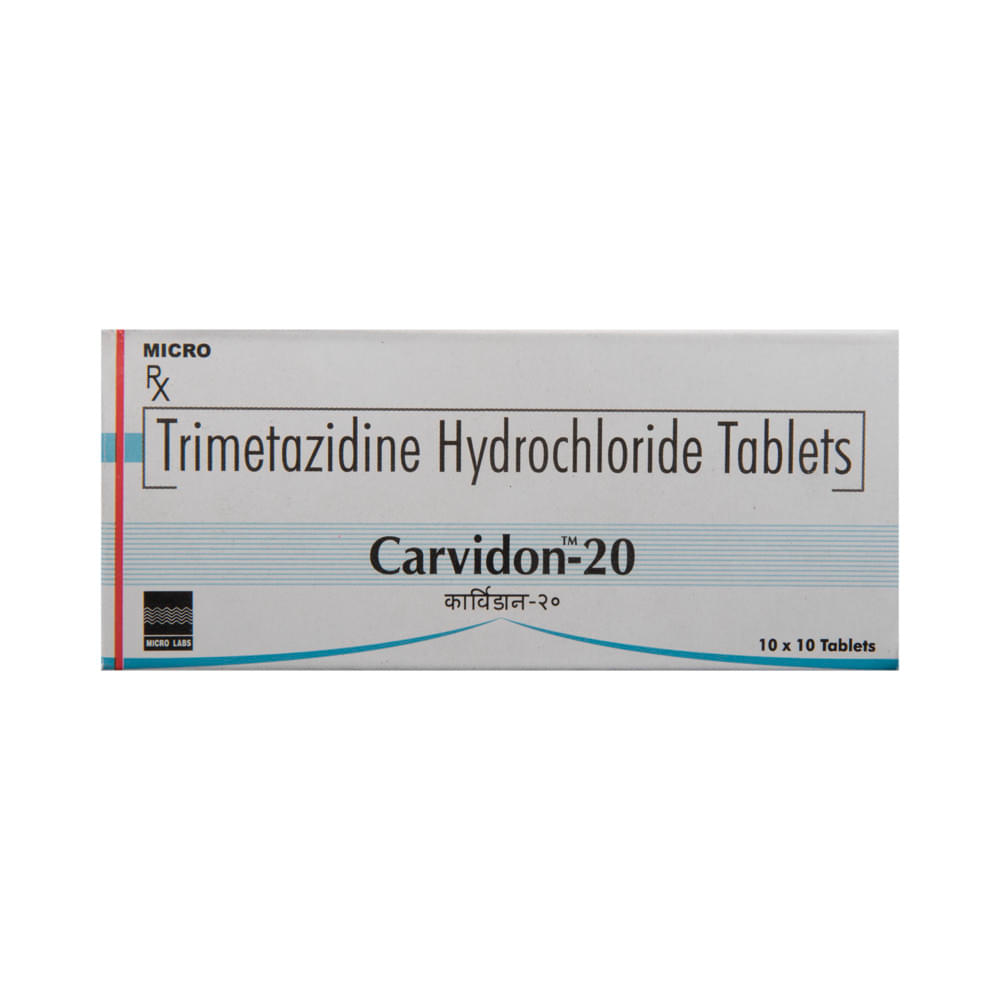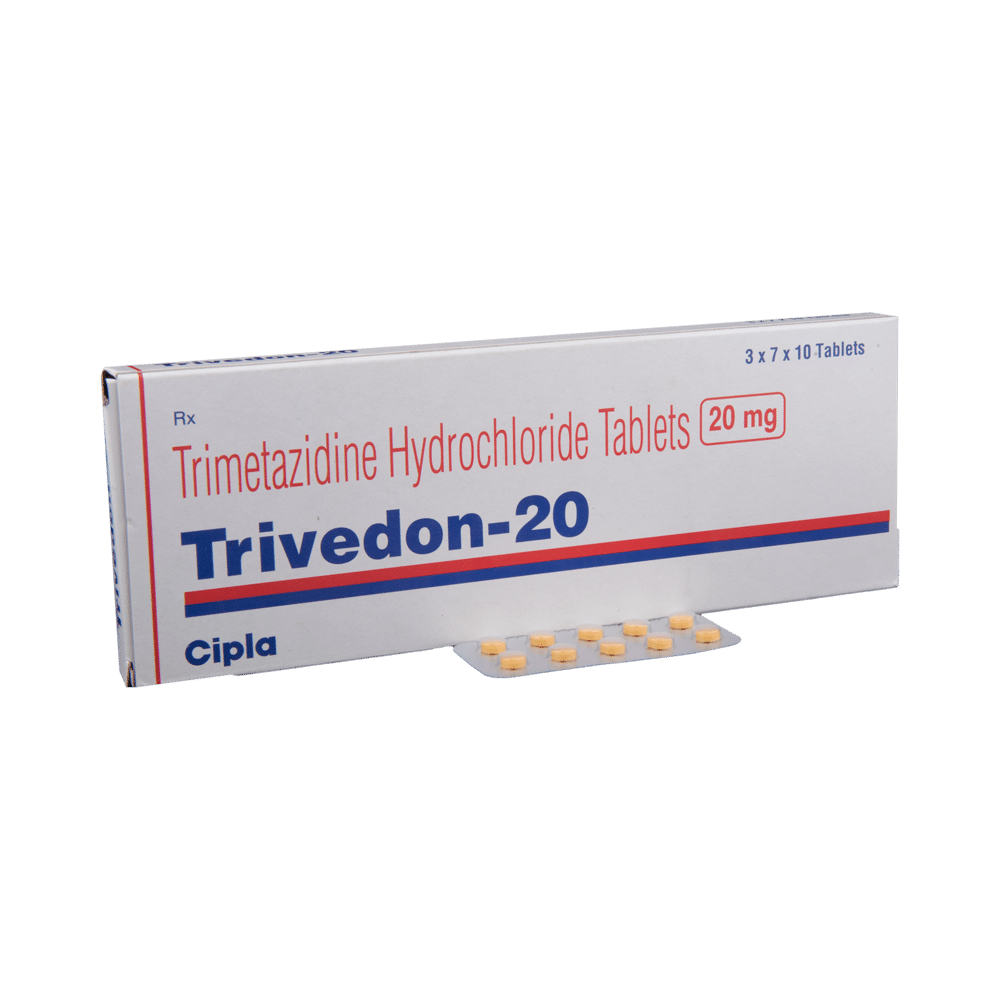
Guard 20mg Tablet
strip of 10.0 tablets.Prescription required
About this product:
| Salt Composition: | Trimetazidine (20mg) |
| Manufacturer: | Admac Pharma Ltd |
| Storage: | Below 25 degree celcius |
Out of Stock
Have doubts about this medicine?
Have doubts about this medicine?
Guard 20mg Tablet is an anti-anginal medicine used for treating heart-related chest pain (angina). Guard 20mg Tablet should be taken regularly as advised by the doctor. You should take it with or without food and at a fixed time. Your doctor will decide how often you should take this medicine. This may change from time to time depending on how well it is working. You should take this medicine regularly to get the most benefit even if you feel fine. It helps in preventing future harm. If you stop taking it, your chest pain may come back. You can improve the health of your heart by making some lifestyle changes such as quitting smoking, cutting down on alcohol, eating well, taking regular exercise, and managing stress.
Guard 20mg Tablet is an anti-anginal medication. It decreases the oxygen requirement of the heart by shifting its metabolism from fats to glucose. As a result, the heart works more efficiently.
What type of medication is Guard 20mg Tablet?
Guard 20mg Tablet is an anti-anginal medicine used to treat angina pectoris (chest pain caused by coronary disease). It protects the heart cells from getting affected by reduced oxygen supply during an episode of angina.
Who should not take Guard 20mg Tablet?
You should not take Guard 20mg Tablet if you are allergic to it or have severe kidney problems. Additionally, patients with Parkinson's disease should avoid taking this medication as it may exacerbate symptoms such as trembling, rigid posture, slow movements, and a shuffling, unbalanced walk.
Can Guard 20mg Tablet be used in elderly patients?
Guard 20mg Tablet should be used with caution in patients aged more than 75 years of age. A lower dose is usually prescribed to reduce the risk of adverse effects, and such patients need continuous monitoring.
Does taking Guard 20mg Tablet increase the risk of falling down frequently?
Though rare, falls may occur with the use of Guard 20mg Tablet. This may be due to instability while walking or a fall in blood pressure when standing up. The risk is higher in elderly patients, who need to be more careful and monitored.
Does Guard 20mg Tablet cause drowsiness?
Yes, Guard 20mg Tablet may make you feel dizzy and drowsy. Therefore, it's essential to avoid driving or using heavy machinery if these side effects occur.
How should Guard 20mg Tablet be taken?
You should take Guard 20mg Tablet exactly as prescribed by your doctor. It is meant for oral use and can be taken with or without food, accompanied by a sufficient amount of liquid, such as water.
What are the possible side effects of Guard 20mg Tablet?
The common side effects include dizziness, headache, abdominal pain, diarrhea, indigestion, and hives or rash. Rare side effects may include fast or irregular heartbeats (palpitations), a fall in blood pressure on standing which can cause dizziness, lightheadedness, or fainting, falls, and flushing.
Take this medicine in the dose and duration as advised by your doctor. Swallow it as a whole. Do not chew, crush or break it. Guard 20mg Tablet is to be taken with food.
- Guard 20mg Tablet prevents new attacks of angina but does not stop an acute attack.
- Does not affect heart rate or blood pressure at rest or during exercise.
- Improves HbA1c and blood sugar levels in diabetes patients.
- Does not affect heart rate or blood pressure at rest or during exercise.
- Improves HbA1c and blood sugar levels in diabetes patients.

Alcohol
Guard 20mg Tablet may cause excessive drowsiness with alcohol.

Breastfeed
Information regarding the use of Guard 20mg Tablet during breastfeeding is not available. Please consult your doctor.

Pregnancy
Information regarding the use of Guard 20mg Tablet during pregnancy is not available. Please consult your doctor.