Flurowyn 0.1% Eye Drop
bottle of 5.0 ml Eye Drop.Prescription required
About this product:
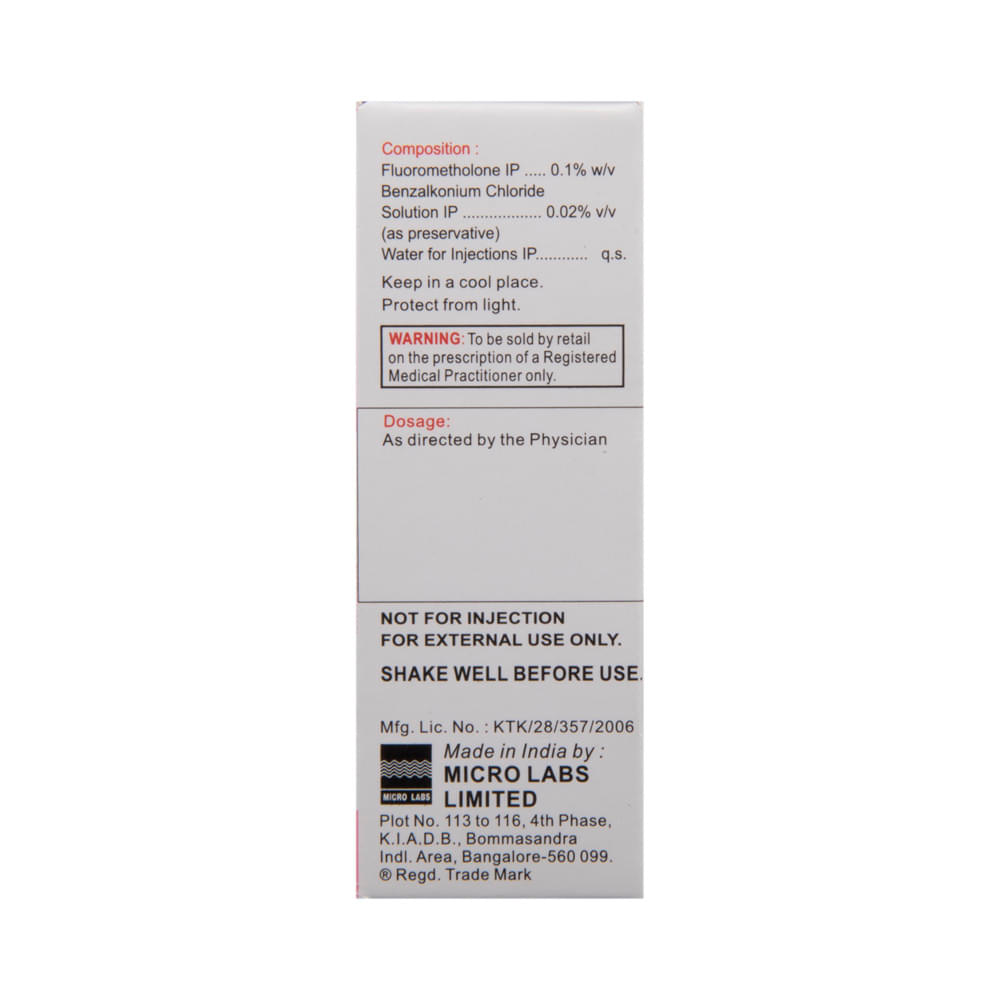
| Salt Composition: | Fluorometholone (0.1% w/v) |
| Manufacturer: | Sherwyn Pharmaceuticals Pvt Ltd |
| Storage: | Below 25 degree celcius |
Out of Stock
Have doubts about this medicine?
Have doubts about this medicine?
Flurowyn 0.1% Eye Drop is a steroid used to treat redness and swelling in the eyes due to infection or allergy. It reduces swelling, itching, and soreness after eye injuries or surgery. Flurowyn 0.1% Eye Drop should be used in the dose and duration as directed by your doctor. Never use it if the seal is broken before you use it for the first time. Wash your hands thoroughly before applying the medicine. Make sure you remove contact lenses if you wear them and wait for at least 15 minutes before putting them back. Continue using it regularly to get the most benefit from it. It may cause eye irritation, burning sensation, or watery eyes. These side effects are usually temporary and resolve with time. If your vision is blurred or you have other changes in sight for a short time, do not drive or operate other machines until your vision is clear. If you are pregnant or breastfeeding, you should consult with your doctor before using this medicine.
Flurowyn 0.1% Eye Drop is a steroid. It works by blocking the release of certain chemical messengers (prostaglandins) that cause redness and swelling in the eye.
Does Flurowyn 0.1% Eye Drop treat pink eye?
Flurowyn 0.1% Eye Drop is used to relieve inflammation of conjunctiva (the clear membrane covering the surface of the eye) and alleviate symptoms such as redness and itching. It should not be used for undiagnosed red eyes. Always follow your doctor's instructions regarding its use.
Is Flurowyn 0.1% Eye Drop an antibiotic?
No, Flurowyn 0.1% Eye Drop is not an antibiotic. It belongs to a group of medicines called synthetic corticosteroid (glucocorticoids). It is used to relieve inflammatory conditions of the eye.
Is Flurowyn 0.1% Eye Drop a steroid?
Yes, Flurowyn 0.1% Eye Drop is a steroid. It belongs to a group of medicines called synthetic corticosteroid (glucocorticoids). It is used to relieve inflammatory conditions of the eye.
Is Flurowyn 0.1% Eye Drop safe?
Flurowyn 0.1% Eye Drop is considered safe when used at prescribed doses for the prescribed duration as advised by your doctor.
Is Flurowyn 0.1% Eye Drop generic?
Yes, Flurowyn 0.1% Eye Drop is a generic name. It is available in various trade names and formulations.
How does Flurowyn 0.1% Eye Drop work?
Flurowyn 0.1% Eye Drop belongs to a group of medicines called synthetic corticosteroid (glucocorticoids). It binds to its receptors and controls the production of certain chemicals that mediate infections in the body, thereby inhibiting inflammatory reactions such as swelling, fibrin deposition, capillary dilatation, and phagocyte migration.
What is Flurowyn 0.1% Eye Drop ophthalmic suspension used for?
Flurowyn 0.1% Eye Drop is used to treat inflammation of conjunctiva such as the palpebral conjunctive (a clear membrane, which coats the inside of the eyelids) and bulbar conjunctiva (a clear membrane of the eye, which covers the outer surface of the eye).
How much does Flurowyn 0.1% Eye Drop cost?
The price of Flurowyn 0.1% Eye Drop may vary depending on the brand prescribed to you. Please refer to the label or package for accurate pricing information.
This medicine is for external use only. Use it in the dose and duration as advised by your doctor. Check the label for directions before use. Hold the dropper close to the eye without touching it. Gently squeeze the dropper and place the medicine inside the lower eyelid. Wipe off the extra liquid.
- Your doctor has prescribed Flurowyn 0.1% Eye Drop to treat redness and swelling (inflammation) of the eye.
- Do not use Flurowyn 0.1% Eye Drop for more than the prescribed duration as it may cause glaucoma or secondary infection.
- Do not touch the tip of the dropper to any surface or to your eye to avoid contaminating the eye drops.
- Apply pressure on the corner of the eye (close to the nose) for about 1 minute immediately after instilling the drop.
- Wait for at least 5-10 minutes before delivering the next medication in the same eye to avoid dilution.
- Stinging sensation may occur for 1-2 mins. Notify your doctor if it persists for longer.
- If you wear soft contact lenses, remove them before putting in these eye drops and wait at least 15 minutes before putting your lenses back in.
- Make sure to use within 4 weeks of opening the bottle.
- No common side effects listed.

Alcohol
No interaction found/established

Breastfeed
Flurowyn 0.1% Eye Drop is probably safe to use during breastfeeding. Limited human data suggests that the drug does not represent any significant risk to the baby. To reduce the amount of Flurowyn 0.1% Eye Drop that reaches the breastmilk, place pressure over the corner of the eye for 1 minute or more, then remove the excess solution with an absorbent tissue.

Pregnancy
Flurowyn 0.1% Eye Drop may be unsafe to use during pregnancy. Although there are limited studies in humans, animal studies have shown harmful effects on the developing baby. Your doctor will weigh the benefits and any potential risks before prescribing it to you. Please consult your doctor.