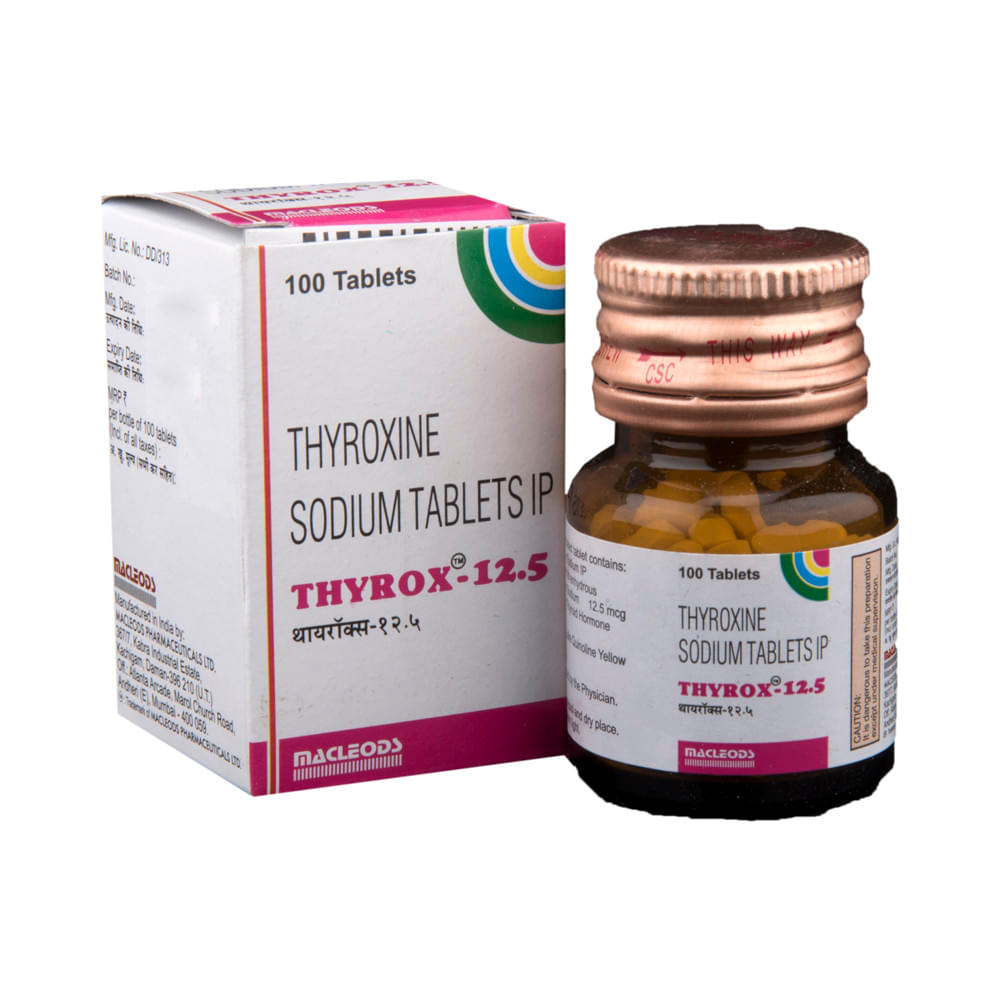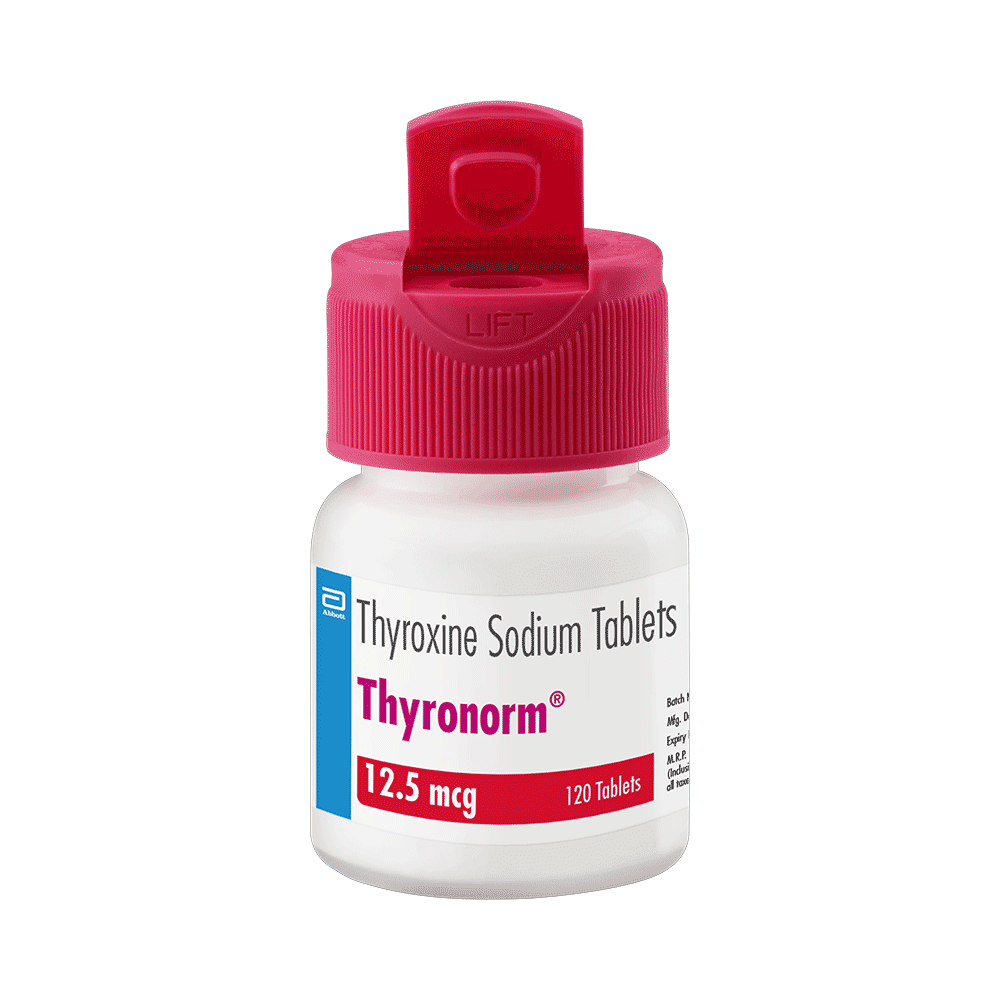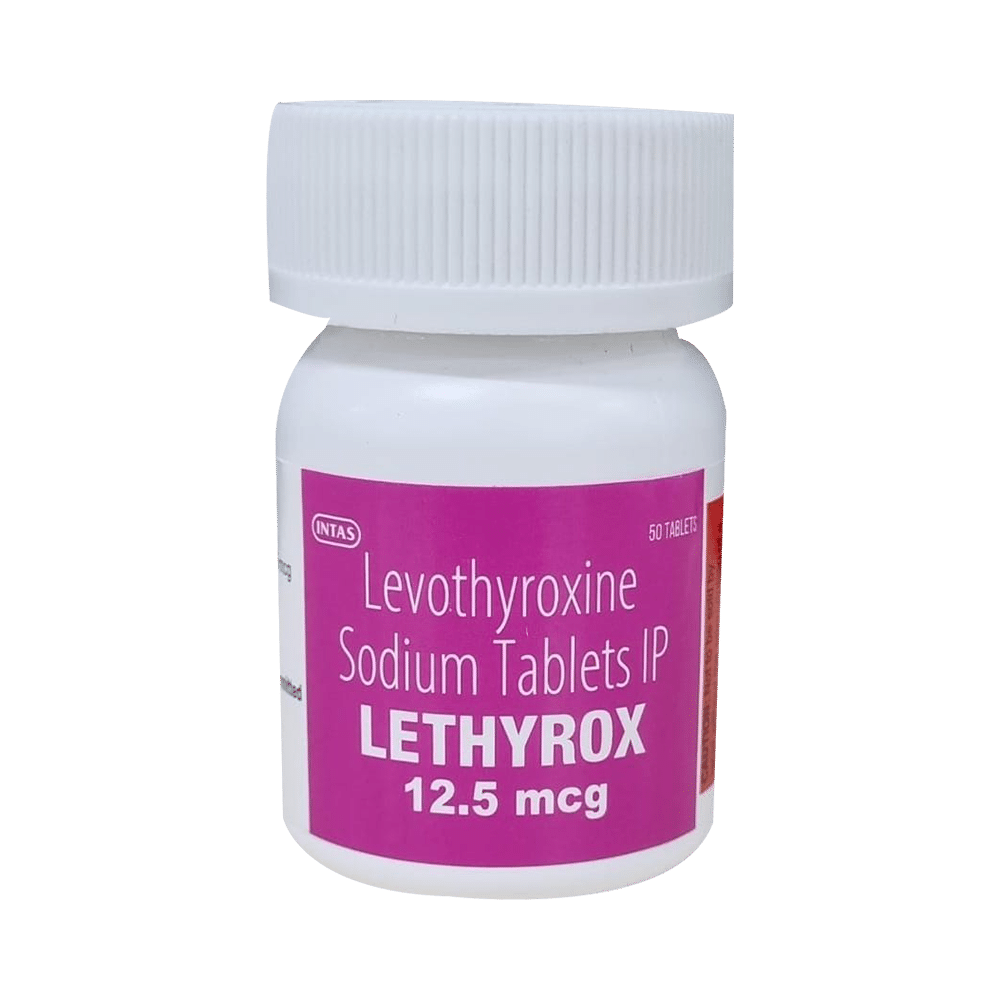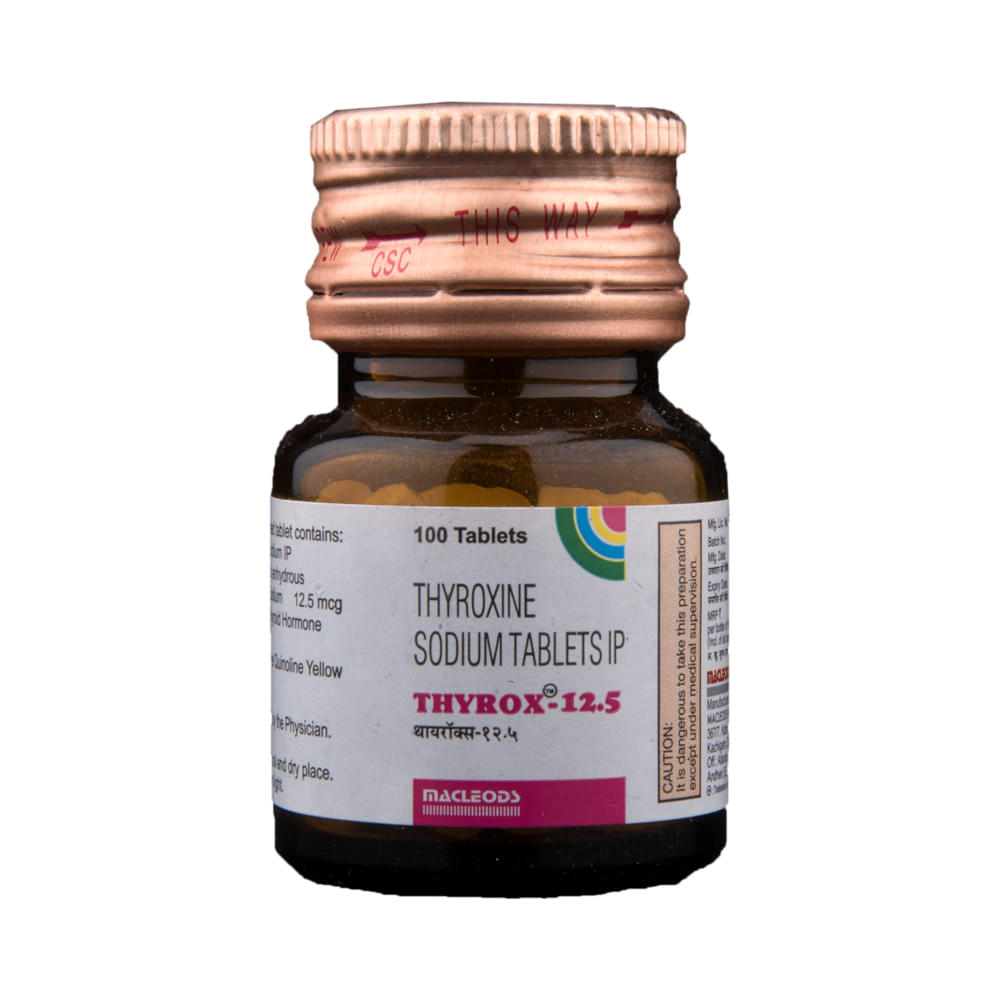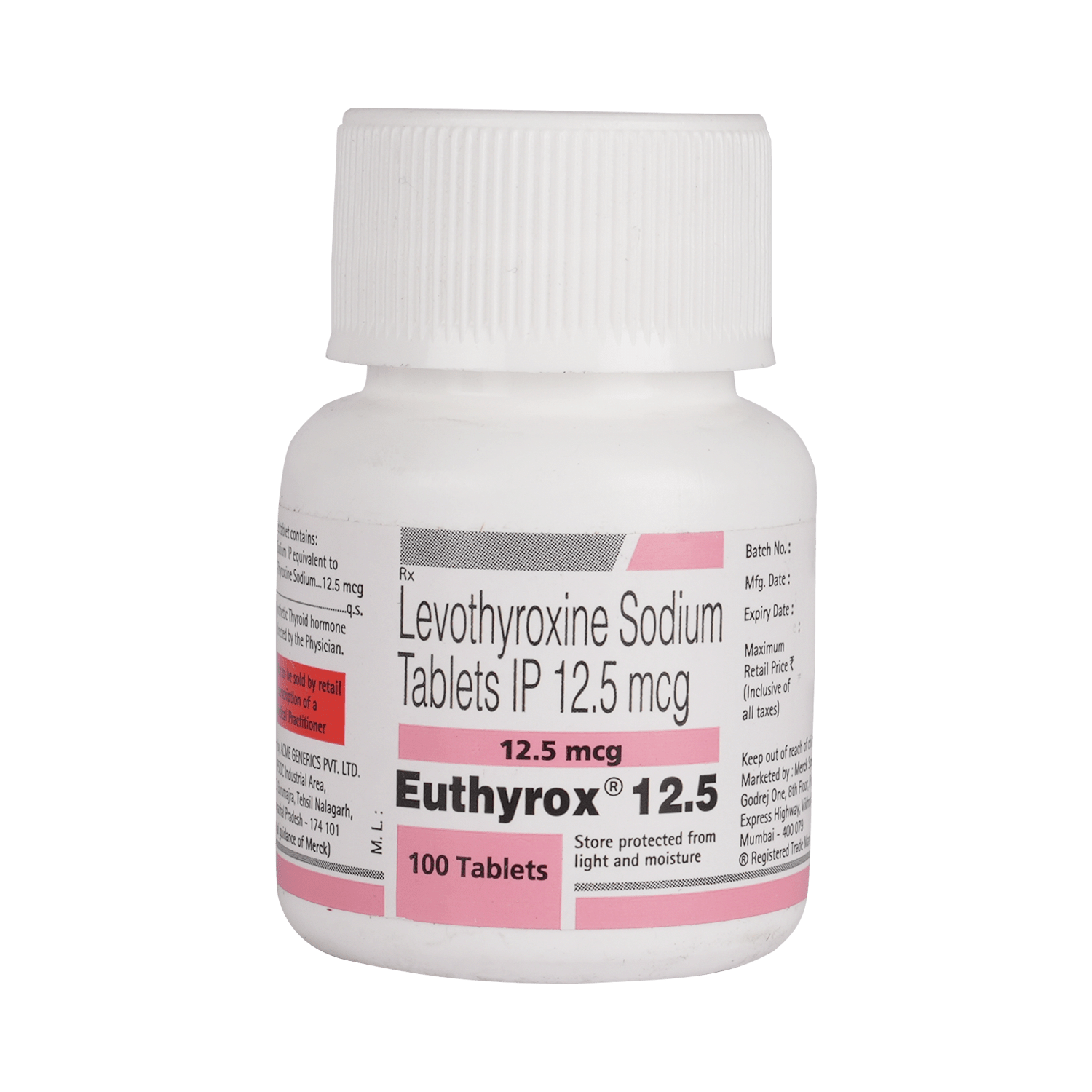
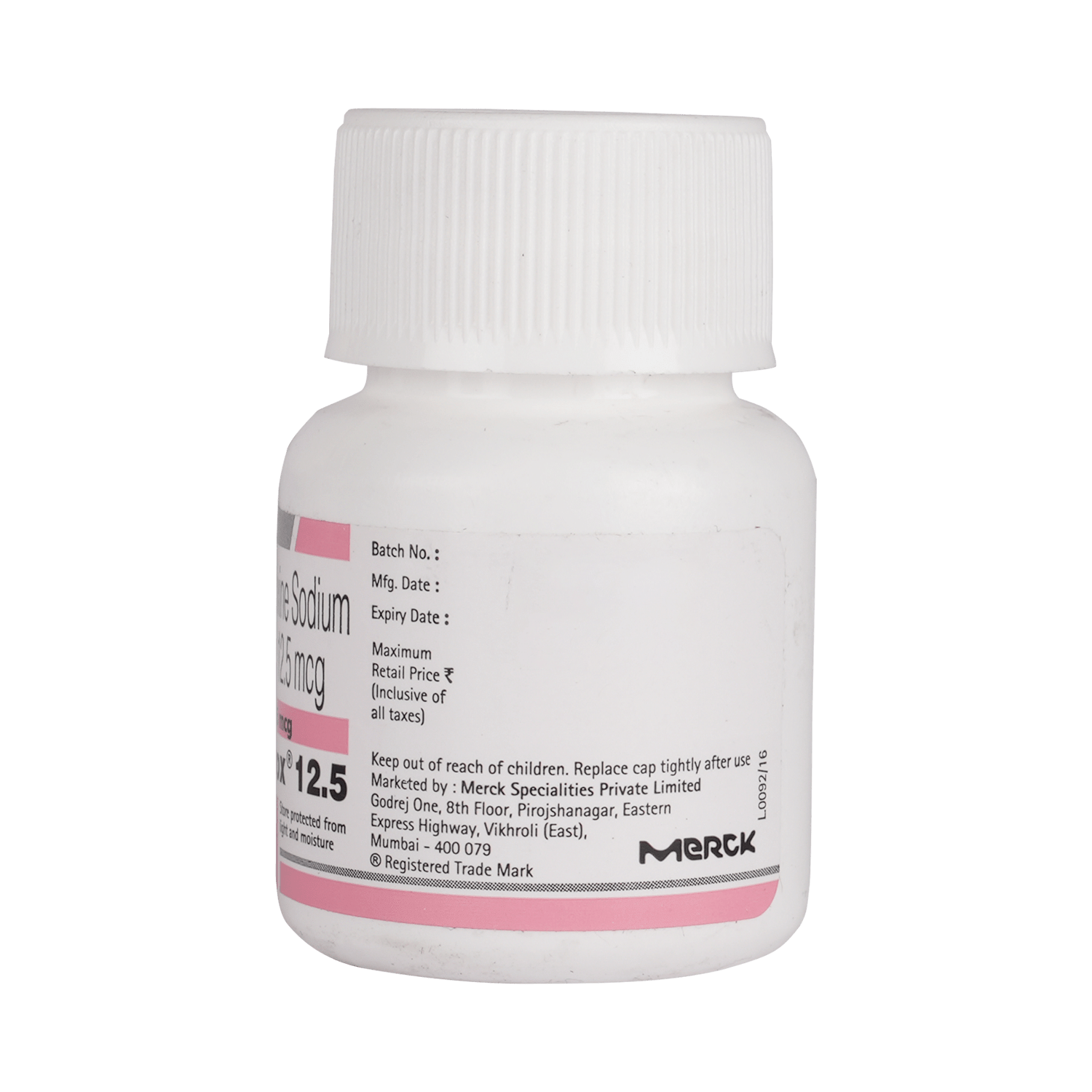
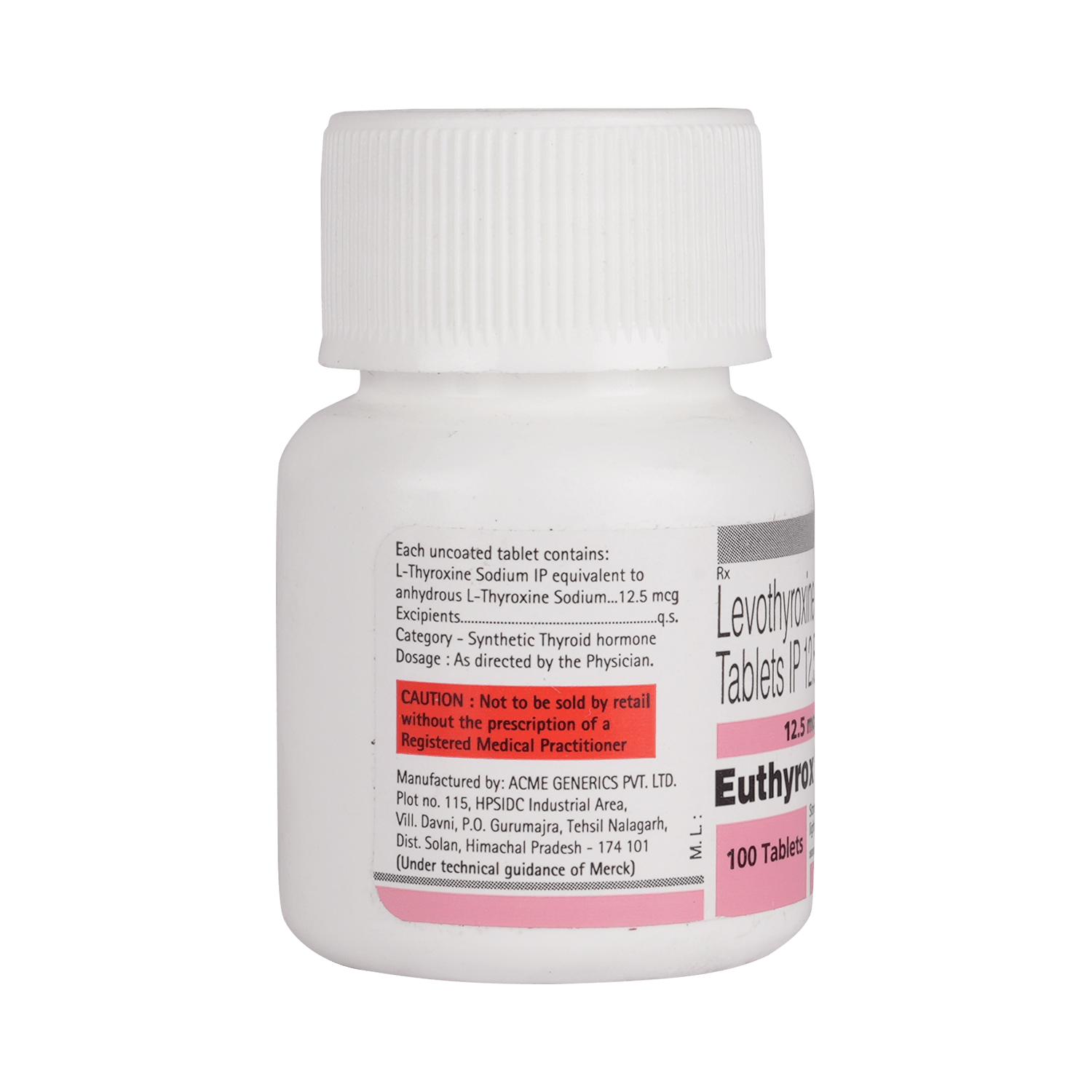
Euthyrox 12.5mcg Tablet
bottle of 100.0 tablets.Prescription required
About this product:
| Salt Composition: | Thyroxine (12.5mcg) |
| Manufacturer: | Merck Ltd |
| Storage: | Below 25 degree celcius |
Out of Stock
Have doubts about this medicine?
Have doubts about this medicine?
Euthyrox 12.5mcg Tablet is a medicine used to treat an underactive thyroid gland (hypothyroidism). It replaces the hormone which is not being produced by your thyroid gland in sufficient quantity and helps regulate your body’s energy and metabolism. Before you start taking Euthyrox 12.5mcg Tablet, your doctor will do a blood test to see what dose you need. Once you start taking the medicine, you will have regular blood tests to see how well it is working and the dose may be adjusted from time to time. It is best taken on an empty stomach before your first meal of the day. You should take this medicine regularly to get the maximum benefit. It may take several weeks before your symptoms start to improve. You may need to take it for the rest of your life. If you stop taking it, your symptoms are likely to come back.
Euthyrox 12.5mcg Tablet is a synthetic version of a hormone produced by the thyroid gland. It works by replacing the thyroid hormones that your thyroid gland cannot produce in a sufficient quantity and relieves the symptoms of hypothyroidism (tiredness, weight gain, and depression).
What should I do if I forget to take a dose?
Take the missed dose as soon as you remember. However, if it is almost time for your next dose, skip the missed dose and take the next one as scheduled.
Take this medicine in the dose and duration as advised by your doctor. Swallow it as a whole. Do not chew, crush or break it. Euthyrox 12.5mcg Tablet is to be taken empty stomach.
- Euthyrox 12.5mcg Tablet should be taken on an empty stomach (ideally first thing in the morning). No food, milk, or tea should be taken 1 hour before and 2 hours after taking this medicine.
- Leave a gap of at least 4 hours before taking any antacids, calcium or iron supplements, and multivitamins as these may interfere with the effect of the medicine.

Alcohol
Consuming alcohol with Euthyrox 12.5mcg Tablet does not cause any harmful side effects.

Breastfeed
Euthyrox 12.5mcg Tablet is safe to use during breastfeeding. Human studies suggest that the drug does not pass into the breastmilk in a significant amount and is not harmful to the baby.

Pregnancy
Euthyrox 12.5mcg Tablet is safe to use during pregnancy. Most studies have shown low or no risk to the developing baby.