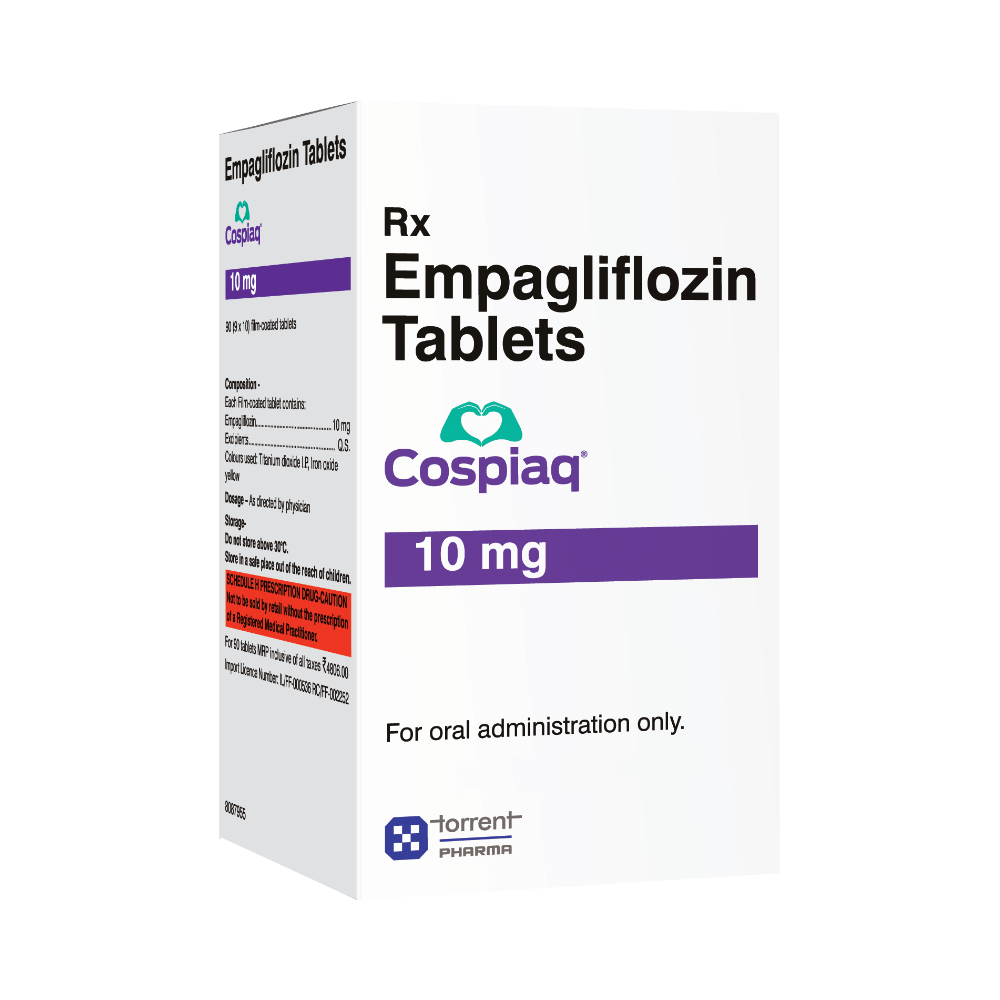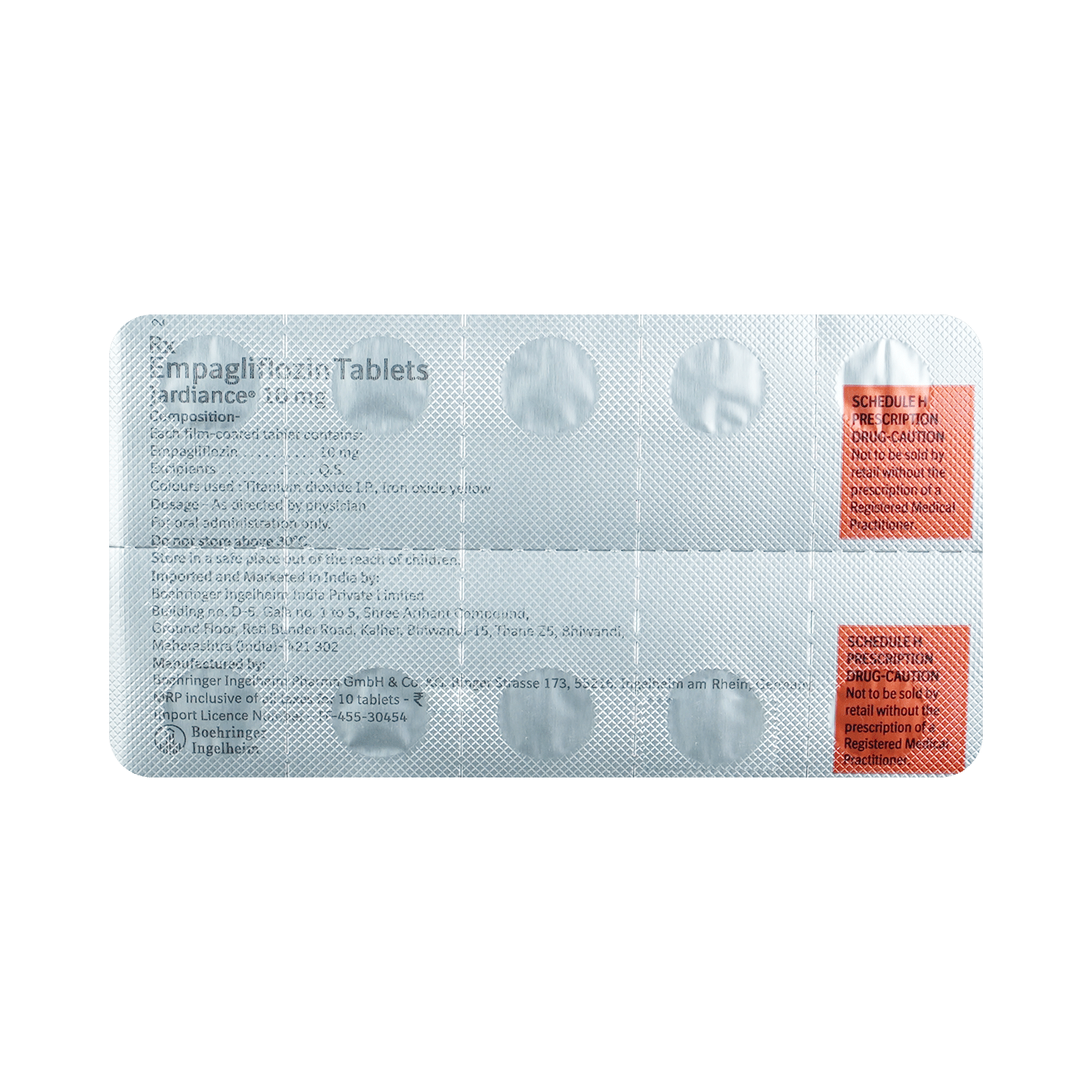
Empaone 10 Tablet
1 Strip of 10 Tablet.Prescription required
About this product:
| Salt Composition: | Empagliflozin (10mg) |
| Manufacturer: | MSN Laboratories Pvt Ltd |
| Storage: | Below 25 degree celcius |
In Stock
Have doubts about this medicine?
Have doubts about this medicine?
Empaone 10mg Tablet is used alone or in combination with other medicines to treat type 2 diabetes mellitus. It helps control high blood sugar levels and reduces the risk of serious complications. Empaone 10mg Tablet can be taken with or without food at any time of day but should be taken at the same time every day. The dose will be decided by your doctor. Do not stop taking it without consulting your doctor, as this may increase your blood sugar levels and put you at risk of serious complications like kidney damage and blindness. This medicine is part of a treatment program that includes a healthy diet, regular exercise, and weight reduction as advised by your doctor. Common side effects include nausea, frequent urge to urinate, increased thirst, urinary tract infections, vaginal yeast infection, joint pain, and hypoglycemia. It may cause the body to lose too much water, so drink plenty of fluids to stay hydrated. Some people may develop fungal infections in the genital area, which can be prevented by maintaining good hygiene. Inform your doctor if you have any kidney or liver problems, a urinary tract infection, or if you are on water pills. Pregnant or breastfeeding women should consult their doctor before taking it. Avoid excessive alcohol intake while taking this medicine and monitor your blood sugar levels regularly.
Empaone 10mg Tablet is an antidiabetic medication. It works by removing excess sugar from your body through urine.
What is the recommended method of taking Empaone 10mg Tablet?
Take Empaone 10mg Tablet exactly as directed by your doctor. You can take it with or without food, and it should be swallowed whole with water. To achieve optimal results, it is essential to follow a diet and exercise program as advised by your doctor.
Can I stop taking Empaone 10mg Tablet?
No, do not discontinue Empaone 10mg Tablet without consulting your doctor. Stopping the medication abruptly can lead to a sudden increase in your blood glucose levels. Always use the medicine as directed by your doctor and never stop taking any medication without consulting your healthcare provider.
Can Empaone 10mg Tablet be used with other diabetes medicine?
Yes, Empaone 10mg Tablet can be used alone or in combination with other diabetes medications. However, it is crucial to follow a proper diet and exercise regimen in addition to taking the medication.
Can the use of Empaone 10mg Tablet cause hypoglycemia (very low blood sugar levels)?
Empaone 10mg Tablet itself does not cause very low blood sugar levels. However, if you take it with other diabetes medications such as insulin, sulfonylurea, or meglitinides, you should be aware of the risk of hypoglycemia and take necessary precautions.
What is the significance of HbA1c test?
Your doctor may request that you undergo an HbA1c test every 3 months to assess your blood sugar control over the past 2-3 months.
I am taking furosemide for high blood pressure, can I take Empaone 10mg Tablet with it?
Empaone 10mg Tablet may cause excessive fluid loss or increased urination, which can lead to dehydration. Since furosemide also causes fluid loss, taking both medications together may result in unusual thirst, lightheadedness, or dizziness upon standing, and in severe cases, fainting or loss of consciousness. Inform your doctor about your use of furosemide before starting Empaone 10mg Tablet.
Take this medicine in the dose and duration as advised by your doctor. Swallow it as a whole. Do not chew, crush, or break it. Empaone 10mg Tablet may be taken with or without food, but it is better to take it at a fixed time.
- Empaone 10mg Tablet is used alone or together with other diabetes medicines to control blood sugar and avoid long-term complications.
- It may cause your body to lose too much fluid (dehydration) or you may urinate more often. Drink plenty of water and stay hydrated.
- It may cause hypoglycemia (low blood sugar level) when used with other antidiabetic medicines, alcohol, or if you delay or miss a meal.
- Always carry some sugary food or fruit juice with you in case you experience hypoglycemia symptoms such as cold sweats, cool pale skin, tremor, and anxiety.
- It can cause genital fungal and/or urinary tract infections (UTIs) in both females and males, so practice good hygiene.
- Monitor your blood sugar regularly while taking this medicine.
- Inform your doctor immediately if you experience constant dizziness, joint pain, cold-like symptoms, or unexplained nausea/vomiting.
- Nausea
- Frequent urge to urinate
- Increased thirst
- Urinary tract infections
- Vaginal yeast infection
- Joint pain
- Hypoglycemia

Alcohol
It is unsafe to consume alcohol with Empaone 10mg Tablet.

Breastfeed
Empaone 10mg Tablet is probably unsafe to use during breastfeeding. Limited human data suggests that the drug may pass into the breastmilk and harm the baby.

Pregnancy
Empaone 10mg Tablet may be unsafe to use during pregnancy. Although there are limited studies in humans, animal studies have shown harmful effects on the developing baby. Consult your doctor.