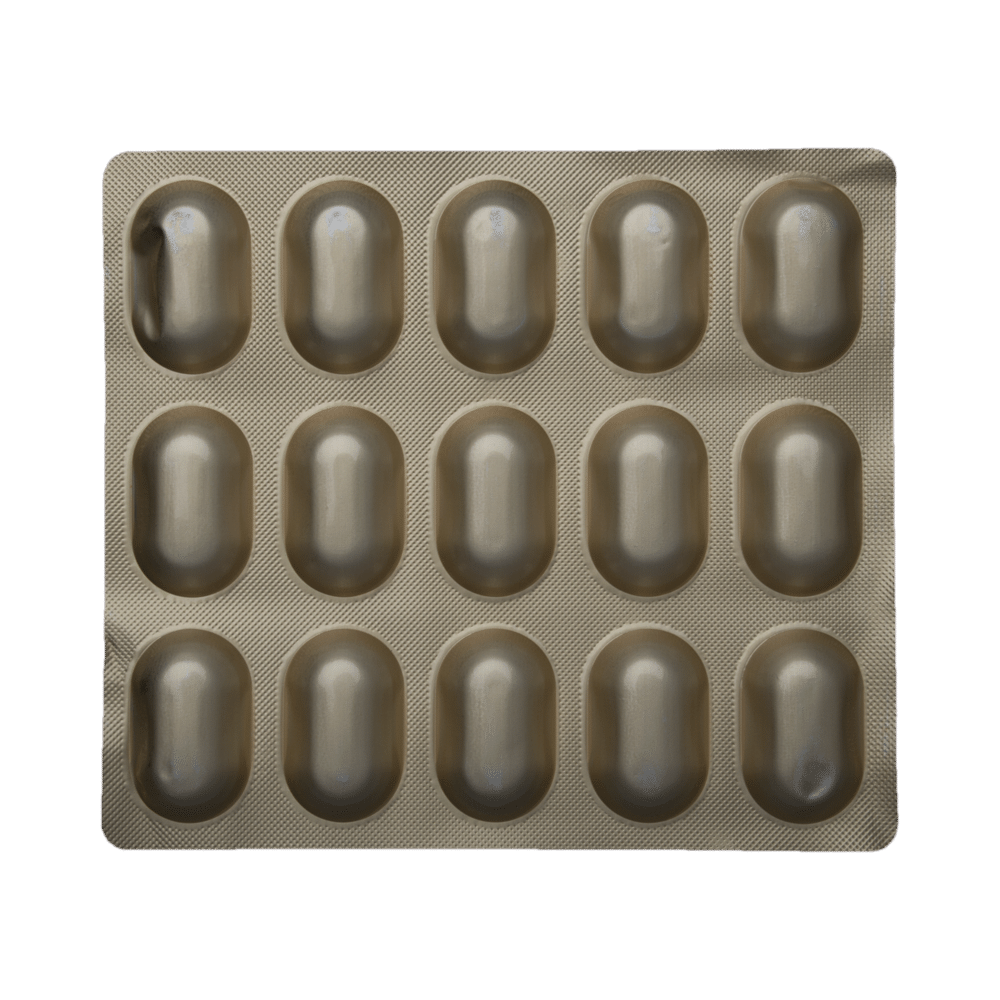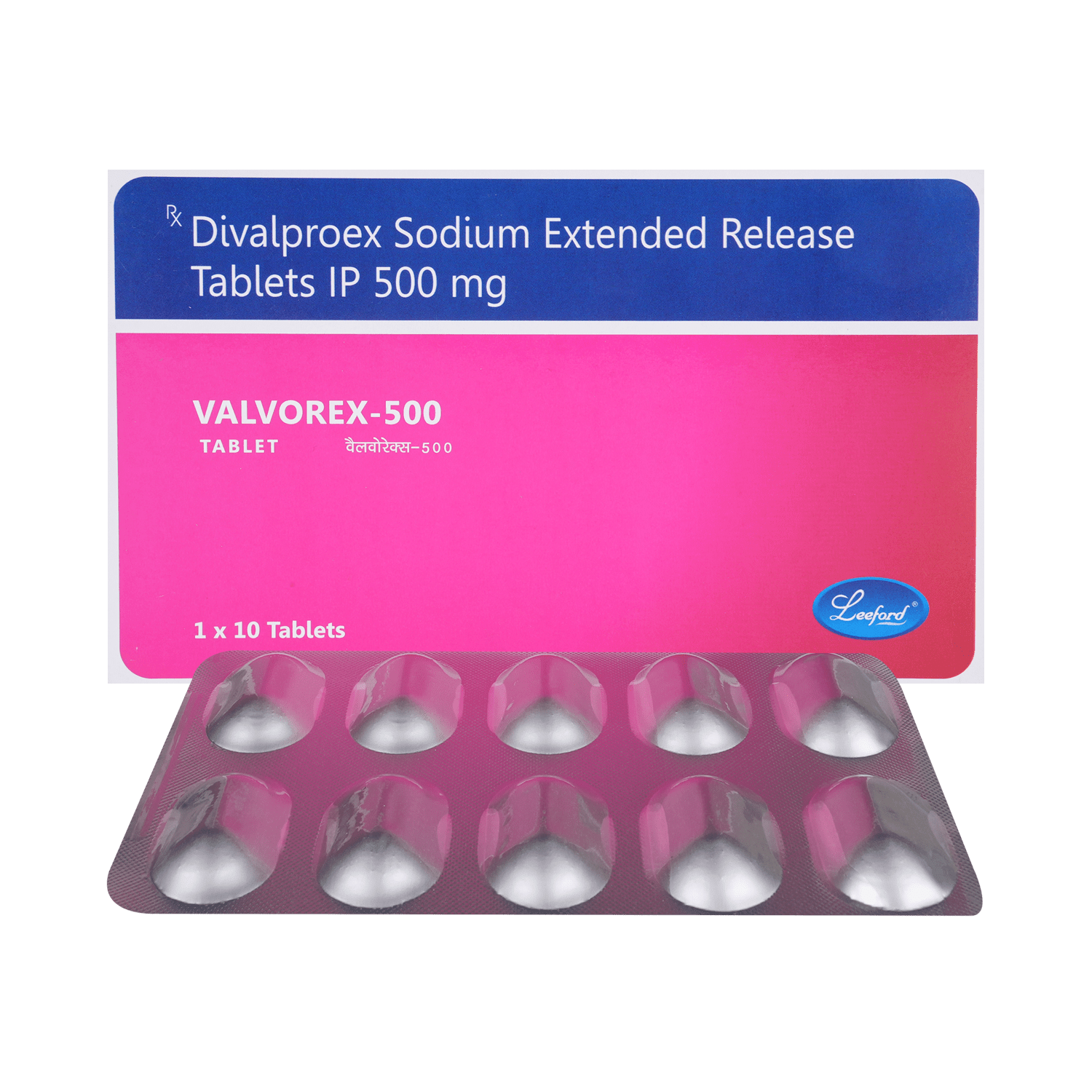
Dvcor OD 500mg Tablet
strip of 10.0 tablets.Prescription required
About this product:
| Salt Composition: | Divalproex (500mg) |
| Manufacturer: | Corpus Callosum |
| Storage: | Below 25 degree celcius |
Out of Stock
Have doubts about this medicine?
Have doubts about this medicine?
Dvcor OD 500mg Tablet is used to treat epilepsy, prevent migraines, and occasionally treat bipolar disorder. Dvcor OD 500mg Tablet may be used alone or in combination with other medicines. The dose and frequency will be decided by your doctor to control your symptoms effectively. It can be taken with or without food but should be taken at the same time each day. It usually takes a couple of weeks to work, and it is important to take it regularly and for as long as advised, even if you feel well. Missing doses may trigger seizures, and stopping suddenly can worsen your condition. Common side effects include headache, blurred vision, nausea, vomiting, dizziness, tiredness, unsteadiness, bruising, and decreased body temperature. Long-term use can cause osteoporosis and increase the risk of fractures. Rarely, it may lead to suicidal thoughts and behaviors. Inform your doctor if you have heart problems, kidney or liver disease, difficulty urinating, depression, or suicidal thoughts. Avoid alcohol as it can increase side effects and seizure risk. Frequent blood tests may be needed to ensure the correct dose.
Dvcor OD 500mg Tablet is an antiepileptic medication that controls seizures by decreasing the abnormal and excessive activity of the nerve cells in the brain.
Take this medicine in the dose and duration as advised by your doctor. Swallow it whole without chewing, crushing, or breaking it. It can be taken with or without food but is better taken at a fixed time.
- Take your medication regularly as directed by your doctor as missing doses can trigger seizures.
- It can be taken with or without food but better to take with food to avoid stomach upset.
- Do not change the brand of your medicine and ensure you have sufficient medicine.
- Practice yoga every day.
- Get enough sleep at nighttime.
- Limit screen time such as mobile/laptop.
- Take your medication on time.
- It may cause dizziness and sleepiness. Do not drive or do anything that requires mental focus until you know how it affects you.
- Monitor your weight during treatment as it can cause weight gain.
- Your doctor may get regular blood tests done to monitor how the medication is affecting your body. Inform your doctor if you notice yellowing of eyes or skin, dark urine, or stomach pain.
- Do not stop taking the medication suddenly without talking to your doctor as it may increase seizure frequency.

Alcohol
Dvcor OD 500mg Tablet may cause excessive drowsiness with alcohol.

Breastfeed
Dvcor OD 500mg Tablet is safe to use during breastfeeding. Human studies suggest that the drug does not pass into breastmilk in significant amounts and is not harmful to the baby.

Pregnancy
Dvcor OD 500mg Tablet is unsafe to use during pregnancy as there is definite evidence of risk to the developing baby. Consult your doctor.