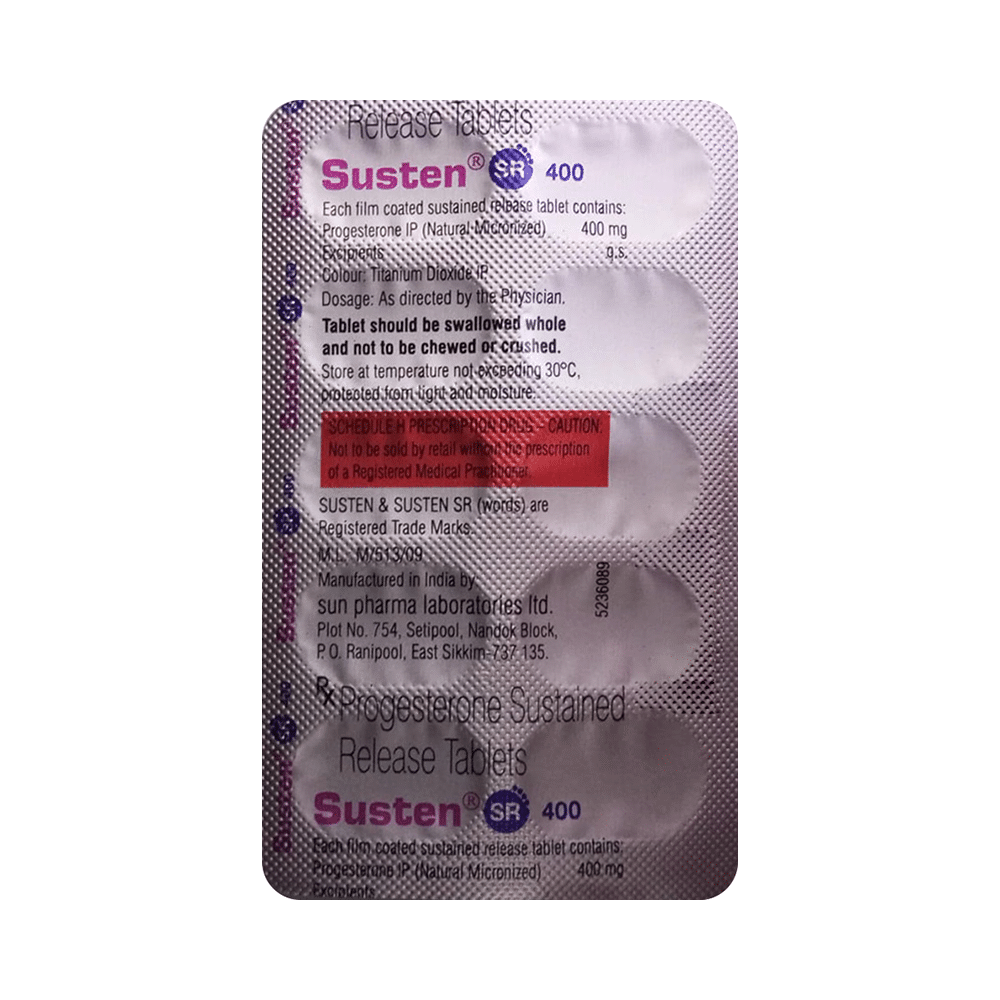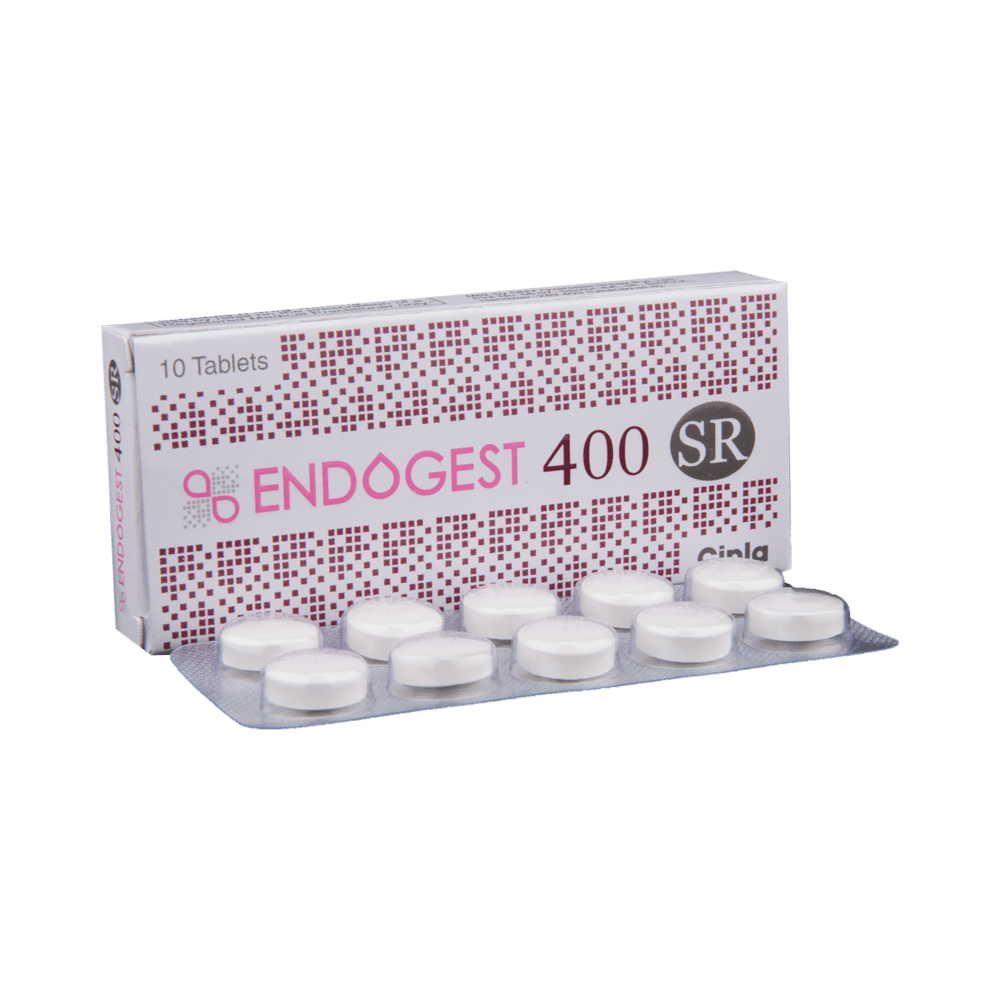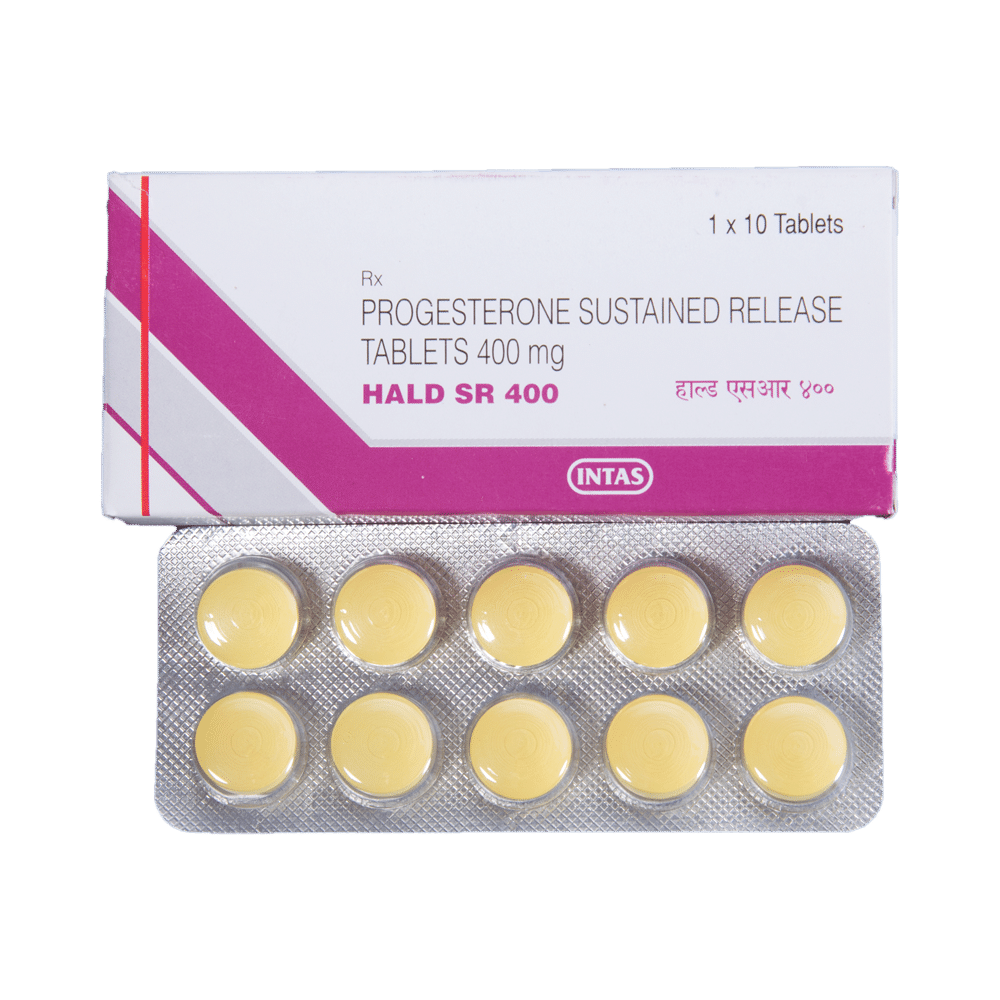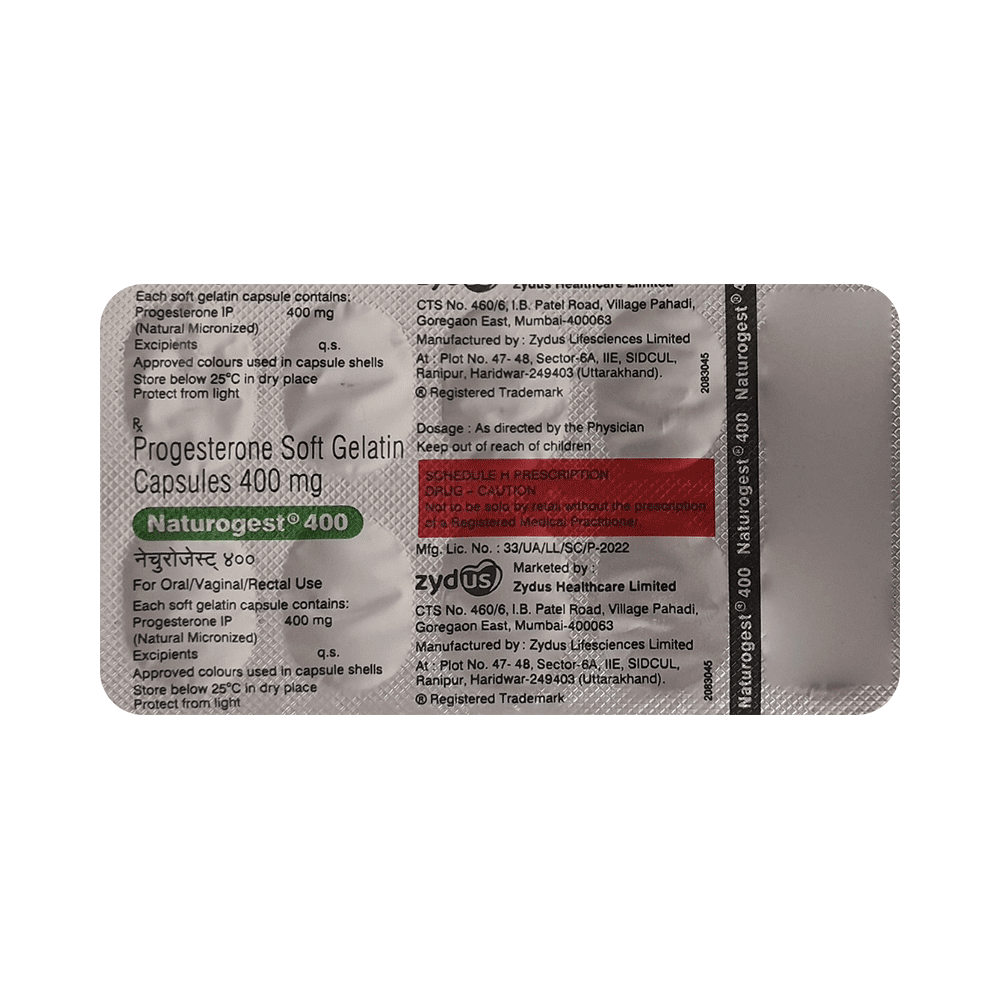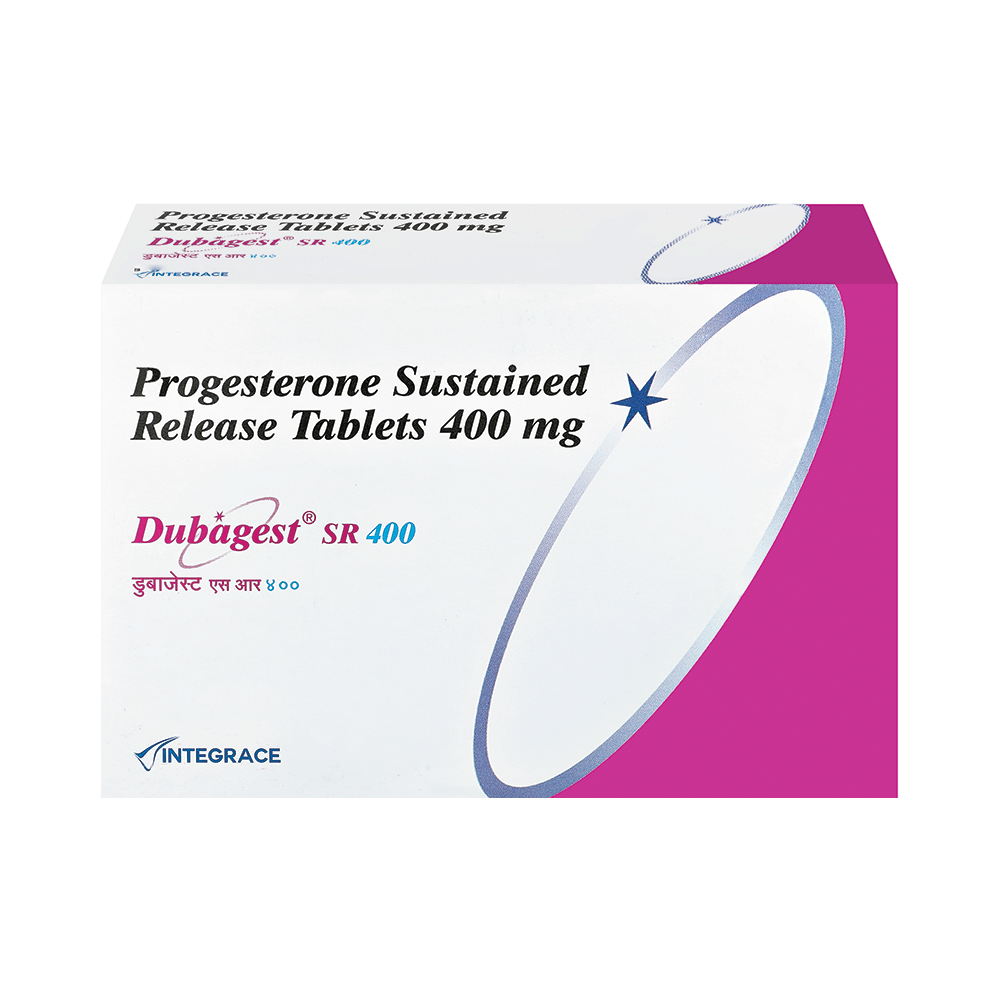
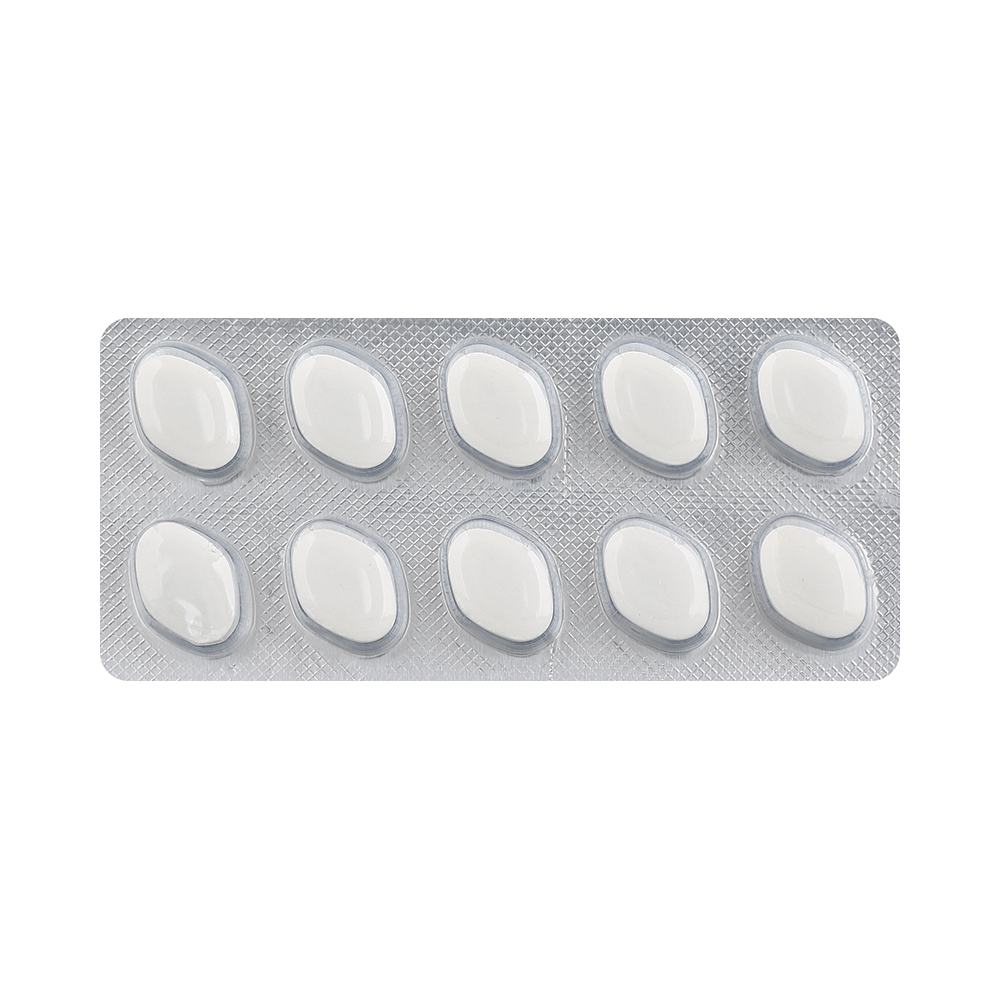
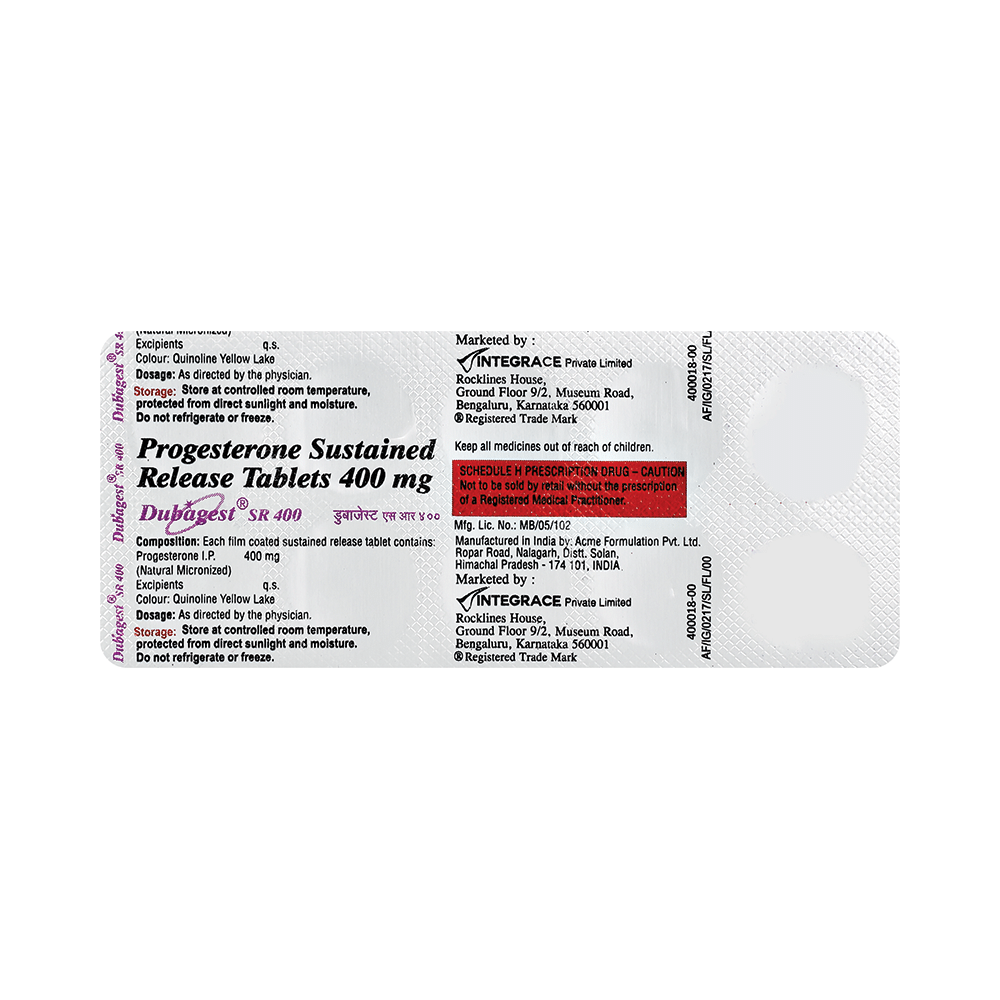
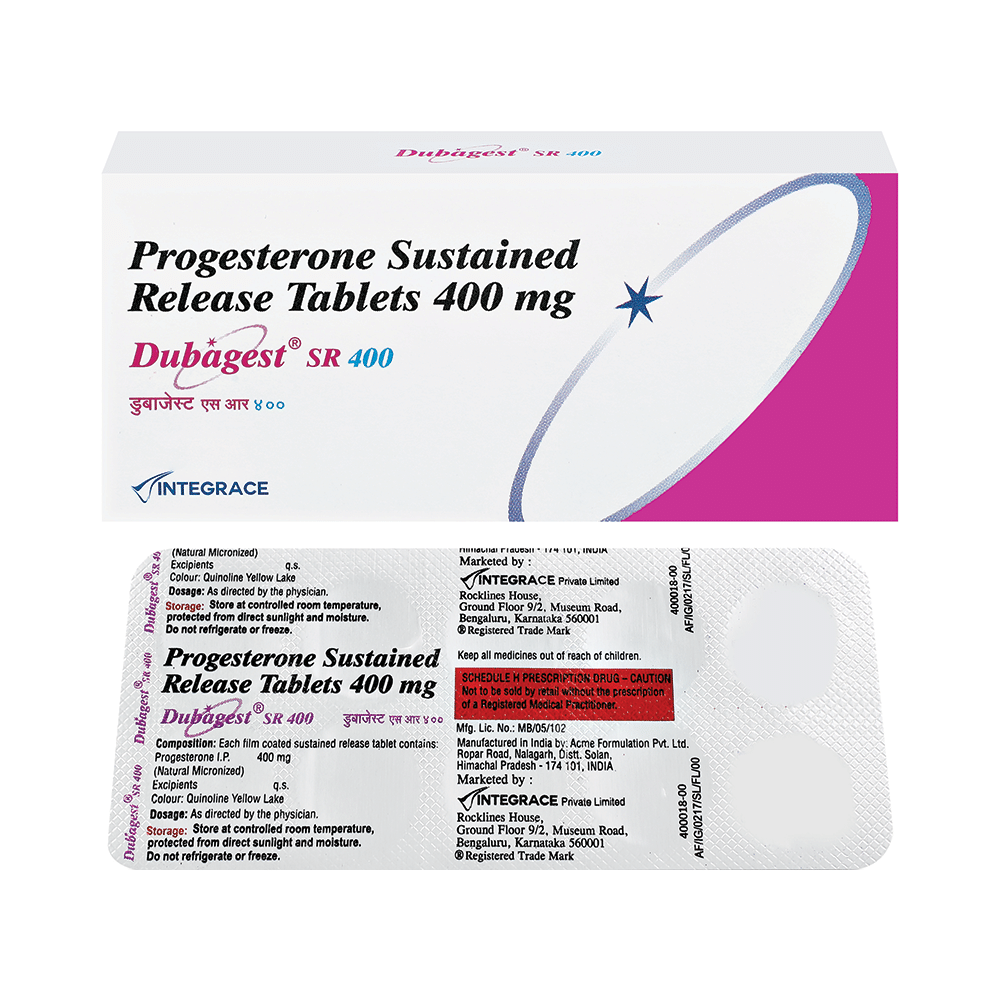
Dubagest SR 400 Tablet
strip of 10.0 tablet.Prescription required
About this product:
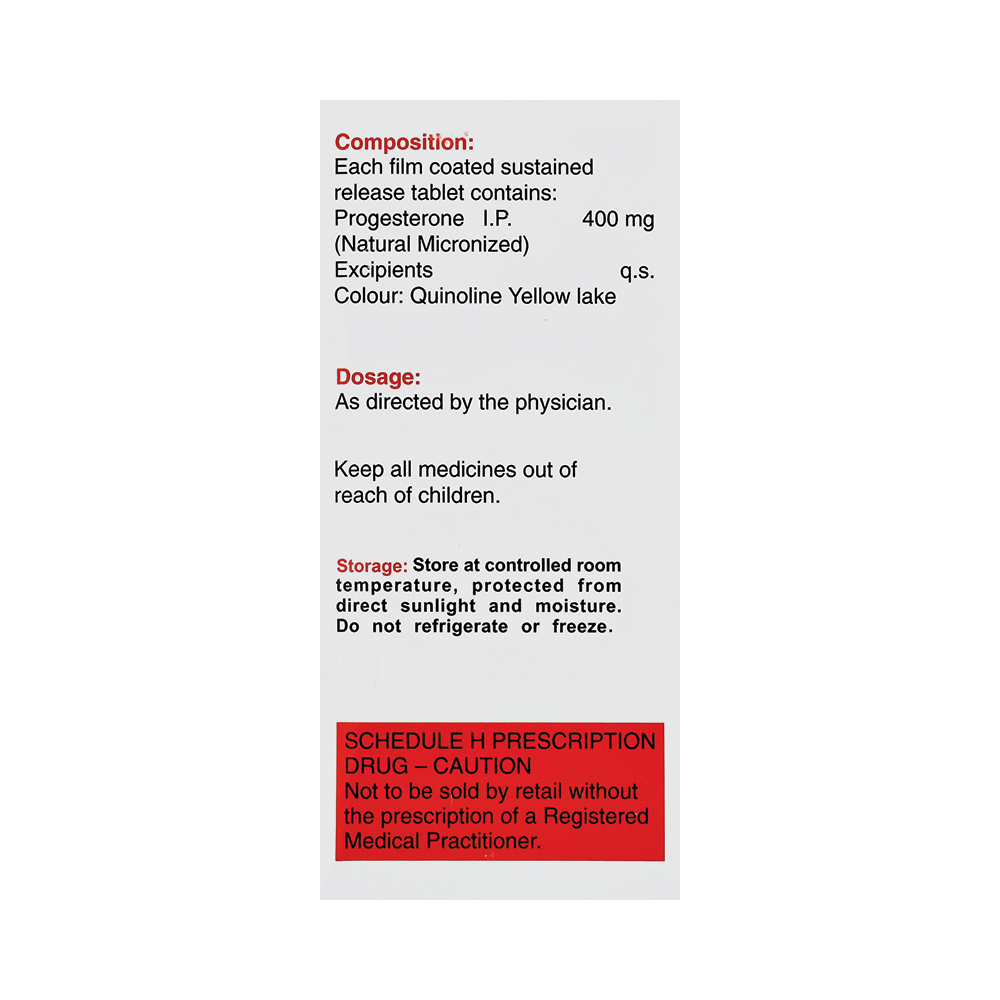
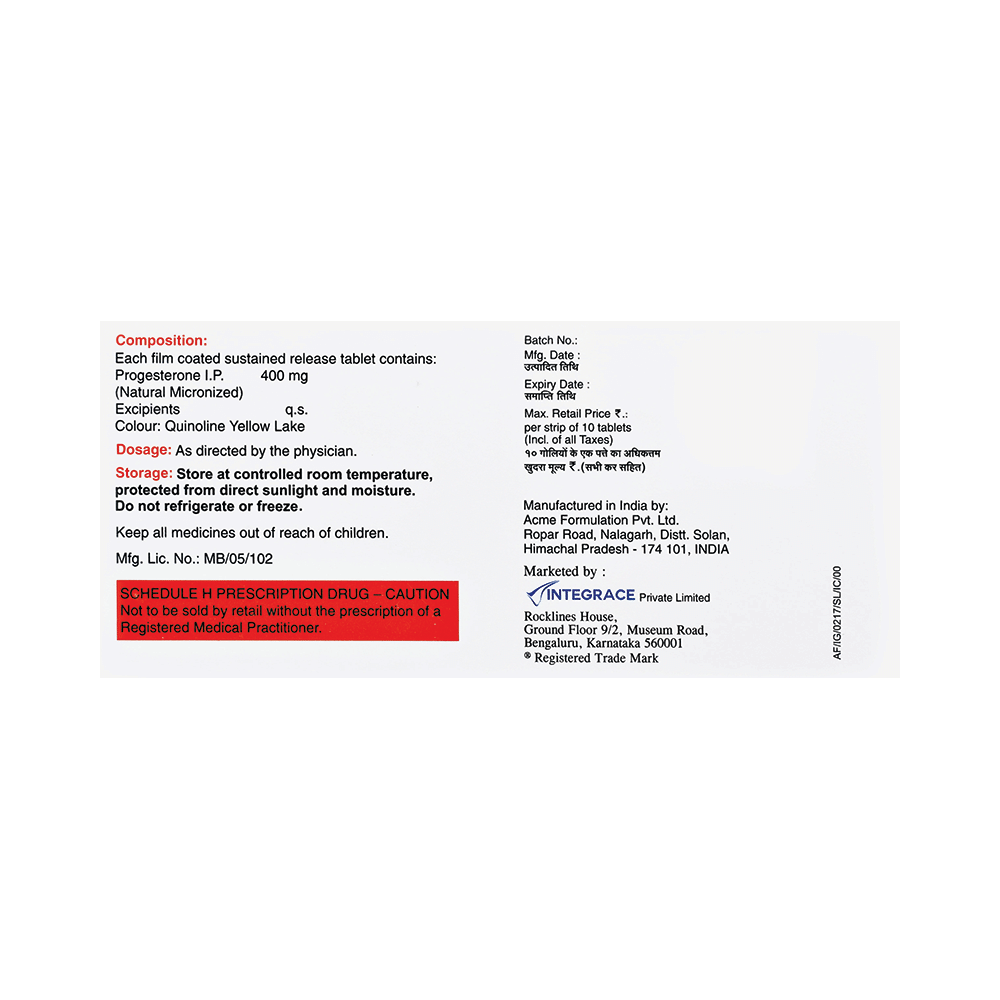
| Salt Composition: | Progesterone (Natural Micronized) (400mg) |
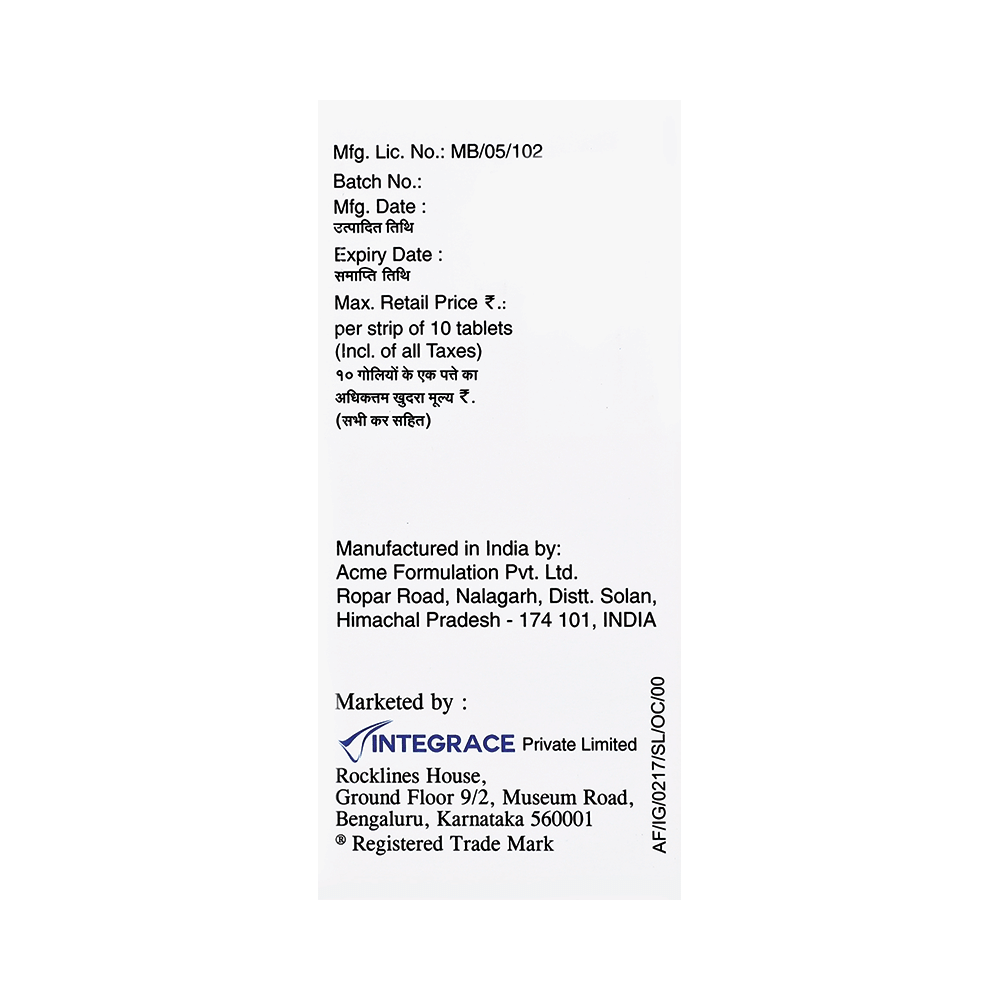
| Manufacturer: | Integrace Pvt Ltd |
| Storage: | Below 25 degree celcius |
Out of Stock
Have doubts about this medicine?
Have doubts about this medicine?
Dubagest SR 400 Tablet is a natural female sex hormone, progesterone, used to treat menstrual and pregnancy-related issues caused by hormonal imbalance. Dubagest SR 400 Tablet is a natural progesterone available as a micronized formulation which helps in better absorption of this medicine. It is used as a part of hormone replacement therapy generally in combination with an estrogen. It may also be used in the treatment of problems related to menstrual periods such as amenorrhea (absence of periods). It also helps in the maintenance of pregnancy in women who are at higher risk of miscarriage. It should be taken with food. It may cause sleepiness or drowsiness. If this happens to you, do not drive or use machinery.
Dubagest SR 400 Tablet is a progesterone (female hormone). It helps to establish and maintain pregnancy. It also prevents the increase in thickness of the endometrium (lining of the uterus) caused by estrogen.
What is Dubagest SR 400 Tablet?
Dubagest SR 400 Tablet is a micronized form of plant-derived progesterone. This formulation utilizes micronization to enhance its dissolution and absorption, improving its availability in the body and potentially reducing side effects compared to traditional progesterone.
What is Dubagest SR 400 Tablet used to treat?
Dubagest SR 400 Tablet is prescribed for several conditions. It is primarily used for women experiencing secondary amenorrhea (absence of menstruation for three months or more) who have had regular periods previously. The medication may be used during pregnancy, to prevent premature labor, and to treat bleeding disorders that can occur before menopause. It may also be a part of fertility treatment or prescribed as hormone replacement therapy following menopause. Additionally, it is beneficial in managing premenstrual syndrome (PMS) symptoms and alleviating painful menstrual bleeding like dysfunctional uterine bleeding.
Can I take Dubagest SR 400 Tablet daily?
Yes, Dubagest SR 400 Tablet can be taken daily. Typically, it's recommended to take one tablet in the evening or at bedtime. The duration of prescribed use varies between 10-12 days per cycle and up to 25 days a month; your doctor will determine the exact schedule based on individual health requirements.
Does Dubagest SR 400 Tablet cause weight gain?
Yes, there is a potential for weight gain when taking Dubagest SR 400 Tablet. This may be due to water retention and is generally not considered a serious concern. However, it's advisable to inform your doctor if you are experiencing significant or unusual weight fluctuations.
Is Dubagest SR 400 Tablet safe?
Dubagest SR 400 Tablet is considered safer compared to conventional synthetic progesterone. Its micronized form allows for easier body absorption, potentially reducing side effects like fluid retention, low HDL cholesterol levels, headaches, and mood disturbances.
How does progesterone benefit fertility and pregnancy?
Progesterone plays a vital role in both fertility and pregnancy. It is naturally produced by the ovaries and prepares the uterus for potential implantation of a fertilized egg. Dubagest SR 400 Tablet (a micronized form of natural progesterone) helps the body prepare the uterus by reducing inflammation, and to prevent miscarriage. It is also used as hormone replacement therapy after menopause.
Take this medicine in the dose and duration as advised by your doctor. Swallow it as a whole. Do not chew, crush or break it. Dubagest SR 400 Tablet is to be taken with food.
- Dubagest SR 400 Tablet is a natural progesterone available as a micronized formulation which helps in better absorption of this medicine.
- It is used as a part of hormone replacement therapy generally in combination with an estrogen.
- It may also be used in the treatment of problems related to menstrual periods such as amenorrhea (absence of periods).
- It also helps in the maintenance of pregnancy in women who are at higher risk of miscarriage.
- It should be taken with food.

Alcohol
It is not known whether it is safe to consume alcohol with Dubagest SR 400 Tablet. Please consult your doctor.

Breastfeed
Dubagest SR 400 Tablet is safe to use during breastfeeding. Human studies suggest that the drug does not pass into the breastmilk in a significant amount and is not harmful to the baby.

Pregnancy
Dubagest SR 400 Tablet is safe to use during pregnancy. Most studies have shown low or no risk to the developing baby.