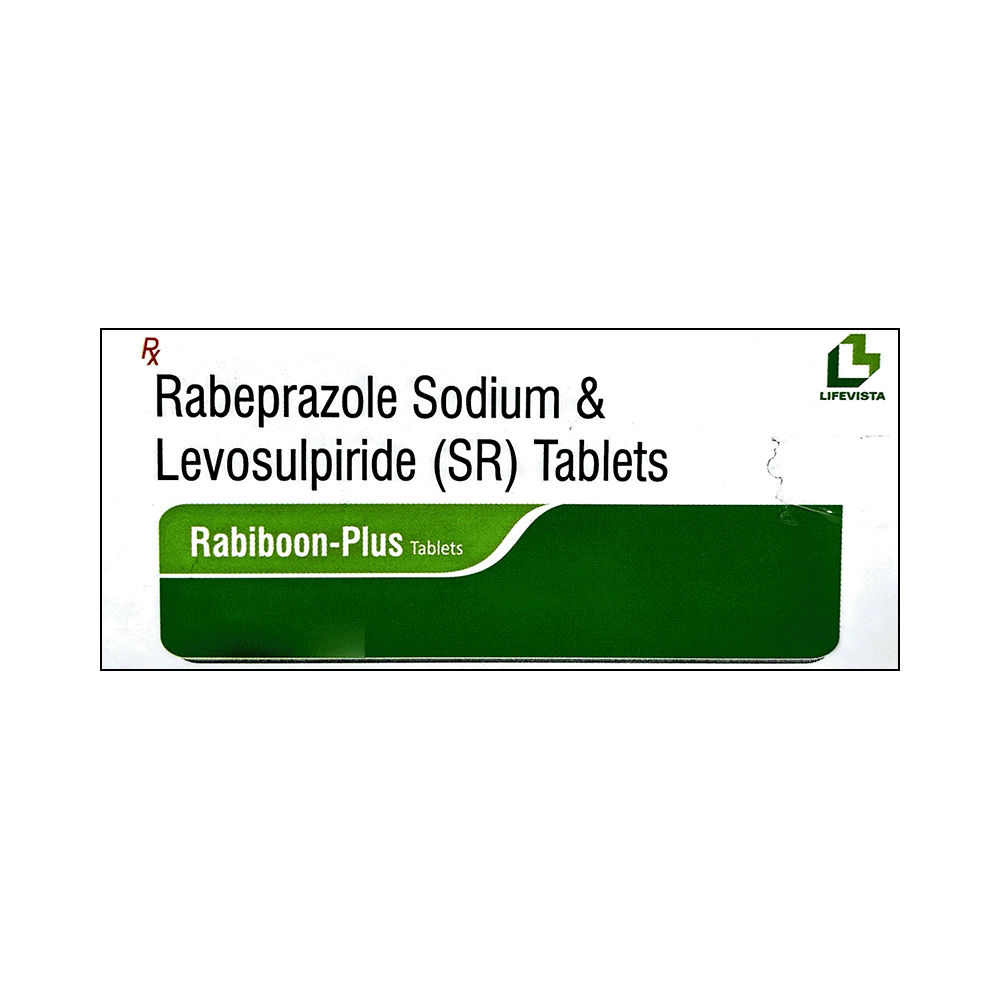
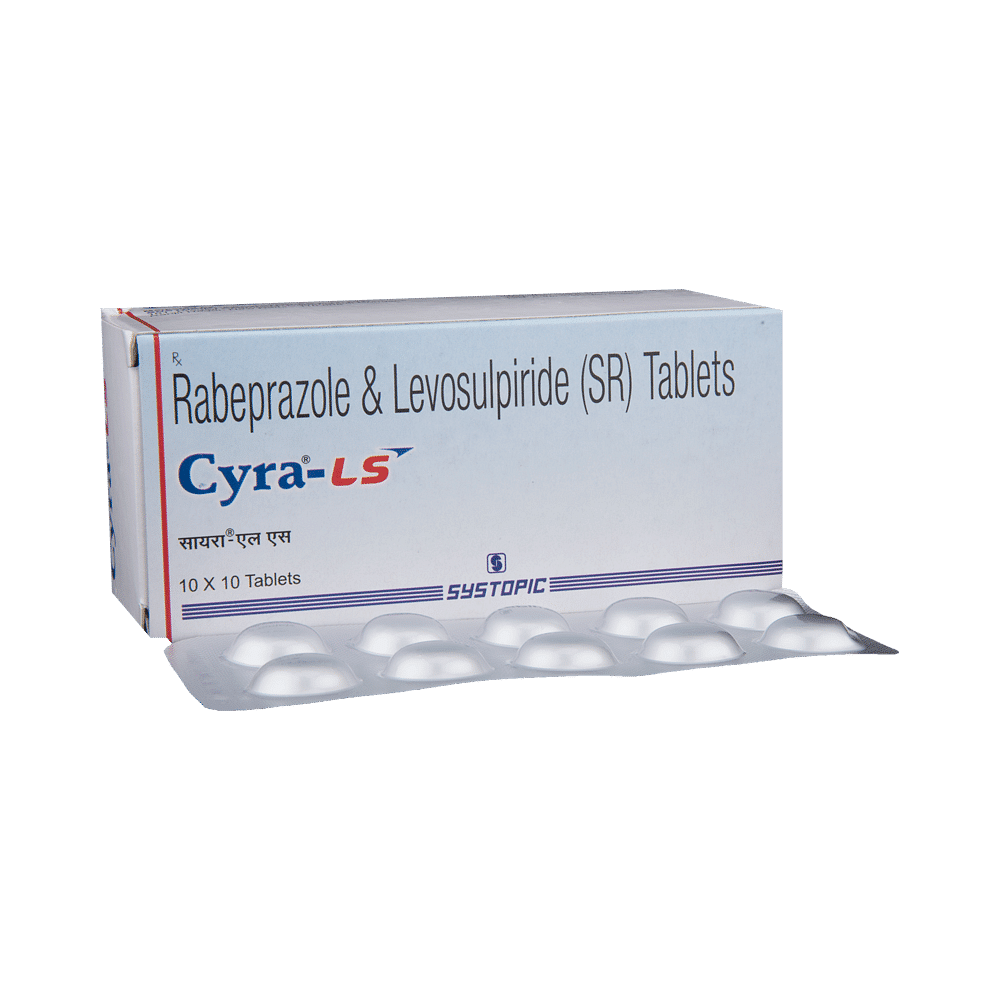
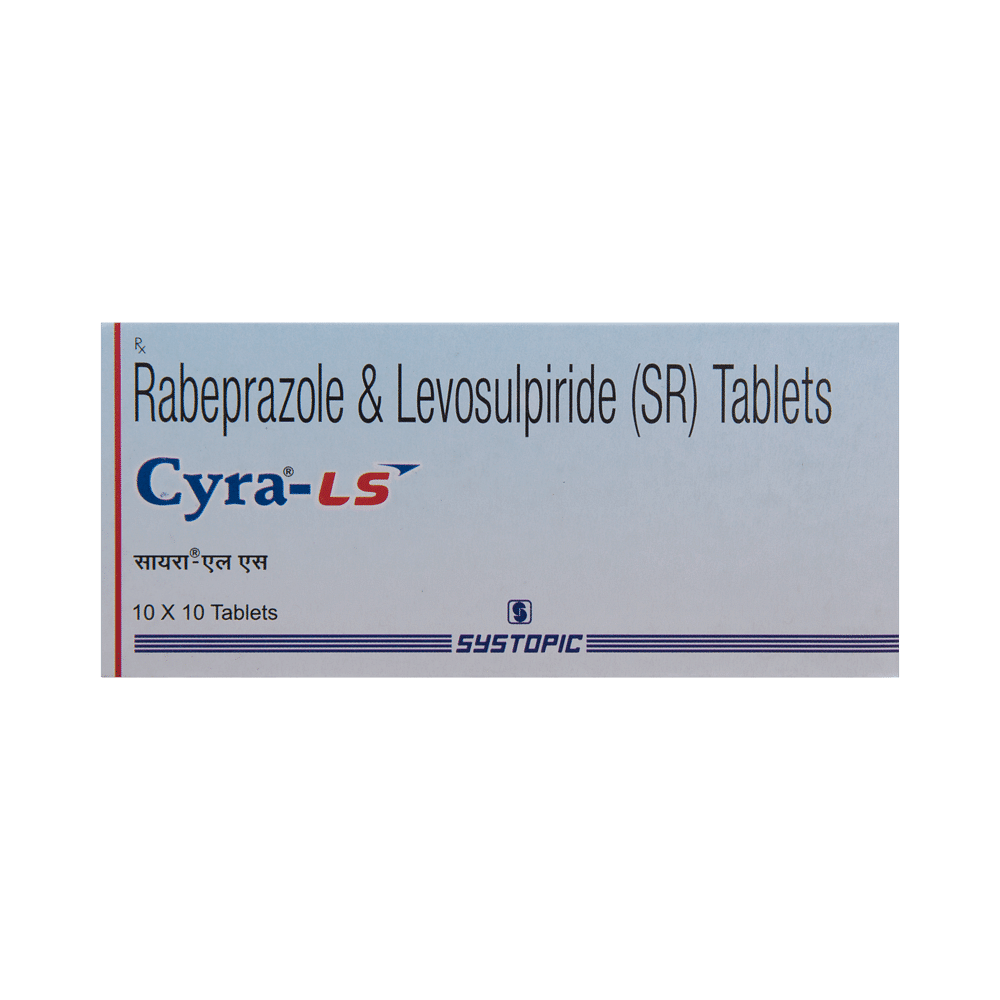
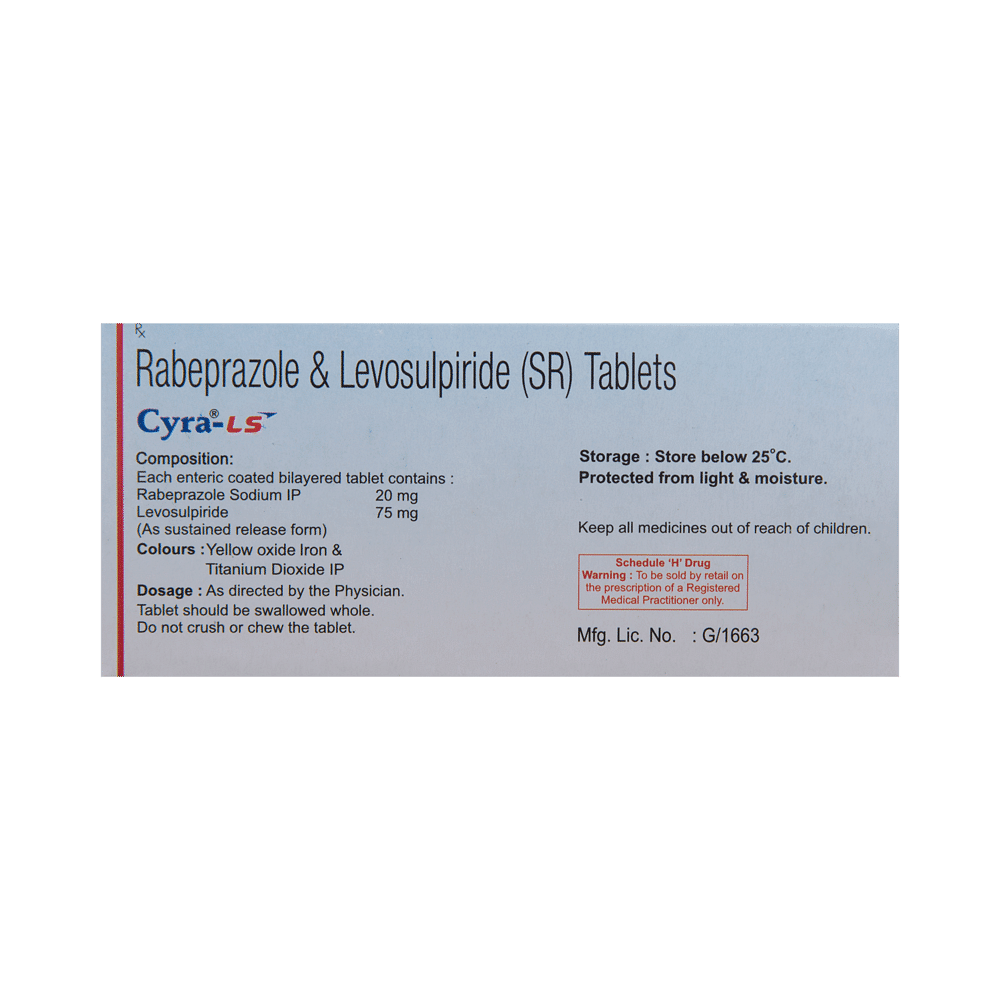
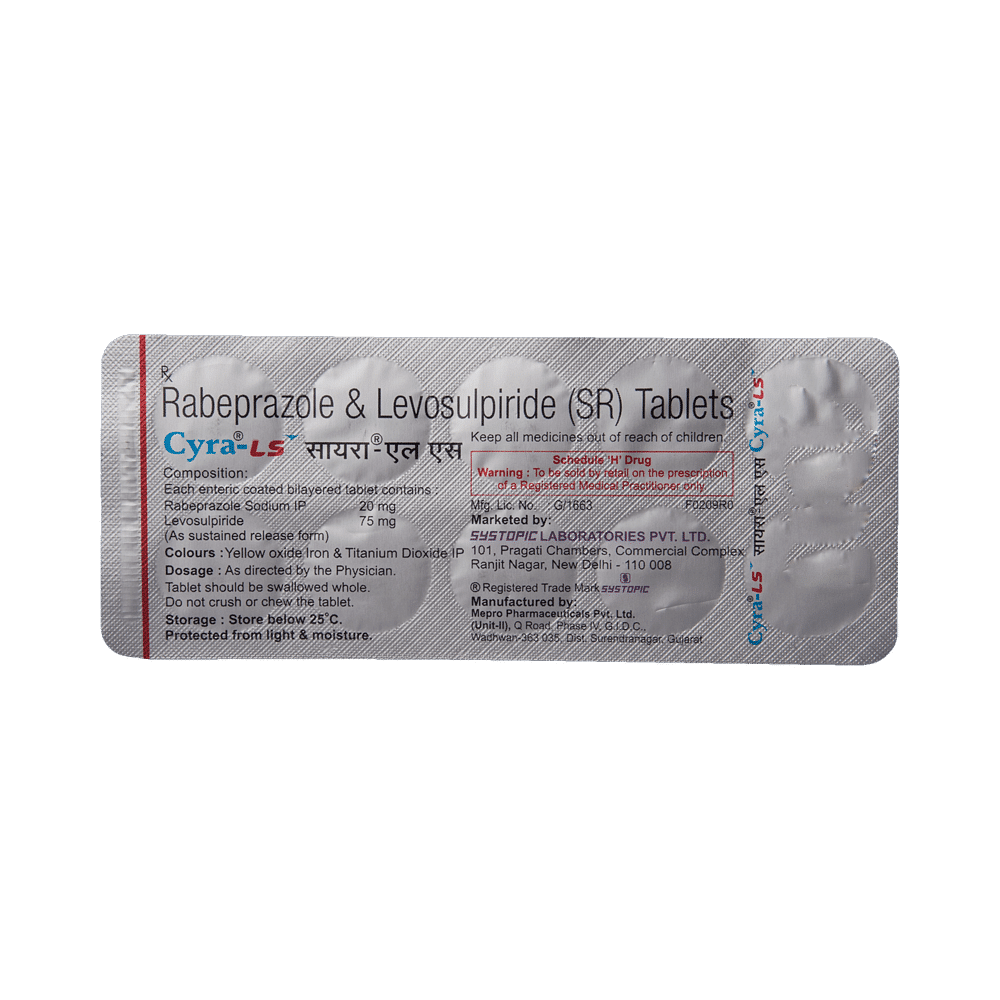
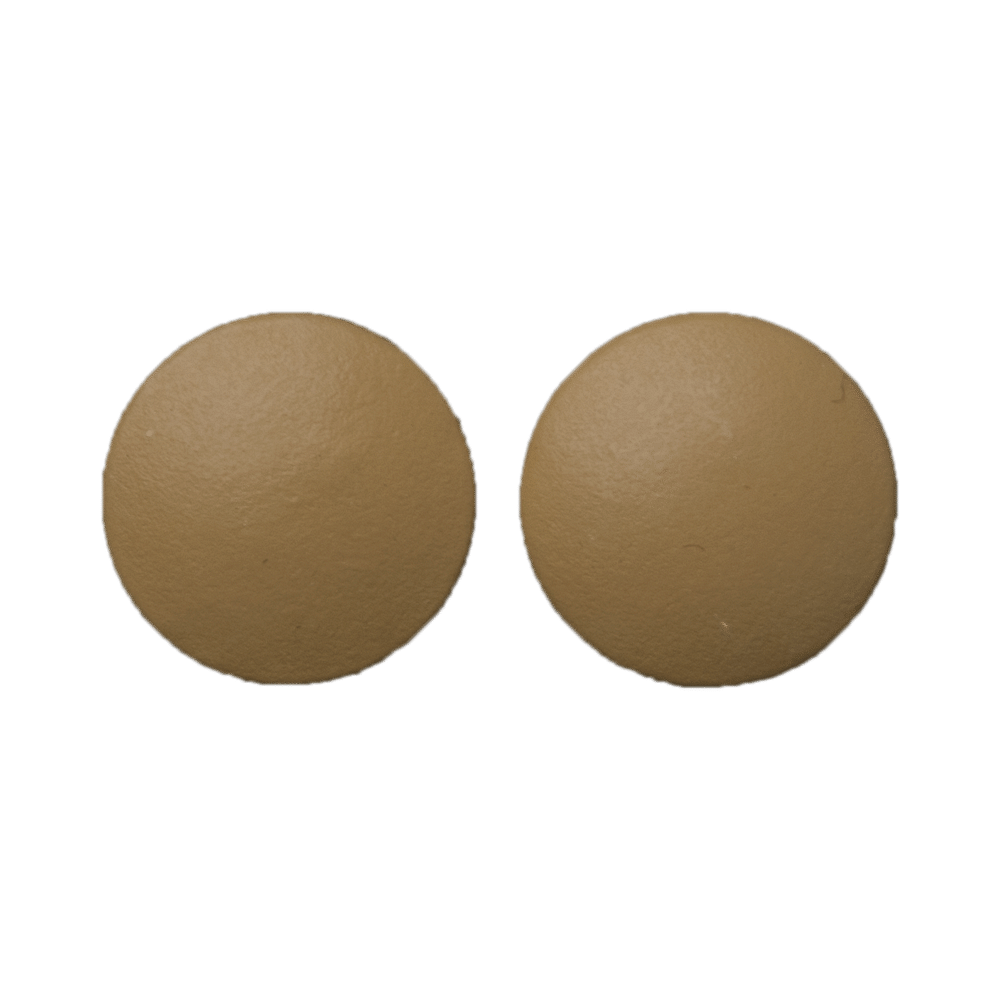
Cyra-LS Tablet
1 Strip of 10 Tablet.Prescription required
About this product:
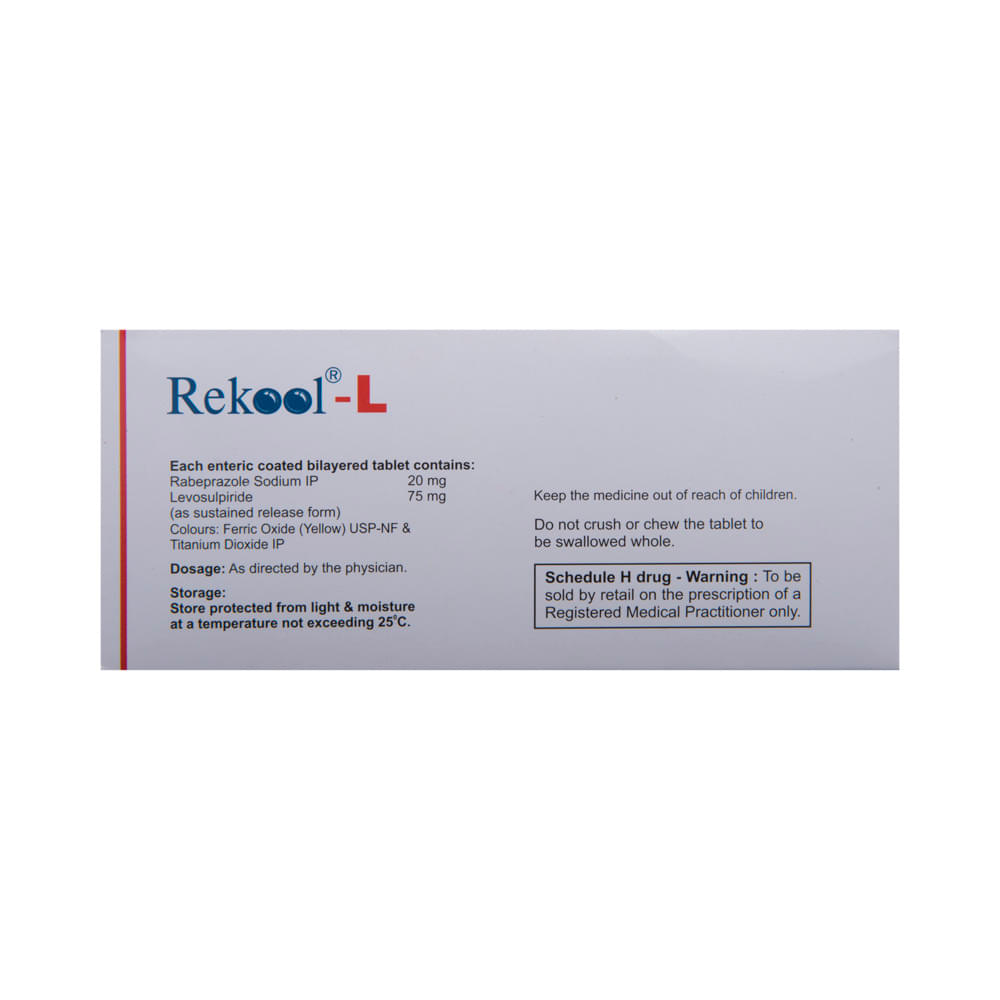
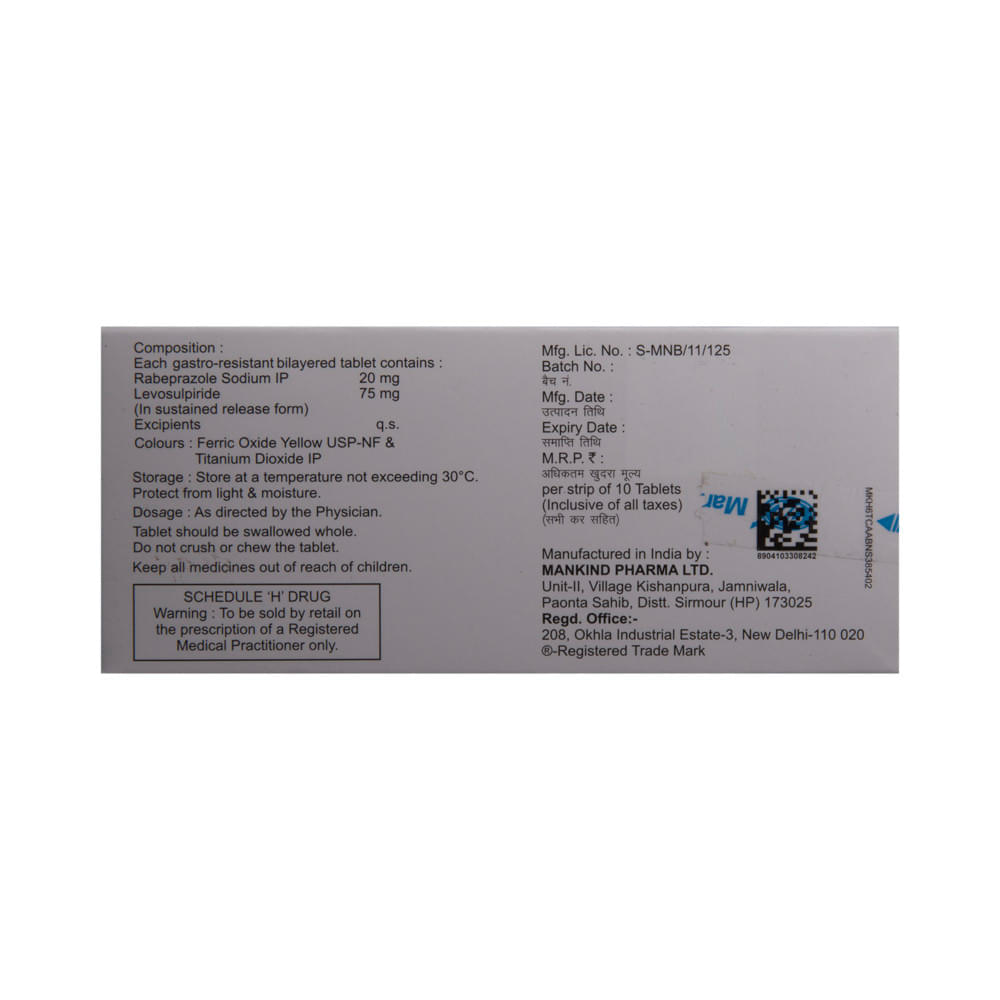
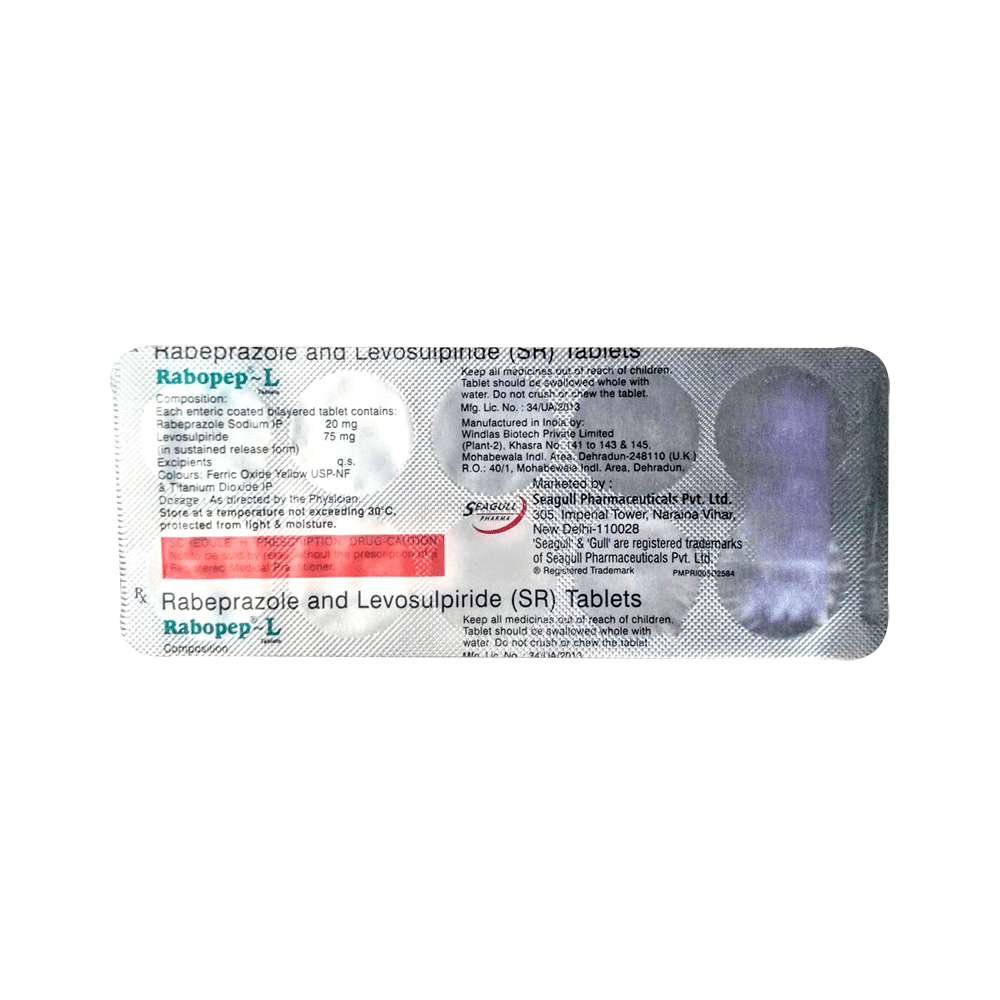
| Salt Composition: | Rabeprazole (20mg) + Levosulpiride (75mg) |
| Manufacturer: | Systopic Laboratories Pvt Ltd |
| Storage: | Below 25 degree celcius |
In Stock
Have doubts about this medicine?
Have doubts about this medicine?
Cyra-LS Tablet SR is used to treat gastroesophageal reflux disease (acid reflux), intestinal ulcers, and irritable bowel syndrome by reducing excess acid production in the stomach. Cyra-LS Tablet SR is taken with or without food in a dose and duration as advised by the doctor. The dose you are given will depend on your condition and how you respond to the medicine. You should keep taking this medicine for as long as your doctor recommends. If you stop treatment too early your symptoms may come back and your condition may worsen. Let your healthcare team know about all other medications you are taking as some may affect, or be affected by this medicine. The most common side effects are nausea, stomach pain, diarrhea, flatulence, constipation, headache, weakness, and flu-like symptoms. Most of these are temporary and usually resolve with time. Contact your doctor straight away if you are at all concerned about any of these side effects. It may also cause dizziness and sleepiness, so do not drive or do anything that requires mental focus until you know how this medicine affects you. Avoid drinking alcohol while taking this medicine as it can worsen your sleepiness. Lifestyle modifications like having a fiber-rich diet, avoiding foods that trigger your symptoms, increasing fluid intake, and regular exercise can help you to get better results. Before taking it, you should tell your doctor if you have any kidney or liver diseases. You should also tell your doctor if you are pregnant, planning pregnancy, or breastfeeding.
Cyra-LS Tablet SR is a combination of two medicines: Levosulpiride and Rabeprazole.
What is the recommended dosing schedule for Cyra-LS Tablet SR?
Take Cyra-LS Tablet SR exactly as directed by your doctor. It is best to take one capsule daily on an empty stomach.
Who should avoid using Cyra-LS Tablet SR?
Use of Cyra-LS Tablet SR should be avoided in patients with known allergy to any of the components or excipients of this medicine.
Can Cyra-LS Tablet SR cause dizziness?
Yes, the use of Cyra-LS Tablet SR can cause dizziness (feeling faint, weak, unsteady or lightheaded) in some patients. If you feel dizzy or lightheaded, it is better to rest for sometime and resume once you feel better. Consult your doctor if the dizziness persists or worsens.
Is there an increased risk of fractures associated with the use of Cyra-LS Tablet SR?
Several studies in adults suggest that treatment with Cyra-LS Tablet SR may be associated with an increased risk of osteoporosis-related fractures of the hip, wrist or spine. The risk of fracture was increased in patients who received high dose. High dose can mean multiple daily doses, and long-term therapy (a year or longer). Consult your doctor if you have any concerns about your risk of fracture.
Can I drive or operate heavy machinery while taking Cyra-LS Tablet SR?
No, taking Cyra-LS Tablet SR may make you feel sleepy, dizzy or could affect your eyesight. So do not drive or use machines until you know how this medicine affects you. Consult your doctor if you have any concerns about your ability to operate heavy machinery.
How should I store and dispose of Cyra-LS Tablet SR?
Keep this medicine in the packet or the container it came in, tightly closed. Store it according to the instructions mentioned on the pack or label. Dispose of the unused medicine. Make sure it is not consumed by pets, children and other people.
Take this medicine in the dose and duration as advised by your doctor. Swallow it as a whole. Do not chew, crush, or break it. Cyra-LS Tablet SR is to be taken on an empty stomach.
- It is a well-tolerated medicine and provides relief for a long time.
- Take it one hour before the meal, preferably in the morning.
- Inform your doctor if you get watery diarrhea, fever, or stomach pain that does not go away.
- Do not consume alcohol while taking Cyra-LS Tablet SR as it can increase the risk of stomach damage.
- Long-term use may cause weak or broken bones. Take adequate intake of dietary calcium and vitamin D or their supplements. Do not take Cyra-LS Tablet SR for longer than prescribed.

Alcohol
It is unsafe to consume alcohol with Cyra-LS Tablet SR.

Breastfeed
Information regarding the use of Cyra-LS Tablet SR during breastfeeding is not available. Please consult your doctor.

Pregnancy
Cyra-LS Tablet SR may be unsafe to use during pregnancy. Although there are limited studies in humans, animal studies have shown harmful effects on the developing baby. Your doctor will weigh the benefits and any potential risks before prescribing it to you. Please consult your doctor.