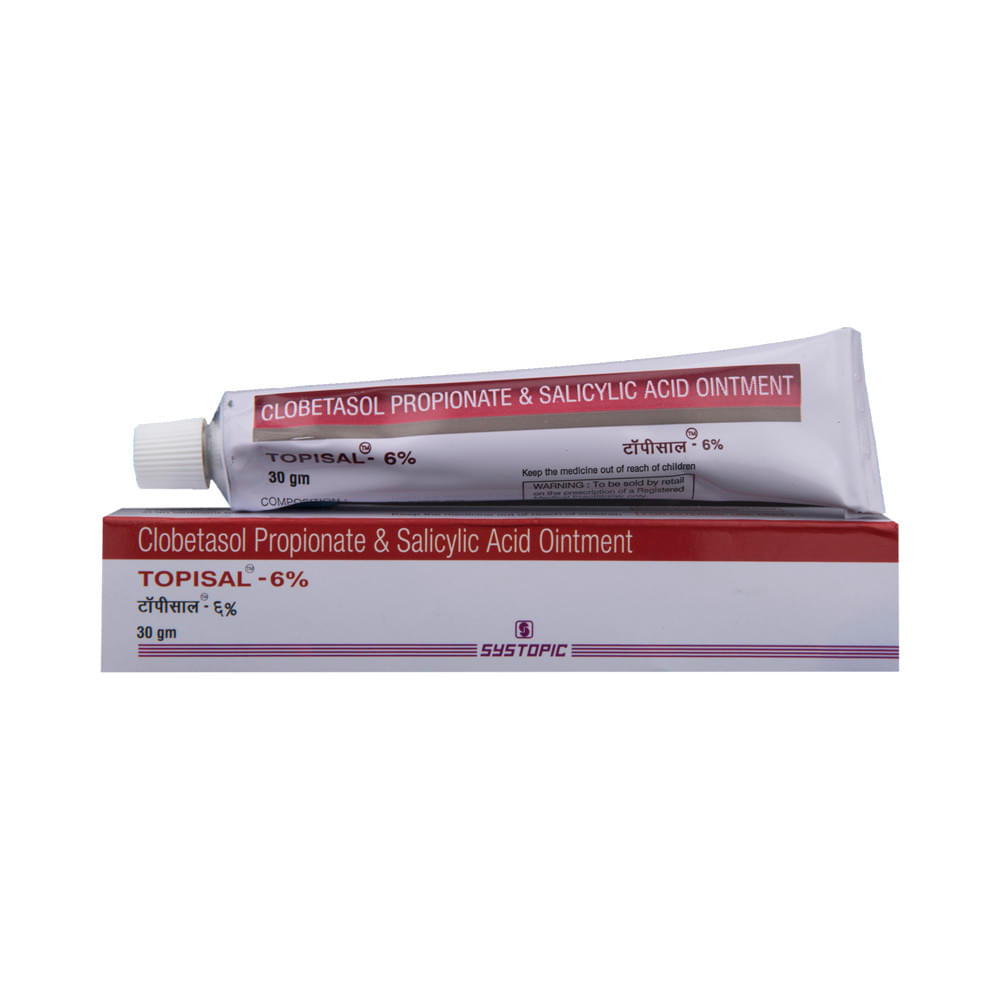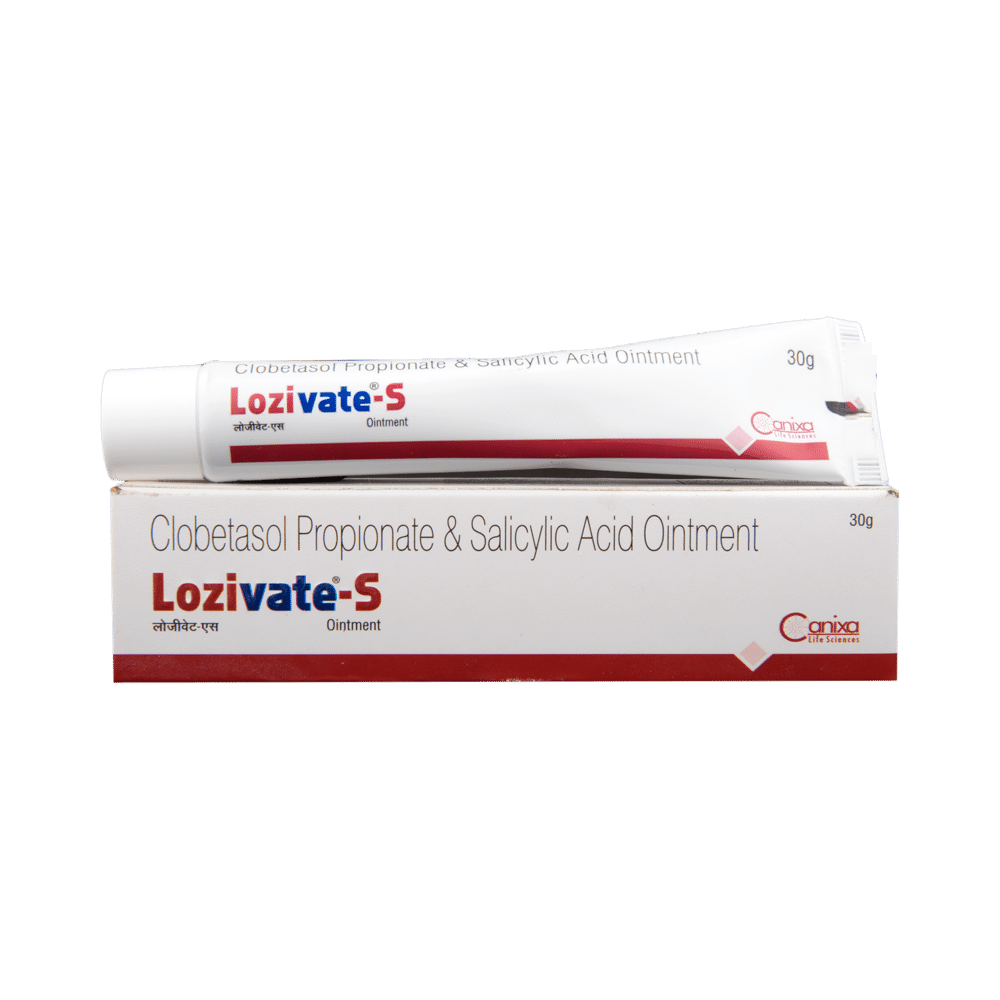
Clozip S Ointment
tube of 30.0 gm Ointment.Prescription required
About this product:
| Salt Composition: | Clobetasol (0.05% w/w) + Salicylic Acid (6% w/w) |
| Manufacturer: | Tanishq Lifecare |
| Storage: | Below 25 degree celcius |
Out of Stock
Have doubts about this medicine?
Have doubts about this medicine?
Clozip S Ointment is a combination of medicines used to treat eczema and psoriasis, providing relief from redness, itching, and swelling, and removing dead skin cells and softening the skin. Clozip S Ointment should be used in the dose and duration as advised by your doctor. Wash your hands before using this medicine. It is advised to check the label for directions before use. It is for external use only. Do not use this medicine more than the recommended dose. Inform your doctor if you have known allergies to this medicine. The common side effects of this medicine include peeling of the skin, thinning of the skin, burning, itching, irritation, and redness at the application site. If these side effects or any other symptoms which you think are because of this medicine persist for a longer duration, please consult your doctor. Inform your doctor if you are pregnant or are suffering from any other disease. This medicine is safe to use in breastfeeding mothers.
Clozip S Ointment is a combination of two medicines: Clobetasol and Salicylic Acid. Clobetasol is a steroid which blocks the production of certain chemical messengers (prostaglandins) that make the skin red, swollen, and itchy. Salicylic Acid is a keratolytic medicine which breaks down keratin clumps, removes dead skin cells, and softens the skin. It also enhances the absorption of Clobetasol into the skin.
How should Clozip S Ointment be used?
Follow the instructions provided by your healthcare professional or on the product packaging. Apply a thin layer of the ointment to the affected skin areas, ensuring adequate coverage. The standard dosage for Clozip S Ointment is typically twice or thrice daily, depending on the specific instructions from your doctor.
Can I discontinue using Clozip S Ointment once my symptoms subside?
No, do not stop using Clozip S Ointment before completing the prescribed treatment course. It's crucial to finish all doses of medication as instructed by your healthcare professional. Symptoms may improve earlier than expected during treatment, but it doesn't necessarily signify complete disease resolution.
What precautions should be taken while using Clozip S Ointment?
Clozip S Ointment should not be applied to the face. Avoid using this medication for extended periods exceeding prescribed intervals. Do not cover the treated area with a bandage or dressing, as this can enhance absorption and increase the risk of adverse effects. This medicine should only be utilized by the intended patient and never shared with others, even in cases where they exhibit similar symptoms.
Will using more than prescribed dosages of Clozip S Ointment make it more effective?
No, increasing your dosage will not improve the effectiveness of Clozip S Ointment. Exceeding recommended dosages can lead to excess medication absorption within the body, potentially causing skin thinning or weakening. If you experience an increase in symptom severity, please consult your doctor for a reevaluation of your condition.
How should Clozip S Ointment be stored and disposed of?
Store this medicine in its original container or packaging, ensuring it's tightly closed. Follow the instructions on the product label for proper storage. Dispose of unused medication responsibly and ensure it's inaccessible to pets, children, and other individuals.
This medicine is for external use only. Use it in the dose and duration as advised by your doctor. Check the label for directions before use. Clean and dry the affected area and gently massage the ointment.
- Clozip S Ointment is used to treat the redness, swelling, itching, and discomfort of various skin conditions like eczema and psoriasis.
- Apply to the affected areas as a thin film two or three times daily or as advised by your doctor.
- Don't cover the area being treated with airtight dressings such as bandages unless directed by a doctor as this may increase the risk of side effects.
- After you have applied Clozip S Ointment, remember to wash your hands (unless your hands are the treated area).
- Use a mild moisturizer regularly to overcome the skin dryness during the course of treatment.
- Consult your doctor if your skin condition has not improved after 2 weeks of treatment.
- Peeling of the skin
- Thinning of the skin
- Burning
- Itching
- Irritation
- Redness at the application site

Breastfeed
Clozip S Ointment is probably safe to use during breastfeeding. Limited human data suggests that the drug does not represent any significant risk to the baby.

Pregnancy
Clozip S Ointment may be unsafe to use during pregnancy. Although there are limited studies in humans, animal studies have shown harmful effects on the developing baby. Your doctor will weigh the benefits and any potential risks before prescribing it to you. Please consult your doctor.