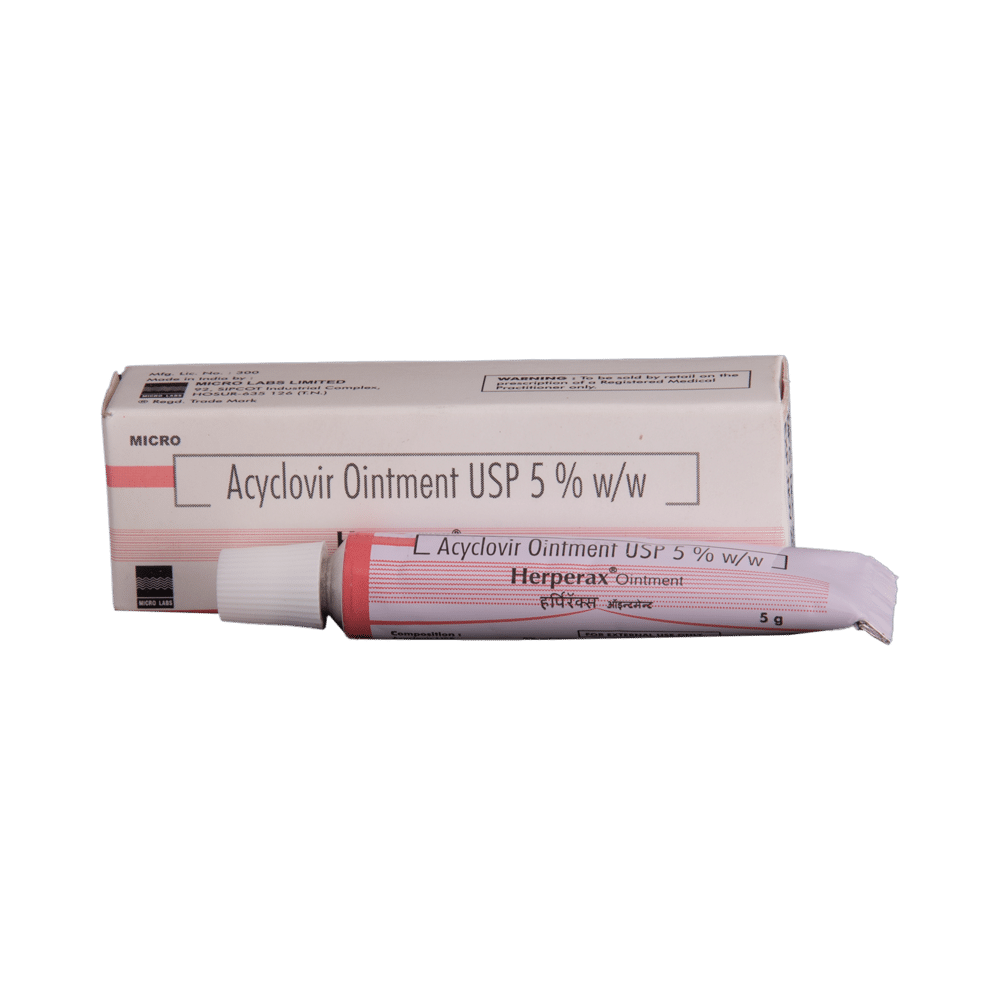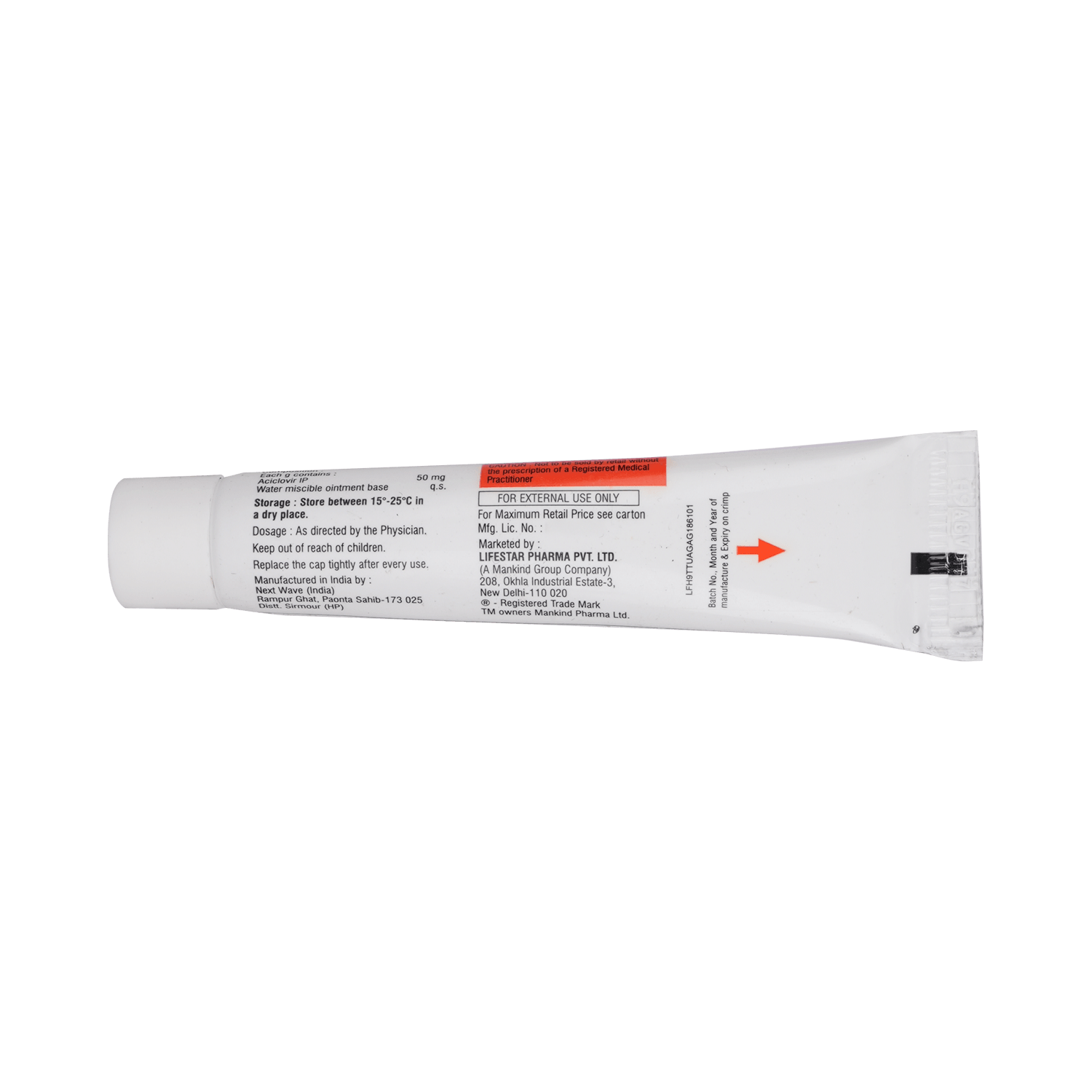
Cloviderm Ointment
tube of 5.0 gm Ointment.Prescription required
About this product:
| Salt Composition: | Acyclovir (5% w/w) |
| Manufacturer: | Novartis India Ltd |
| Storage: | Below 25 degree celcius |
Out of Stock
Have doubts about this medicine?
Have doubts about this medicine?
Cloviderm Ointment is an antiviral medicine that helps treat skin infections caused by Herpes simplex virus such as herpes labialis. Cloviderm Ointment is an antiviral medication which treats skin infections caused by Herpes simplex virus. It works by preventing the multiplication of virus in the skin cells. This stops the virus from producing new viruses and clears up your skin infection. It is for external use only and should be used in the dose and duration as advised by your doctor. The affected area should be clean and dry before application of the ointment. You must wash your hands thoroughly before and after applying this medicine. Do not touch the sores unnecessarily with your hands or towel to avoid spreading the infection. Some common side effects include burning, irritation, itching and redness of the skin at the site of application. Please consult your doctor if these side effects persist for a longer duration. Do not use it in the eyes, mouth, nose or vagina as it may cause irritation. If accidental exposure occurs, rinse immediately with plenty of water.
Cloviderm Ointment is an antiviral medication which treats skin infections caused by Herpes simplex virus. It works by preventing the multiplication of virus in the skin cells. This stops the virus from producing new viruses and clears up your skin infection.
This medicine is for external use only. Use it in the dose and duration as advised by your doctor. Check the label for directions before use. Clean and dry the affected area and gently massage the ointment.
- Cloviderm Ointment helps treat recurrent herpes labialis (cold sores)
- Treatment should be started as early as possible following onset of signs and symptoms
- Apply it thinly to affected area five times a day or as suggested by your doctor
- Do not touch the sores unnecessarily with your hands or towel to avoid spreading the infection
- Inform your doctor if your symptoms have not improved after 10 days of treatment
- No common side effects listed

Alcohol
No interaction found/established

Breastfeed
Cloviderm Ointment is probably safe to use during breastfeeding. Limited human data suggests that the drug does not represent any significant risk to the baby.

Pregnancy
Cloviderm Ointment is generally considered safe to use during pregnancy. Animal studies have shown low or no adverse effects to the developing baby; however, there are limited human studies.