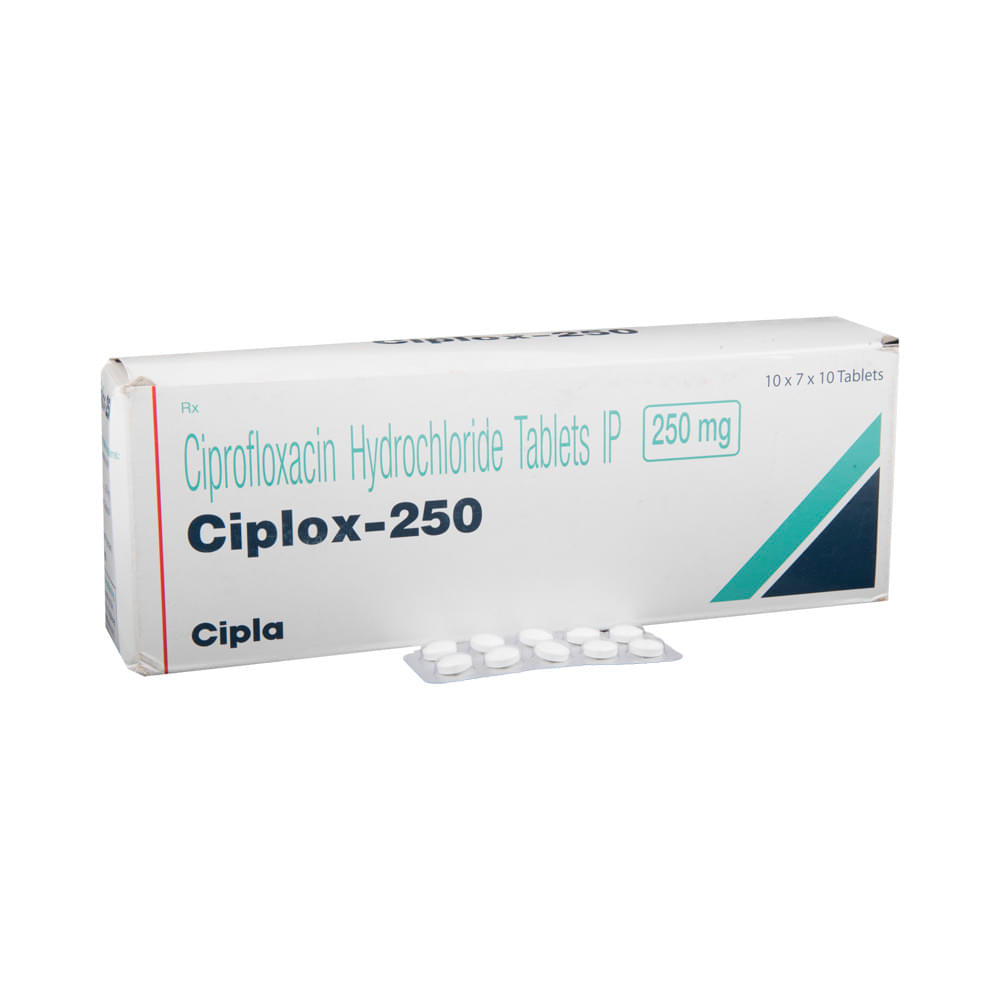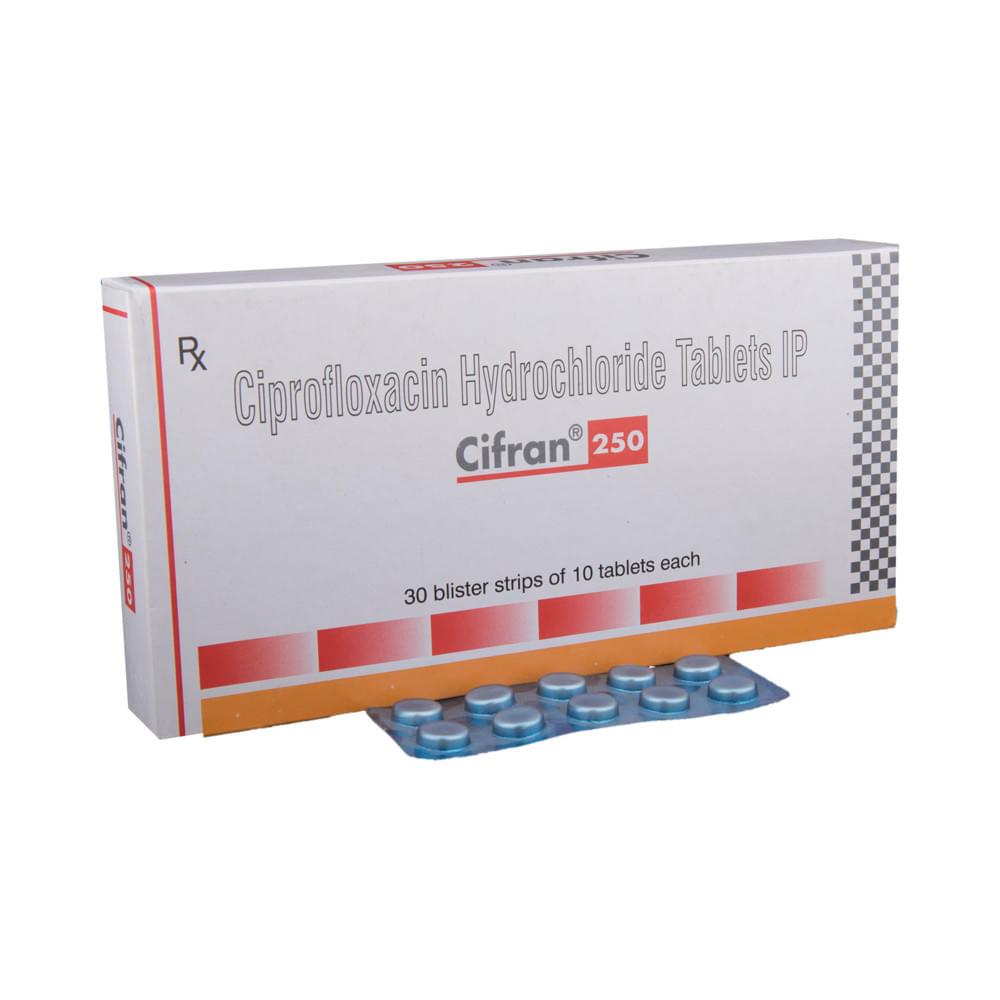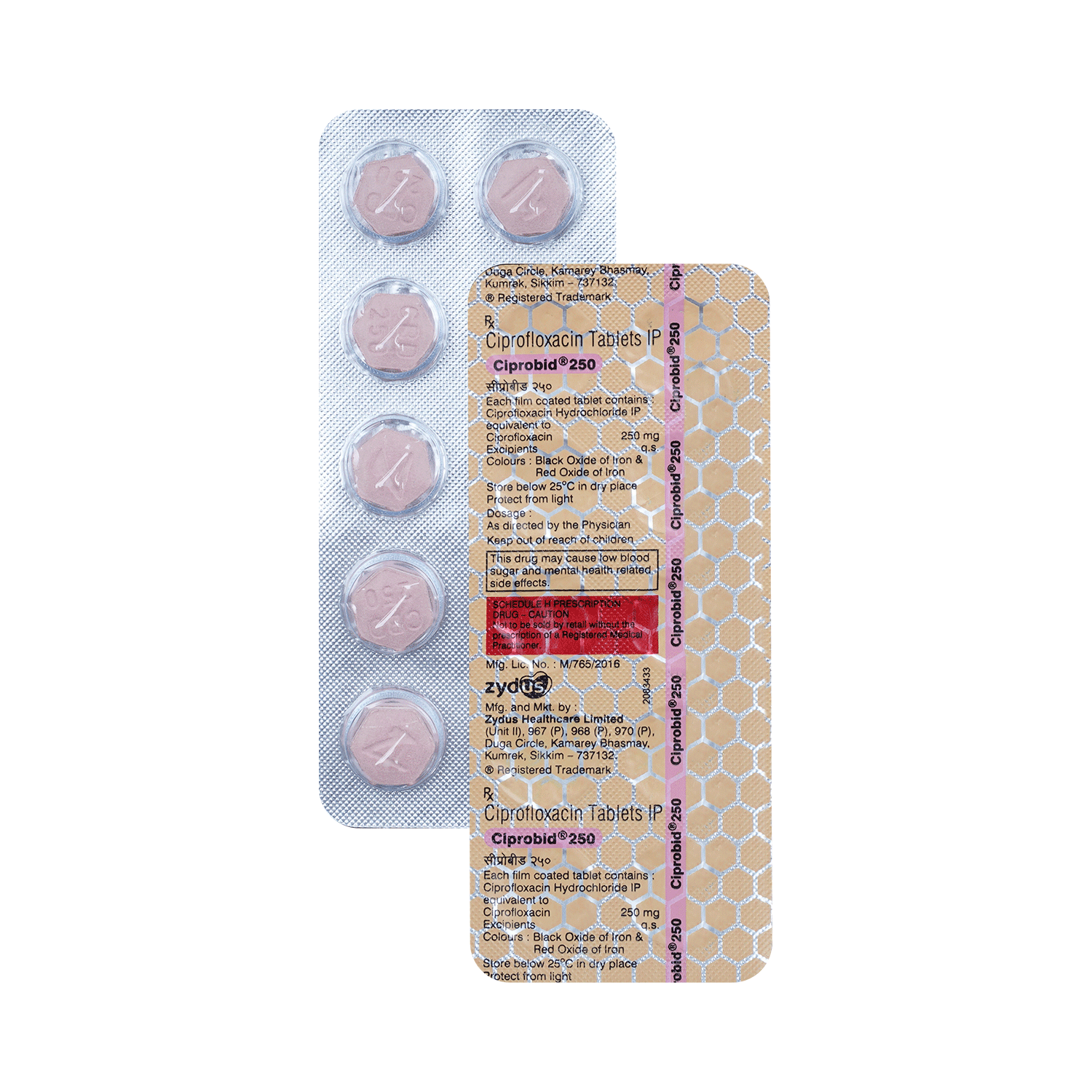
Ciprobiotic 250mg Tablet
strip of 10.0 tablets.Prescription required
About this product:
| Salt Composition: | Ciprofloxacin (250mg) |
| Manufacturer: | Emcure Pharmaceuticals Ltd |
| Storage: | Below 25 degree celcius |
Out of Stock
Have doubts about this medicine?
Have doubts about this medicine?
Ciprobiotic 250mg Tablet is an antibiotic used to treat bacterial infections, including urinary tract, nose, throat, skin, and lung infections. Ciprobiotic 250mg Tablet should be used in the dose and duration as advised by your doctor. It may be taken with or without food, preferably at a fixed time. Avoid skipping any doses and finish the full course of treatment even if you feel better. Do not take a double dose to make up for a missed dose. Simply take the next dose as planned. You may experience nausea as a side effect of this medicine. This is usually temporary and resolves on its own, but please consult your doctor if it bothers you or persists for a longer duration. Diarrhea may also occur as a side effect but should stop when your course is complete. Inform your doctor if it does not stop or if you find blood in your stools. You should not take this medicine if you are allergic to any of its ingredients. Rarely, some people may have a severe allergic reaction which needs urgent medical attention. Signs of this include rash, swelling of the lips, tongue, or face, shortness of breath, or breathing problems. Special care should be taken in people with kidney problems while taking this medicine.
Ciprobiotic 250mg Tablet is an antibiotic. It works by stopping the action of a bacterial enzyme called DNA-gyrase. This prevents the bacterial cells from dividing and repairing, thereby killing them.
Is Ciprobiotic 250mg Tablet safe to take?
Ciprobiotic 250mg Tablet is generally considered a safe medication when used as directed by a healthcare provider. However, it's essential to note that all medications can cause side effects in some individuals.
Can Ciprobiotic 250mg Tablet cause diarrhea?
Yes, one of the potential side effects of Ciprobiotic 250mg Tablet is antibiotic-associated diarrhea. This occurs when the medication kills off beneficial bacteria in the gut, leading to an imbalance.
Should I stop taking Ciprobiotic 250mg Tablet if my symptoms improve?
No, it's crucial not to discontinue Ciprobiotic 250mg Tablet prematurely. Complete the full course of treatment as directed by your healthcare provider, even if you start feeling better before the infection is fully cleared.
Can Ciprobiotic 250mg Tablet increase the risk of muscle damage?
Yes, this medication has been associated with an increased risk of tendonitis and other musculoskeletal issues. If you experience any unusual muscle pain or discomfort while taking Ciprobiotic 250mg Tablet, consult your doctor.
Is it safe to take Ciprobiotic 250mg Tablet with paracetamol?
While there is no known clinically significant interaction between Ciprobiotic 250mg Tablet and paracetamol, interactions can occur. Consult with your healthcare provider before taking both medications together.
Take this medicine in the dose and duration as advised by your doctor. Swallow it as a whole. Do not chew, crush, or break it. Ciprobiotic 250mg Tablet may be taken with or without food, but it is better to take it at a fixed time. Avoid Ciprobiotic 250mg Tablet with caffeine and chocolate as well as food containing caffeine and chocolate such as tea leaves, cocoa beans.
- Your doctor has prescribed Ciprobiotic 250mg Tablet to cure your infection and improve symptoms.
- Do not skip any doses and finish the full course of treatment even if you feel better.
- Discontinue Ciprobiotic 250mg Tablet and inform your doctor immediately if you get a rash, itchy skin, swelling of face and mouth, or have difficulty in breathing.
- Diarrhea may occur as a side effect but should stop when your course is complete. Inform your doctor if it doesn't stop or if you find blood in your stools.
- Notify your doctor if you feel pain in your tendons, numbness, or tingling sensations.
- Inform your doctor if you are pregnant or planning to conceive or breastfeeding.
- No common side effects listed.

Alcohol
Consuming alcohol with Ciprobiotic 250mg Tablet does not cause any harmful side effects.

Breastfeed
Ciprobiotic 250mg Tablet is probably safe to use during breastfeeding. Limited human data suggests that the drug does not represent any significant risk to the baby. Baby should be closely monitored for development of fever, loss of appetite, and diarrhea. In case, any of the above happens, please inform your doctor immediately.

Pregnancy
Ciprobiotic 250mg Tablet may be unsafe to use during pregnancy. Although there are limited studies in humans, animal studies have shown harmful effects on the developing baby. Your doctor will weigh the benefits and any potential risks before prescribing it to you. Please consult your doctor.