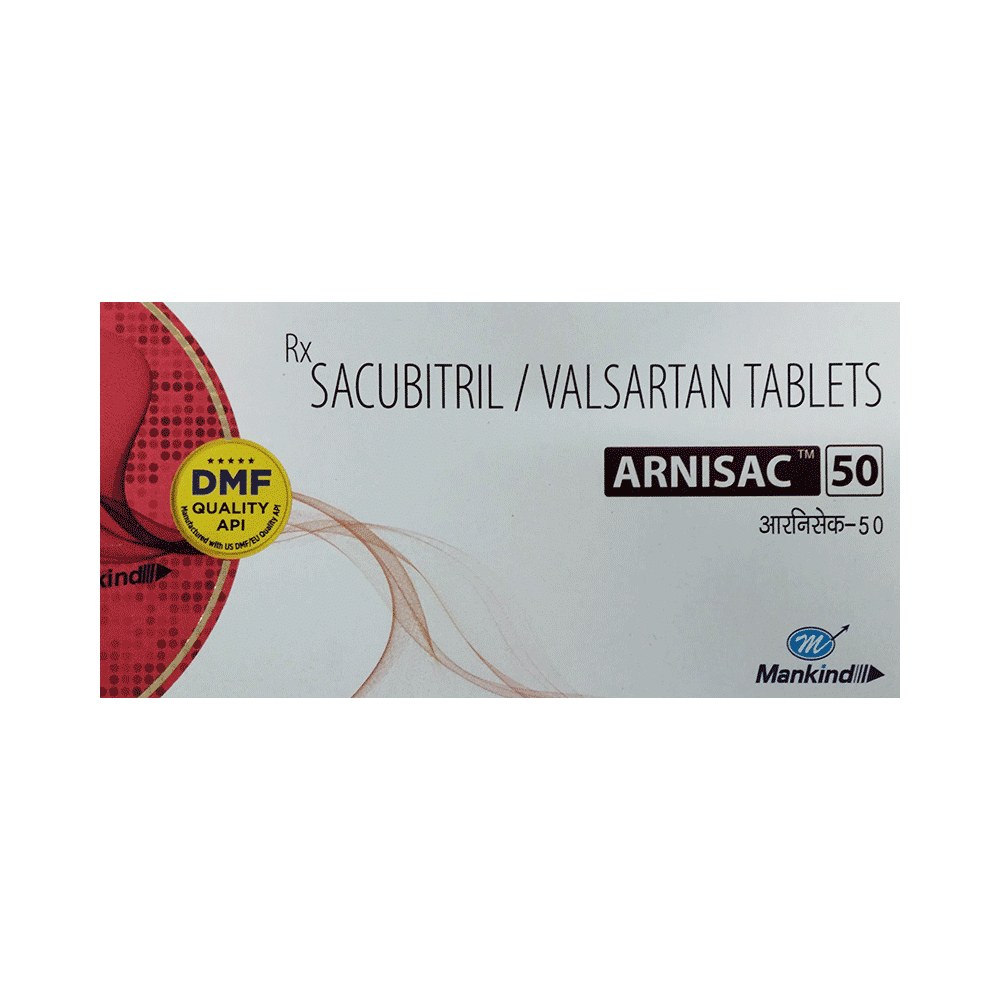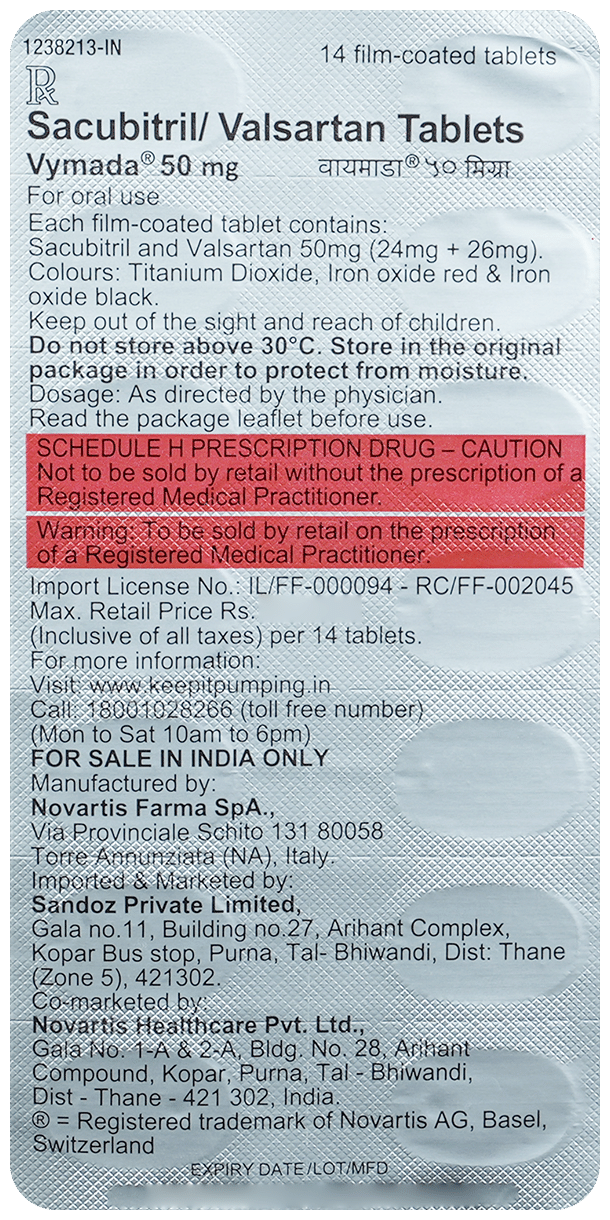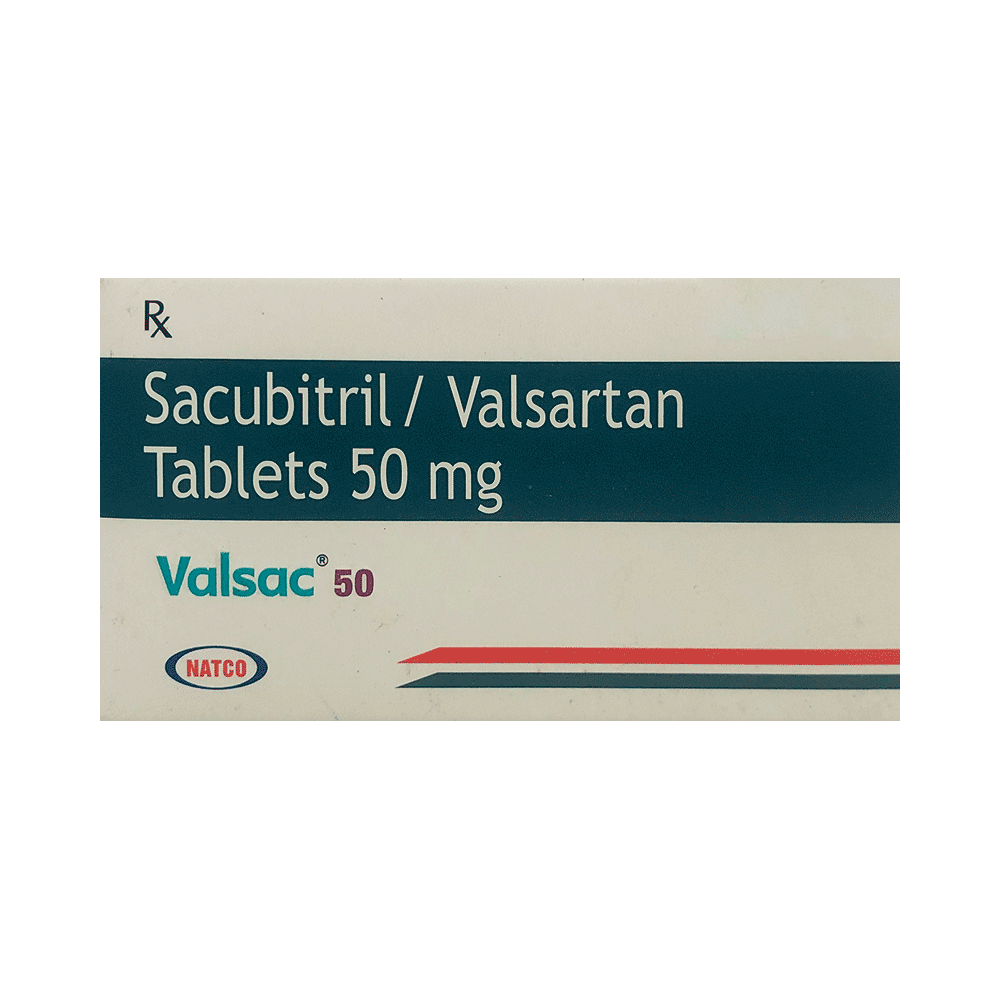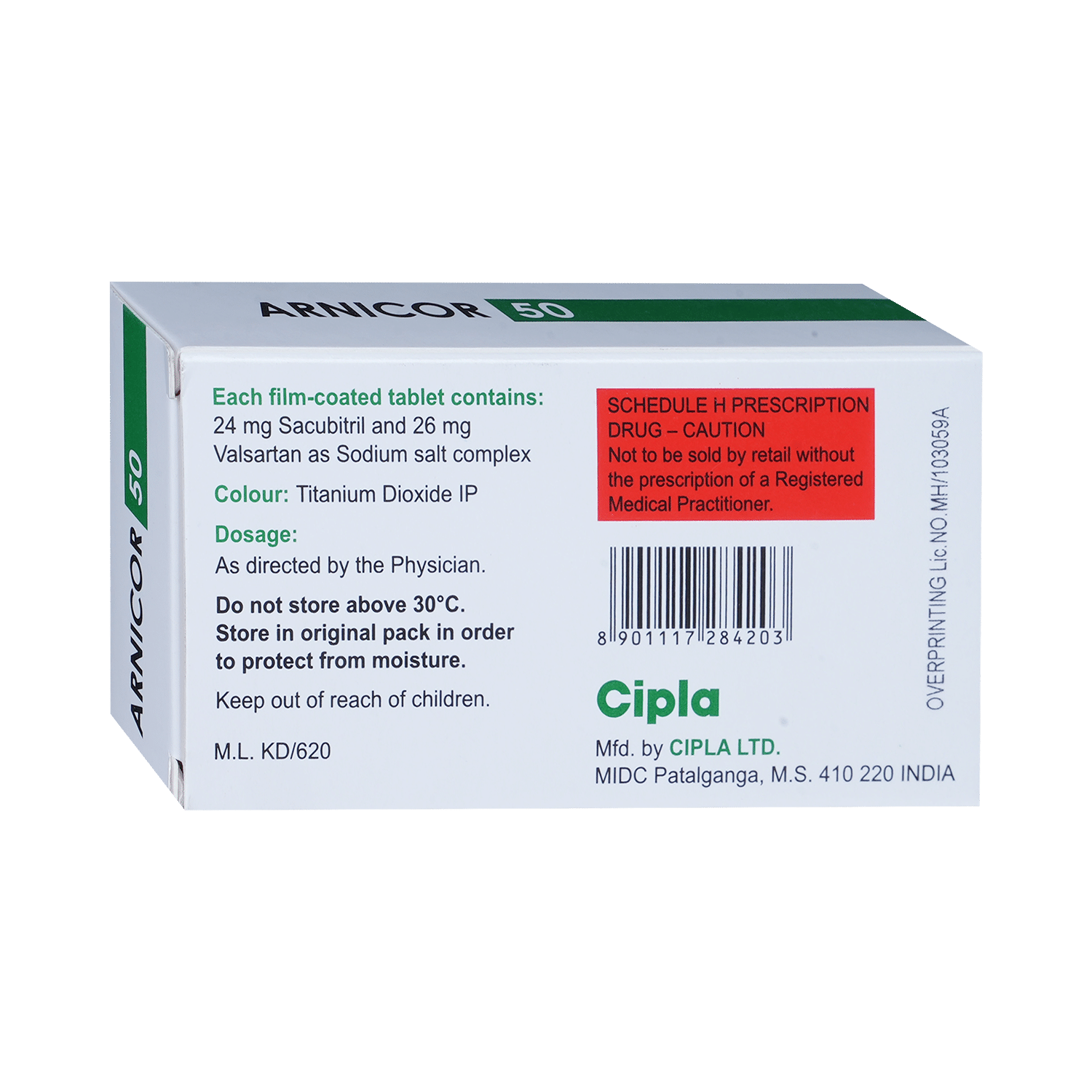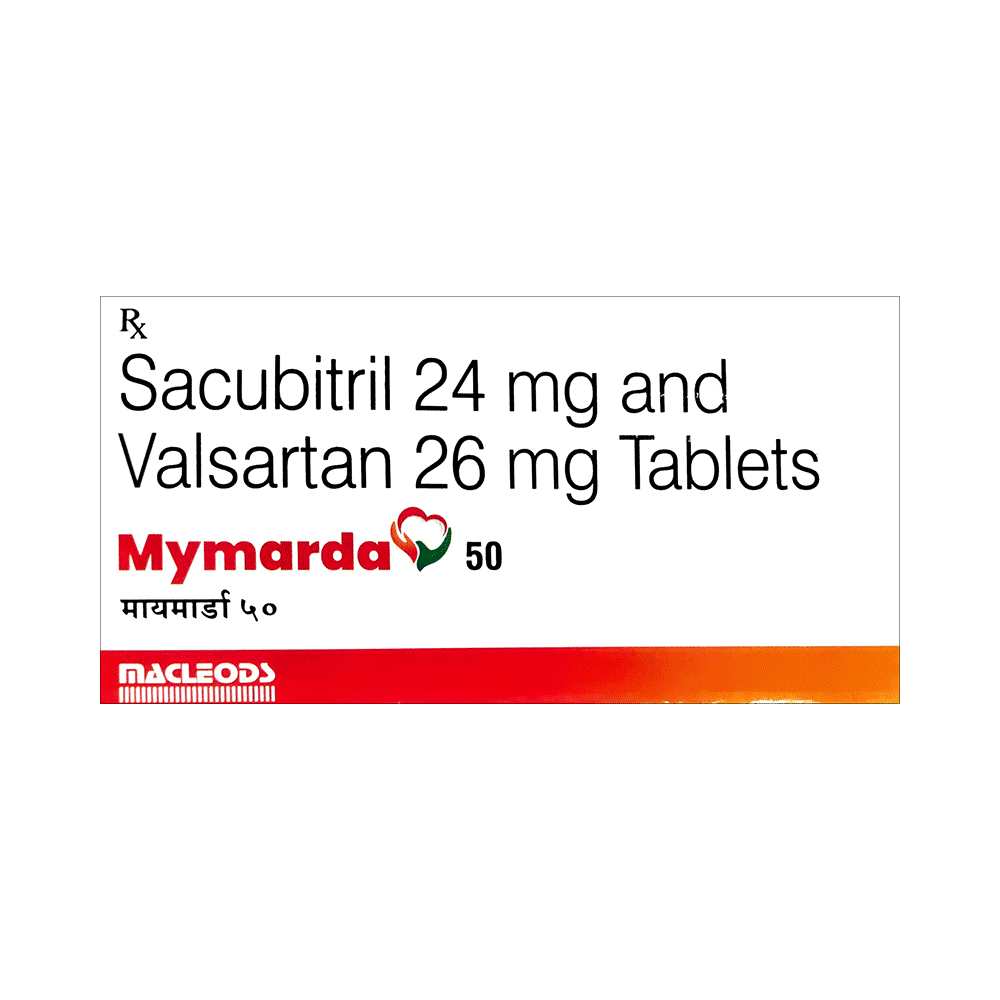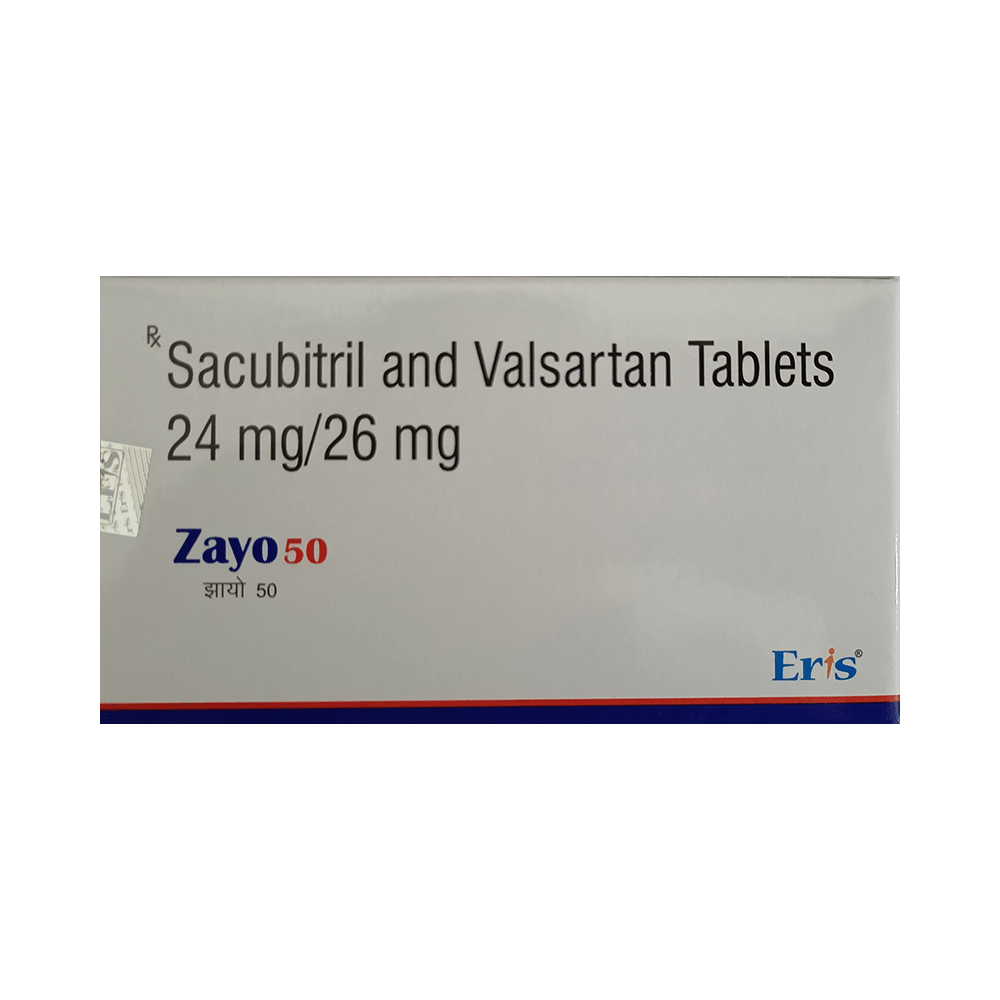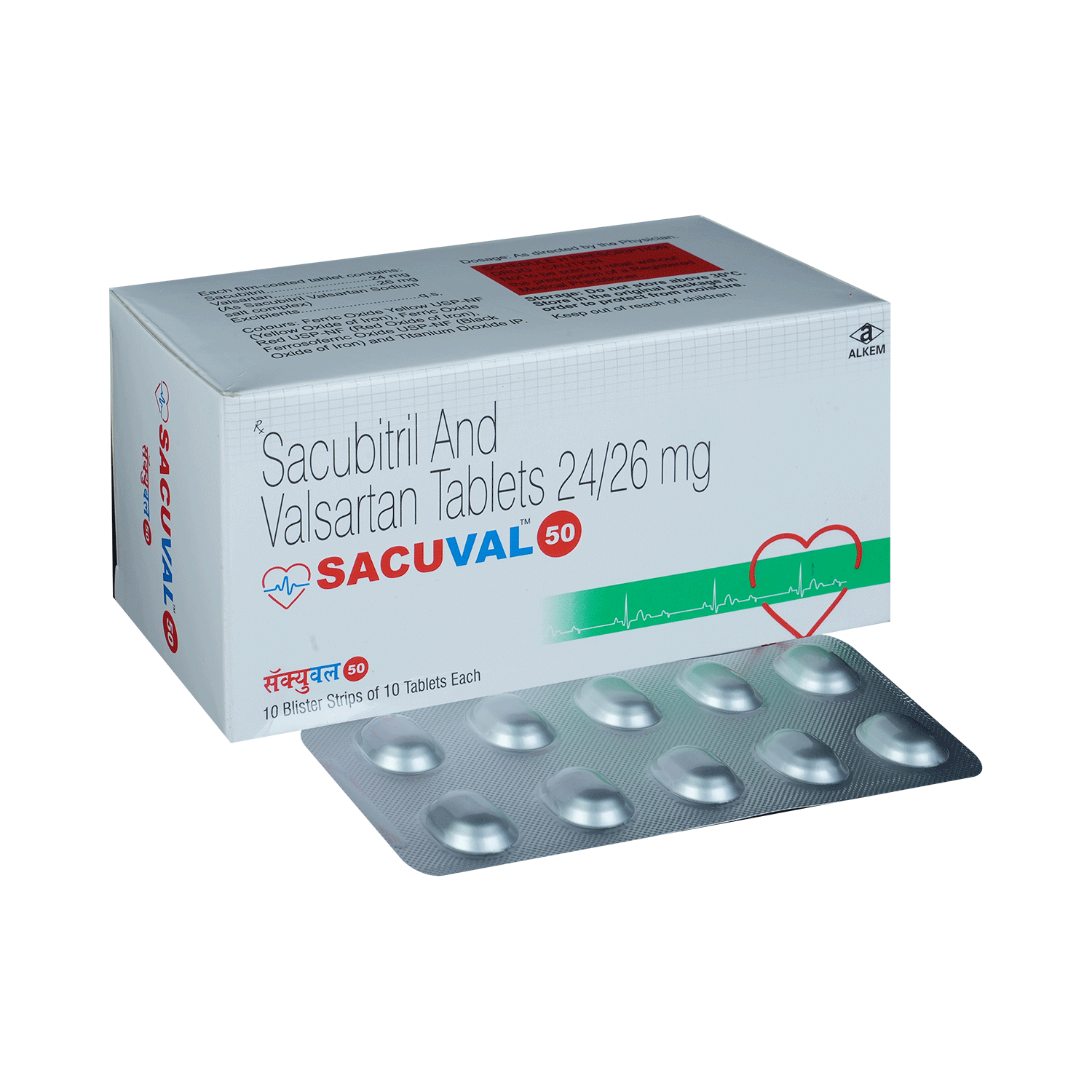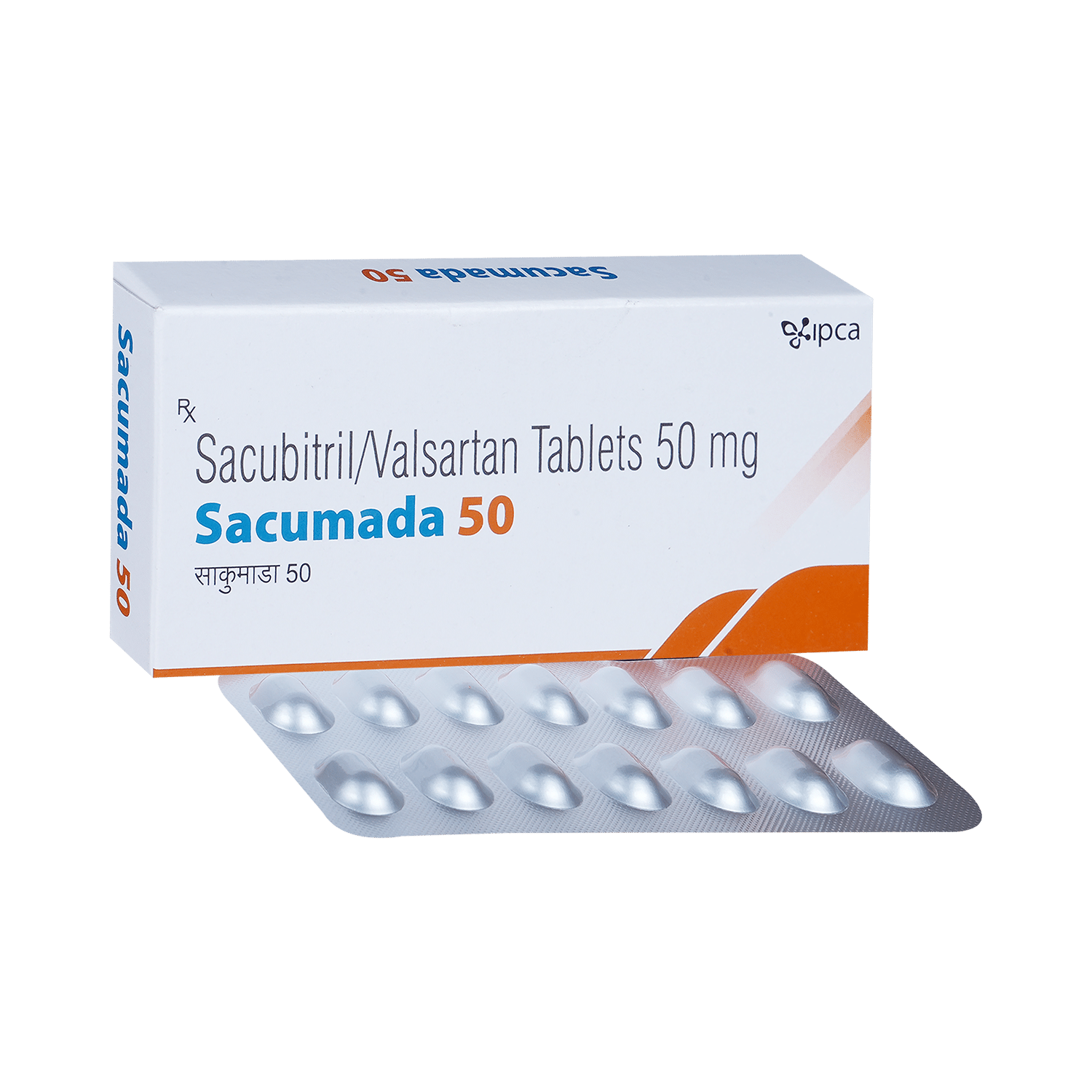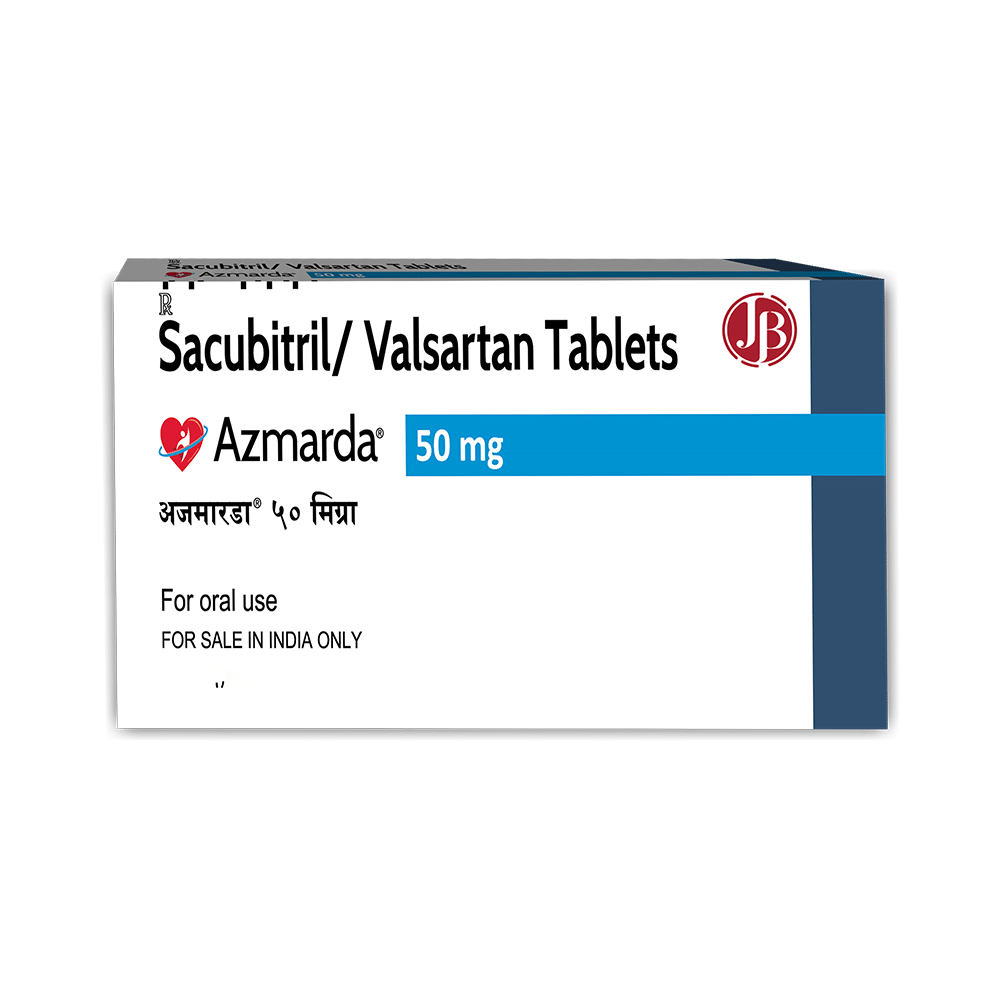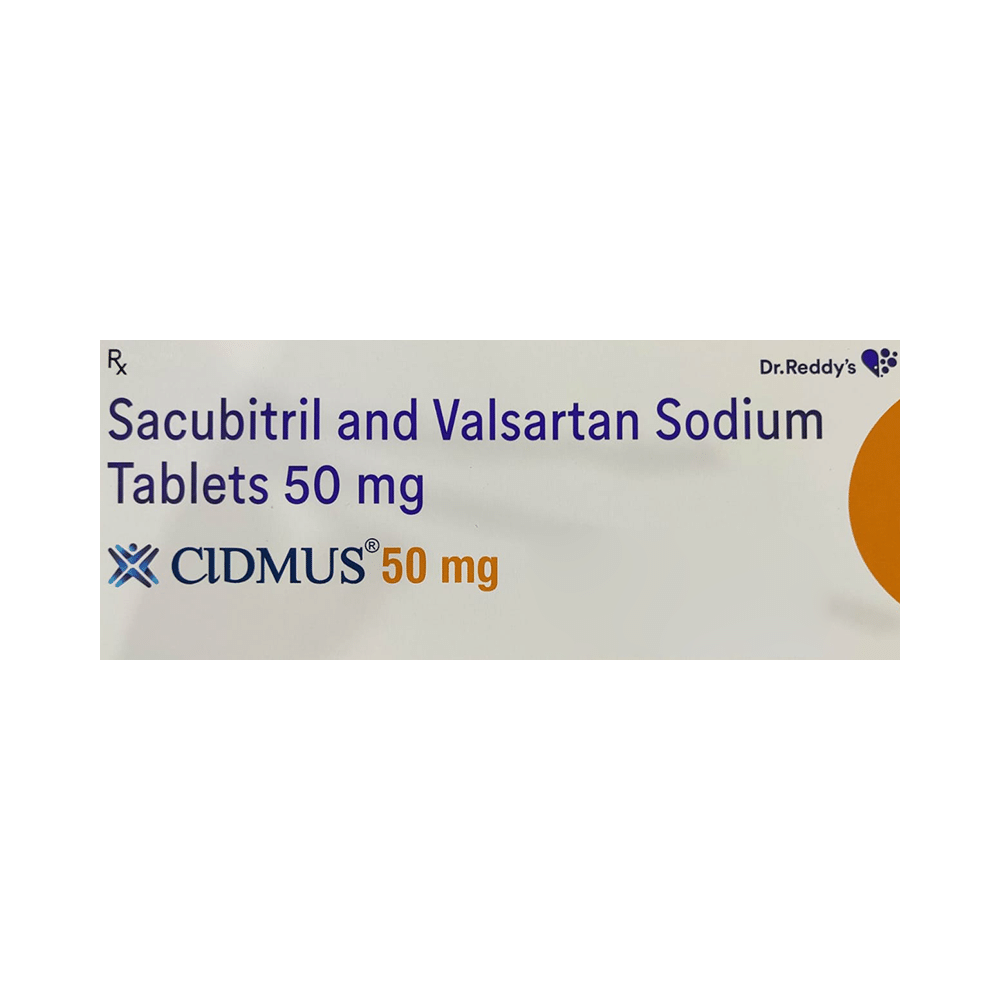
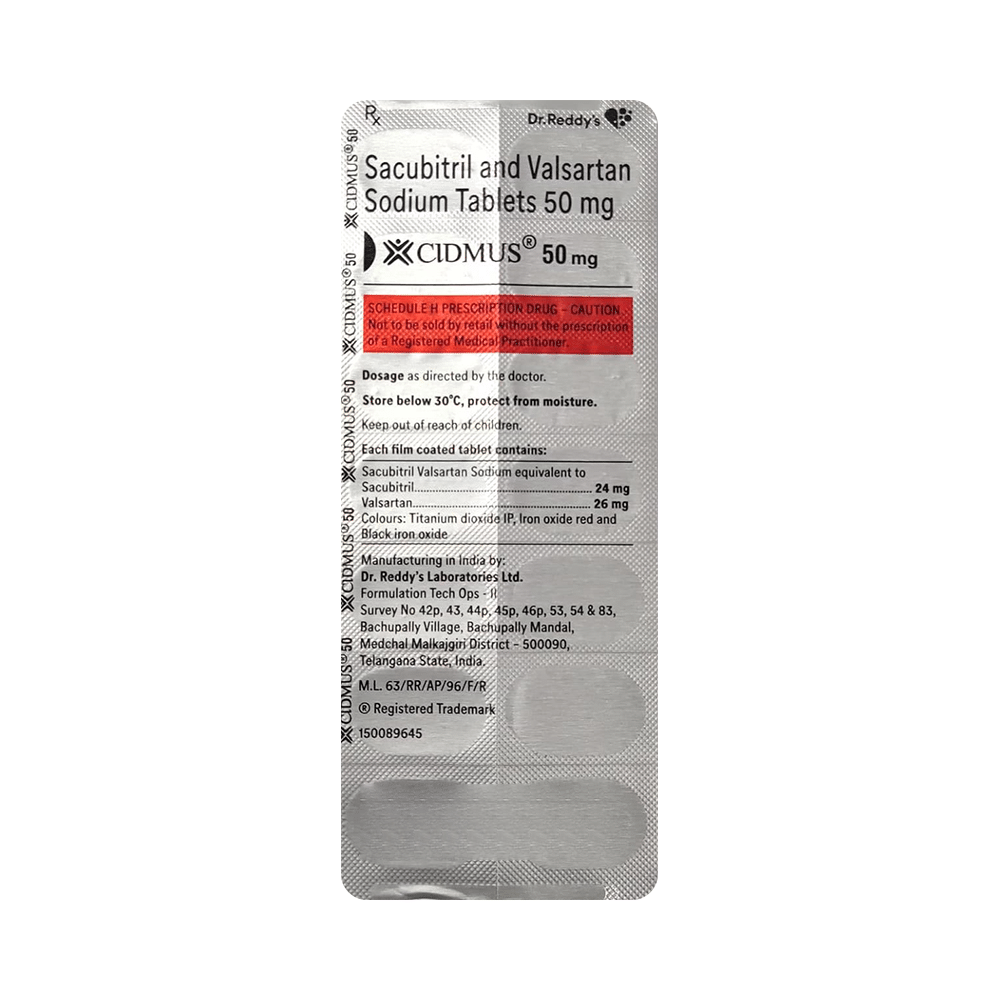
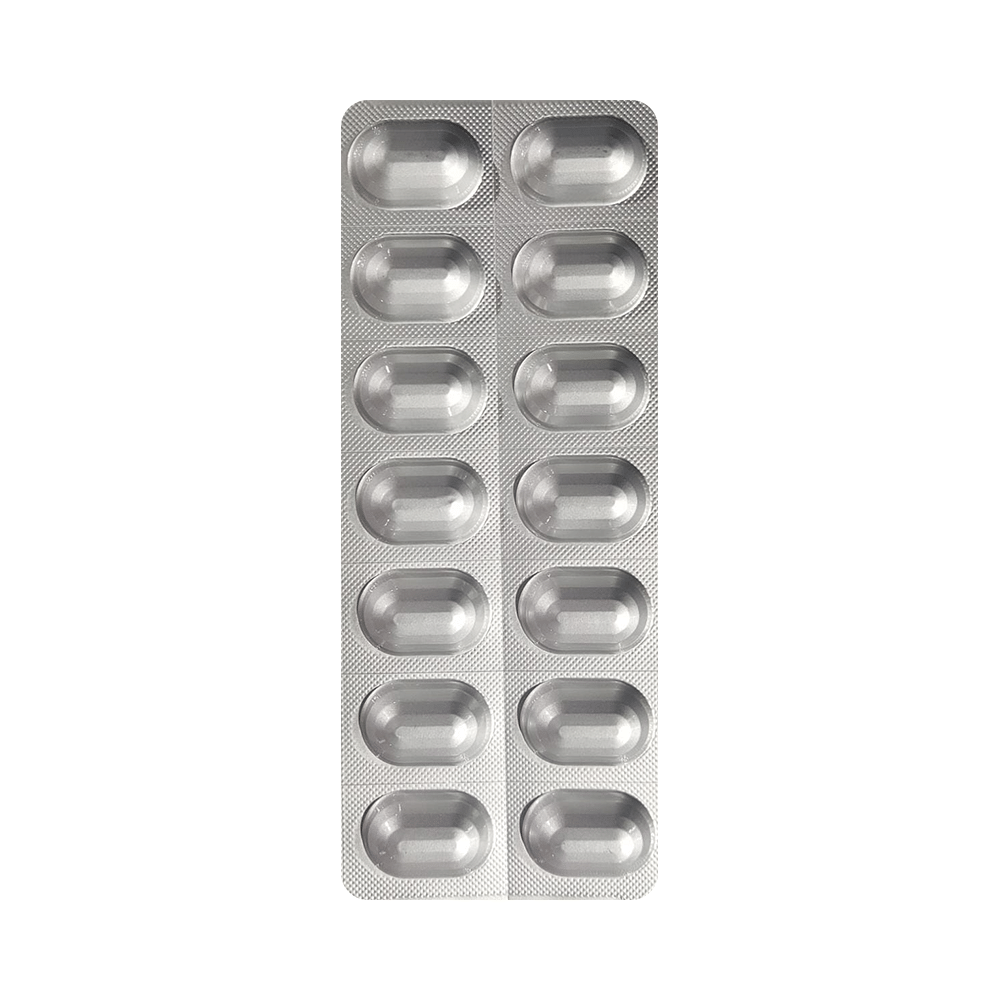
Cidmus 50 Tablet
1 Strip of 14 Tablet.Prescription required
About this product:
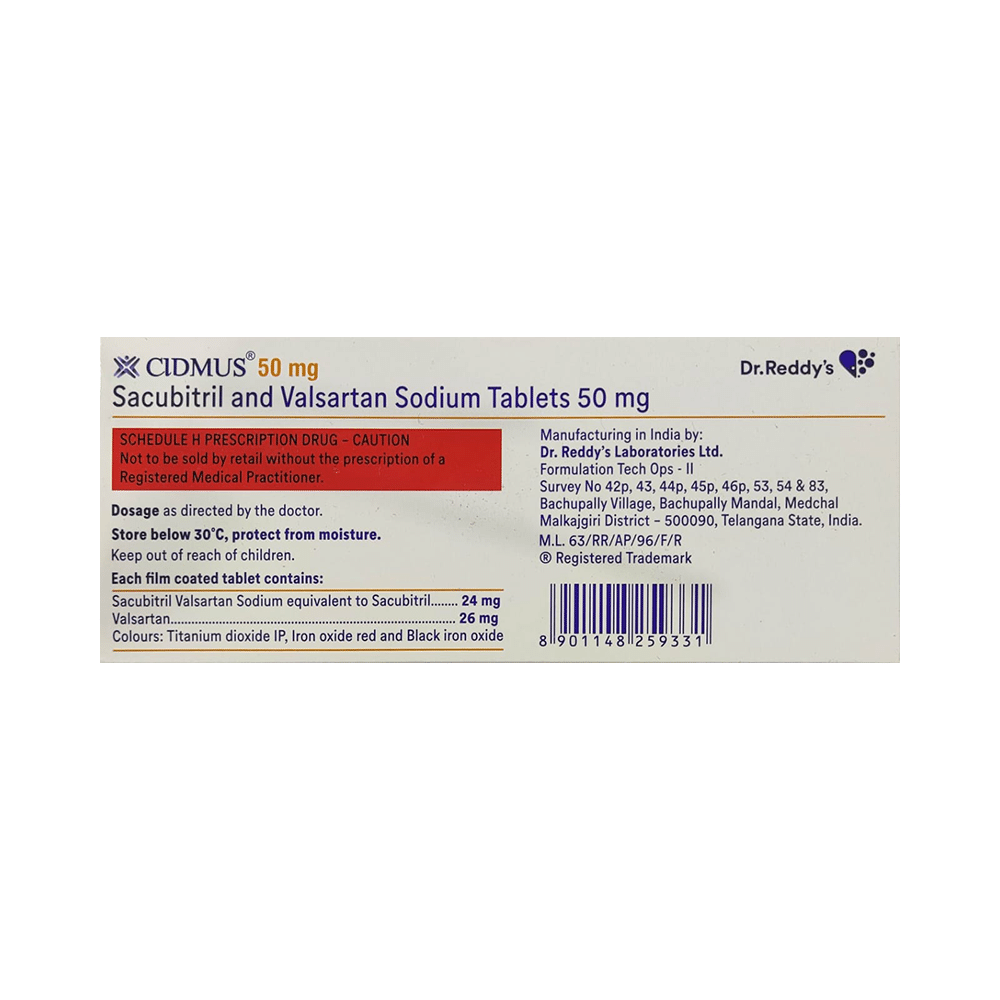
| Salt Composition: | Sacubitril (24mg) + Valsartan (26mg) |
| Manufacturer: | Dr Reddy's Laboratories Ltd |
| Storage: | Below 25 degree celcius |
In Stock
Have doubts about this medicine?
Have doubts about this medicine?
CIDMUS 50mg Tablet is a combination of two medicines used to treat heart failure, reducing the risk of hospitalization and death in patients with chronic heart failure. CIDMUS 50mg Tablet is a combination of two medicines used to treat heart failure. It reduces the risk of hospitalization and death in patients with long-lasting (chronic) heart failure. It is generally given along with other heart failure medications.
CIDMUS 50mg Tablet is a combination of two medicines: Sacubitril and Valsartan which belong to a class of angiotensin receptor neprilysin inhibitor (ARNI). This combination treats heart failure by relaxing the blood vessels and making it easier for your heart to pump blood throughout your body. In addition, it also helps your body retain less water.
Who should avoid taking CIDMUS 50mg Tablet due to potential allergic reactions or interactions?
Patients who are allergic to any of its components, ACE inhibitors, or ARBs should avoid using this medicine. Additionally, it should not be used along with other antihypertensive medicines like ACE inhibitors or ARBs, and not taken for at least 36 hours before or after taking an ACE inhibitor medicine. If unsure, consult a doctor.
What information should I provide to my doctor before starting CIDMUS 50mg Tablet?
Inform your doctor about any medical conditions, including liver or kidney disease, history of facial swelling (angioedema), and whether you are pregnant or breastfeeding. Also, disclose all medications you're taking, especially potassium supplements, painkillers, blood pressure, or heart failure medicines.
Is CIDMUS 50mg Tablet safe for use during pregnancy?
No, CIDMUS 50mg Tablet should be avoided in pregnancy as it can cause harm to the baby. If you become pregnant while using this medicine, stop taking it and consult your doctor immediately.
How will I know if I have high potassium levels (hyperkalemia)?
Your doctor will periodically check your blood potassium levels to detect high potassium levels. Ensure that you attend all scheduled appointments with the doctor.
Who should avoid taking CIDMUS 50mg Tablet due to potential allergic reactions or interactions?
Patients who are allergic to any of its components, ACE inhibitors, or ARBs should avoid using this medicine. Additionally, it should not be used along with other antihypertensive medicines like ACE inhibitors or ARBs, and not taken for at least 36 hours before or after taking an ACE inhibitor medicine. If unsure, consult a doctor.
What information should I provide to my doctor before starting CIDMUS 50mg Tablet?
Inform your doctor about any medical conditions, including liver or kidney disease, history of facial swelling (angioedema), and whether you are pregnant or breastfeeding. Also, disclose all medications you're taking, especially potassium supplements, painkillers, blood pressure, or heart failure medicines.
Is CIDMUS 50mg Tablet safe for use during pregnancy?
No, CIDMUS 50mg Tablet should be avoided in pregnancy as it can cause harm to the baby. If you become pregnant while using this medicine, stop taking it and consult your doctor immediately.
How will I know if I have high potassium levels (hyperkalemia)?
Your doctor will periodically check your blood potassium levels to detect high potassium levels. Ensure that you attend all scheduled appointments with the doctor.
Take this medicine in the dose and duration as advised by your doctor. Swallow it as a whole. Do not chew, crush or break it. CIDMUS 50mg Tablet may be taken with or without food, but it is better to take it at a fixed time.
- You have been prescribed CIDMUS 50mg Tablet for the treatment of long-lasting (chronic) heart failure.
- Continue to stay active (light walking and stretching) and eat a healthy, low sodium diet along with taking this medication.
- Rise slowly if you have been sitting or lying down to reduce the chances of feeling dizzy.
- Inform your doctor if you have a history of liver or kidney diseases.
- Do not take CIDMUS 50mg Tablet if you are pregnant or breastfeeding.

Alcohol
It is unsafe to consume alcohol with CIDMUS 50mg Tablet.

Breastfeed
CIDMUS 50mg Tablet is probably unsafe to use during breastfeeding. Limited human data suggests that the drug may pass into the breastmilk and harm the baby.

Pregnancy
CIDMUS 50mg Tablet is unsafe to use during pregnancy as there is definite evidence of risk to the developing baby. However, the doctor may rarely prescribe it in some life-threatening situations if the benefits are more than the potential risks. Please consult your doctor.